The Federal Tax Credit Isn’t Just for Hollywood: An Analysis of the Motion Picture, Television, and Entertainment Revitalization Act

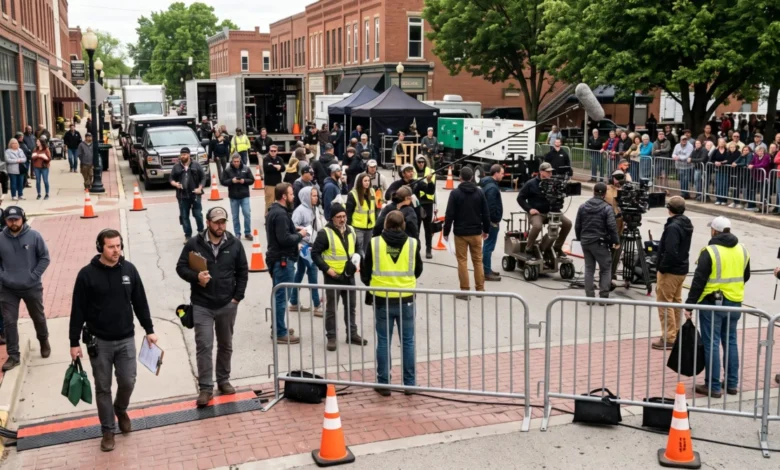
The legislative landscape surrounding the American entertainment industry is undergoing a significant transformation as Congress deliberates the Motion Picture, Television, and Entertainment Revitalization Act. While public discourse often frames film tax incentives as subsidies for high-budget studio blockbusters and A-list celebrities, the proposed federal framework is fundamentally aimed at stabilizing a domestic production ecosystem that has faced severe contraction over the past several years. By introducing a federal incentive structure that mirrors successful state-level programs, lawmakers hope to reverse the tide of "runaway production," a phenomenon where films and television series are shot overseas to take advantage of lower labor costs and foreign tax rebates.
The Current State of the Domestic Production Economy
The urgency of this legislation is underscored by recent data from FilmLA, which monitors on-location production in the Los Angeles area. The industry has experienced a sustained downward trajectory: 2025 concluded with 19,694 shoot days, representing a 16.1% decrease from the previous year. This volatility has persisted into 2026, with second-quarter figures showing a further 12.7% decline year-over-year. These figures, while seemingly abstract, represent a quantifiable loss of labor hours for thousands of specialized professionals, including lighting technicians, sound mixers, set designers, and logistics coordinators.
The broader creative economy relies on an intricate supply chain. When a major production decides to film in the United States rather than in jurisdictions like Canada, Eastern Europe, or Southeast Asia, it triggers a cascade of local spending. This includes the rental of specialized camera gear, the purchase of expendable supplies—such as gaff tape, cabling, and lighting gels—and the engagement of local craft services, catering, and equipment maintenance facilities. Businesses like Filmtools serve as the connective tissue for this ecosystem; when production volume drops, the impact is felt immediately through reduced inventory turnover, stagnating hiring, and the eventual erosion of local technical expertise.
Legislative Framework and Economic Projections
The proposed federal incentive is designed to harmonize with existing state-level credits rather than replace them. The current legislative framework under discussion proposes a base tax credit of approximately 20% on qualifying U.S. production labor. Depending on specific criteria—such as location of production and adherence to labor standards—this figure could potentially reach up to 30%. The intent is to create a predictable, nationwide financial environment that allows producers to finalize budgets with the certainty that the United States remains a cost-competitive destination.
According to a study released by the Motion Picture Association (MPA), the enactment of this federal incentive could result in an estimated $125.3 billion in additional U.S. production spending through 2035. The economic model projects the creation of approximately 143,500 new jobs. While industry analysts advise that these figures, provided by an organization directly lobbying for the policy, should be viewed through the lens of advocacy, the underlying trend is undeniable: domestic film and television production is currently at a competitive disadvantage in the global market.
A Chronology of Industry Decline and Legislative Response
The impetus for this act stems from a multi-year stagnation in domestic production that began to accelerate in the early 2020s.
- 2023-2024: The industry faced dual headwinds: labor strikes and a fundamental shift in studio spending habits. As streaming platforms consolidated their content strategies, budgets were tightened, and international incentives became the primary driver for location scouting.
- Early 2025: Data from production hubs like Los Angeles, New York, and Georgia began to confirm a consistent decline in shoot days. Industry groups began forming coalitions to lobby for federal intervention, noting that while states like Georgia and New Mexico have robust programs, a lack of federal alignment created a fragmented landscape that discouraged long-term planning.
- Late 2025 – Early 2026: Legislators began drafting the Motion Picture, Television, and Entertainment Revitalization Act, acknowledging that the "Hollywood" brand is a national economic asset. The focus of the bill shifted from "subsidizing celebrities" to "supporting the workforce," emphasizing the 300,000-plus workers in Los Angeles County alone whose livelihoods are tied to the viability of local shoots.
The Broader Geographical Impact
It is a common misconception that film production, and by extension the benefits of a federal tax credit, is limited to Southern California. The reality is that the "production-ready" infrastructure of the United States has expanded significantly over the last two decades. States such as Georgia, New Mexico, Texas, Illinois, and New York have developed deep pools of local talent and specialized vendor networks.
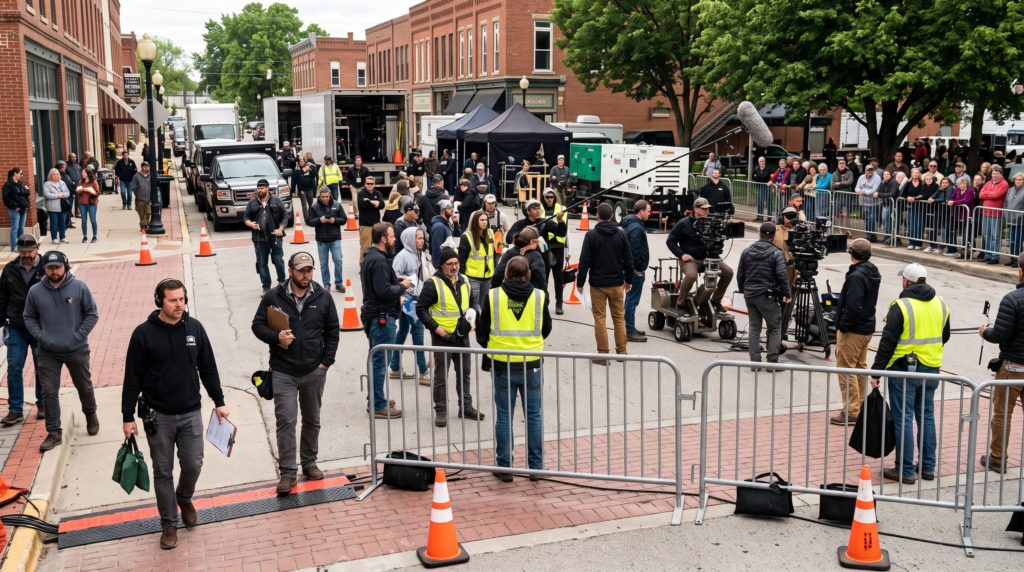
When a large-scale production opts to shoot in Albuquerque or Atlanta, the economic ripple effects are profound. These regions have spent years investing in sound stages, crew training programs, and local equipment rental houses. A federal tax credit would provide a vital lifeline to these regional economies, which are currently struggling to maintain their competitive edge against international production hubs that offer highly aggressive, government-backed financial incentives.
Addressing Concerns of Oversight and Equity
Critics of film tax credits frequently point to the potential for abuse by large entities, warning of "bad actors" who may attempt to exploit government funds without providing the promised local economic stimulus. Proponents of the Motion Picture, Television, and Entertainment Revitalization Act have acknowledged these concerns, arguing that the legislative draft must include robust audit mechanisms.
Transparency, proponents argue, is essential. The focus of the federal policy is to ensure that the credits are applied to legitimate production labor and local vendor spending. By establishing strict eligibility requirements, the government can ensure that the $125.3 billion in projected economic activity translates into stable employment for technicians and small business owners rather than being absorbed by overhead and corporate profit margins.
Implications for the Future of American Content
The decline in domestic production has implications that extend beyond the economic realm. When production moves overseas, the United States risks losing the cultural and technical infrastructure that has defined global media for a century. The "gold standard" of American production is built on the expertise of its crew members and the availability of its specialized supply houses. If this workforce is forced to exit the industry due to lack of opportunity, the capacity to produce high-quality, large-scale content domestically will be severely diminished.
The "real story" of this legislation is not found in the boardrooms of the major studios, but in the early morning hours on a set, where a grip or a camera assistant relies on the availability of a local supplier to keep a production running on schedule. These individuals are the backbone of the creative economy. Their ability to remain employed, pay their mortgages, and support their families depends on the decision to keep the cameras rolling on American soil.
Conclusion: Sustaining the Creative Ecosystem
As the debate moves forward in Congress, the focus is expected to remain on the fiscal sustainability and the specific labor-market outcomes of the proposal. The Motion Picture, Television, and Entertainment Revitalization Act represents a strategic pivot toward protecting a vital sector of the American economy. By lowering the barrier to entry for domestic production, the act seeks to foster a more stable environment for the thousands of workers whose names appear in the credits—often hundreds of lines below the stars—but whose contributions are the essential, daily work that keeps the industry alive.
Ultimately, the goal is to bridge the gap between the heritage of American filmmaking and its future. By investing in the workforce today, the government aims to ensure that the United States remains the global center for creative and technical excellence, securing the jobs of the next generation of technicians, artists, and production support professionals. The success of this act will be measured not in box office returns, but in the stability and growth of the hundreds of thousands of jobs that sustain the broader production ecosystem.