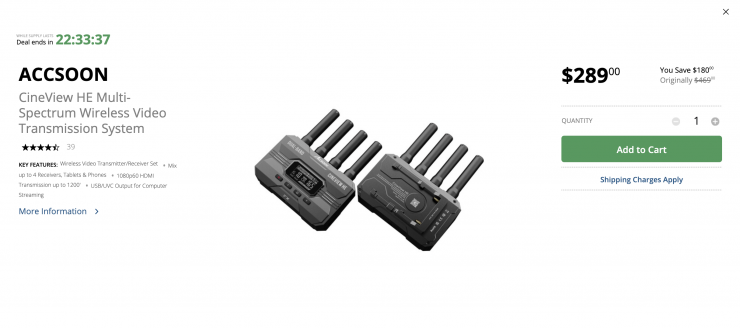
Accsoon CineView HE Multi-Spectrum Wireless Video Transmission System is on sale for $289 USD

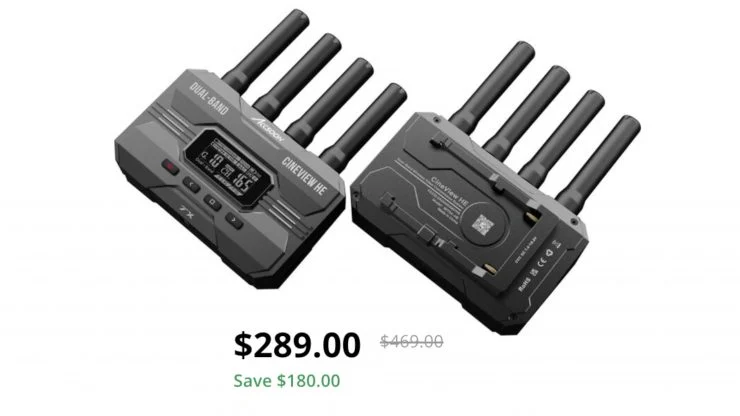
The landscape of professional videography has been fundamentally altered by the democratization of high-end monitoring technology, and the current promotional pricing on the Accsoon CineView HE Multi-Spectrum Wireless Video Transmission System represents a significant milestone in this shift. Recently discounted by $180 USD, the system is now available for $289 USD, offering independent filmmakers, broadcast professionals, and content creators access to robust wireless monitoring capabilities that were previously reserved for high-budget productions. This price adjustment, facilitated through major retail channels, marks a strategic effort to capture a wider segment of the market as the demand for remote monitoring on set continues to climb.
Evolution of Wireless Monitoring Systems
Wireless video transmission has traveled a long path from the cumbersome, proprietary systems of the early 2000s to the agile, multi-platform solutions available today. Historically, the broadcast industry relied on massive, rack-mounted microwave transmitters that required dedicated engineering support. As high-definition digital signal processing became more efficient, manufacturers began to shrink the form factor. Accsoon entered this competitive space with a specific focus on "multi-spectrum" technology, which utilizes both 2.4GHz and 5GHz frequencies simultaneously to maintain signal integrity in crowded RF environments.
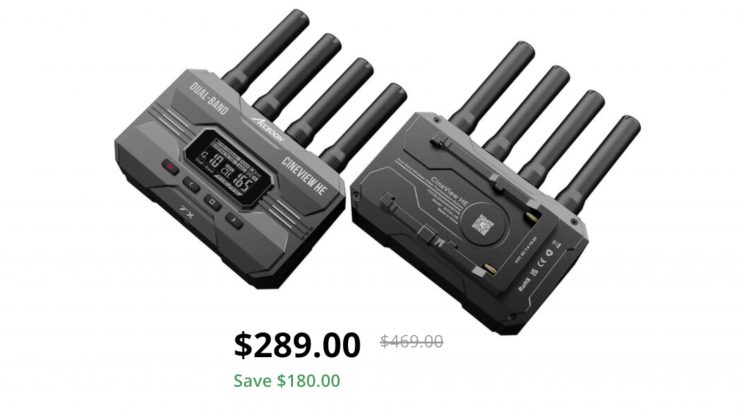
The CineView HE represents the culmination of several years of iteration. By allowing a 1080p60 signal to be transmitted not only to a dedicated receiver but also to a mix of up to four mobile devices, the system addresses the modern requirement for "client-friendly" monitoring. With the rise of hybrid production workflows, the ability to feed a director, a focus puller, and a client simultaneously via their own smartphones has become an essential operational standard rather than a luxury.
Technical Specifications and Operational Workflow
At the core of the CineView HE is its proprietary transmission protocol. Unlike basic Wi-Fi-based transmitters that often suffer from significant latency—the delay between the physical action and its representation on screen—the CineView HE maintains a latency of approximately 60ms. While this may not be suitable for high-speed, frame-accurate sports officiating, it is more than sufficient for general cinematography, narrative blocking, and interview setups.
The system’s versatility is anchored in its input and output flexibility. The transmitter accepts standard HDMI inputs, while the receiver offers both HDMI and a USB UVC (USB Video Class) output. This UVC output is particularly significant in the post-pandemic era, as it allows users to plug the receiver directly into a computer to act as a webcam source for live-streaming platforms like Zoom, OBS, or vMix without the need for additional capture cards. This bridge between traditional cinema hardware and web-based streaming software is a key driver of the system’s popularity.
Chronology of Wireless Transmission Accessibility
The trend toward lower-cost, high-performance monitoring began in earnest around 2018, as CMOS sensor technology allowed cameras to become smaller and more mobile. As production crews downsized, the need for bulky, cable-heavy setups diminished.
- 2019: The industry saw the first wave of reliable sub-$500 wireless transmitters entering the prosumer market.
- 2021: Accsoon introduced the CineView line, emphasizing the use of dual-band transmission to bypass the common interference issues found in 5GHz-only systems.
- 2023: The integration of app-based monitoring became the industry standard, moving away from dedicated, expensive hardware monitors toward smartphone and tablet displays.
- 2026: With the current $180 discount on the CineView HE, the price-to-performance ratio has reached a level where wireless monitoring is now a baseline expectation for even the smallest independent video productions.
Data-Driven Performance Analysis
In technical testing, the 1200-foot (350-meter) range of the CineView HE is impressive, though it is contingent on line-of-sight conditions. In real-world environments—such as soundstages with high electronic noise or dense urban environments—the dual-band transmission algorithm proves its value. By constantly hopping between frequencies, the system maintains a stable link.
Furthermore, the companion app serves as more than just a viewer. It provides a suite of professional monitoring tools that previously required expensive third-party hardware monitors. These include:

- Peaking: Essential for critical focus adjustments.
- Zebras: Used for identifying overexposed areas in the frame.
- False Color: A precise method for evaluating exposure across the entire dynamic range.
- 3D LUT Overlays: Enabling the crew to view a "graded" look on set while recording in a flat log profile.
The power management of the system is equally optimized for the field. With both DC input and USB-C power options, the system is compatible with a wide array of battery banks and external power supplies. The support for standard L-series batteries provides up to 12 hours of continuous operation, effectively removing the "battery anxiety" that often plagues wireless equipment during long production days.
Implications for the Independent Filmmaker
The reduction in cost for this technology has profound implications for the industry. For student filmmakers and independent creators, the ability to implement a professional-grade monitoring workflow for under $300 significantly lowers the barrier to entry for high-quality production standards. In the past, a production team would have to prioritize budget toward lenses and lighting, often sacrificing the ability for the director to review shots in real-time. By making the CineView HE more accessible, producers can now ensure better quality control throughout the production process.
Furthermore, the integration of these systems into streaming workflows suggests a broader trend in the industry: the convergence of cinema and broadcast. As the lines between high-end digital cinema and live-streamed content continue to blur, tools that can serve both purposes with equal proficiency become the backbone of the modern production kit.

Strategic Market Positioning
The current promotion is reflective of a wider strategy by manufacturers to build brand loyalty within the entry-level professional market. By lowering the entry price, Accsoon is positioning the CineView HE as an indispensable "first piece of gear" for those upgrading from entry-level mirrorless cameras to more robust, professional-grade setups.
From an industry analyst perspective, this price cut is a reaction to increased competition from other manufacturers who have also begun to iterate on their own wireless video transmission systems. As the hardware becomes more commoditized, the value proposition shifts from raw technical specs to software reliability and ecosystem support. Accsoon’s commitment to frequent firmware updates and app enhancements ensures that the device remains relevant long after the initial purchase, which is a critical factor for professional users who demand longevity from their equipment.
Conclusion
The Accsoon CineView HE Multi-Spectrum Wireless Video Transmission System, at its reduced price of $289 USD, offers a compelling combination of features that address the core needs of the modern videographer. By combining dual-band transmission, low latency, and a powerful software companion app, the system effectively bridges the gap between consumer electronics and professional broadcast equipment. As the industry continues to prioritize mobility, connectivity, and cost-effective monitoring, the CineView HE stands as a noteworthy example of how high-end features are becoming standard, essential components for creators at every level of the production hierarchy. Whether for a small-scale documentary shoot or a complex narrative production, the accessibility of such technology serves to elevate the standards of visual storytelling.