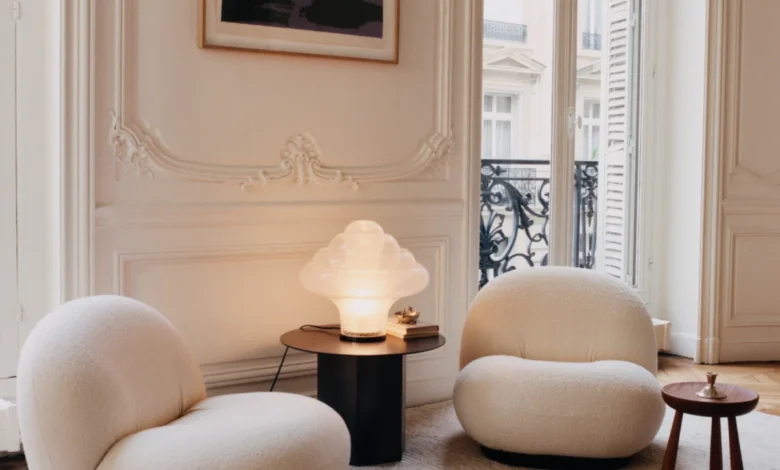
The revival of mid-century design classics has become a defining movement within contemporary interior architecture, bridging the gap between historical craftsmanship and modern living requirements. Italian design house Gubi has officially brought back into production one of the most sought-after lighting fixtures of the late 1960s: the LT305 sculptural table lamp, universally known to collectors as the "Lotus lamp." Originally conceived in 1969 by visionary Italian glassmaker and designer Carlo Nason, the lamp spent only a brief window in commercial production before fading into the archives, subsequently building a dedicated cult following among vintage furniture collectors.
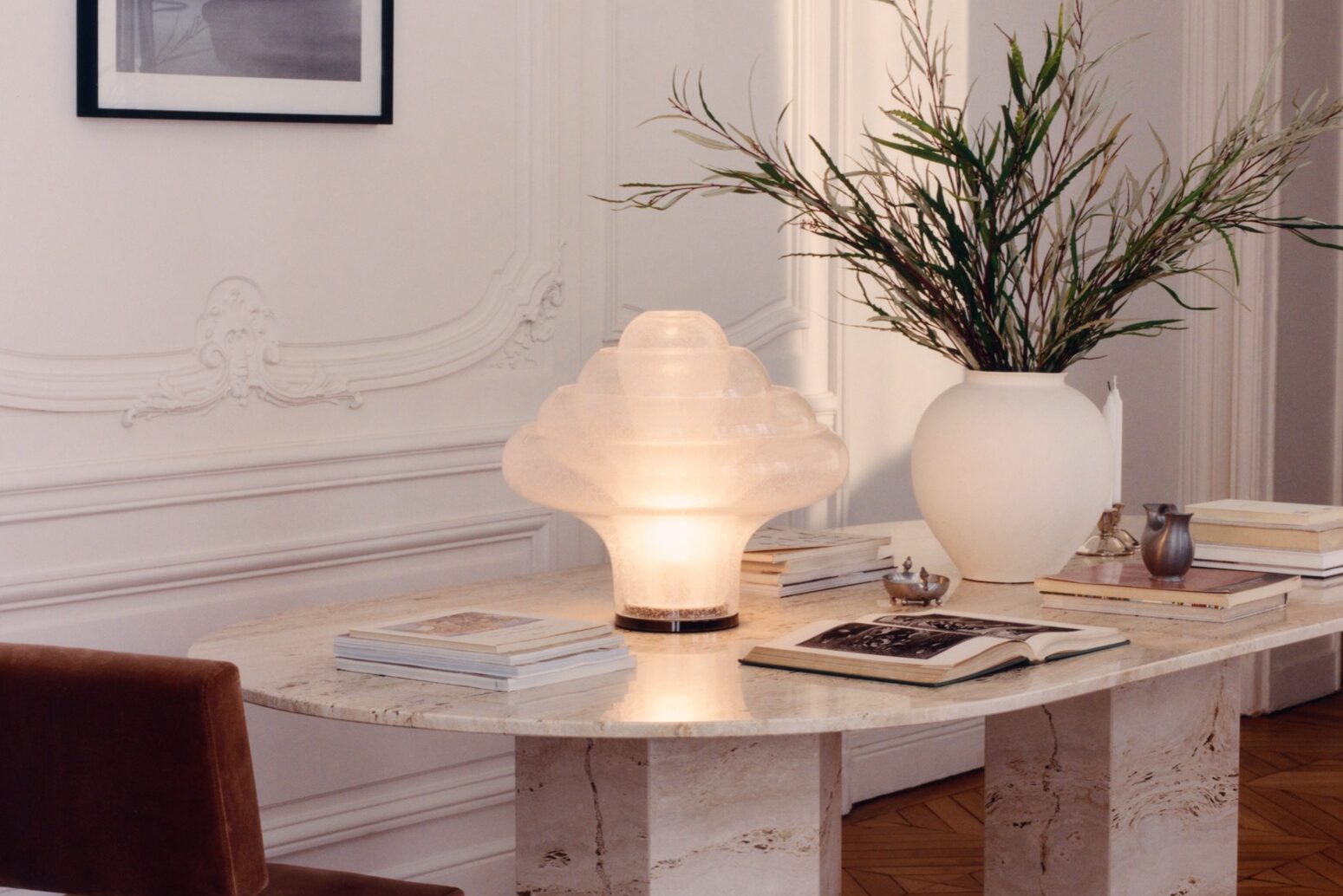
This modern reissue arrives at a poignant time for design history, following the passing of Carlo Nason earlier this year. Developed in close collaboration with the designer’s son, Alberto Nason, the reintroduced Lotus table lamp honors the late artisan’s legacy while introducing subtle engineering enhancements designed for contemporary households. By merging heritage Murano glass traditions with modern functional durability, Gubi has positioned the architectural fixture to captivate a new generation of design enthusiasts.
The Origins of a Masterpiece: Carlo Nason and Murano Traditions
To understand the enduring significance of the Lotus lamp, one must examine the lineage and pioneering spirit of its creator. Carlo Nason was born into a distinguished family of master glassmakers on Murano, the island off the coast of Venice globally synonymous with the art of fine glassblowing. Growing up immersed in centuries-old techniques, Nason acquired an intimate mastery of material, heat, and form.
However, while his contemporaries and ancestors largely focused on producing traditional, highly ornate decorative objects, Nason harbored a progressive vision. Influenced by the burgeoning global interest in industrial design and the boundary-pushing aesthetics of the 1960s Space Age movement, Nason sought to channel his ancestral craft into streamlined, architectural, and contemporary forms.
When the LT305 debuted in 1969, it represented a radical departure from conventional lighting. Its bulbous, organic silhouette echoed the futuristic design language of the era, yet its construction demanded rigorous traditional handcraftsmanship. Despite its striking visual impact, commercial manufacturing shifts and changing market conditions meant the lamp remained in production for only a brief period, inadvertently cementing its status as an elusive holy grail for vintage collectors worldwide.
Anatomy of Light: Craftsmanship and the Pulegoso Technique
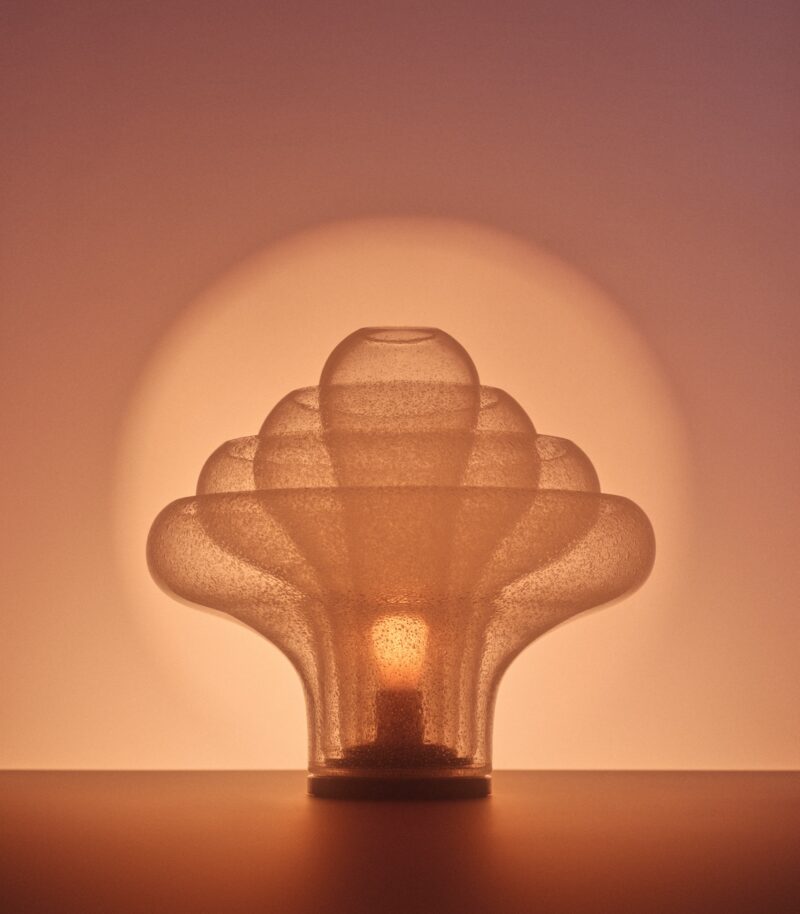
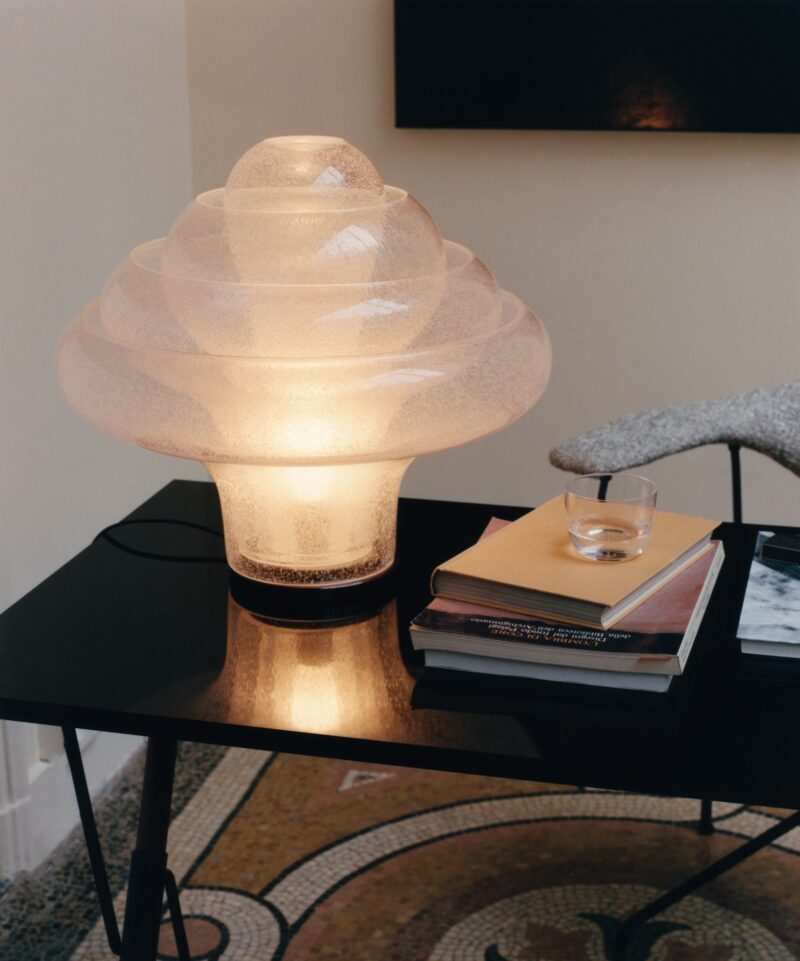
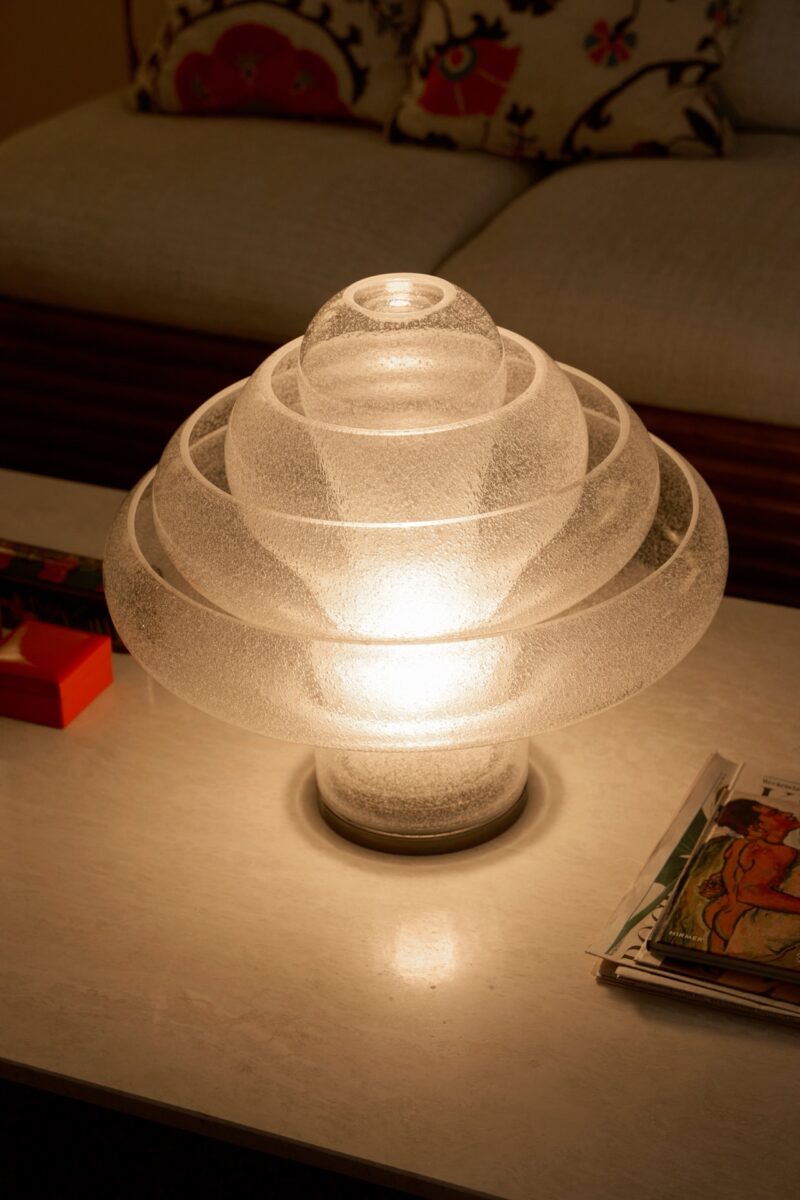
At the heart of the Lotus lamp’s aesthetic and tactile appeal is its complex, multi-layered construction. The fixture is composed of four distinct, mouth-blown glass shades nested precisely one inside the other. This layered arrangement creates a sculptural profile reminiscent of a lotus flower in full bloom, lending the object an undeniable architectural presence even when unilluminated.
The manufacturing process relies heavily on a specialized Murano glassmaking technique known as pulegoso, which was originally developed in the 1920s. By introducing small, controlled air bubbles into the molten glass during the blowing process, artisans achieve a distinctive textured, semi-opaque finish. This intentional bubbling creates a dynamic sense of depth, diffusing light in a manner that completely obscures the internal bulb while eliminating harsh glares and sharp shadows.
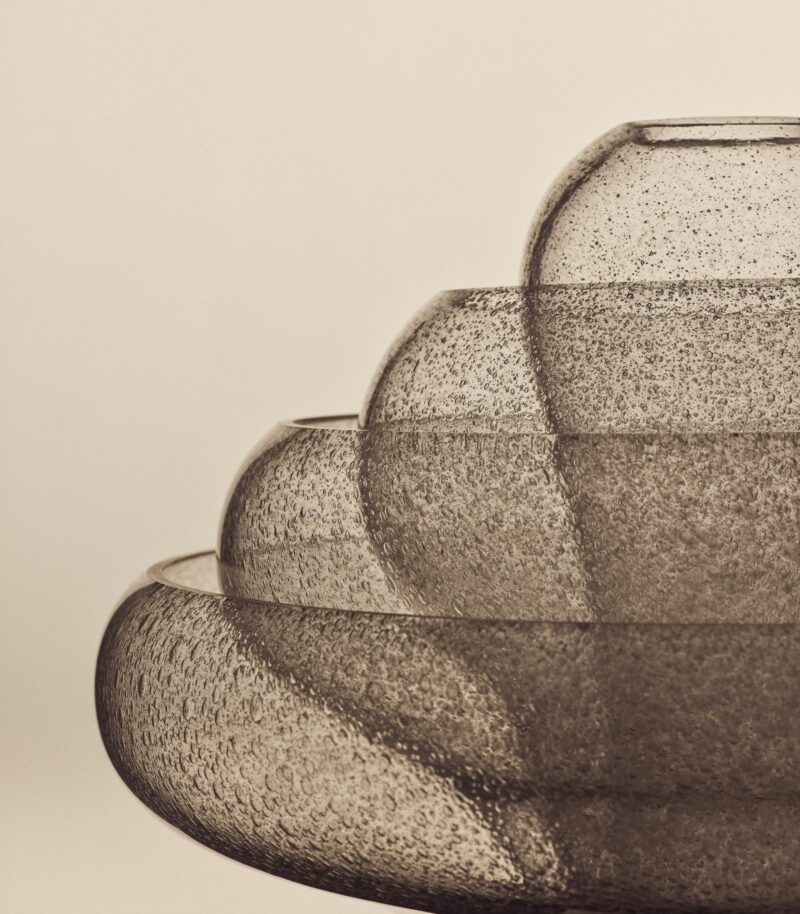
The outer curves of the fixture feature a single layer of glass, exhibiting a delicate transparency that contrasts beautifully with the opaque, overlapping central core. Because each of the four shades is individually mouth-blown, natural variations occur in both the glass thickness and the distribution of the internal bubbles. Consequently, no two Lotus lamps are entirely identical, imbuing every production unit with a distinct individual character.
Engineering for the Modern Era: Bridging Past and Present
While Gubi’s reissue remains rigorously faithful to Carlo Nason’s original 1969 specifications and visual expression, the brand implemented deliberate, discreet refinements to enhance everyday functionality.
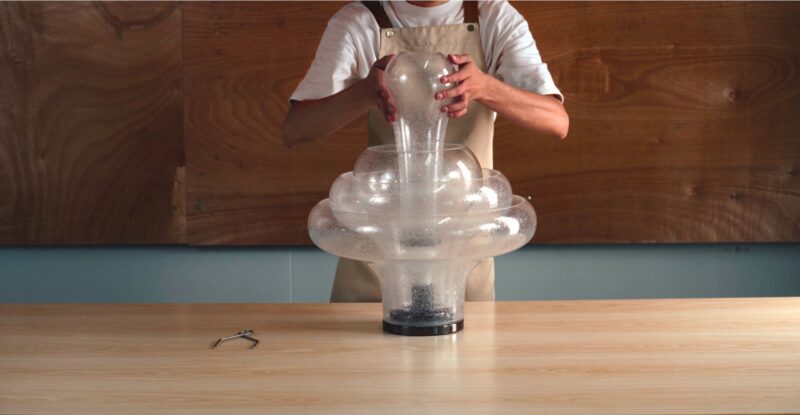
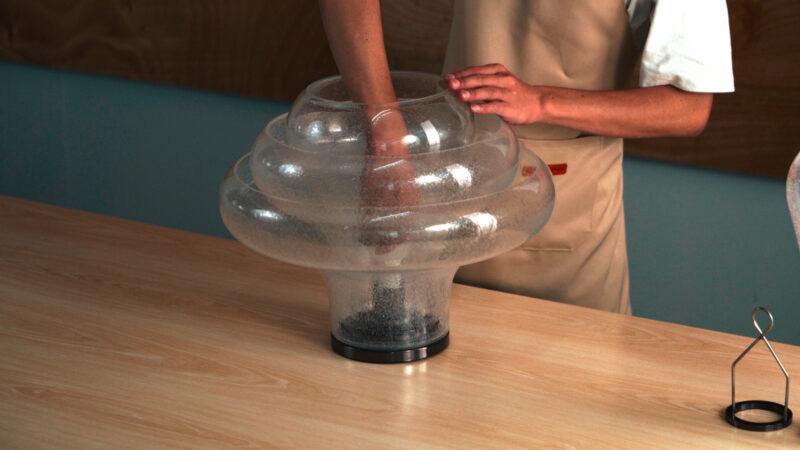
In close partnership with Alberto Nason, Gubi’s product development team re-engineered the lamp’s internal steel base. This component houses the bulb socket and secures the four heavy glass shades. The updated structural engineering provides significantly greater stability, addressing potential tipping concerns inherent to large glass sculptures. Furthermore, the redesigned base simplifies the process of disassembling the fixture, making routine maintenance, such as cleaning the interior glass layers and replacing lightbulbs, markedly more accessible for everyday users.
Marie Kristine Schmidt, CEO of Gubi, emphasized that these alterations were executed with the utmost respect for the original design intent. According to Schmidt, a piece must possess a strong identity, a distinct point of view, and enduring relevance to earn a place within the Gubi collection. The official adoption of the moniker "Lotus lamp"—a name bestowed by collectors decades prior—reflects the brand’s dedication to honoring the cultural narrative already built around the object.
Broader Implications for the Design Market and Archival Reissues
The re-release of the Lotus table lamp underscores a broader economic and cultural trend within the high-end interior design sector: the strategic revitalization of archival mid-century lighting. As architectural tastes lean increasingly toward organic minimalism, biomorphic forms, and artisanal authenticity, design brands are looking to mid-century Italian modernism for inspiration.
The market for authenticated vintage lighting has experienced exponential price inflation over the past decade, driven by limited supply and surging demand from global collectors. Reissues executed with archival integrity—such as Gubi’s undertaking with the Nason family—serve to democratize access to historically significant objects while protecting the integrity of the original design. By providing a safe, compliant, and structurally refined alternative to fragile vintage specimens, manufacturers allow a wider audience to experience museum-quality design within residential spaces.
Furthermore, the timing of the release imbues the product with profound emotional resonance. Following Carlo Nason’s passing earlier this year, the collaboration between Gubi and Alberto Nason acts as a living monument to the patriarch’s contributions to modern glass art.
A Lasting Legacy in Bloom
For Alberto Nason, the commercial availability of his father’s masterpiece is a source of immense pride. He notes that the lamp possesses a quiet, tactile magic, where light behaves almost as a physical material, revealing new dimensions the longer one observes it.
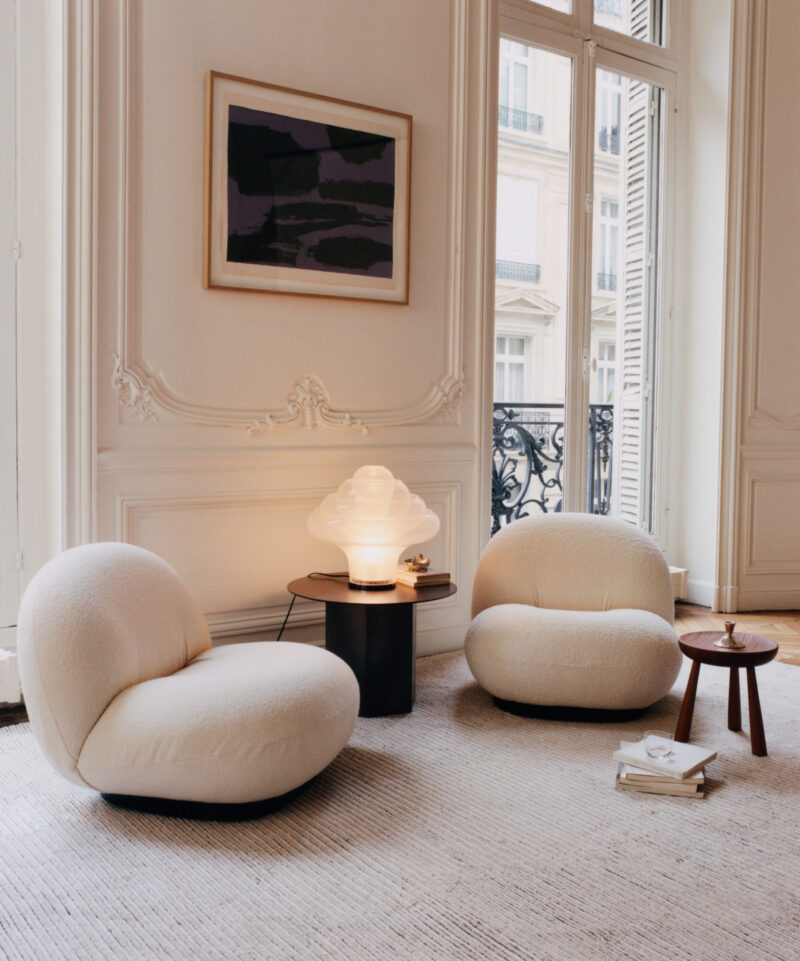
As the design world continues to embrace pieces that tell a compelling story, the Lotus table lamp stands ready to stake its claim in modern interiors. By fusing the heritage of Murano glassblowing with thoughtful modern engineering, Gubi has ensured that Carlo Nason’s visionary 1969 creation will continue to illuminate spaces—and inspire awe—for decades to come. The Lotus is, fittingly, back in bloom.