Meta issues formal apology to No Kings Coalition following controversial account suspension during nationwide demonstrations

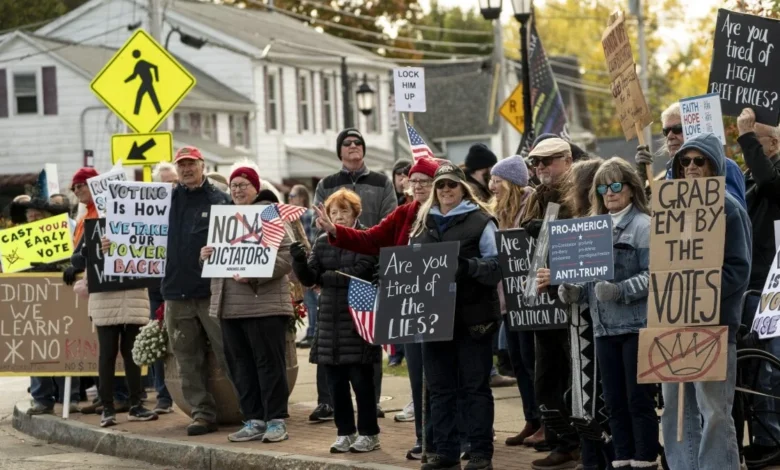
The social justice advocacy group No Kings Coalition saw its primary communication channel on Instagram abruptly shuttered on October 17, sparking a wave of public backlash and renewed scrutiny regarding Meta’s automated content moderation policies. The outage, which occurred during a critical weekend of nationwide civic engagement and voter mobilization efforts, prompted a swift, albeit delayed, response from Meta. The tech conglomerate acknowledged the suspension was an "incorrect enforcement" action, attributing the error to internal automated protections that misidentified legitimate traffic as a malicious bot attack.
This incident, which lasted approximately 90 minutes, has reignited long-standing concerns among civil rights groups, digital activists, and transparency advocates regarding the opacity of social media algorithms. As the No Kings Coalition continues to organize around historic protests and midterm election participation, the timing of the suspension has prompted questions about whether Meta’s reliance on high-frequency, automated monitoring systems is inadvertently suppressing legitimate political discourse.
A Chronology of the Disruption
The events of October 17 unfolded in the shadow of widespread national mobilization. According to representatives from the No Kings Coalition, the organization noticed a sudden loss of access to their Instagram account during the peak of their weekend programming. The suspension occurred at a time when the group was actively coordinating voter activations and managing live updates for nationwide protests.
For the organizers, the timing was not merely inconvenient; it was viewed as an existential threat to their ability to communicate with their base. Despite the account being restored after roughly an hour and a half, the coalition reported that administrative access remained compromised for a period, preventing them from posting updates or interacting with followers during a time-sensitive window.
Meta’s explanation, provided via a statement from spokesperson Andy Stone, pointed toward an external factor: a third-party tool powered by Claude that was allegedly scraping or accessing the platform at a frequency that triggered the company’s anti-bot protocols. Meta claims that "abrupt, high-volume" requests resembled the behavior of automated spam scripts, forcing their security systems to quarantine the account to prevent potential platform exploitation.
The Role of Automated Enforcement
The incident highlights the inherent tension between protecting platform integrity and preserving freedom of expression. Meta utilizes sophisticated, machine-learning-driven tools to combat the proliferation of bots, misinformation, and spam. These systems are designed to operate at scale, analyzing millions of data points per second to identify suspicious patterns, such as sudden spikes in profile visits, comment volume, or hashtag usage.
However, the "false positive" experienced by the No Kings Coalition underscores the limitations of such technology. When automated systems lack the nuance to distinguish between a coordinated bot network and a rapidly mobilizing grassroots movement, the results can be detrimental to civil society. In this instance, the algorithm viewed the coalition’s high engagement as a security threat rather than organic community interaction.
Critics argue that Meta’s reliance on these systems creates a "black box" environment where organizations are punished without warning or a clear path to appeal. For the No Kings Coalition, the primary challenge was the lack of immediate recourse; even after the platform identified the error, the restoration of full administrative privileges was delayed, extending the duration of the organization’s silence.
Broader Implications and Public Reaction
The backlash to the suspension was immediate. Ally organizations, including the League of Women Voters, utilized their own platforms to demand accountability from Meta. In an Instagram post dated October 18, the League highlighted the broader implications of such actions: "The timing matters. When people are gathering, organizing, and seeking information about civic participation, cutting off a movement’s primary communication channel—even temporarily—is deeply troubling."
This sentiment reflects a growing anxiety among advocacy groups that social media platforms—once hailed as the "town squares" of the 21st century—are becoming increasingly hostile to social justice work. The League’s statement underscores a critical point: in the digital age, a 90-minute blackout can effectively disenfranchise voters by stripping away the information infrastructure required to organize and execute civic duties.
Patterns of Alleged Censorship
The No Kings Coalition incident is not an isolated event. Over the past several months, Meta has been embroiled in multiple controversies concerning its moderation practices. Feminist organizations recently accused the company of suppressing content related to the Cornell sexual assault case, alleging that Meta’s filters were disproportionately targeting posts discussing sensitive gender-based violence.
Furthermore, these incidents occur against a backdrop of long-standing grievances from the reproductive health and LGBTQ+ advocacy communities. For years, these groups have claimed that their pages are subject to "shadow-banning"—a practice where visibility is restricted without explicit notification—or removal for content that falls within the bounds of community standards. Many of these groups contend that their posts, which often include educational material or personal accounts of discrimination, are flagged as "inappropriate" or "hateful" by algorithms that fail to account for context.
The 2025 Policy Shift
A significant factor contributing to this climate of distrust is Meta’s 2025 decision to scale back certain hateful conduct protections. This policy shift, which involved removing or loosening specific safeguards on its platforms, was widely interpreted as a capitulation to external political pressure, specifically the anti-DEI (Diversity, Equity, and Inclusion) efforts championed by the Trump administration.
Industry analysts note that when a platform reduces its focus on protected speech and diversity-related content, the remaining automated moderation tools often default to more restrictive, conservative settings. This creates a environment where, ironically, the very groups that were supposed to be protected by robust policies are now the ones most likely to be swept up in erratic, algorithm-driven enforcement actions.
Data and Transparency: The Path Forward
Meta’s apology to the No Kings Coalition was a necessary step, but for many, it is insufficient to address the underlying structural issues. The company has yet to release a full audit detailing exactly how the Claude tool triggered such a drastic response or why the restoration of administrative access took as long as it did.
Data transparency remains a core demand for civil rights groups. Without access to the logic governing these automated tools, organizations are forced to operate in a state of perpetual vulnerability. Experts suggest that Meta should consider implementing a "human-in-the-loop" requirement for account suspensions of verified advocacy groups, particularly during election cycles or periods of national unrest. By introducing a manual review step for high-profile accounts, the company could mitigate the risk of these technical "false positives" interfering with democratic processes.
The Future of Digital Activism
As the midterms approach, the ability to organize effectively online will remain a cornerstone of American political life. The incident with the No Kings Coalition serves as a stark reminder of the fragility of that power. When social media platforms serve as the primary conduits for protest and political discourse, the technical decisions made by a handful of engineers in Menlo Park carry the weight of real-world civic impact.
Meta’s statement that it wants to "reiterate our sincere apology for the error" is a formal acknowledgment of the mistake, but it does little to alleviate the concern that such errors are inevitable under the current algorithmic regime. For now, the No Kings Coalition and their peers continue to operate with a heightened awareness that their digital presence is subject to the whims of an automated system that is, by the company’s own admission, prone to catastrophic misinterpretation.
The path forward for Meta involves a delicate balancing act: maintaining a secure platform that is free from genuine bot interference while ensuring that the vibrant, messy, and necessary work of democratic activism is not silenced by the very tools built to protect it. Whether the company will move toward greater transparency or continue to rely on the current, opaque system of automated enforcement remains the central question for the future of digital advocacy. As of late October, the No Kings Coalition remains active, but their experience remains a cautionary tale for any organization relying on the stability of social media for its mission-critical communications.
Related posts: