Pathway Introduces BDH-CQ: A Breakthrough Reasoning Model That Bypasses Intermediate Thought Tokens Through Recurrent Latent Memory


The landscape of artificial intelligence research is experiencing a structural shift as scientists increasingly challenge the necessity of human-readable text generation for complex machine reasoning. For years, state-of-the-art large language models (LLMs) have relied heavily on explicit "chains of thought," translating every step of an internal logic problem into serialized text tokens before arriving at a final output. While this methodology has driven significant advancements in fields like coding, mathematics, and logic puzzle resolution, it introduces severe bottlenecks in terms of compute time, memory consumption, and system latency.
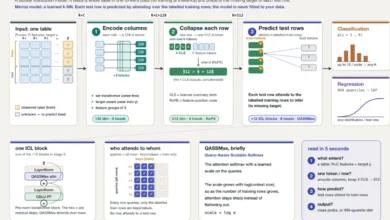
Addressing these foundational constraints, researchers at Pathway—in collaboration with industry peers—have developed and unveiled BDH-CQ, an advanced reasoning model designed to execute in-context learning entirely without generating intermediate thought tokens. By integrating rapid in-context adaptation with recurrent latent memory, BDH-CQ updates its internal state to digest demonstrations dynamically at inference time, processes the underlying problems within a continuous hidden workspace, and decodes solely the final answer. This paradigm points toward a future where artificial intelligence systems can reason with human-like adaptability while avoiding the massive computational overhead characteristic of modern inference-scaling techniques.
Background and the Evolution of Latent Reasoning
To understand the magnitude of the BDH-CQ development, it is necessary to examine how modern reasoning models function. Conventional architectures operate autoregressively, processing information one token at a time. When challenged with a difficult problem, models like OpenAI’s o3-mini or DeepSeek-R1 generate extended sequences of intermediate reasoning tokens. This acts as a cognitive scratchpad, projecting every thought step into the model’s vocabulary.
While this technique has proven effective, it binds computation strictly to a serial channel. Every hypothesis, alternative path, and constraint check must be compressed into a linear text sequence. This mechanical constraint creates several distinct disadvantages:
- Escalating Latency: As reasoning traces grow longer, response times increase exponentially.
- Token Bloat: Massive amounts of compute are wasted generating internal deliberations that end-users do not actually need to see.
- Semantic Limitations: As Zuzanna Stamirowska, CEO of Pathway, noted in recent discussions, treating language as the fundamental substrate for computation forces models to verbalize abstract concepts that may be better represented continuously.
Latent reasoning bypasses these hurdles entirely. Instead of serializing every micro-step into a token, a latent reasoning model repeatedly adjusts its internal hidden representations, exploring multiple potential paths simultaneously within a continuous space. Systems like Coconut and various looped Transformer designs have previously experimented with this concept, gradually replacing text-based chains of thought with continuous vectors. However, these earlier architectures historically struggled with flexible task acquisition—the ability to learn a brand-new task dynamically from a few prompt-provided examples without requiring intensive parameter optimization or retraining. BDH-CQ successfully bridges this gap by merging in-context learning capabilities with deep recurrent latent processing.
From Dragon Hatchling (BDH) to BDH-CQ
The technological foundation of BDH-CQ rests upon Pathway’s proprietary Dragon Hatchling (BDH) architecture. Unlike a traditional autoregressive Transformer, which processes sequences via dense global attention mechanisms, BDH fundamentally alters how information flows through a neural network. The architecture relies heavily on high-dimensional positive activations driven by Rectified Linear Unit (ReLU) functions, low-rank communication pathways, and a persistent recurrent associative state.
In a standard Transformer, the model processes a context window, predicts a token, appends it, and repeats the cycle. BDH, by contrast, maintains a massive internal feature space where information is stored as distributed patterns of active features. Lower-dimensional transformations manage communication between different segments of this space, while a persistent recurrent state ensures that historical context is preserved without requiring every computational iteration to be converted into an emitted token.

The efficacy of the underlying BDH framework was previously demonstrated in rigorous constraint-satisfaction benchmarks. In prior evaluations focusing on extreme Sudoku puzzles, a BDH-based system achieved an astonishing 97.4% solve rate across approximately 250,000 extreme-difficulty puzzles. By contrast, prominent commercial reasoning models—including OpenAI o3-mini and DeepSeek R1—scored 0% on the exact same benchmark. Sudoku serves as an ideal stress test for recurrent architectures because it requires the continuous tracking of intersecting constraints and the iterative refinement of candidate solutions before committing to a final grid layout.
BDH-CQ extends this robust capability by introducing a dual-interface system that systematically decouples two distinct cognitive phases: learning what the task requires and executing the solution.
Mechanism of Action: The Two-Phase Cognitive Workspace
The architecture of BDH-CQ splits the reasoning process into two cleanly separated workspaces, resolving a major inefficiency found in standard LLM prompting:
- The Contextual Memory State: When presented with few-shot demonstrations (such as input-output visual pairs), BDH-CQ processes them sequentially. Crucially, the model’s underlying parameters do not change. Instead, each demonstration dynamically alters and imprints upon the recurrent contextual memory state, effectively teaching the model the "rules of the game" on the fly.
- The Latent Workspace: Once the rules are established in memory, the target query enters a separate, structured latent workspace. Here, the model iterates repeatedly while conditioning itself on the contextual memory, exploring transformations and testing hypotheses in continuous space before finally decoding the polished output.
This design was rigorously tested on the Abstraction and Reasoning Corpus for Artificial General Intelligence (ARC-AGI-1), a widely recognized benchmark designed to measure an AI’s ability to acquire new skills from minimal visual examples.
Benchmark Performance and Cost Efficiency
In evaluations utilizing the ARC-AGI-1 benchmark, a compact 150-million-parameter BDH-CQ model achieved a 29.5% success rate under a pass@2 metric. While raw accuracy figures are compelling, the true breakthrough lies in the computational cost required to achieve them.
The 150M-parameter model consumed approximately 0.85 H200 GPU-seconds per task. Based on estimated enterprise cloud hardware pricing of $3 per H200-hour, the computed inference cost amounted to a mere $0.00070 per task. According to Pathway researchers, this places BDH-CQ well beyond the previously established cost-accuracy Pareto frontier for the ARC-AGI benchmark.
Further experimental analysis revealed striking insights into how the model handles specific classes of abstract reasoning:
- Color Mappings and Boundary Propagation: When tested on tasks involving novel color mappings, the model successfully solved 100% of held-out sequences (96 out of 96), even when handling eight simultaneous color bindings. Similarly, boundary propagation and copying tasks maintained a perfect 48/48 success rate as distance and target sites scaled upward.
- Compositional Limitations: Performance varied when tasks required complex structural composition. While rotation combined with relocation achieved a flawless 72/72 score, reflection combined with relocation dropped to 47/72. Furthermore, object-sorting tasks maintained high accuracy up to five objects before experiencing sharp performance degradation as complexity increased.
- Consistency Constraints: On the ConceptARC dataset, the model achieved a 77.92% pass@2 score on individual test pairs, but this metric fell to 59.38% when a task was evaluated strictly on the condition that all three test inputs had to be simultaneously correct.
Implications for Agentic Engineering and Enterprise AI
Beyond standalone puzzle benchmarks, the integration of persistent recurrent memory carries profound implications for the broader ecosystem of AI agent engineering.

Current enterprise agent workflows are notoriously cumbersome. Because traditional LLM calls possess no inherent long-term memory of prior states, developers are forced to build elaborate external infrastructures. Agent systems must continually retrieve conversation histories, maintain external vector databases, summarize legacy contexts, compress prompts, and constantly re-inject vital instructions at every single step of a workflow.
Zuzanna Stamirowska emphasized the operational burden this places on software developers. In standard agentic loops, latency and token usage inflate rapidly not because a task inherently demands it, but because the system must repeatedly reconstruct what the model already learned in previous interactions.
By shifting from ephemeral token-based context reconstruction to persistent model state, architectures like BDH-CQ could radically streamline agent engineering. While retrieval-augmented generation (RAG) will remain necessary for accessing real-time, external documentation, persistent internal states could drastically minimize the infrastructure required to remind an AI of rules, tool traces, and procedural histories it has already processed.
Future Outlook and Commercial Roadmap
Despite its impressive early metrics, BDH-CQ remains in its developmental stages. The current research focuses predominantly on visual grid puzzles via ARC-AGI, leaving the translation of this architecture to complex natural language, advanced mathematics, and agentic software engineering as future milestones. Furthermore, historical concerns regarding recurrent neural networks—such as vanishing gradients and optimization hurdles—mean that scaling the architecture to trillion-parameter tiers will require rigorous stress-testing. Pathway researchers have noted that the model inherits tensor-sharding patterns from BDH that align well with modern distributed training paradigms, indicating strong potential for large-scale deployment.
For enterprise developers eager to experiment with the technology, immediate open-source availability is not planned. Pathway has chosen to keep the underlying model weights, full training code, and exact update recipes proprietary for the time being. Instead, the company is rolling out the technology via a phased commercial roadmap.
The rollout will transition progressively from closed design partnerships to a research-preview API, followed by public beta testing and eventual general availability. This commercial strategy will allow organizations to leverage the unprecedented speed and efficiency of latent reasoning models without exposing core intellectual property.
As the artificial intelligence sector matures, the dichotomy between token-driven generation and latent computation is likely to resolve into a hybrid ecosystem. While fully autonomous latent models will handle heavy backend processing, constraint satisfaction, and rapid in-context adaptation with near-zero latency, they will seamlessly interface with human-readable language components whenever clear explanations, verifications, or tool interactions are required. BDH-CQ represents a crucial foundational step toward that unified future.