The Enduring Legacy of Battery Compatibility: Why Camera Form Factors Matter More Than Specs

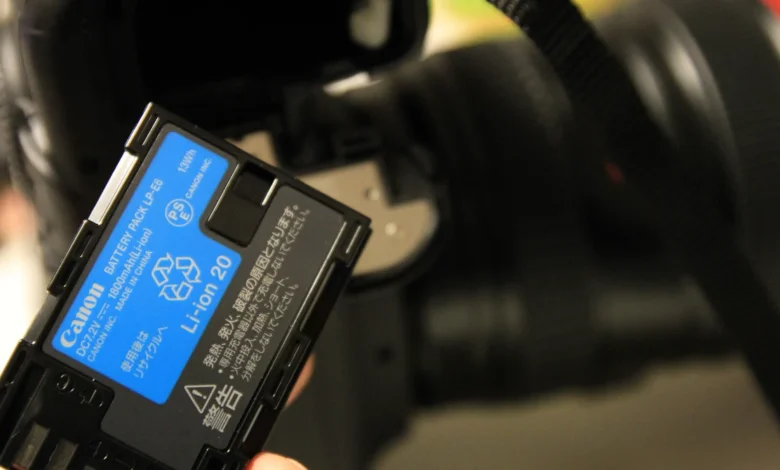
When a photographer purchases a Canon EOS R7 today, the included manual reveals a detail often overlooked in the high-octane world of camera marketing: the camera is compatible with the LP-E6P, LP-E6NH, LP-E6N, and the original LP-E6 battery packs. The inclusion of the LP-E6, a cell that first arrived with the EOS 5D Mark II in November 2008, represents a remarkable feat of industrial design. Nearly two decades after its introduction, a battery intended for the early days of high-definition DSLR video continues to power modern, AI-driven mirrorless systems. This continuity, a rarity in an industry defined by rapid technological turnover, serves as a testament to the value of standardized engineering, yet it is a metric almost never discussed in contemporary gear reviews.
A Seventeen-Year Evolution of Energy
Canon’s commitment to the LP-E6 lineage is not merely a matter of convenience; it is a calculated engineering choice. Over the past 18 years, the company has released four distinct versions of the battery, yet the physical housing has remained identical. The original LP-E6 offered a capacity of 1,800 mAh. By 2014, the LP-E6N arrived alongside the EOS 7D Mark II, boosting capacity slightly to 1,865 mAh. The July 2020 launch of the EOS R5 and R6 brought the LP-E6NH, which utilized the same footprint to reach 2,130 mAh. Finally, the LP-E6P, debuting with the EOS R5 Mark II in 2024, maintained that 2,130 mAh capacity but introduced a critical internal change: a maximum continuous discharge current of 6 A, necessitated by the power-hungry demands of modern stacked sensors and high-speed processing chips.
Total capacity growth across this 18-year period has been a modest 18 percent. While critics might view this as stagnation compared to the exponential leaps in sensor resolution, autofocus tracking, and processor speeds, it is, in reality, a deliberate strategy. By refusing to redesign the battery envelope, Canon has ensured that legacy charging systems, such as the LC-E6 and LC-E6E, remain functional. It has allowed the battery door mechanism to remain a constant and has permitted the use of accessories like the BG-R10 battery grip across multiple generations of camera bodies.
The Industry Standard: Nikon and Beyond
While Canon’s consistency is often touted as a unique virtue in online photography forums, it is not an isolated phenomenon. Nikon has demonstrated a similar commitment to its user base through the EN-EL15 series. First introduced in September 2010 with the D7000, the EN-EL15 has undergone three revisions, yet it remains the backbone of Nikon’s power strategy. The current EN-EL15c is backward compatible with an extensive list of hardware, spanning from the legendary D850 DSLR to the cutting-edge Z8 and Z6III mirrorless bodies.
This cross-generational compatibility—spanning the transition from the F-mount DSLR ecosystem to the Z-mount mirrorless platform—mirrors Canon’s EF-to-RF transition. Pentax, too, has maintained its D-LI90 form factor since the introduction of the K-7 in 2009. These examples highlight a quiet, functional pact between manufacturers and professionals: the recognition that a stable, reliable power ecosystem provides more long-term value to a working photographer than marginal gains in energy density. Companies that have chosen to break their form factors, such as Sony with the shift from the NP-FW50 to the NP-FZ100, have essentially forced their loyal customers to re-invest in their entire power infrastructure, effectively increasing the hidden cost of ownership.
The Reality of Diminishing Compatibility
However, this continuity is a "ratchet," not an infinite promise. As camera technology advances, the physical constraints of older batteries inevitably clash with the requirements of new hardware. Canon’s latest manuals for the EOS R5 Mark II and R6 Mark III include complex compatibility matrices. These tables categorize power sources into tiers: fully functional, partially functional, or incompatible.
The original 2008 LP-E6, for instance, has finally reached the end of its road, marked as incompatible with the latest generation of R-series bodies. Even the LP-E6NH and LP-E6N, while still usable, often trigger performance limitations. Users may find themselves unable to access high-speed burst rates, specific 8K video modes, or advanced wireless connectivity features when using these older packs. A notable incident occurred at the launch of the R5 Mark II, where initial firmware restricted 24p recording with older batteries. Following immediate industry backlash, Canon released a firmware update (version 1.0.2) to restore this functionality, proving that some restrictions are software-based rather than purely electrical.
The physical reality, however, is immutable. The higher power draw of a stacked sensor or an external cooling fan requires a higher current discharge rate. As a result, older batteries are increasingly demoted to "secondary" status—useful for general photography but incapable of powering the full feature set of a flagship camera. This represents a natural lifecycle for hardware: batteries remain useful until the power demands of the camera body exceed the physical ceiling of the cell’s internal design.
Financial and Environmental Implications
The economic impact of a form-factor change is often underestimated by hobbyists but acutely felt by professional rental houses and working photographers. If a photographer has a collection of eight batteries accumulated over a decade, a sudden change in form factor represents an immediate, non-discretionary expenditure of roughly $640. In the context of a professional career, that is the cost of a high-quality lens or a significant software subscription.
Furthermore, the environmental argument for stability is compelling. Camera batteries are complex, high-density lithium-ion devices that cannot be easily recycled in municipal systems. When a manufacturer maintains a form factor, it extends the useful life of every battery currently in circulation. When a manufacturer changes the shape, they effectively accelerate the obsolescence of existing stock, pushing functional units into the secondhand market or, worse, into hazardous waste streams prematurely. Stability, therefore, is an environmentally responsible choice that aligns with the user’s financial interests.
Shifting the Review Paradigm
Despite the obvious importance of power ecosystems, current industry reviews rarely provide more than a cursory glance at battery specifications. Most technical breakdowns focus on CIPA ratings—the standardized measure of how many shots a camera can take per charge—which are often poor predictors of real-world performance.
A more useful metric for the professional buyer would be a clear assessment of long-term compatibility. Prospective buyers should look beyond the marketing gloss and consult the "Power Accessory Compatibility" section of the camera manual. This is where the true story of the camera’s lineage is told. Whether a battery is a "fully functional" unit or a "restricted" legacy pack provides a clearer picture of the manufacturer’s commitment to its user base than any single spec-sheet line item.
As of late 2025, with the launch of the EOS R6 Mark III, the industry appears to be reaching a turning point. The formal retirement of the 2008-era LP-E6 cell in the latest documentation serves as a reminder that even the longest-running standards must eventually sunset. Yet, the fact that a 17-year-old battery was even considered in the design phase of a 2025 camera is a testament to the longevity of thoughtful engineering. For the working photographer, this continuity remains one of the few stable pillars in an industry defined by relentless, high-speed change. While the "ratchet" eventually moves forward, the value of those seventeen years of consistency remains a rare and significant asset in the professional’s kit.