Navigating the Link-in-Bio Dilemma: SproutLink vs. Linktree in Modern Social Media Strategy


Social media marketers and digital creators constantly face a foundational friction point: transforming ephemeral engagement—such as viral Reels and dynamic carousel posts on Instagram—into measurable website traffic, lead generation, and direct revenue. With Meta continuing to restrict clickable caption links exclusively to Meta One subscribers, the digital real estate of a brand’s social media bio has become immensely valuable. Yet, natively, platforms typically limit creators to a handful of uniform URLs, forcing a tedious cycle of manually swapping out landing pages every time a new piece of content goes live. To resolve this logistical bottleneck, link-in-bio solutions have evolved from rudimentary list-holders into sophisticated, dynamic traffic-routing engines. Among the market options, Linktree has long reigned as the pioneer of the category, while Sprout Social’s proprietary SproutLink offers deep integration directly within a broader enterprise publishing workflow. Evaluating these two systems requires a careful examination of workflow efficiency, pricing structures, analytical capabilities, and overarching organizational needs.
The Evolution of Social Media Traffic Management and the Bio Link Bottleneck
The historical trajectory of social media marketing is defined by platforms locking users inside walled gardens. For years, the inability to include outbound links in standard organic posts necessitated workarounds like "link in bio." However, as digital marketing matured from casual brand awareness to performance-driven ROI tracking, the limitations of static single-link profiles became glaringly apparent. Brands no longer wanted to send all traffic to a single, generalized landing page; they needed contextual routing where a specific post about a new product collection seamlessly funnels users directly to that exact product page.
Linktree entered this space years ago by offering a standalone, platform-agnostic landing page that consolidates infinite URLs under one digital umbrella. Its initial rise coincided with the explosive growth of Instagram and TikTok as primary discovery engines for e-commerce and publishing. Conversely, platform developers like Sprout Social approached the problem from an operational standpoint. Rather than treating link management as an isolated, standalone task, Sprout engineered SproutLink to embed destination URL attachment directly into the content creation and scheduling pipeline. This fundamental divergence in product philosophy—standalone specialization versus all-inclusive ecosystem integration—shapes how modern marketing teams approach their day-to-day operations.
Comparative Breakdown: Core Architecture and Workflow Integration

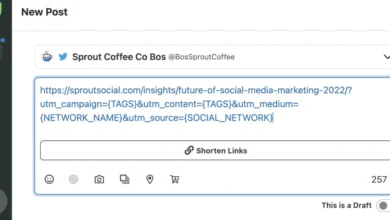
To understand the practical implications of choosing between SproutLink and Linktree, professionals must evaluate their day-to-day functional mechanics. SproutLink is built as an intrinsic feature of Sprout Social’s comprehensive social media management suite. When content creators draft a new post within the platform’s Compose window, they can simultaneously attach the corresponding destination URL. This integration extends retroactively, allowing teams to link existing posts without navigating to a separate third-party dashboard. SproutLink features a customizable landing page that can host custom call-to-action buttons, direct social profile links, and an optional clickable replica of the brand’s Instagram grid, supporting up to 1,000 linked posts.
Linktree, by contrast, operates as an independent software-as-a-service (SaaS) tool. It provides a simple, list-style landing page with an emphasis on ease of use and broad accessibility. Because it is platform-agnostic, Linktree serves as a centralized hub not just for Instagram, but across Facebook, TikTok, X (formerly Twitter), and LinkedIn. Furthermore, Linktree’s paid tiers include a built-in Social Planner that enables cross-platform content scheduling and auto-posting. This allows creators to synchronize when a post goes live with when its corresponding link becomes active in their bio, creating a largely automated workflow for independent operators.
Financial Commitments and Scalability for Businesses
Budgetary considerations often dictate the initial adoption of digital marketing tools, establishing a clear line between the target audiences of SproutLink and Linktree. Linktree employs a classic freemium model. It offers a robust free tier for basic link consolidation, while its paid plans start at an accessible price point of approximately $8 per month. This low barrier to entry makes Linktree exceptionally popular among individual creators, micro-influencers, and small businesses operating on tight margins.
On the other end of the spectrum, SproutLink is packaged within Sprout Social’s broader social media management platform, meaning it carries a higher financial commitment. Access to SproutLink begins with the platform’s starter tiers, such as the Sprout Essentials plan, priced at roughly $79 per seat per month. While this represents a significant investment compared to standalone link tools, industry analysts note that the cost covers an entire suite of enterprise-grade tools, including advanced publishing calendars, listening tools, and comprehensive reporting analytics. Consequently, organizations evaluating SproutLink are typically looking to consolidate multiple software subscriptions—such as a separate scheduler, analytics tracker, and link-in-bio tool—into a single unified dashboard.
User Sentiment, Review Aggregators, and Industry Feedback

Independent software review platforms provide valuable empirical insight into how these tools perform in real-world environments. Data aggregated from major review sites like G2 and Capterra reveals distinct usage patterns and satisfaction metrics. Linktree consistently scores exceptionally high in ease-of-use categories—often hovering around a 4.6 out of 5 stars—because it is purpose-built to execute a single function with minimal friction.
Sprout Social, meanwhile, captures user ratings that reflect the complexity and power of an entire enterprise platform. Reviewers on G2 and Capterra frequently grade Sprout Social across all its operational vectors, including customer service, listening, and multi-channel reporting, which naturally yields a slightly different score distribution relative to pure-play single-feature applications. Volume metrics on these review sites further illuminate the market segment differences: reviewers discussing Sprout frequently hail from mid-market to enterprise-level organizations managing complex, multi-person marketing teams.
Industry professionals frequently emphasize the productivity gains of integrated workflows. Alyssa R., a social media manager for a mid-market non-profit organization, highlights the operational necessity of consolidation for lean teams: "As a one-person social team, I need to maximize my productivity, and I rely on Sprout every day. Its features, such as SproutLink in bio, the ability to toggle a single post across multiple platforms and the AI Alt Text Generator, have helped me streamline my workflow."
Strategic Decision Framework: Which Tool Fits Your Brand?
Selecting the optimal link-in-bio strategy requires an honest internal audit of an organization’s structure, technical stack, and primary objectives. Marketing leaders should weigh specific operational criteria before committing capital.
Organizations should choose Linktree if they operate as independent creators, solopreneurs, or small businesses primarily needing a budget-friendly, highly specialized tool to manage basic bio links. Linktree is also the ideal choice for teams requiring a platform-agnostic solution that spans numerous diverse social networks beyond the Meta ecosystem, or those who desire ready-made aesthetic templates with minimal administrative setup.

Conversely, marketing teams and brands should invest in SproutLink if they are already utilizing—or looking to adopt—a comprehensive social media management platform to eliminate software fragmentation. It suits mid-to-large enterprises and growing brands that want to streamline their publishing workflows by attaching destination URLs at the exact moment of content creation. Furthermore, businesses that require granular, automated analytics tracking to attribute web traffic and revenue directly to specific social posts will find the integrated tracking architecture of SproutLink superior to manual URL management.
Implications for the Future of Social Media Marketing
As social media platforms continue to evolve their algorithmic distribution and monetization features, the friction between organic reach and website conversion will remain a central challenge for digital strategists. The ongoing debate between standalone micro-tools and all-in-one platform features reflects a broader maturation of the martech stack.
Ultimately, the choice between SproutLink and Linktree is not merely about where a URL is hosted; it is a foundational architectural decision regarding how a brand manages its entire digital footprint. Whether an organization prioritizes the nimble, low-cost accessibility of a dedicated link manager or the streamlined, data-rich efficiency of an integrated enterprise suite, aligning the tool with organizational scale and workflow capacity remains the definitive key to maximizing social ROI.