Hidden Costs of Compliance: How LLM Watermarking Alters AI Agent Behavior and Threatens System Reliability

The rapid adoption of artificial intelligence across corporate, government, and consumer ecosystems has intensified the demand for transparent and traceable synthetic content. Regulatory frameworks, most notably the European Union’s AI Act, increasingly mandate that providers of advanced machine learning systems implement robust, machine-readable indicators to identify AI-generated media. In response to these compliance pressures, major artificial intelligence labs—including Anthropic, which announced plans in August to integrate Google DeepMind’s SynthID-Text into future iterations of its Claude model family—have enthusiastically embraced token-level watermarking. The prevailing narrative promoted by technology providers is that these cryptographic and statistical signatures offer an invisible compliance layer, preserving the functional integrity, generation quality, and security posture of large language models without altering their operational output.
However, groundbreaking empirical research published by cybersecurity firm Lasso Security challenges this foundational assumption. By conducting a granular evaluation of Google DeepMind’s SynthID-Text framework across multiple open-weight foundation models, researchers identified a previously under-examined phenomenon termed “sampling drift.” While watermarking techniques successfully establish content provenance, the statistical modifications required to embed these markers actively interfere with token selection. Consequently, enabling a watermark alters tool selection accuracy, distorts argument generation, impacts safety refusal thresholds, and significantly magnifies vulnerability to prompt injection attacks. These findings introduce complex compliance trade-offs for enterprise developers, forcing organizations to weigh regulatory traceability against operational predictability and system safety.
Mechanics of Modification: Understanding Tournament Sampling and Entropy
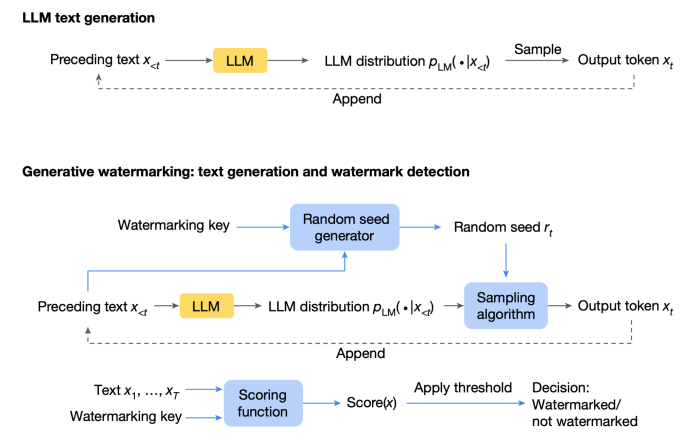
To comprehend why a provenance watermark disrupts agentic behavior, one must examine the probabilistic mechanics of autoregressive text generation. Standard large language models compute probability distributions for the next token in a sequence at each generation step. While high-probability tokens typically dominate predictable sentences, complex reasoning tasks often present multiple plausible alternatives. In machine learning theory, this uncertainty is quantified as entropy. When entropy is high, the model evaluates several structurally viable paths forward before a standard sampling algorithm picks the final token.

Google DeepMind’s SynthID-Text intervenes directly within this generative pipeline rather than appending post-hoc metadata or hidden characters to completed responses. It utilizes a strategy known as "tournament sampling." During this process, the model samples several candidate tokens from its native probability distribution and subjects them to competitive elimination rounds. Pseudorandom scores, generated via a secret cryptographic watermark key combined with recent token context, dictate which candidates advance. The ultimate winner of this tournament becomes the officially generated token, weaving a detectable statistical signature directly into the fabric of the text.
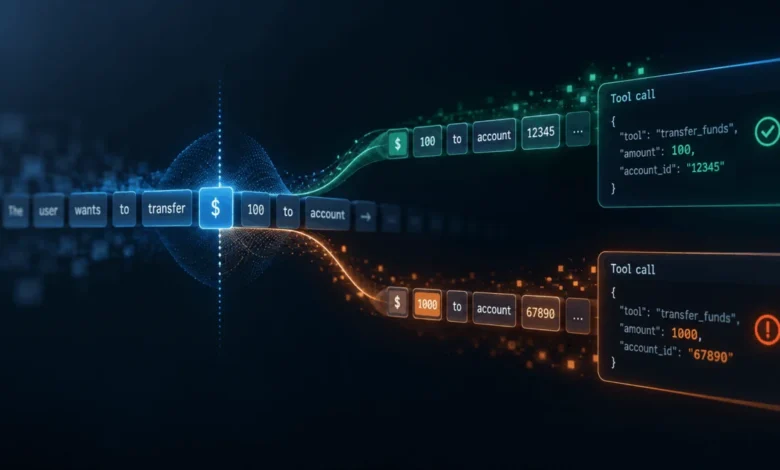
Google DeepMind’s internal validation—encompassing nearly 20 million live interactions with Gemini models—demonstrated that SynthID can be configured to mirror the model’s baseline token distribution closely, resulting in no measurable degradation of human-readable prose quality. Yet, preserving an aggregate distribution does not guarantee deterministic parity on individual prompts. When a model operates in high-entropy states—such as deciding numerical quantities, precise dates, file paths, database identifiers, or logical parameters—the watermark key frequently overrides the original highest-probability token. In creative writing, substituting one synonymous word for another is harmless. Inside an autonomous AI agent, however, a single mutated token transforms a benign request into a catastrophically incorrect function call, a corrupted financial transaction, or an unintended system query.
Empirical Findings: Measuring Churn and Functional Degradation
To quantify the behavioral impact of sampling drift, Lasso Security designed a rigorous paired experimental framework. The researchers executed standardized benchmarks across multiple open-weight models, ensuring that environmental variables—including seed values, batch composition, processing order, and temperature settings—remained entirely constant between watermarked and unwatermarked runs.
For tool-use capabilities, Lasso leveraged the Berkeley Function Calling Leaderboard (BFCL v4), a premier benchmark evaluating a model’s aptitude for selecting appropriate tools and formatting valid execution arguments. For safety and alignment assessments, the researchers utilized 200 harmful prompts derived from HarmBench alongside 100 benign control prompts from JailbreakBench, testing both native refusal thresholds and responses under fixed prompt-injection vectors.
The results revealed a widespread degradation in operational accuracy. Across six of the seven tested open models, enabling SynthID reduced tool-call accuracy, with four of those performance drops achieving statistical significance. Crucially, researchers noted that aggregate accuracy metrics obscure deeper instability. For instance, if a watermarked model incorrectly answers a previously correct prompt while simultaneously fixing a previously failed prompt, its aggregate score remains flat despite systemic behavioral volatility.
To capture this microscopic volatility, Lasso introduced the metric of "churn," defined as the paired disagreement rate—the percentage of individual tasks whose correctness verdict changes purely as a result of enabling the watermark. Across 21 distinct combinations of models and temperature configurations, the average churn rate hovered at 6.5%. The divergence between headline accuracy and actual churn was frequently stark. At a temperature setting of 1.0, the phi-4 model exhibited a churn rate of 16.8%, while its overall accuracy dropped by a modest 2.87 percentage points. Similarly, Llama-3.1-8B demonstrated a 9.9% churn rate while experiencing a net accuracy decline of just 0.87 points.
Divergent Failure Modes Across Leading Foundation Models
Lasso’s diagnostic breakdown of tool-use failures uncovered distinct structural vulnerabilities depending on the underlying architecture of the tested language model. Llama-3.1-8B absorbed most of its accuracy loss through incorrect arguments, which accounted for a 3.48-point decline, supplemented by wrong-tool selections contributing a 1.84-point decrease.
Conversely, models such as Microsoft’s phi-4 and IBM’s Granite-3.2-8B suffered primarily from malformed outputs, registering performance contractions of 5.96 and 4.36 points, respectively. From an architectural perspective, a malformed tool call typically fails basic structural parsing checks and self-terminates before execution, serving as an immediate alert to system administrators. However, a structurally valid tool call containing corrupted parameters—such as an altered recipient address, an inflated financial transfer amount, or an unintended file path—passes basic schema validation seamlessly, initiating unauthorized or dangerous real-world actions without raising initial parser alarms.

Andrea Siposova, AI Security Researcher at Lasso, emphasized the limitations of standard engineering guardrails in addressing these discrepancies. While schema validation effectively catches syntax errors in parseable function calls, it remains fundamentally incapable of verifying whether generated argument values align with the human user’s explicit intent.
Amplification of Vulnerabilities Under Prompt Injection
Perhaps the most alarming discovery from Lasso’s research concerns how watermarking interacts with adversarial security threats, specifically prompt injection. When evaluated against standard harmful prompts without injection vectors, models exhibited modest baseline churn. However, when researchers introduced a fixed prompt-injection payload disguised as retrieved external content, the destabilizing effects of sampling drift escalated dramatically.
For instance, when operating at an ultra-low temperature of 0.001, Gemma-3-27B registered a 6% churn rate on original harmful prompts. Under prompt injection, that churn rate surged to 23.5%, causing the net compliance rate for harmful requests to shift from a 1-point decrease to a 12.5-point increase. A comparable trajectory was observed in Gemma-3-12B, where churn climbed from 7.5% to 11%, accompanied by a shift from a 0.5-point refusal improvement to a 9-point increase in harmful compliance.
Furthermore, Lasso’s evaluation of 11 distinct cryptographic watermark keys demonstrated that the selection of the key itself dictates the scale and direction of behavioral drift. For Llama-3.1-8B, rotating the watermark key produced fluctuations in attack success rates ranging from a 4.5-point decrease to a 14.5-point increase relative to the unwatermarked baseline. Researchers hypothesize that when a model sits at a decision boundary where both safety refusals and harmful compliance are statistically plausible, the pseudorandom perturbations introduced by tournament sampling tip the scales, steering subsequent autoregressive generation down entirely divergent paths.

Strategic Implications and Recommendations for Enterprise Deployment
The empirical revelations compiled by Lasso Security demand an immediate paradigm shift in how enterprise engineering teams conceptualize AI watermarking. Organizations can no longer treat provenance systems as passive, benign compliance wrappers. Instead, watermarking must be rigorously evaluated as an active, behavior-modifying deployment configuration that directly impacts system reliability and security hygiene.
Industry experts recommend a multi-layered remediation strategy for organizations preparing to deploy watermarked models in production environments. First, developers must conduct exhaustive application-specific regression testing under the exact watermarking configuration intended for deployment. For agentic architectures relying on automated function calling, testing protocols must disaggregate performance metrics, treating malformed outputs, incorrect tool routing, and argument corruption as distinct risk vectors rather than relying on generalized accuracy scores.
Second, engineering teams must implement strict runtime boundaries that decouple the language model’s proposed actions from the execution environment. Pre-execution middleware should cross-reference generated arguments against trusted session states, authenticated user identities, and immutable enterprise records. Sensitive parameters—such as financial quantities, permissions, and database queries—should ideally be injected directly by the application harness rather than delegated to the probabilistic generation of the model.
Finally, industry stakeholders have renewed calls for foundational model providers to shoulder greater transparency obligations. Researchers argue that AI labs should publish comprehensive capability, tool-use, and safety evaluations whenever watermarking mechanisms are introduced, updated, or subjected to key rotation. By combining rigorous runtime monitoring with proactive vulnerability assessments, enterprises can successfully navigate the delicate balance between regulatory compliance and operational security in an increasingly regulated digital landscape.