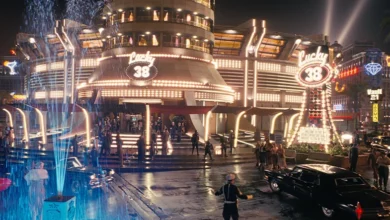
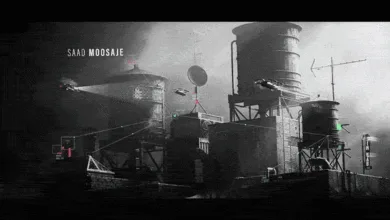
From Viral Digital Phenomenon to Cinematic Masterpiece: Inside the Visual Effects and Practical Engineering of A24s The Backrooms

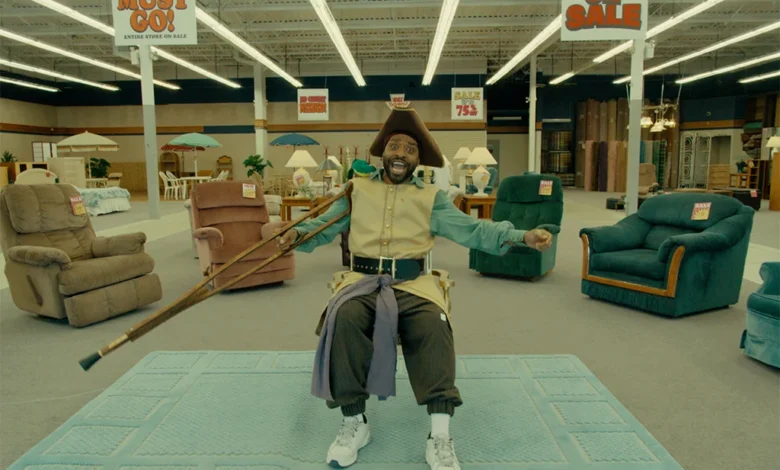
What began as a low-resolution, deeply unsettling digital image of a vacant carpeted room in a Wisconsin furniture store has officially metamorphosed into one of the most unexpected box-office blockbusters of 2026. A24’s psychological horror feature film, Backrooms, represents a monumental leap for digital media, translating a hyper-niche internet urban legend into a mainstream cinematic triumph. Directed by twenty-four-year-old filmmaker Kane Parsons in his feature-film directorial debut, the project successfully expands the universe of his wildly prolific, internet-famous YouTube web series.
The narrative follows Clark—portrayed with desperate, haunting depth by Chiwetel Ejiofor—a struggling furniture store owner whose fortunes take a catastrophic plunge when he accidentally slips through an anomalous spatial tear situated directly beneath his showroom floor. Plunged into an endless, labyrinthine expanse of monochromatic yellow rooms, hum-buzzing fluorescent lights, and claustrophobic corridors, Clark becomes untethered from reality. Renate Reinsve co-stars as Mary, Clark’s dedicated and increasingly desperate therapist, who embarks on a terrifying rescue mission, tracking her patient across shifting dimensions that defy the laws of physics and human geography.
While the premise relies on uncanny geometry and digital surrealism, the production methodology behind Backrooms represents a meticulous synthesis of old-school practical filmmaking and cutting-edge digital wizardry. Operating on a modest indie budget of $10 million, the creative team achieved visual parity with tentpole studio releases through an intricate, highly collaborative pipeline that blurred the lines between physical reality and computer-generated imagery.
The Genesis of an Internet Nightmare: Background and Evolution
To understand the scale of Backrooms, one must examine its improbable chronology. Kane Parsons first began conceptualizing and rendering his distinct iteration of the internet lore using the open-source 3D graphics software Blender when he was just 16 years old. Operating out of his bedroom, Parsons crafted short, jarring found-footage-style videos that quickly amassed tens of millions of views on YouTube. His ability to mimic analog tape degradation, archaic camera equipment, and non-Euclidean architecture struck a chord with a generation of internet users fascinated by "liminal spaces" and internet creepypastas.
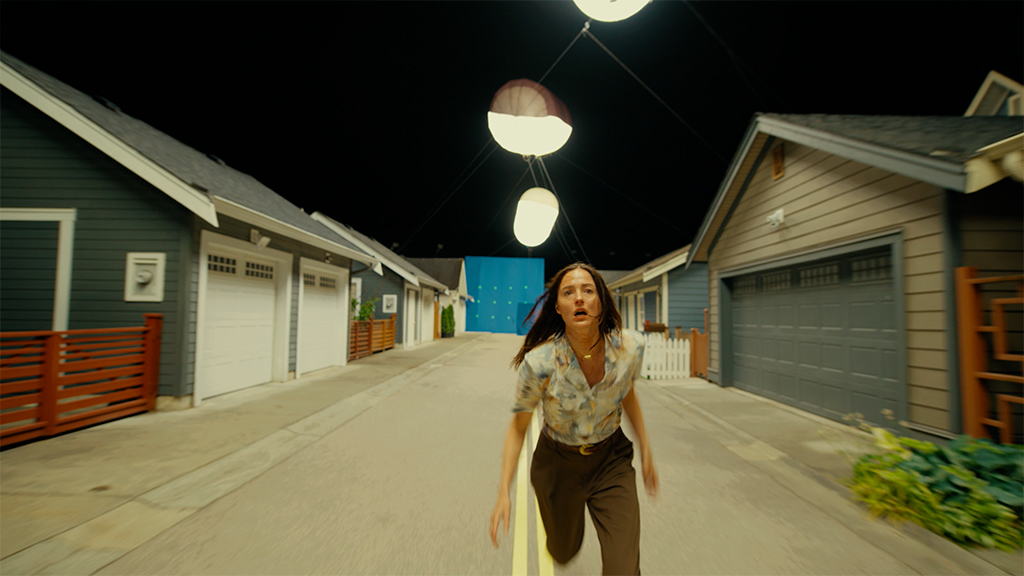
When A24 greenlit the feature-film adaptation, studio executives made a bold bet by keeping Parsons at the helm. Rather than stripping the project away from its creator and handing it to a studio-vetted veteran, they integrated Parsons directly into the high-end Hollywood production pipeline. Remarkably, the foundational digital assets Parsons constructed as a teenager did not end up discarded; instead, they served as the literal architectural blueprints for major sequences in the 2026 film.
"There were certain moments where we were literally taking the Blender file he built when he was 16 and working off it, enhancing it, getting it ready for cinematic quality, and then moving it into a production pipeline," explains Visual Effects Supervisor Edward Douglas. This unusual bridge between amateur digital creation and professional cinema established a unique tone for the entire production, ensuring the film retained the raw, authentic DNA of the original viral shorts.
Building the Impossible: Practical Sets Meet Digital Environments
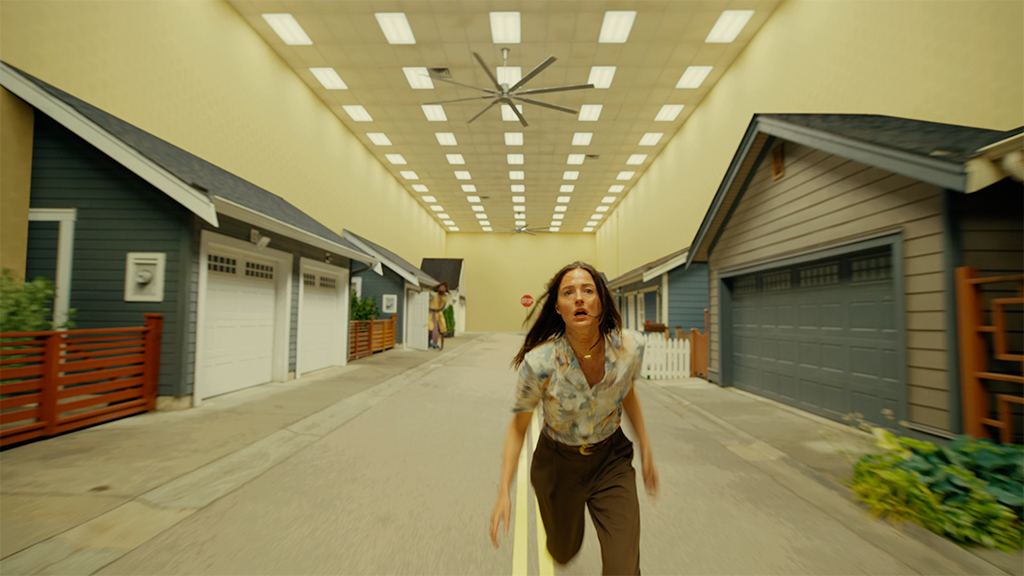
Despite coming from a purely digital background, Parsons showed a profound commitment to tangible filmmaking. Rather than opting for an entirely green-screen-driven production—a common trap for digital-first creators—Parsons insisted on tangible environments that actors could physically inhabit.
Across four major sound stages, the production constructed roughly 30,000 square feet of physical sets. These sets replicated the disorienting, endless office layouts and decaying institutional hallways characteristic of the Backrooms lore. However, this physical footprint was dwarfed by the approximately 100,000 square feet of virtual environments designed by Parsons and his digital artists.
"We’re all building this world together," Douglas notes. "Kane built these incredible sets, but there are key images that are full CG. There are moments where we are in Kane’s Blender CG world. There are moments where it might look like we are, but it’s actually a set."
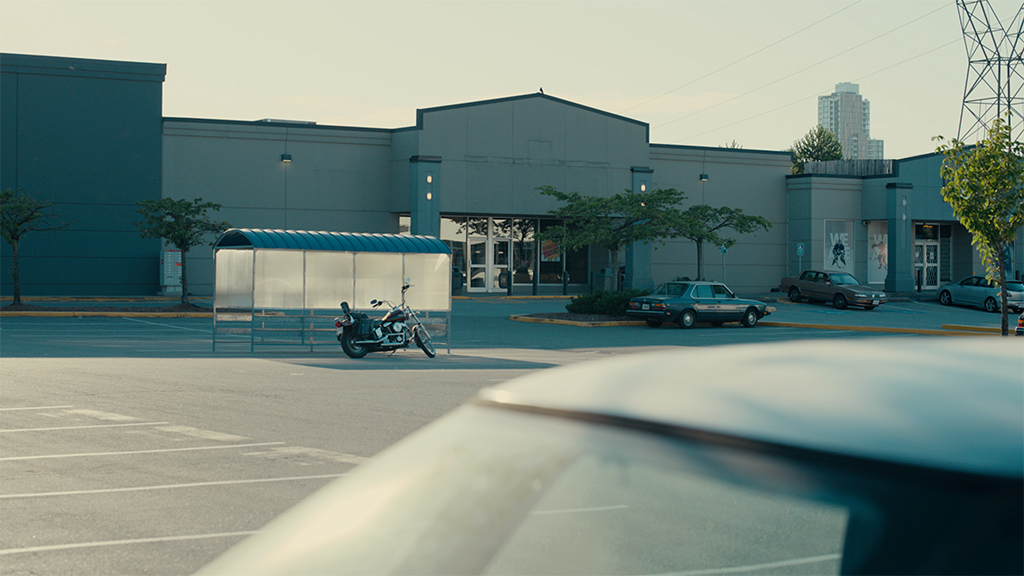
Douglas maintains a pragmatic philosophy regarding visual effects, viewing them not as an alternative to practical shooting, but as an extension of traditional cinematic illusion. "I don’t think of visual effects as computer things," Douglas explains. "I think of visual effects as figuring out what tricks we need that we can’t film for real. My job as a supervisor is to make sure whatever we can’t film for real ends up in the movie."
Mastering the Uncanny: The Physics of "Clipping"
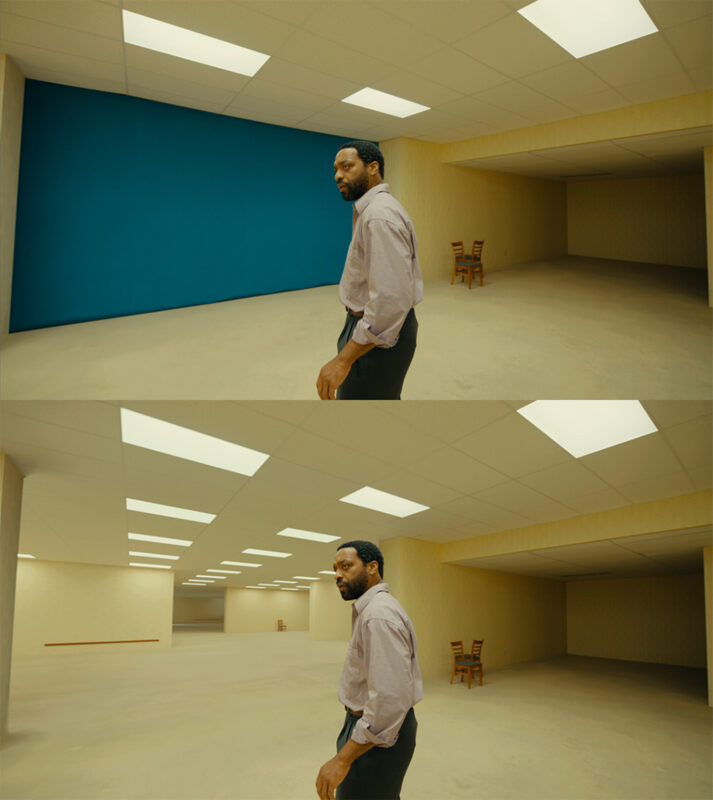
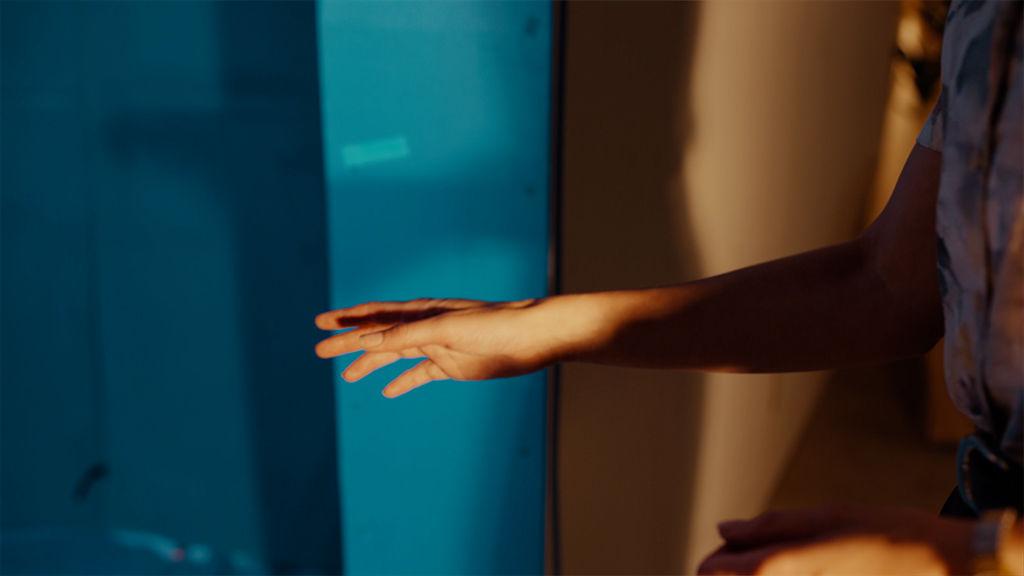
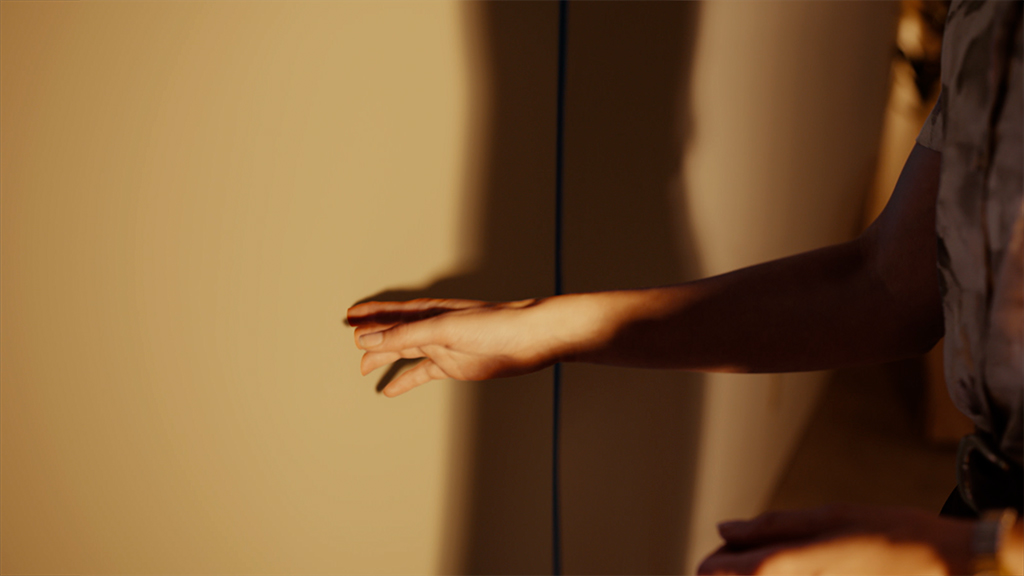
One of the most defining characteristics of Backrooms lore is the phenomenon of "clipping"—the glitch-like ability of entities and people to phase through solid walls and floors, transitioning between our reality and the infinite rooms beyond. Replicating this effect on screen proved to be one of the production’s most formidable technical hurdles.
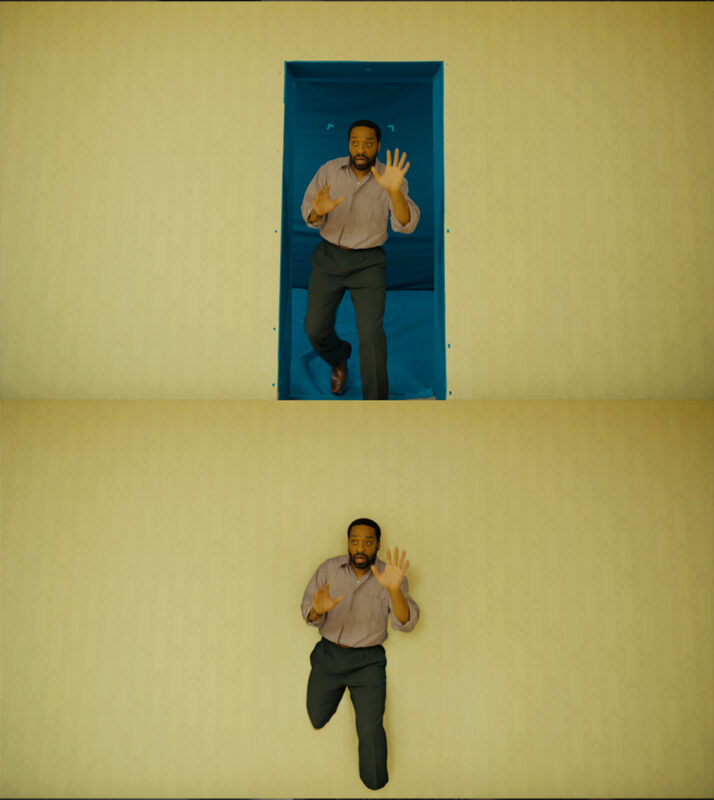
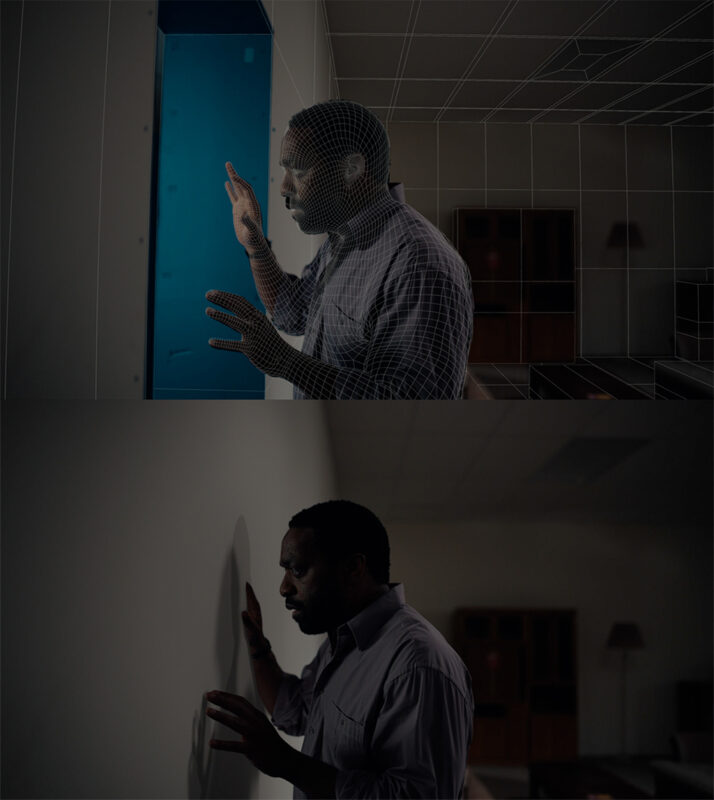
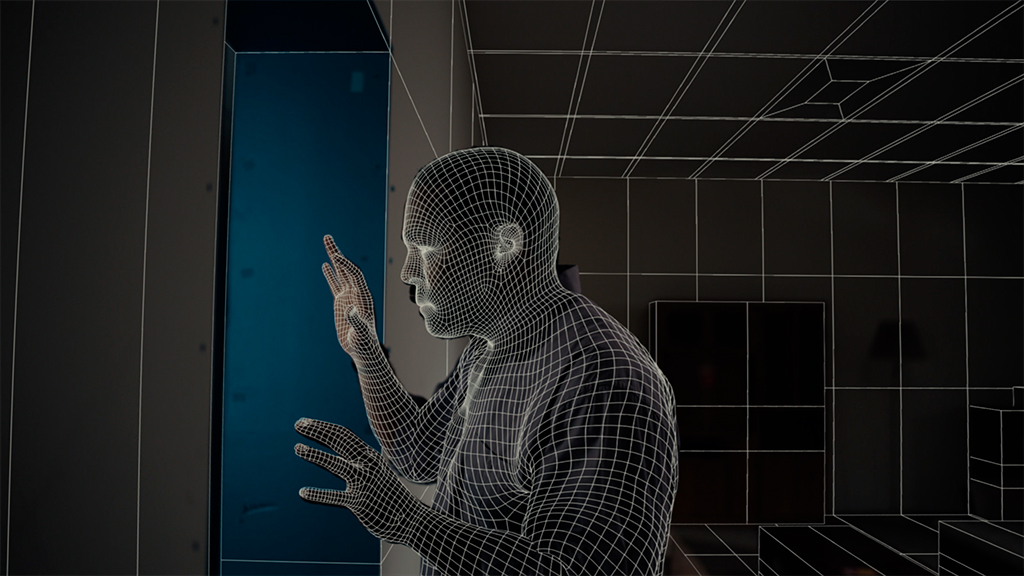
Instead of fully digitalizing actors as they passed through barriers, the production utilized a hybrid method. Actors physically performed the movements by walking through specially designed, practical openings in the set walls. Post-production visual effects vendors, primarily Mr. Wolf VFX, were then tasked with digitally restoring the walls around the actors as they moved.
"Clipping was an incredibly simple concept but pretty challenging to pull off," Douglas states. "You have two objects in a computer and you’re just sliding them together. There’s nowhere to hide. So it was about letting the actors perform naturally and then adding in the walls where they would slide back through."
The process required a complex mix of rotomation, geometric intersection, and meticulous hand-rotoscoping to refine micro-details. However, Douglas emphasizes that the true secret to selling the effect lay in illumination. "The hard part is the clipping… but the real trick there is the shadows. All the shadows you’re seeing on the walls are CG shadows projected from animation. What we found is the shadows and how those shadows appeared is what sold the effects."
Practical Monsters: Prosthetics, Puppetry, and Physical Endurance
In an era where movie monsters are frequently rendered entirely through post-production computer graphics, Backrooms swam against the current by heavily prioritizing practical makeup effects and advanced puppetry. Makeup Effects Supervisor Werner Pretorius, renowned for his work on Snowpiercer, led the team at Amazing Ape to fabricate a terrifying roster of creatures known in the film as "Still Lifes."
To the surprise of the visual effects department, the vast majority of the creature work was executed practically on set. The redheaded Still Life entity, whose design drew profound inspiration from the hyper-realistic, distorted sculptures of artist Evan Penny, required immense physical stamina from actress Rhiannon Roberts. Bound to a fixed corner in towering high heels and trapped inside a heavily distorted prosthetic suit for three consecutive days of filming, Roberts relied on strategically placed vision holes to navigate the grueling shoot. Douglas lauds the performance, calling it "a masterful piece of prosthetics makeup" and an incredible feat of endurance.
Similarly, the striped-shirt Still Life was realized primarily through a 90% practical prosthetic face. Visual effects were brought in solely to enhance the character’s unsettling anatomy: multiple sets of eyes. Because static glass prosthetic eyes lack depth and life, Douglas’s team replaced them with CGI counterparts to unify their gaze.
"We made sure all the eyes looked the same," Douglas details. "So the top and bottom eyes were prosthetic, glass eyes, but they didn’t really have any depth… So in VFX, we replaced those with CGI, so it would look like the same eye line looking in the same direction." To elevate the horror, the team introduced a subtle, unnerving behavioral quirk: "Whenever he blinked, we made the other eyes blink, but offset. So it was like creepy cascading blinks. It is so creepy, and I love it so much."
The practical makeup was so remarkably convincing that it routinely deceived industry professionals. When plates were sent to external visual effects vendors for eye enhancements, artists frequently asked for the "un-vfx’d originals," operating under the false assumption that the prosthetics themselves were computer-generated.
Engineering "Pirate Clark": A Multi-Disciplinary Giant
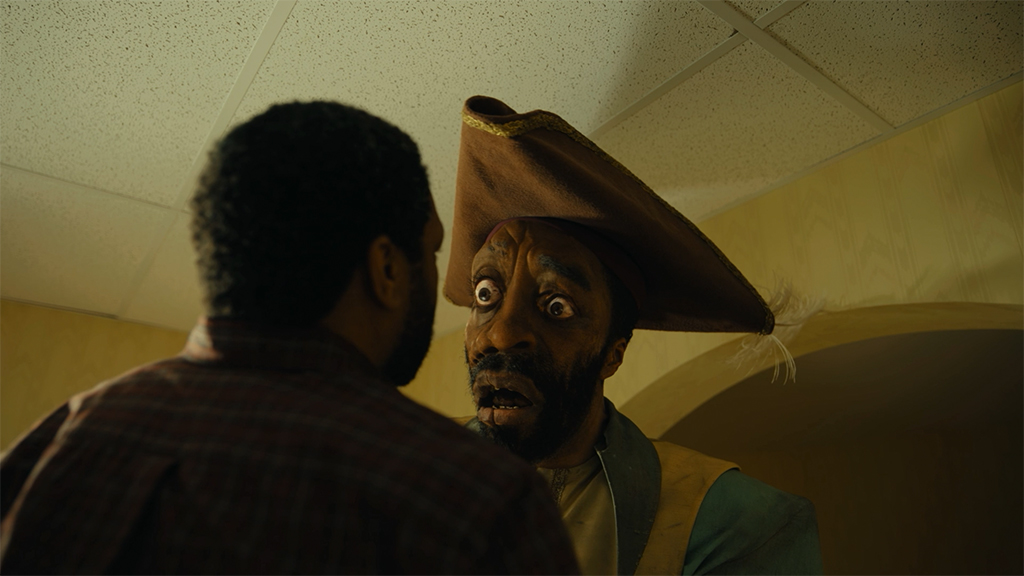
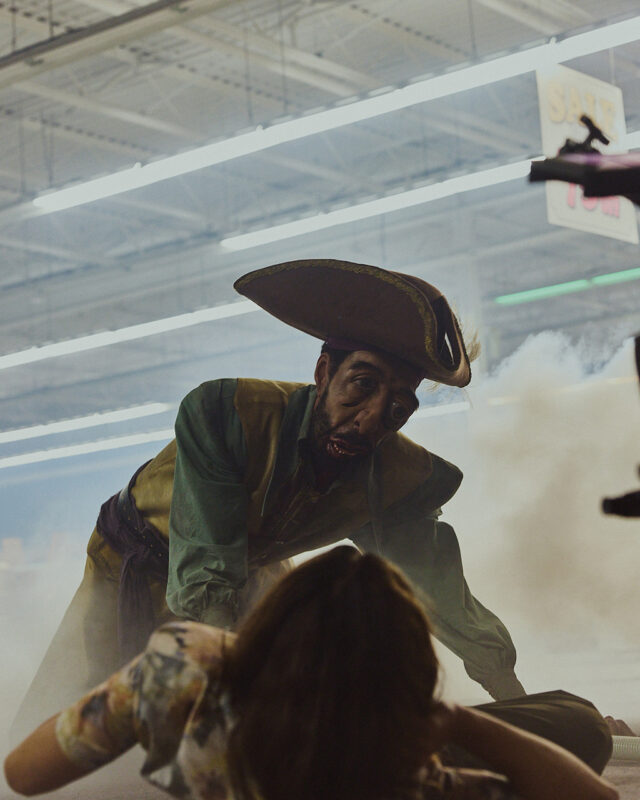
Among the most visually striking and structurally complex antagonists in the film is "Pirate Clark"—an 8.5-foot-tall, grotesque doppelgänger of Chiwetel Ejiofor’s character, complete with a terrifying presence and distorted proportions.
Initially, the production considered traditional stunt solutions, such as mounting a performer on stilts. However, stunt coordinators quickly flagged the safety hazards and severe limitations on movement speed. A breakthrough occurred when the production suggested casting towering performer Robert Bobroczkyi, who previously left audiences terrified in Alien: Romulus. Within days, Bobroczkyi was secured, shifting the design philosophy entirely toward a practical performance-driven model.
Bobroczkyi, alongside master puppeteer Richard Darwin, brought Pirate Clark’s towering physique to life on set. However, physical prosthetics alone could not capture the intricate, emotional micro-expressions required for the character. Consequently, Zoic Studios constructed a digital face by mapping high-resolution 3D scans of Chiwetel Ejiofor.
Rather than defaulting to standard cinematic monster tropes—such as snarls and furrowed brows—the creative team deliberately chose emotional vulnerability. "Some of the early instincts in animation was, ‘let’s give him a scary face and he’s gonna have furrowed eyebrows and snarls,’" Douglas notes. "Some of the very first iterations came in that way, which wasn’t at all right for the character. The context makes it scary. He doesn’t need a scary face. We wanted him to really express this fear and sadness."
This emotional baseline required relentless micro-animation adjustments to ensure the character’s sorrowful expression remained convincing across shifting camera angles and dramatic lighting changes. The restraint paid off, particularly during violent interactions where the digital enhancements were carefully threaded into physical puppetry without replacing the character’s clothing or core physical performance.
An Unprecedented VFX Scale for an Independent Film
The logistical scope of Backrooms is staggering for an independent production. Out of the film’s total runtime, which spans roughly one hour and eighteen minutes, a massive 600 shots out of a total 830 feature visual effects enhancements. This density rivals major Hollywood studio blockbusters, operating under a streamlined $10 million budget.
Eleven external visual effects vendors collaborated alongside the internal team to cross the finish line. These included Zoic Studios, Roxel Creative, Mr. Wolf VFX, CoSA VFX, Barnstorm Visual Effects, Stormborn VFX, Shapeshifter VFX, OscarFX, Rotomaker, Beyond Performance Capture Studios, and Industrial Pixel 3D Studios.
Throughout post-production, Kane Parsons maintained a hands-on approach, frequently logging into editing and rendering software to execute adjustments directly. "He’s very happy to jump in and do it himself and it’s what he does," Douglas remarks. "Sometimes he may have a note, but him just logging in and doing the thing is going to be much more efficient and closer to his vision than passing a note through me…"
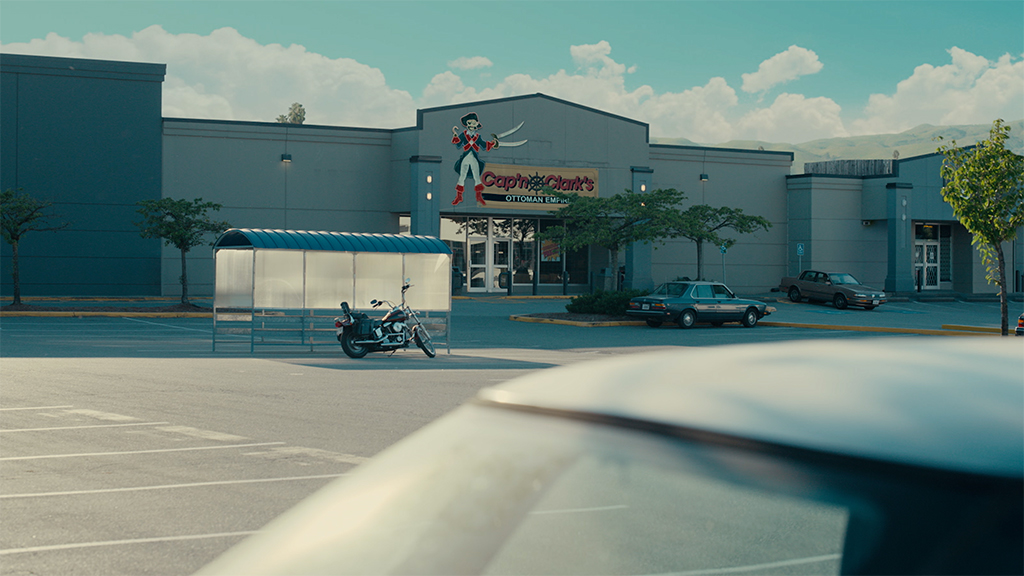
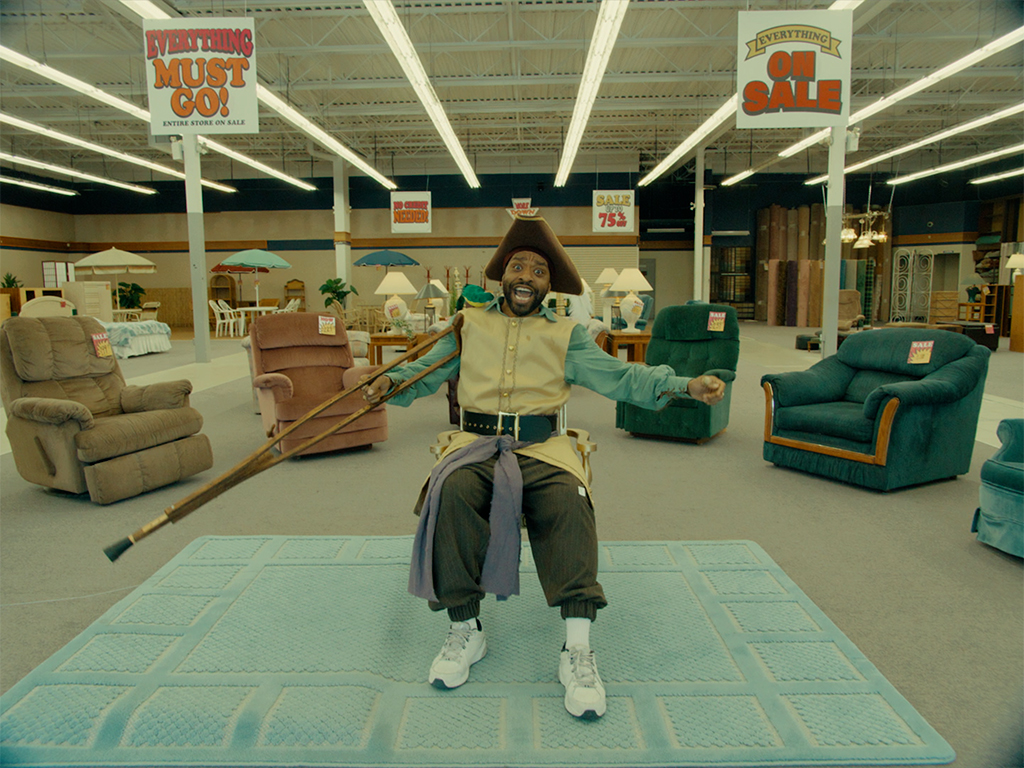
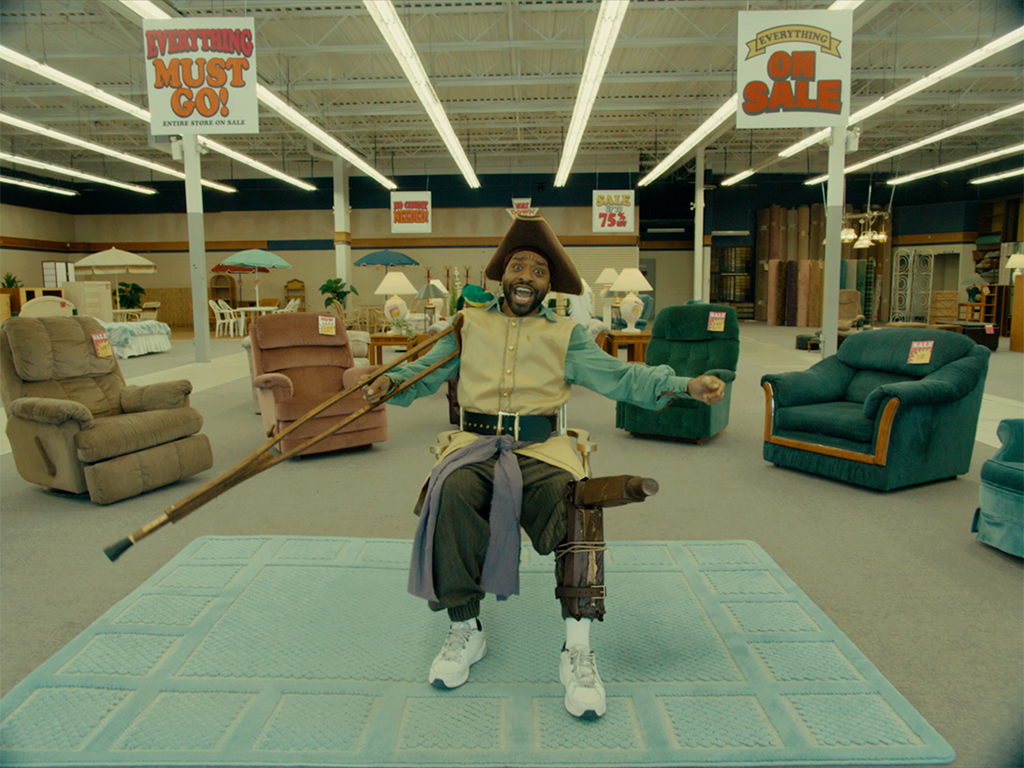
Beyond the grand scale of the creatures and the infinite corridors, visual effects were frequently deployed for basic cinematic safety and environmental continuity. In Clark’s opening commercial sequence, the actor’s peg leg was rendered entirely via CG pants-replacement and prosthetic integration to prevent on-set injuries during physical slapstick gags. Furthermore, exterior scenes shot on location in Vancouver underwent massive digital overhauls to strip away modern skylines, replacing them with period-accurate San Jose views and manipulating cloud dynamics to achieve an "uncanny dreamcore feeling."
Embracing the Analog: True VHS Degradation
In an industry heavily reliant on digital filters to simulate retro aesthetics, Backrooms leaned into genuine analog processes to capture the texture of late-20th-century found footage.
Rather than applying software overlays in post-production, the creative team ran footage physically through actual VHS hardware. "Everything we did with the VHS was actually going through a VHS machine," Douglas explains. "We were doing frame-rate conversion, tape speeds, tracking, all of that."
To push authenticity even further, Kane Parsons utilized a physical distortion box—a custom-built device operating similarly to a guitar pedal. By manually depressing switches, Parsons could introduce live signal distortion into the cables running between computers and vintage recording decks. "It’s almost like a guitar pedal where he could press the button to get more distortion, just jamming distortion into the cables going between the computer and the VHS machine," Douglas recalls. "Which is really cool. It was super analog. None of that was digitally simulated."
Implications and Industry Reception
The massive financial and critical success of Backrooms serves as a watershed moment for modern cinema. By successfully bridging the gap between internet-born decentralized media and high-end studio filmmaking, A24 and Kane Parsons have established a new blueprint for franchise expansion in the digital age.
Furthermore, the film’s production methodology offers a compelling rebuttal to the contemporary industry trend of over-relying on green screens and post-production digital substitution. By anchoring performances in physical sets, high-end practical prosthetics, and analog machinery—and using visual effects strictly to bridge the gap of the impossible—the production achieved a tangible, visceral horror that resonated deeply with audiences worldwide.
As the box-office receipts continue to climb, Backrooms stands as a testament to the power of interdisciplinary collaboration. In the words of Edward Douglas, summarizing the philosophy that brought the nightmare to life: "It’s always such a collaboration between all the departments. And if you don’t know where one starts and one ends, it makes it that much more magical."