Tonic DNA Unveils Major Visual Refresh as Montreal Animation Institution Enters Its Fortieth Year


The animation landscape is experiencing a profound identity shift, balancing heritage techniques with rapid technological advancements. In downtown Montreal, one of the industry’s most enduring independent production houses is marking this era of transition on its own terms. Tonic DNA, a creative powerhouse with roots stretching back four decades, has officially launched a comprehensive visual refresh, anchored by a sleek, modernized website and a refined brand identity.
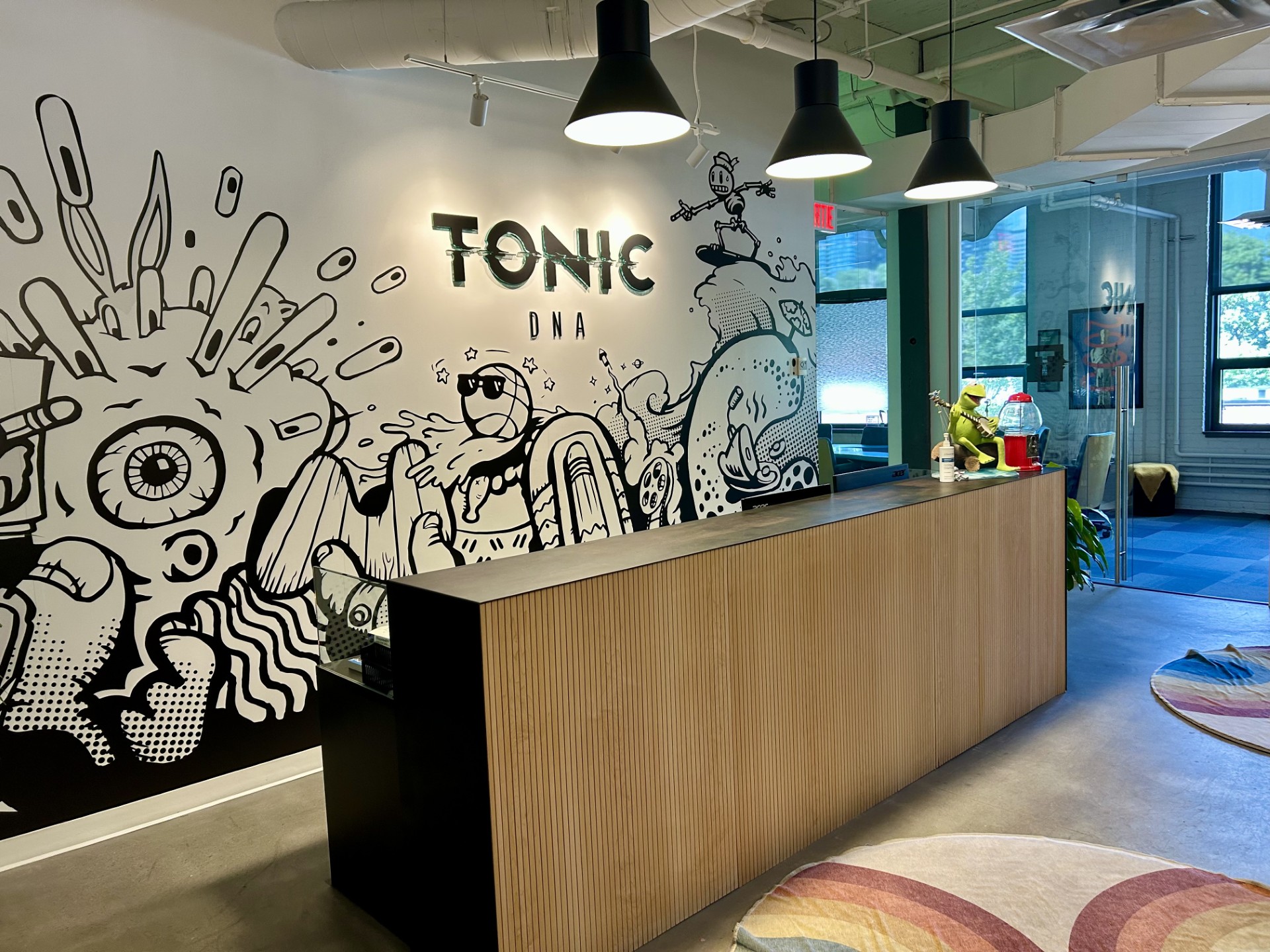
The update features a spare, sophisticated wordmark—displaying TONIC in wide capital letters with dna in lowercase, set against a near-black backdrop accented by warm cream and sage green. Yet, despite the contemporary aesthetic overhaul, studio partner and executive producer Stefanie Bitton is quick to contextualize the change. Rejecting the terminology of a traditional rebrand, Bitton emphasizes that the studio’s core operational model and creative philosophy remain entirely intact. This update serves strictly as a visual evolution for a company that has continuously reinvented its pipeline without losing its foundational identity.
From Traditional Roots to a Director-Led Model

The history of Tonic DNA mirrors the broader technological evolution of the animation industry itself. Founded roughly forty years ago in downtown Montreal, the enterprise has operated under various iterations: as a traditional hand-drawn animation house, an IMAX pioneer, a 3D and hybrid studio, and ultimately, a modern director-led creative powerhouse.
A defining milestone in the studio’s chronology occurred in 2000, when it garnered international acclaim by winning the Academy Award for Best Animated Short Film for The Old Man and the Sea. Directed by Alexander Petrov, the adaptation of Ernest Hemingway’s novella was meticulously painted in oil on glass, frame by frame, and produced specifically for IMAX formats—a technical feat never before attempted in animated cinema. Bernard Lajoie, a studio founder and current partner, helped spearhead this technological leap, bridging the gap between classical art forms and nascent cinematic technologies.
The most structural transformation in the studio’s recent history occurred in 2017, when the organization officially adopted the name Tonic DNA. The moniker was chosen with deliberate intent: "Tonic" signified revitalization and energy, while "DNA" initially stood for Directors and Animators. Over time, that acronym has expanded organically to encompass designers, software developers, and AI engineers. This rebrand shifted the studio away from a singular, centralized house style toward a dynamic, director-led collaborative model that elevates individual artistic visions.
Chronology of Innovation and Cultural Impact
Over the past four decades, Tonic DNA’s trajectory has been defined by key operational phases:
- The 1980s–1990s: Establishment as a premier traditional hand-drawn and technical animation house in downtown Montreal.
- 2000: Winning the Academy Award for Best Animated Short Film with The Old Man and the Sea, pioneering oil-on-glass animation for IMAX.
- 2010s: Expansion into 3D stereoscopic production, cross-border client acquisition across Latin America, the United States, and Europe, and diversification into hybrid commercial content.
- 2017: Official adoption of the Tonic DNA name, transitioning definitively from a single-vision craft studio to a multi-director collective.
- 2020s: Development of proprietary AI pipelines, a robust slate of original long-form intellectual property, and critically acclaimed shorts such as Freebird.
- 2026: Launch of the studio’s new visual identity and the anticipated release of original 2D holiday special The Anta Claus of the South Pole.
Commitment to Craft in the Age of Digital Noise
Despite industry narratives declaring a "renaissance" for 2D animation—spurred by recent high-profile feature films—Bitton challenges the premise that traditional animation ever truly vanished. Instead, she views 2D as the foundational bedrock of the medium, noting that the fundamental discipline of breathing life into drawings remains constant while the surrounding technological ecosystem evolves.
This dedication to character fidelity is evident in Tonic’s commercial and narrative work. When animating legacy properties such as Bugs Bunny, the studio relies on a deep-seated institutional understanding of established personalities, movement physics, and historical continuity.
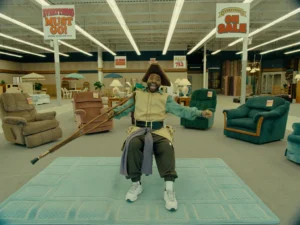
Locally, Tonic DNA has cemented its place in Quebec’s cultural fabric through a series of celebrated holiday campaigns produced in collaboration with advertising agency Sid Lee for regional retailer IGA. Projects like The Meatloaf (2022), Mr. Beaver’s Yule Log (2023), and Paulo’s Wish (2024) showcase a blend of CG textures and stop-motion aesthetics. Similarly, the studio’s work on (un)Hungry for Highmark—directed by Jamil Lahham and Fabien Fulchiron—utilized virtual reality hair-painting and hand-applied brush strokes on 3D sets, earning a MUSE Platinum award.
On the narrative front, the studio’s short film Freebird, written and directed by Joe Bluhm and Michael McDonald for L’Arche Canada, explores forty-five years in the life of a man with Down syndrome. The deeply emotional project exemplifies Tonic’s commitment to storytelling that prioritizes psychological depth and human empathy over commercial spectacle.
Expanding into Original IP and Intentional AI Integration
Today, Tonic DNA operates across three distinct operational pillars: short-form advertising and branding, long-form series and features, and original intellectual property development.

This year marks a significant milestone with the production of The Anta Claus of the South Pole, a 24-minute 2D holiday special directed by two-time Oscar nominee Cordell Barker. Developed over a span of fifteen years, the project is a co-production with the National Film Board of Canada, produced in association with Crave (a division of Bell Media) and supported by the Canada Media Fund. Bitton notes that creating original IP does not compete with client service work; rather, the two sides reinforce one another, cultivating internal creativity that ultimately benefits commercial projects.
Concurrently, the studio has spent the last two years developing proprietary artificial intelligence tools. Rather than utilizing AI to bypass human labor or substitute artistic authorship, Tonic approaches technology with strict intentionality. By integrating AI into pre-production and long-form 2D pipelines, artists are afforded greater experimental freedom to explore complex visual directions without risking schedule overruns. Bitton stresses that transparency and consent remain non-negotiable parameters, ensuring that technology serves the artist rather than obscuring their contribution.
Broader Industry Implications and Future Outlook
As independent studios face mounting economic pressures and rapid consolidation within the entertainment sector, Tonic DNA’s enduring independence offers a compelling operational blueprint. By maintaining agility, resisting corporate conglomerate structures, and reinvesting directly in its workforce, the studio has successfully navigated forty years of macroeconomic and technological upheaval.
As Tonic DNA looks ahead toward its fiftieth anniversary in the next decade, the studio’s leadership remains focused on the human element that underpins its longevity. In an industry increasingly disrupted by automation and shifting consumer habits, Tonic DNA’s trajectory suggests that institutional survival relies not on clinging to static techniques, but on protecting the standard of excellence and fostering the creative communities that bring stories to life.