From Practical Masterpieces to Digital Canvas: The Evolution of Industrial Light & Magic Through the Eyes of John Goodson

Industrial Light & Magic (ILM), the legendary visual effects powerhouse founded by George Lucas in 1975, has spent nearly half a century defining the visual language of modern cinema. Born out of a necessity to create the groundbreaking, World War II-style aerial dogfights for the original 1977 release of Star Wars, ILM revolutionized an entire industry. While the studio is celebrated today for pioneering digital effects that shape contemporary blockbusters, its foundation was built on physical craftsmanship. At the epicenter of this tangible artistry was the ILM Model Shop—a workshop of master artisans, machinists, and modelmakers whose contributions forever changed the cinematic landscape.
The closure of this iconic practical effects department remains one of the most poignant eras in visual effects history, a transition vividly detailed in the Disney+ documentary series Light & Magic. Among the artists who weathered this seismic shift is John Goodson, a digital artist and former model project supervisor whose career bridges the golden age of practical miniatures and the frontier of digital filmmaking.

From Childhood Awe to the ILM Model Shop
John Goodson’s journey into the world of visual effects began long before he ever set foot on a Hollywood studio lot. Growing up on an Air Force base, his lifelong passion for visual storytelling was ignited at the age of three while watching "The Derelict," an episode of the classic science fiction television series Lost in Space. The broadcast featured sweeping shots of the Jupiter II being pulled into a massive alien spacecraft, captivating the young viewer.
Surrounded by military aviation culture—with a neighbor who was a fighter pilot—Goodson’s interest deepened when someone handed him a copy of The Making of Star Trek. The book demystified the cinematic illusion, revealing that the awe-inspiring spacecraft were not real vehicles, but constructed miniatures. Rather than dampening his enthusiasm, this revelation galvanized him. When Star Wars premiered in 1978 when Goodson was 14 years old, he immediately began writing letters to ILM, eager to understand how he could join their ranks.
Reviewing biographies published in early Art of Star Wars companion books, Goodson noticed a common professional thread among the studio’s craftsmen: many hailed from industrial arts or architectural backgrounds. Pursuing a similar path, Goodson enrolled in the School of Design at North Carolina State University to study Product Design, viewing it as the closest academic approximation to practical modelmaking. In reality, he was already refining his craft independently.

In 1988, Goodson relocated to California and secured his first professional assignment at ILM: a single-week contract working on Body Wars, a pioneering motion-simulator attraction akin to Star Tours that transported riders through a miniaturized human body. That initial week blossomed into a decades-long career.
The Practical Pipeline and the Art of Deception
Working within the ILM Model Shop functioned as an immersive, high-stakes film school. Crafting miniatures for the camera required an intimate understanding of photographic optics, lighting, and physical constraints. For instance, the matte, seemingly drab paint jobs applied to many early models were not aesthetic oversights, but technical necessities. If a model’s paint was too reflective, it would pick up the blue or green screen background, causing the physical asset to become transparent or riddled with digital "holes" during compositing.
The collaborative environment of the Model Shop fostered rapid skill development. Artisans freely exchanged techniques, secrets, and observational tips, cultivating a specialized aesthetic eye.
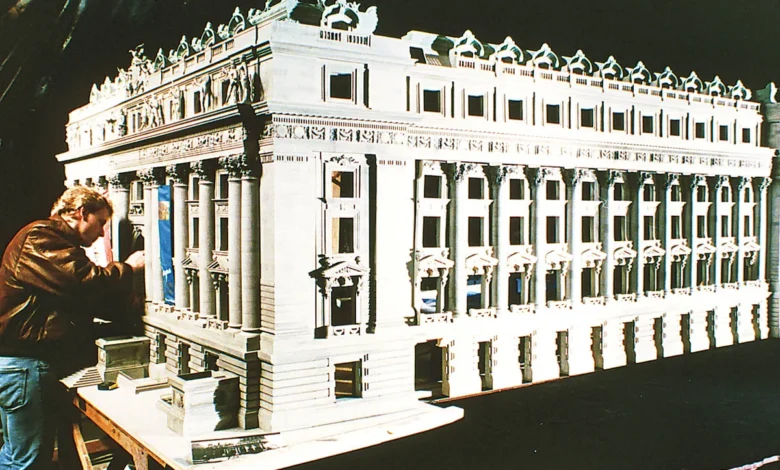
However, practical modelmaking routinely demanded unorthodox problem-solving under extreme time constraints. During the production of Ghostbusters II (1989), Goodson faced a sudden crisis when director Ivan Reitman required the structural belts on the hull of the Titanic miniature to be made significantly thinner—and the change had to be executed while the crew was at lunch. Thinking quickly, Goodson packed modeling clay into the low recesses between the hull’s belts, used a trimmed chip brush to rapidly apply a stippled texture, and pounded pastel dust ground down from 60-grit sandpaper directly into the surface. The improvised asset was shot immediately, perfectly capturing the gritty realism required for the scene.
Similarly, during the production of Roland Emmerich’s disaster epic The Day After Tomorrow (2004), when a digital asset of a frozen oil tanker was deemed unusable by the production team, Goodson was called upon to construct a physical alternative over a single weekend. Using a sheet of plywood, eighth-inch styrene plastic, and strategically placed hinges, he engineered an adjustable, curved hull complete with miniature bollards and meticulously crafted icicles made of silicone and cotton swabs by master modelmakers Lorne Peterson and Paul Huston. Delivered to the studio by Monday morning, the practical miniature successfully fulfilled the shot’s requirements, earning Goodson a personal note of gratitude from the director.
Navigating the Digital Revolution
As computing power advanced through the 1990s, the visual effects industry experienced a massive paradigm shift. The introduction of computer-generated imagery (CGI) threatened to render practical modelmaking obsolete, leading to the eventual shuttering of the physical Model Shop—a transition Goodson describes as "brutal."
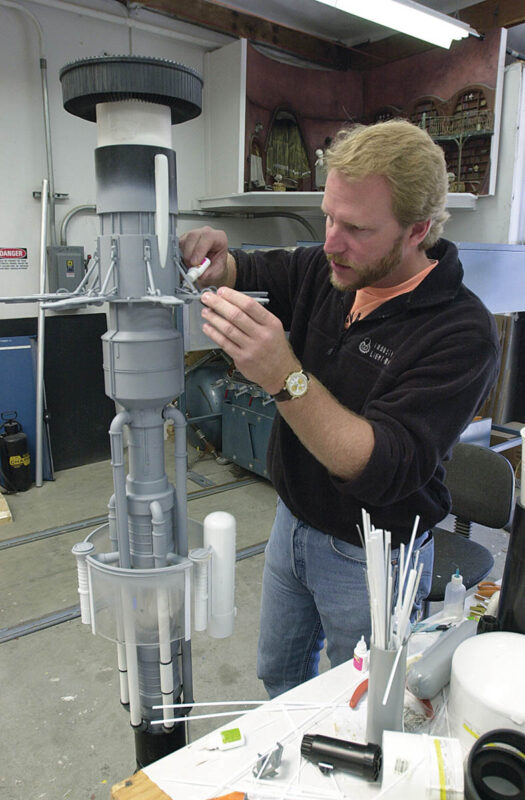
"The ripples from that are still happening because so many people didn’t make the transition," Goodson reflects. "It is the story of technology. New technology comes in. Older jobs go away. New jobs are created. But for the people caught in the gears, it’s tough."
For Goodson, survival meant adapting. Following a brief training period, he was assigned to paint revisions for the 1997 Special Edition release of Star Wars: A New Hope, tasked with texturing Luke Skywalker’s landspeeder using unfamiliar software. The learning curve was steep, but as software evolved—particularly with the adoption of Mari, a program that allowed digital artists to paint in complex, multi-material layers—Goodson found that digital texturing could rival the tactile depth of the physical world.
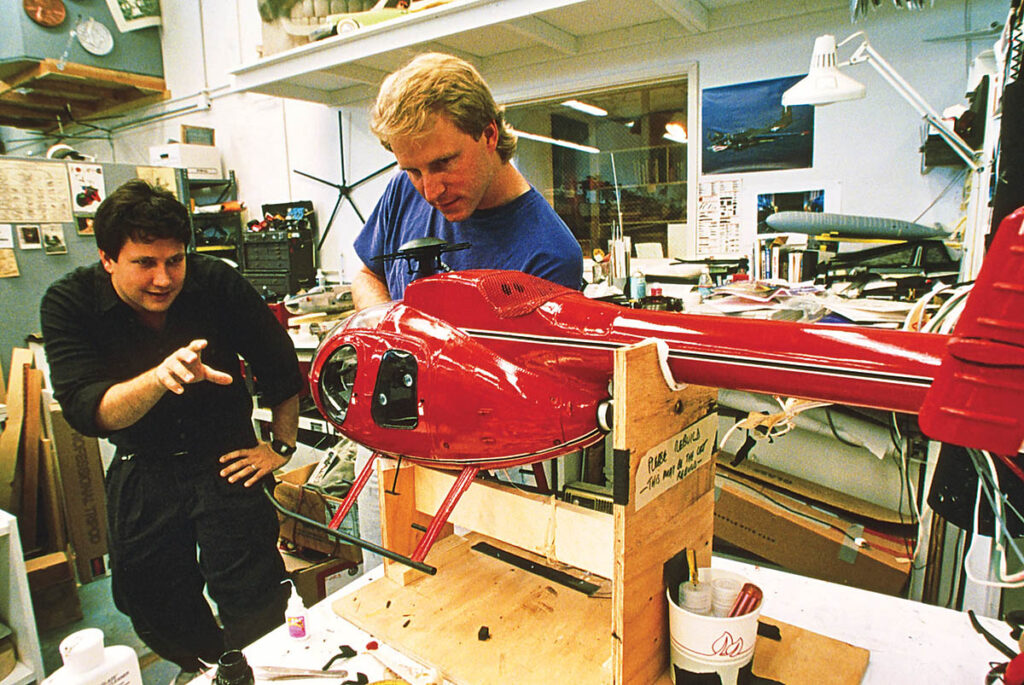
Despite his successful pivot to digital artistry—contributing to major franchises such as Transformers, Star Trek Into Darkness, Iron Man 2, and Mission: Impossible—Goodson maintained a foot in both worlds.
The Renaissance of Miniatures in the Digital Age
Rather than entirely replacing physical craftsmanship, modern filmmaking has increasingly embraced a hybrid model, combining the tactile authenticity of practical miniatures with the flexibility of digital compositing and LED volume stages.
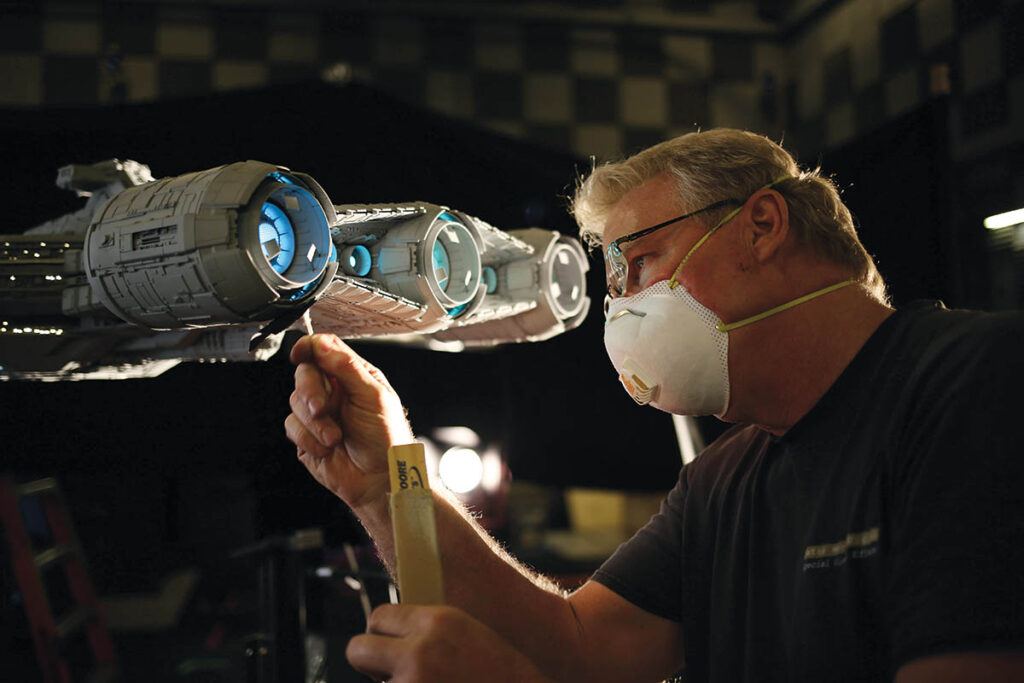
This renaissance was prominently displayed in the production of Disney+’s The Mandalorian, where Goodson reunited with fellow ILM veterans to construct two-foot and four-foot physical models of the Razor Crest, as well as components for Moff Gideon’s Light Cruiser. Rather than relying solely on green screens, these physical models were shot inside modern LED volumes, capturing authentic, real-time interactive lighting that seamlessly blended the physical asset with digital environments.
This hybrid approach extends to engineering challenges. When constructing physical models for modern series like Ahsoka, mechanical complexity often requires innovative manufacturing techniques. For Ahsoka’s ship, which featured a rotating wing cantilevered off a narrow tube, space limitations prevented the installation of a traditional central motor. Machinist and 3D printing specialist Dan Patrascu engineered custom peripheral gears operating around the tube to achieve the smooth mechanical rotation, highlighting the ongoing synthesis of old-school machining and modern prototyping.
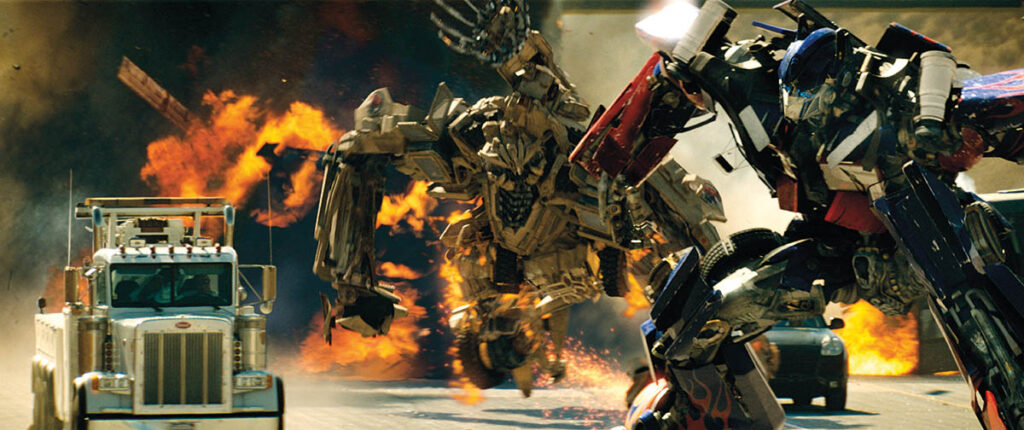
Although Goodson harbors a traditionalist’s cautious skepticism toward 3D printing due to material durability concerns, he acknowledges its utility for hyper-complex components like engines and weaponry.
"Three Garages Productions" and the Enduring Legacy of ILM
Today, the collaborative spirit of the closed ILM Model Shop lives on through informal networks of veteran artisans. Jokingly referring to themselves as "Three Garages Productions," Goodson, Patrascu, and visual effects supervisor John Knoll continue to build, tinker, and engineer physical models in their personal workshops, occasionally returning to ILM’s motion-capture stages to shoot practical elements.
This enduring dedication to observation and realism remains the core philosophy of ILM’s veteran artists. Whether constructing a physical spaceship, a complex Transformer, or a miniature helicopter for reference during Mission: Impossible, the ultimate goal is to study the real world so meticulously that the fantasy becomes entirely believable to the audience.
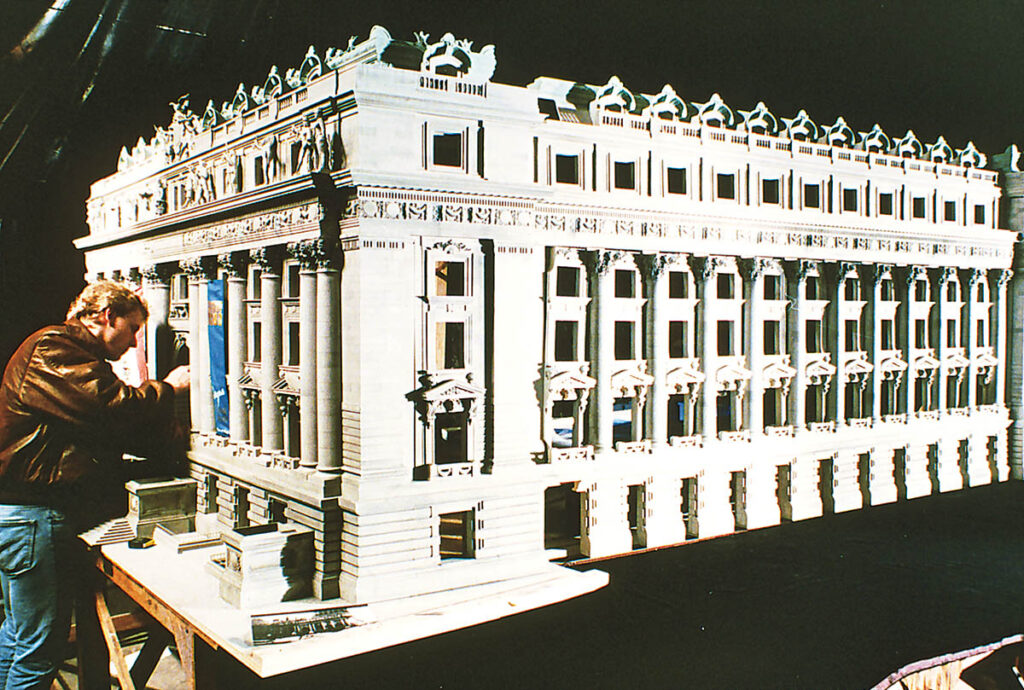
Reflecting on the closure of the original Model Shop warehouse—where crews discovered forgotten treasures including speeder bikes, a full-sized snowspeeder, Rancor limbs, and decades-old correspondence boxes containing Goodson’s childhood letters to the studio—the artist recognizes that while physical footprints shrink, the foundational ethos of Industrial Light & Magic remains unchanged.
"Every part of the process contributes to the end result," Goodson notes. "Failures contribute, too… If we’ve done our job right, people don’t question it."