From Cartoons on Pan-Arab Television to Senior Animator at Sony Pictures Imageworks: The Inspiring Journey of Alissar Kobeissi

Alissar Kobeissi stands at the forefront of a shifting global animation landscape. As a senior animator at Sony Pictures Imageworks, her career path bridges the cultural gap between the Middle East and the major studios of Hollywood. Over the past decade, Kobeissi has contributed her craft to some of the industry’s most prominent visual productions across major houses, including Illumination, Skydance Animation, and Walt Disney Animation Studios. Her trajectory—from a childhood spent watching Arabic-dubbed cartoons in the United Arab Emirates to leading complex, effects-driven shots for blockbuster films—highlights both the personal dedication required to break into Western animation and the broader internationalization of the medium.
Main Facts and Career Trajectory
Kobeissi’s professional ascent began in earnest with a viral animation test that caught the attention of industry veterans. This crucial breakthrough led to her recruitment by Kevin Webb, then head animator at Sony Pictures Imageworks, and Patrick Delage at Illumination. In 2018, Kobeissi joined Sony Pictures Imageworks to work on the animated feature Smallfoot. She subsequently transitioned to Illumination to work on Sing 2, establishing a steady momentum that allowed her to collaborate with nearly every major studio pipeline in the industry.
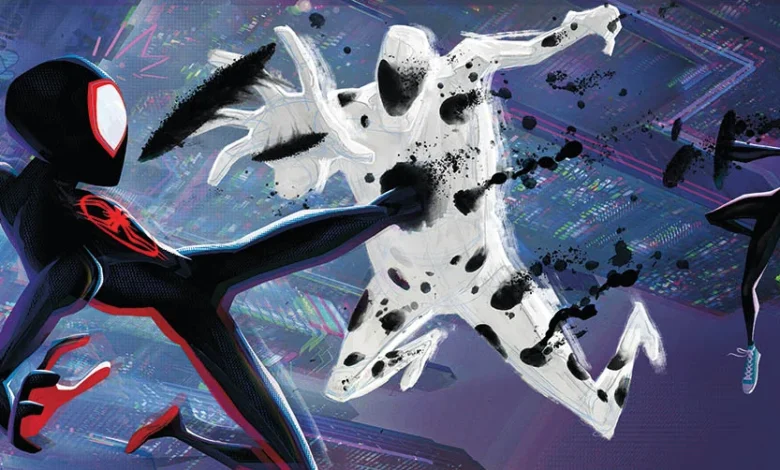
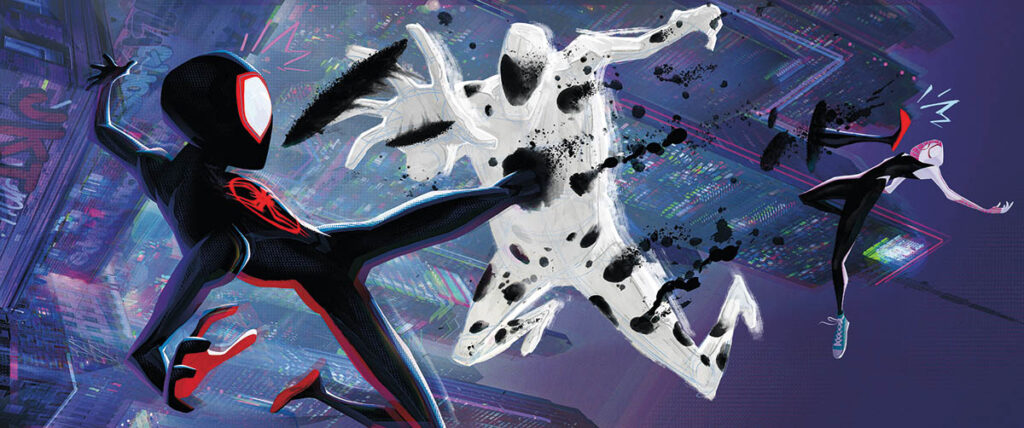
Today, her resume includes contributions to critically acclaimed and commercially successful projects. Among these is her work on Netflix’s In Your Dreams and her involvement in the highly stylized production ecosystem of Spider-Man: Across the Spider-Verse. Within major studios, Kobeissi notes that production pipelines share overarching similarities, though they are continuously adapted to fit the unique demands of individual shows. For instance, during the production of Across the Spider-Verse, Sony Pictures Imageworks established an entirely new department specifically designed to bridge the gap between the layout and animation stages. Because animators on the previous film had naturally absorbed a heavy layout workload, this structural adjustment was implemented to alleviate production pressure while keeping layout responsibilities distinct from the primary animation floor.
Chronology of an International Animator

Kobeissi’s journey into the digital arts began in her youth, fueled by a steady diet of Pan-Arab television broadcasts and VHS tapes. Growing up in the United Arab Emirates, she watched classic series such as Pokémon, Nobody’s Boy: Remi, and Romeo’s Blue Skies dubbed into Arabic on the children’s channel Spacetoon. Simultaneously, western cinematic milestones cemented her ambition. Receiving a copy of Disney’s Mulan for her birthday proved to be a pivotal cultural and artistic touchstone.
Pursuing this passion formally, Kobeissi enrolled at the Académie Libanaise des Beaux-Arts (ALBA) in Beirut, Lebanon. There, she earned a Bachelor’s degree in Computer Graphics and Interactive Media, immersing herself in a multidisciplinary curriculum that included gouache painting, JavaScript programming, art history, and typography. A defining moment occurred during her studies when she witnessed a 3D model of a donkey rotate within LightWave 3D software. Intrigued by the technical and spatial possibilities of three-dimensional space, she enrolled in an online 3D character animation course provided by AnimSchool.
Nearly a decade after completing her formal education, Kobeissi experienced a full-circle career moment by returning to digital instruction as a freelance educator. Through the Gnomon Workshop, she developed and taught a comprehensive four-hour course titled "Animating Characters for Feature Films." The curriculum focused on instilling natural performances through character specificity, distinct personality traits, and entertainment value.
Reflecting on her teaching experience, Kobeissi notes that articulating her workflow forces her to externalize what has become an intuitive physical and digital process. Beyond her studio work, she remains active in regional creative communities, helping to host Beirut Animation Nights—a festival dedicated to showcasing short films produced by Lebanese artists.
Background Context: The Evolution of Animation in the Middle East
During Kobeissi’s formative years, local infrastructure and professional opportunities for feature-grade animation within the United Arab Emirates and Lebanon were severely limited. Like many artists of her generation, she recognized that building a career in high-end feature animation necessitated relocating abroad to access international studios, diverse cultural perspectives, and advanced technological pipelines.

However, the regional landscape has undergone a demonstrable transformation. Today, educational resources within the Middle East have expanded, and local artists are increasingly equipped to produce sophisticated work. Independent festivals, digital distribution platforms, and cross-border collaborations have enabled a new wave of creators from the Levant and the Gulf to contribute to the global artistic dialogue.
This regional awakening mirrors a broader historical shift in how animation is perceived globally. While Middle Eastern cinema is rarely associated immediately with animation, Oscar-nominated productions such as Marjane Satrapi and Vincent Paronnaud’s Persepolis and Nora Twomey’s The Breadwinner have long demonstrated the medium’s profound capacity to address complex sociopolitical issues. These works prove that animation can tackle heavy, real-world themes without alienating audiences through excessive grimness. Kobeissi frequently cites The Breadwinner as a prime example of minimalist graphics serving a demanding narrative, allowing sensitive subject matter to remain accessible and emotionally resonant.
Technical Methodology: Bridging 2D and 3D Techniques
Kobeissi’s professional workflow relies heavily on the synergy between traditional two-dimensional draftsmanship and modern three-dimensional rigging. Despite the ubiquity of advanced software, she emphasizes that digital tools cannot replace fundamental artistic instinct.
"We are not capable of imagining these nuances and creating them from scratch," Kobeissi explains, noting the necessity of utilizing live-action reference footage to capture authentic human movement. By studying real-world physics and micro-expressions, animators can abstract and stylize performances to match the specific artistic direction of a project.
Within her own workspace, Kobeissi relies on a Wacom tablet to sketch initial thumbnails and draw directly over 3D animation poses and reference footage. This tactile overlay technique allows her to push stylization, define clear lines of action, and enhance silhouette readability. She asserts that even animators who do not consider themselves traditional draftsmen can drastically improve their character performances by integrating basic 2D drawing principles into their digital pipelines.

Conversely, 3D technology informs 2D execution by ensuring proportional consistency across entire feature-length films. The challenge for modern artists lies in knowing when to respect the structural limitations of a 3D rig and when to intentionally distort those constraints to achieve dynamic, expressive poses.
Handling complex effects-driven animation presents unique challenges in studio environments. During her work on the virtual reality short film Reimagined Volume III: Young Thang, Kobeissi animated a character composed entirely of water. Every single acting and emotional choice required a corresponding physical shift in fluid dynamics, demanding close coordination between the character animation and visual effects departments. Similarly, in traditional character animation, subtle environmental details—such as utilizing wind effects in a character’s hair to emphasize the emotional impact of another character shouting—require precise cross-departmental communication to preserve narrative intent.
Broader Industry Implications and the Demonopolization of Animation
The global animation industry is currently experiencing a structural decentralization. The traditional monopoly held by a handful of legacy studios in North America and Western Europe is steadily giving way to an interconnected global ecosystem, accelerated by the rise of streaming services and digital distribution networks.
Platforms like Netflix have heavily invested in culturally diverse storytelling and international talent pipelines. This shift has enabled smaller boutique studios around the world to produce high-end animated projects that seamlessly blend 3D rendering with hand-drawn 2D aesthetics. Projects such as Arcane, Blue Eye Samurai, and various emerging short films from international festivals demonstrate how hybrid visual styles migrate across borders, inspiring new creative movements.
Furthermore, changing audience demographics are expanding the narrative boundaries of the medium. As older generations and young adults embrace animation as a versatile storytelling medium rather than a restricted children’s genre, studios are emboldened to greenlight mature, complex narratives. Kobeissi observes that contemporary animation students and teenagers are deeply engaged with stylistically diverse projects, contrasting sharply with the traditional Disney-centric focus of her own childhood.
Future Outlook and Studio Dynamics
Despite these advancements, industry veterans continue to evaluate how internal studio structures can be optimized. Kobeissi points out that a persistent challenge in major feature animation houses is the disconnect between frontline artists and high-level creative storytelling decisions. While artist incubator programs and short-film circuits historically provided avenues for creative exploration within major studios, budget shifts and restructuring have frequently curtailed these internal opportunities.
Looking ahead, Kobeissi remains optimistic about the trajectory of the medium. As digital tools become more accessible, regional infrastructures strengthen, and stylistic barriers continue to dissolve, the global animation community stands poised to explore untold stories. By maintaining a balance between rigorous technical execution, cultural openness, and strong artistic identity, contemporary animators are redefining the possibilities of what visual storytelling can achieve.
Related posts: