Christopher Nolan Blends Practical Ingenuity and Advanced Visual Effects to Bring The Odyssey to the Big Screen


The announcement of Christopher Nolan’s cinematic adaptation of Homer’s foundational epic, The Odyssey, marked a major evolution for a filmmaker renowned for his devotion to practical filmmaking and high-concept storytelling. Having previously explored complex themes of cloning in The Prestige, architectural dream manipulation in Inception, and the gritty realism of a superhero trilogy, Nolan’s venture into Greek mythology feels like a natural continuation of his artistic trajectory. The director has frequently cited a missed opportunity to direct Troy decades prior as the structural catalyst that eventually led him to craft his own definitive vision of Odysseus’s decade-long journey home to Ithaca.
While the source material is steeped in fantasy—featuring one-eyed giants, six-headed sea monsters, and divine intervention—Nolan approached the project through an unexpected lens. Rather than treating the epic as a traditional sword-and-sandal fantasy, the production treated the mythos with the world-building rigor typically reserved for science fiction. This comprehensive article examines the production design, practical and visual effects integration, international photography, and collaborative efforts that defined the creation of one of the most anticipated cinematic adaptations of the decade.
Conceptualizing a Mythological Universe Through a Sci-Fi Lens
Bringing the Bronze Age to cinematic life presented severe historical hurdles for the production. Because archaeological and historical records from the period offer limited concrete details regarding daily life, architecture, and maritime technology, Nolan and his creative team were forced to construct a believable world from the ground up.
"We treated The Odyssey like a science fiction film," Nolan stated during production. "We look at the world-building and the fact that we have to create everything. We couldn’t do everything from research because very little is known archeologically and historically of the Bronze Age, so you had to do world-building in the manner of a science fiction film and obviously with visual effects and creatures."
This world-building philosophy extended to the depiction of the divine. Rather than portraying gods as physical beings walking routinely among mortals—a common trope in various adaptations—Nolan chose to anchor the divine presence in the psychological perspective of the human characters. In the world of his film, divinity is manifested through nature: the violent state of the sea, the wind howling through pine forests, and sudden displays of thunder and lightning. This approach allowed the audience to experience the environment precisely as a Bronze Age mariner would, interpreting natural phenomena as undeniable evidence of higher powers.
Production Design and International Locations
Production Designer Ruth De Jong faced the monumental task of establishing a geographically vast and visually arresting landscape that would honor the mythic scale of the poem without adhering strictly to traditional, confined interpretations of the Mediterranean.
Principal photography spanned multiple countries, including Morocco, Greece, Italy, Iceland, and Scotland. De Jong noted that the production consciously avoided limiting its scope to traditional southern European aesthetics. For example, when depicting Circe’s stone house or the ominous woods associated with the Laestrygonians, the production utilized the dramatic, towering lodgepole pines of Scotland. These forests abutted the ocean in a visually striking configuration rarely found in the Mediterranean basin, creating a uniquely atmospheric environment that elevated the otherworldly tone of the narrative.
To achieve this level of international coordination, distinct art departments were established in every shooting location. However, departmental isolation was strictly avoided. De Jong worked in continuous synergy with Visual Effects Supervisor Andrew Jackson, Marine Coordinator Neil Andrea, Special Effects Supervisor Scott Fisher, and Cinematographer Hoyte van Hoytema. This cross-departmental communication ensured that practical builds and digital extensions remained perfectly synchronized across international borders.
Among the film’s most striking design choices was the depiction of a sunken Trojan Horse resting on a beach. Rejecting the conventional image of a wheeled wooden horse parked outside city gates, Nolan and De Jong reimagined the structure through the lens of ancient Greek maritime engineering. Recognizing the Greeks as master shipbuilders and woodworkers, the production crafted a shiplap Trojan Horse featuring a finely tooled head and legs, presenting a more refined, nautical aesthetic than previous cinematic iterations.
Marrying Practical Effects with Digital Innovation
The collaborative dynamic between Special Effects Supervisor Scott Fisher and Visual Effects Supervisor Andrew Jackson formed the backbone of the film’s technical execution. Nolan’s well-documented preference for practical solutions dictated that whenever a mythological creature, hazard, or environmental threat could be built or simulated in-camera, the practical route took precedence. Digital effects were subsequently employed to expand, repair, or enhance these physical foundations.
This hybrid methodology was heavily relied upon for the iconic sequences involving the Cyclops, Scylla, and Charybdis.
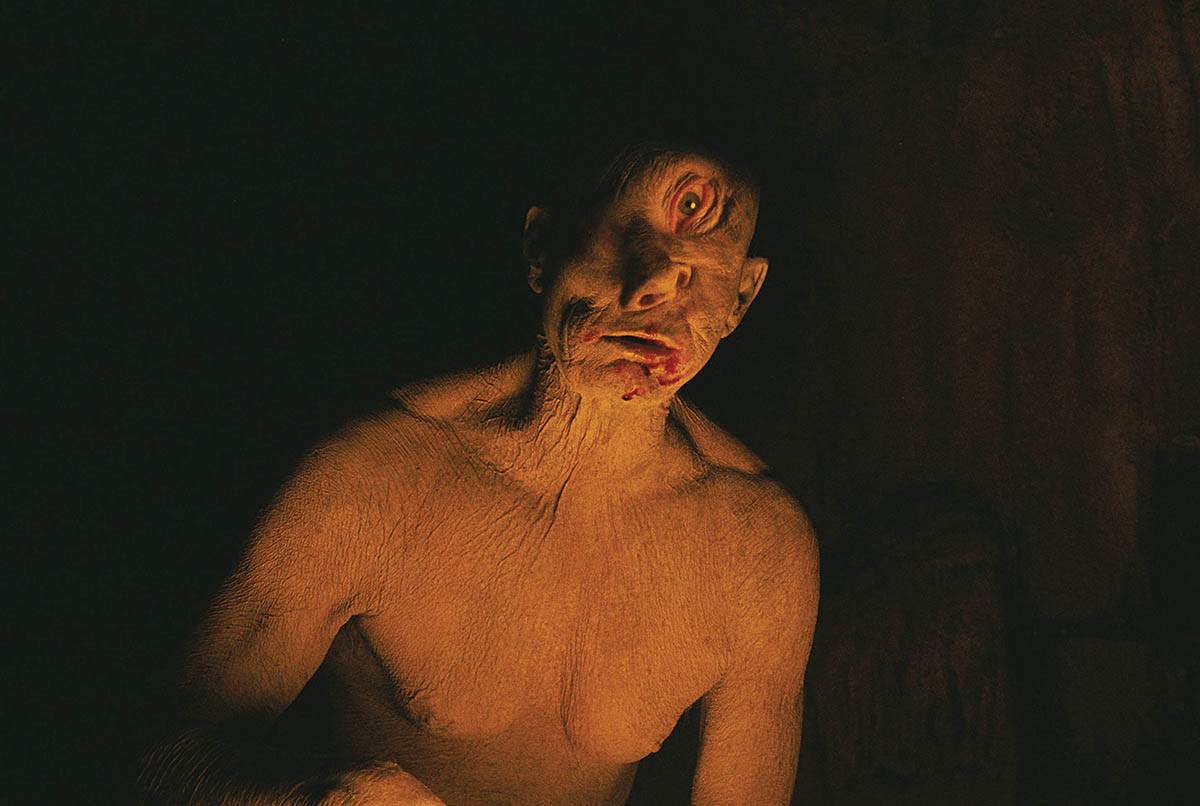
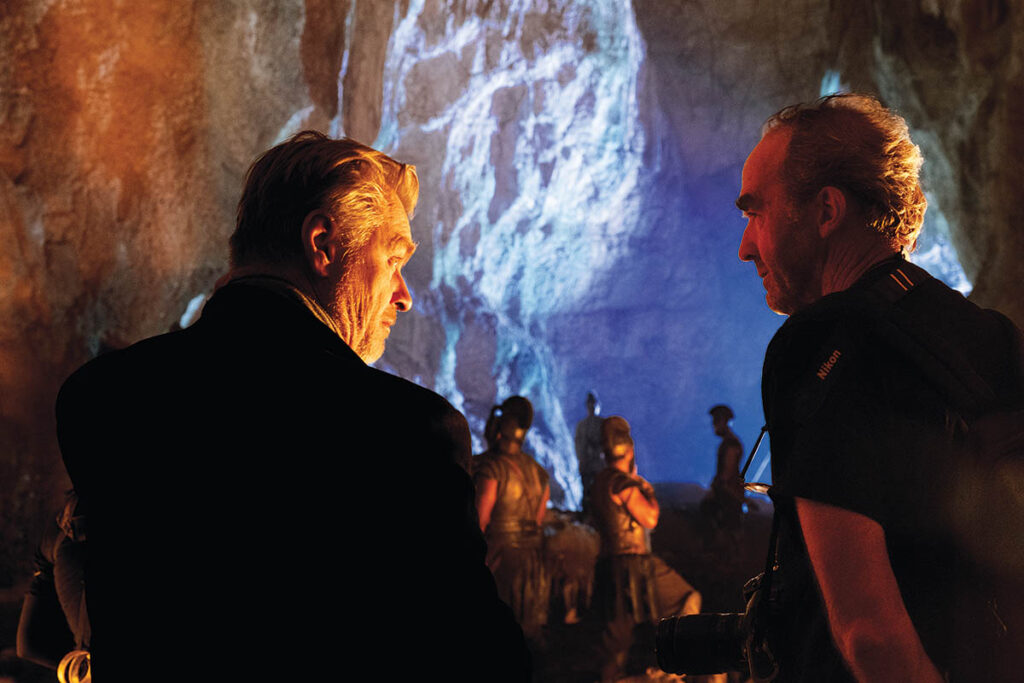
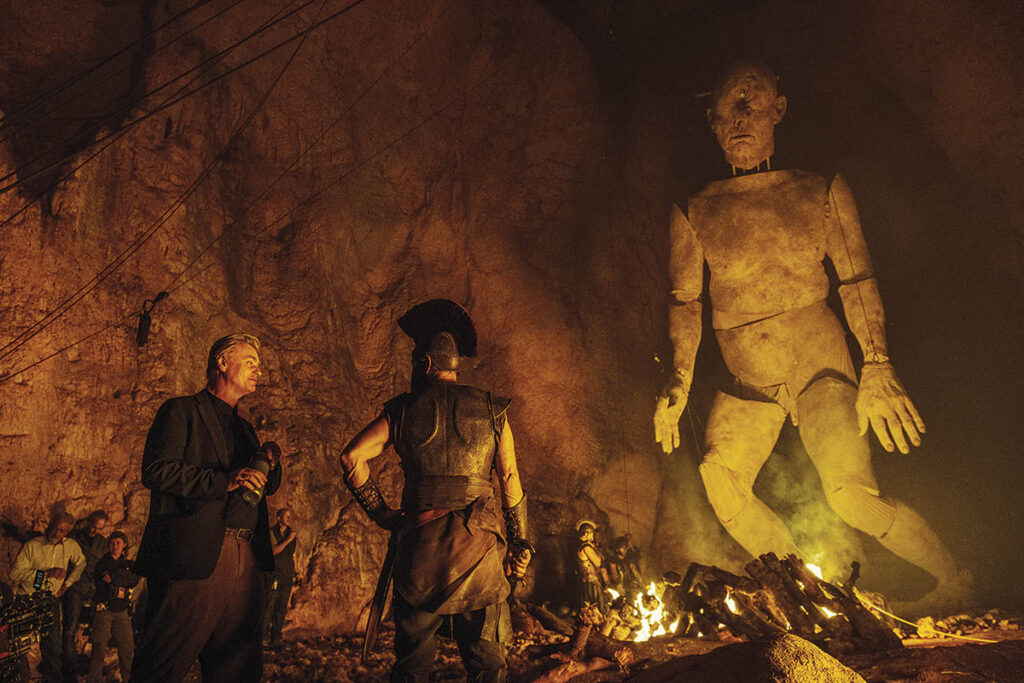
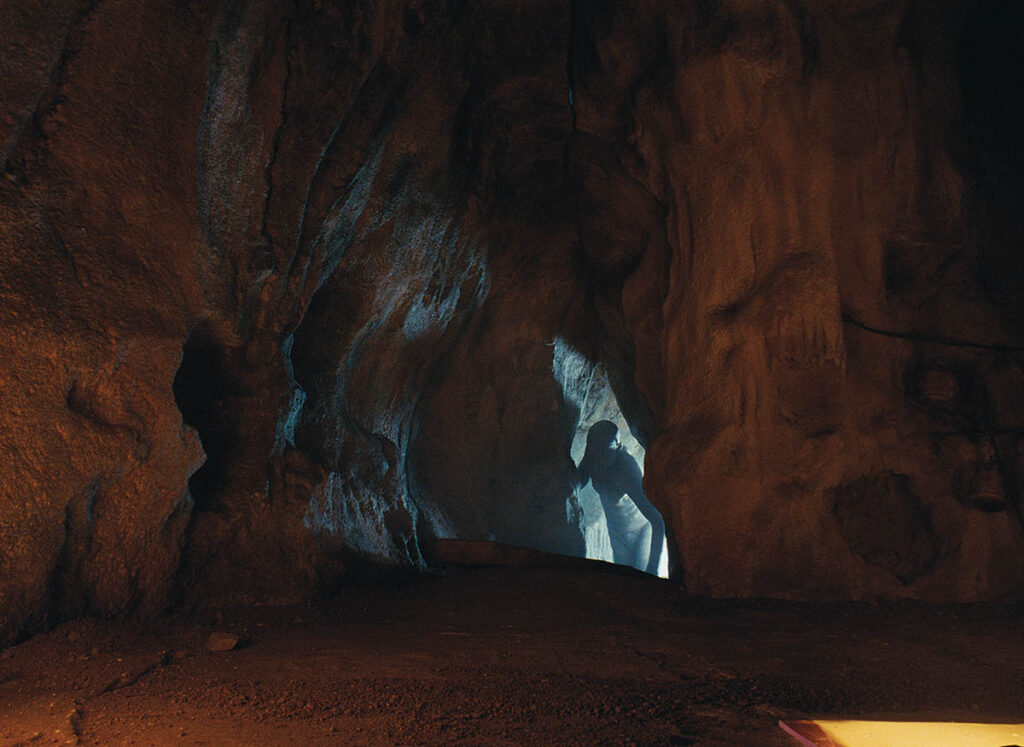
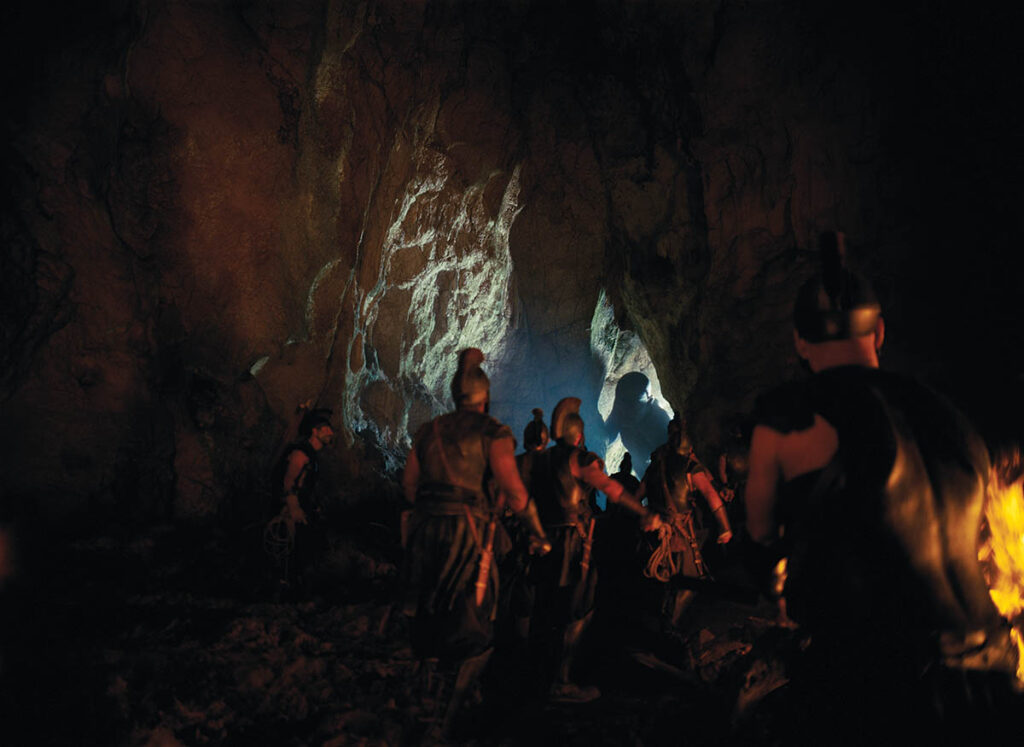
For the Cyclops, the production initially planned to shoot cave sequences on a Los Angeles stage late in the schedule. However, after Nolan discovered a natural cave in Greece during a location scout, the shooting timeline shifted dramatically, compressing the construction window for the giant creature from seven months down to two.
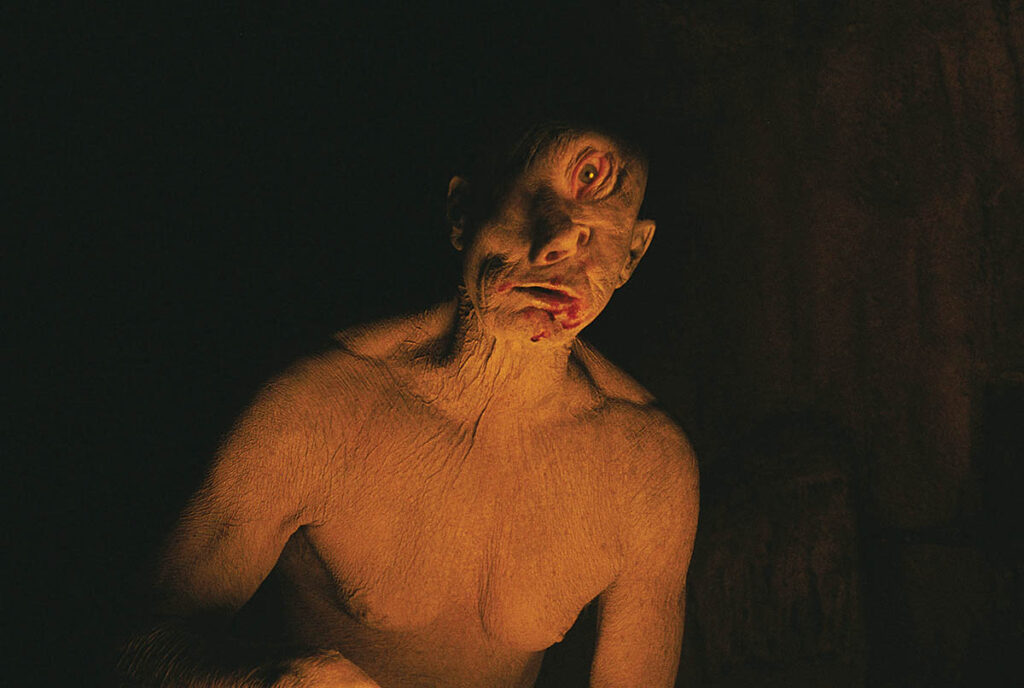
To overcome this constraint, the special effects team constructed a lightweight, 36-foot-tall stick-figure puppet operated via ropes, counterweights, and human puppeteering techniques inspired by giant street puppets seen in French parades. This simplified marionette design allowed the creature to move with an organic fluidity that would have been exceedingly difficult to achieve with a heavier animatronic model. For closer interactions, an actor in advanced prosthetic makeup performed alongside the cast, while DNEG later applied digital touch-ups and augmented miniature cave sets to match the full-scale Greek locations.
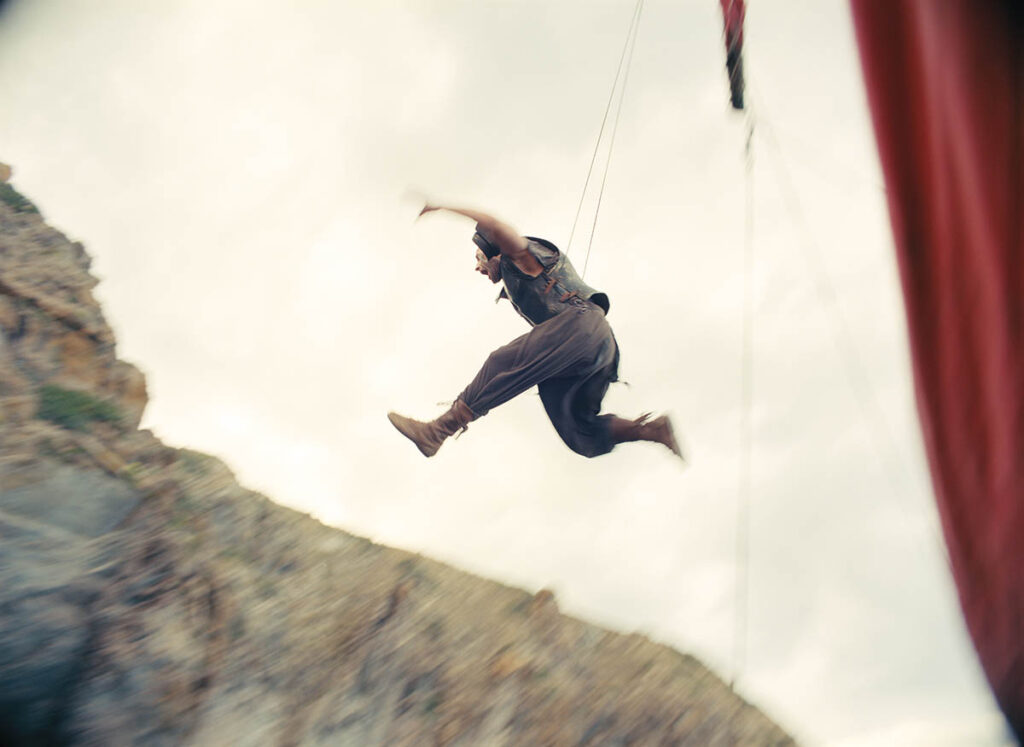
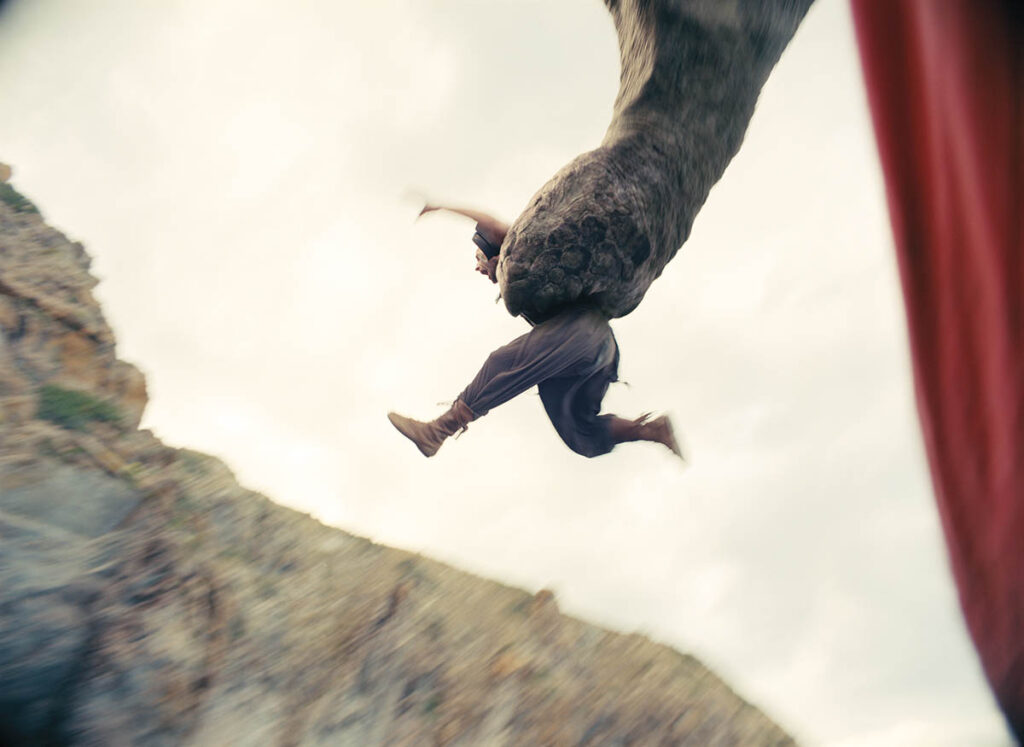
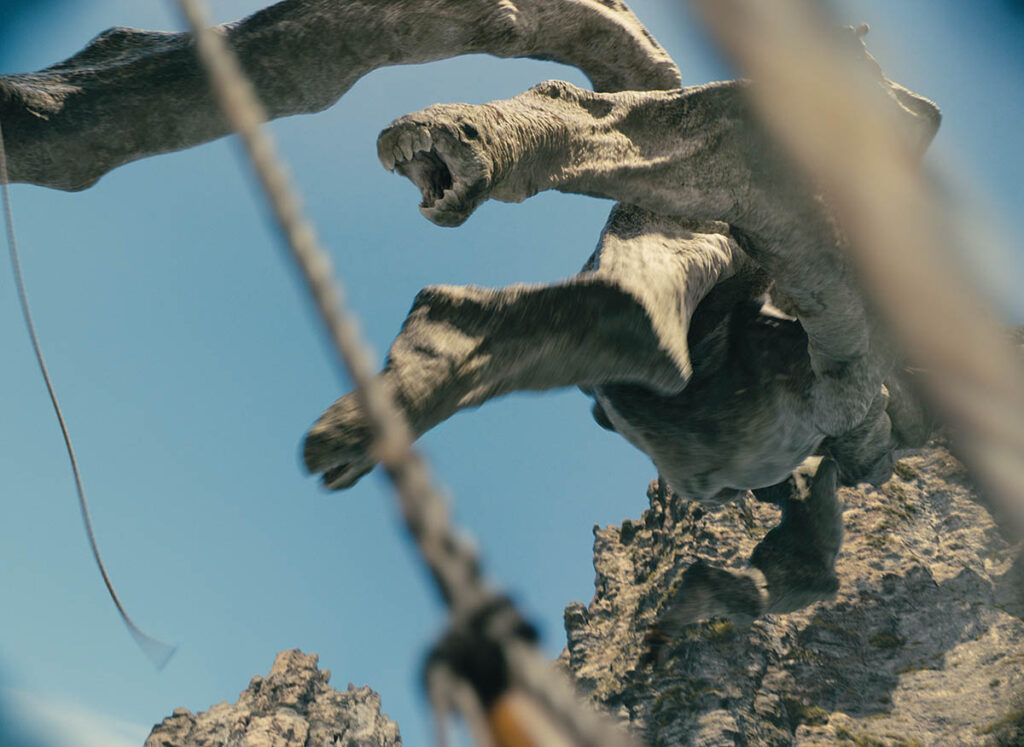
The multi-headed monster Scylla was similarly grounded in physical reality. Fisher’s team constructed a giant, foam-puppeteered practical head and neck system. Operated via wires, this physical build was used actively on set to interact with stunt performers, shatter breakaway props, destroy portions of the ship, and physically grab actors—interactions notoriously difficult to replicate purely through computer-generated imagery.
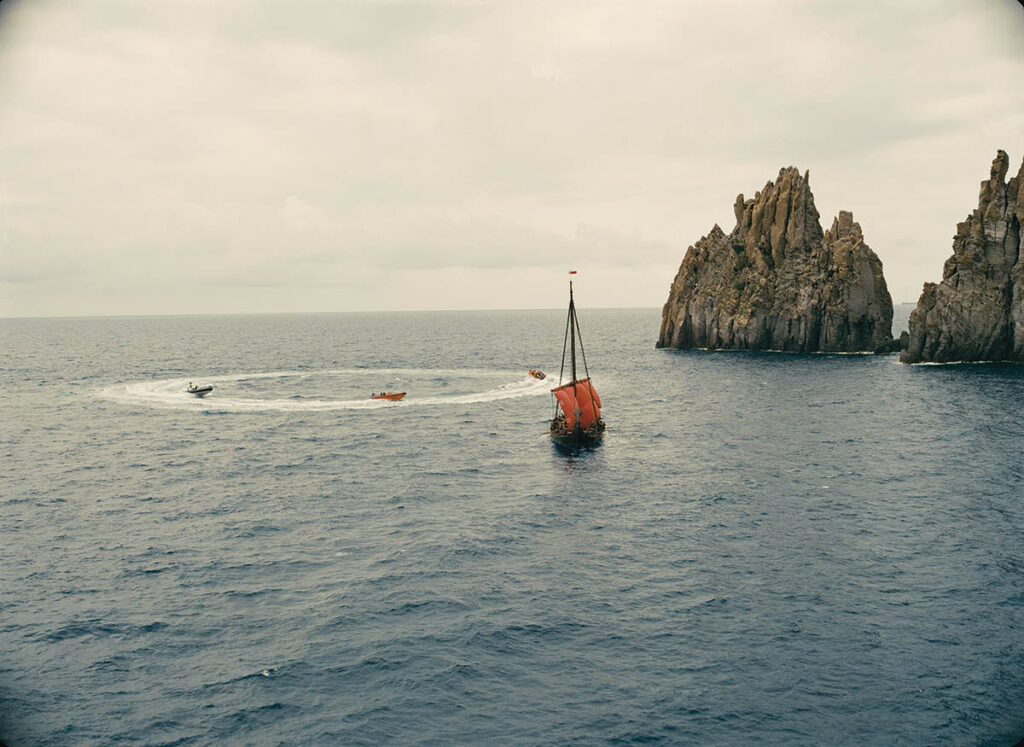
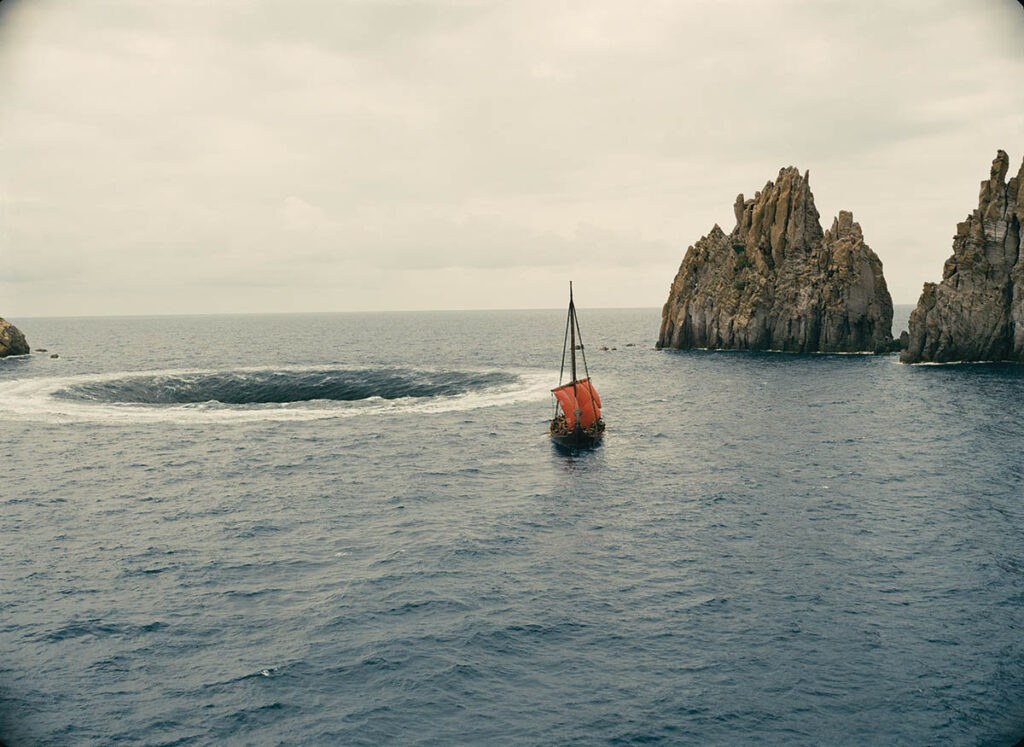
For the monstrous whirlpool Charybdis, the production scaled up practical mechanics in the open ocean. Utilizing specialized boat-like thrusters, the crew generated massive water surface disturbances to simulate the violent suction of the vortex. Digital water simulations and compositional work by DNEG were later layered into the shots to provide deep, vertiginous views down into the center of the whirlpool.
Navigating Maritime Hazards and Studio Tanks
The wrath of Zeus, manifesting as a violent oceanic storm, required a combination of unpredictable natural weather and controlled studio environments. Open-ocean sequences were filmed during genuinely inclement conditions, supplemented by massive marine fireboats—similar to those used by municipal ports—blasting high-pressure water streams across the set, much to the chagrin of lead actor Matt Damon.
For intricate shipboard destruction, such as snapping masts and breaking hulls, the production utilized the water tank facilities at Falls Lake on the Universal Studios Hollywood lot. A dedicated six-axis motion base was submerged underwater beneath a large section of ship construction, allowing the crew to execute violent, repeatable physical movements that seamlessly matched the open-ocean footage captured abroad.
Post-Production and Visual Effects Integration
With approximately 400 visual effects shots in the final cut, DNEG played a pivotal role in finalizing the film’s complex composites. Because many sequences relied heavily on 2D elements and multi-layered practical plates, Jackson and his team utilized extensive post-visualization techniques, collaborating directly with Nolan and editor Jennifer Lame.
During the editing process, editorial required rough digital composites of creatures like the Cyclops to cut scenes effectively before final rendering was complete. This demanding workflow required rapid turnaround times for vast frame counts, underscoring the deep integration of visual effects tools throughout every stage of post-production.
Furthermore, several transformations were achieved primarily in-camera. During the Circe sequence, where Odysseus’s men are transformed into swine, the production utilized specialized makeup appliances featuring transitional faces that shifted from human to animal in-camera, minimizing the need for extensive digital crowd simulations or post-production alterations.
Legacy and Thematic Resonance
As Nolan reflects on the production, the connective tissue between The Odyssey and his previous cinematic works becomes increasingly apparent. The director noted that structural elements of Homer’s epic—such as the claustrophobic tension of men trapped inside a ship’s hull while danger looms above—unconsciously influenced suspense sequences in Dunkirk, while broader thematic parallels echo throughout Interstellar.
By refusing to rely exclusively on either hyper-digital creation or rigid traditionalism, Nolan, Jackson, Fisher, and De Jong have established a new benchmark for fantasy adaptation. Through meticulous world-building, tactile practical effects, and a rigorous adherence to the psychological perspective of the Bronze Age, The Odyssey stands as a testament to the enduring viability of hybrid filmmaking on an epic scale.