Whoop Launches New Social Network Whoop Humans as Wearable Tech Giants Pivot Toward Medical Wellness and Strategic Consolidation

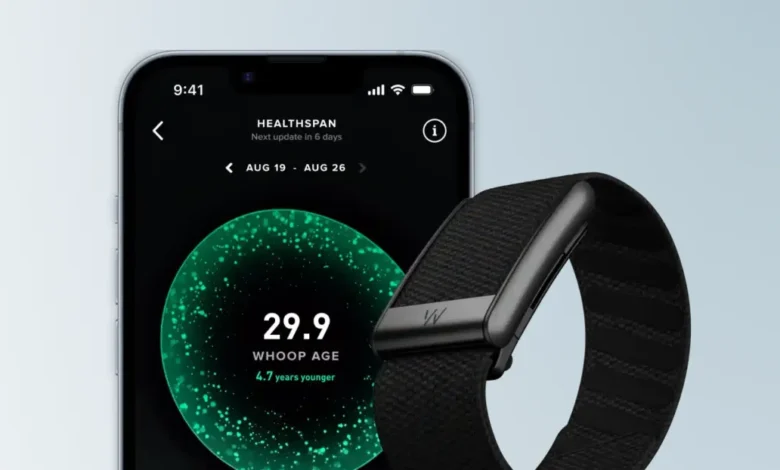
Fitness technology pioneer Whoop is significantly expanding the scope of its platform with the official rollout of Whoop Humans, a new in-app social network designed to allow its screen-less fitness band members to share health data, workouts, and lifestyle achievements with friends, family, and personal trainers.
Available to all members at no additional cost regardless of their subscription tier, the new feature shifts Whoop away from anonymous group leaderboards toward intimate, permission-based health sharing. While the company has long offered a "Teams" feature utilized by roughly half of its customer base, that existing structure relies on broad group metrics where all participants can view communal leaderboards. Whoop Humans, by contrast, operates on a strict opt-in framework. Users maintain complete autonomy over who follows them and which specific metrics—ranging from sleep performance and physiological recovery scores to strenuous workouts and personal milestones—are visible to designated followers.
The strategic deployment of this feature underscores a broader evolution within the digital health and wearables sector. As consumer hardware matures, leading manufacturers are increasingly pivoting away from basic step-counting and generic calorie-tracking toward sophisticated medical wellness, preventive healthcare, and intergenerational family health monitoring.
The Mechanics of Whoop Humans and Privacy Safeguards
The architecture of Whoop Humans has been intentionally designed to facilitate granular control. Members can curate their follower lists to accommodate various relationships. For instance, a physical trainer can monitor the performance data of multiple clients simultaneously without those clients gaining visibility into one another’s metrics. Similarly, adult children can integrate aging parents into their network to passively monitor health anomalies.
According to preliminary beta testing data cited by Whoop Chief Executive Officer Will Ahmed, user engagement patterns revealed an unexpected behavioral trend: members demonstrated higher levels of platform interaction and empathy when peers reported low recovery scores rather than optimal or near-perfect metrics. This suggests that the feature could serve as a valuable indicator of physical stress, illness, or impending burnout, allowing social circles to intervene or offer support when loved ones are struggling.
Addressing inevitable concerns regarding data privacy, executive leadership emphasized that the platform incorporates multiple safeguards. Users retain the ability to selectively share metrics, remove followers at will, or toggle a "stealth mode" that effectively darkens their profile for a designated period without requiring a complete reconfiguration of privacy settings. Furthermore, sensitive activities are excluded from default sharing permissions, while medical alerts, diagnostic information, and clinical records are entirely excluded from the social network. The company has also instituted content moderation protocols, enabling members to flag disturbing comments or media for internal review.
For younger demographics, Whoop enforces a minimum age requirement of 13—varying by international jurisdiction—allowing adolescent members to participate under standard parental and platform consent protocols. Addressing whether parents could directly track teenage accounts, executive commentary deferred to the comprehensive suite of privacy controls rather than enforcing mandatory parental oversight. Furthermore, the company reiterated its long-standing corporate policy prohibiting the sale or third-party licensing of user health data, reinforcing the stance that revenue generation remains strictly tied to subscription memberships rather than data monetization.
The Strategic Shift Toward Medical Wellness and Geriatric Care
The introduction of Whoop Humans arrives as the company accelerates its transition into the medical wellness space, directly mirroring the trajectory of its primary competitor, Oura. Both companies are aggressively positioning themselves to capture the demographic and financial opportunities presented by an increasingly aging global population.
Over recent product cycles, Whoop has integrated several advanced clinical tools into its ecosystem, including FDA-cleared electrocardiogram (ECG) functionality, atrial fibrillation detection, blood pressure trend analysis, comprehensive at-home blood testing integration, and medical record uploading capabilities. This clinical pivot has yielded measurable demographic shifts. Over the preceding 18 months, Whoop has reported substantial growth among consumers aged 60 and older.
In a significant validation of its clinical utility, Whoop secured inclusion in a specialized Medicare program designed to reimburse qualifying wearable devices that empirically demonstrate improvements in patient health outcomes. This milestone has established a foundational base of Medicare-enrolled users, positioning the hardware not merely as a consumer fitness accessory, but as a recognized clinical intervention tool.
Industry Consolidation and Competitive Landscapes
The broader wearable technology landscape is currently undergoing rapid transformation, characterized by aggressive strategic acquisitions and heightened corporate consolidation. Oura recently made headlines by announcing a $625 million acquisition of Counsel Health, an artificial intelligence-native primary care startup offering on-demand physician access.
When questioned regarding industry consolidation, Ahmed indicated that the coming years will likely see continued mergers and acquisitions involving AI-focused startups, clinical telehealth platforms, and hardware manufacturers. Boasting a robust relationship with a rapidly expanding subscriber base, Ahmed asserted that Whoop is positioned to act as an aggressive acquirer rather than a target.
While maintaining discretion regarding immediate financial metrics—declining to disclose exact revenue figures or current profitability status—Whoop leadership provided visibility into its operational scale. The company’s software platform membership has expanded by more than 70 percent annually for three consecutive years, with projections indicating the active user base will approach 4 million members by the close of the calendar year. A massive funding round earlier this year valued the enterprise significantly, and leadership has confirmed intentions to pursue an Initial Public Offering (IPO) in the future, though no definitive timeline has been established. This contrasts with competitor Oura, which reportedly shelved its planned IPO of up to $2.2 billion due to prevailing market volatility.
Expanding Retail Footprints and Market Competition
To sustain its rapid expansion, Whoop is diversifying its distribution channels beyond direct-to-consumer digital sales. Beginning next March, Whoop devices will enter traditional brick-and-mortar retail via a partnership with beauty and lifestyle retailer Ulta. The rollout will initially target approximately 500 retail locations, with a long-term strategic goal of scaling presence to over a thousand stores nationwide. This retail strategy aligns with internal demographic trends; Whoop reports that its female audience has more than doubled year-over-year, driven in part by expanded marketing efforts and dedicated physiological tracking features tailored to women’s health.
The competitive arena, however, remains intensely contested. Whoop faces ongoing competition from established ecosystem giants. Google continues to expand its footprint with screen-less fitness tracking alternatives such as the Fitbit Air band, while consumer technology titan Apple is reportedly developing a dedicated fitness tracker specifically engineered to challenge Whoop’s dominance in the screen-less, recovery-focused wearable market.
Despite the looming presence of Silicon Valley competitors, executive leadership remains unfazed. Maintaining that the mere development of competing hardware does not guarantee consumer adoption, Ahmed emphasized that Whoop’s continued market viability rests on its unwavering dedication to serving health-conscious consumers who prioritize rigorous data, actionable insights, and community-driven wellness.