Sprout Social Unveils 2027 Strategic Roadmap and Advanced AI Capabilities at Q4 Breaking Ground Innovation Event


As social media marketing enters an increasingly complex era defined by massive data accumulation and shifting consumer channels, organizations are under mounting pressure to extract actionable intelligence rather than simply accumulating metrics. Addressing this industry-wide challenge, enterprise social media management platform Sprout Social hosted its quarterly virtual innovation event, Breaking Ground, to outline a definitive three-step blueprint for setting up a successful 2027 social strategy. The 30-minute broadcast brought together product experts, industry analysts, and prominent social media leaders from institutions such as Indiana University and Bell Bank to discuss how brands can leverage cutting-edge analytics, contextual market intelligence, and expanded publishing workflows to stay ahead of the curve.
The year-end virtual showcase served as a comprehensive recap of Sprout Social’s recent technological milestones and provided a forward-looking glimpse into upcoming platform capabilities slated for release through the fourth quarter of 2026 and into the upcoming fiscal year. Throughout the session, presenters emphasized that modern social media teams are no longer limited by a lack of data; rather, they are constrained by the sheer volume of unstructured information and the difficulty of translating disparate metrics into cohesive, real-world business actions. By focusing on a structured methodology—analyzing internal data, contextualizing it with broader market behaviors, and executing targeted omnichannel campaigns—brands can bridge the gap between data collection and strategic execution.
Analyzing Social Data for Actionable Insights

The foundation of Sprout Social’s 2027 strategic framework begins with a fundamental reevaluation of how organizations interact with their internal social data. Historically, social media teams have grappled with siloed dashboards, cumbersome tagging systems, and fragmented reporting tools that obscure the underlying narratives of their campaigns. To resolve these friction points, Sprout has introduced substantial enhancements to Trellis, its proprietary conversational AI teammate, designed to democratize data access and streamline analytical workflows.
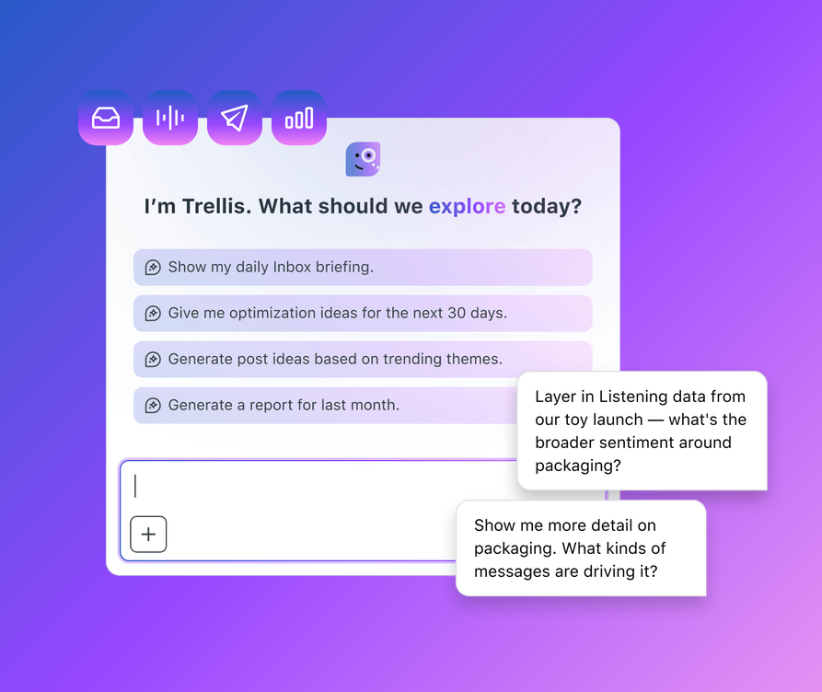
Through natural language processing, users can now query Trellis in plain language to uncover nuanced themes, longitudinal trends, and data-backed recommendations. For instance, a marketer can initiate a broad inquiry such as what drove engagement over the past year, and subsequently prompt the system to identify high-yield areas for future investment. This conversational continuity allows teams to drill down into specific performance metrics without navigating complex database queries or constructing manual pivot tables. Furthermore, Sprout has deployed a platform-wide search functionality that consolidates tags, labels, users, and profiles into a single query interface, allowing Trellis to pull relevant backend data instantaneously.
Complementing these conversational AI capabilities are significant structural upgrades to tagging mechanisms. Tags have long served as the analytical backbone of social media categorization, yet maintaining consistency across large enterprise teams has remained a persistent challenge. Sprout’s new iteration incorporates AI-recommended tags to accelerate initial setup, mandatory tagging protocols to eliminate oversight gaps, and hierarchical nesting capabilities that allow teams to organize tags up to seven levels deep. This granular classification structure enables organizations to slice their performance data with unprecedented precision.
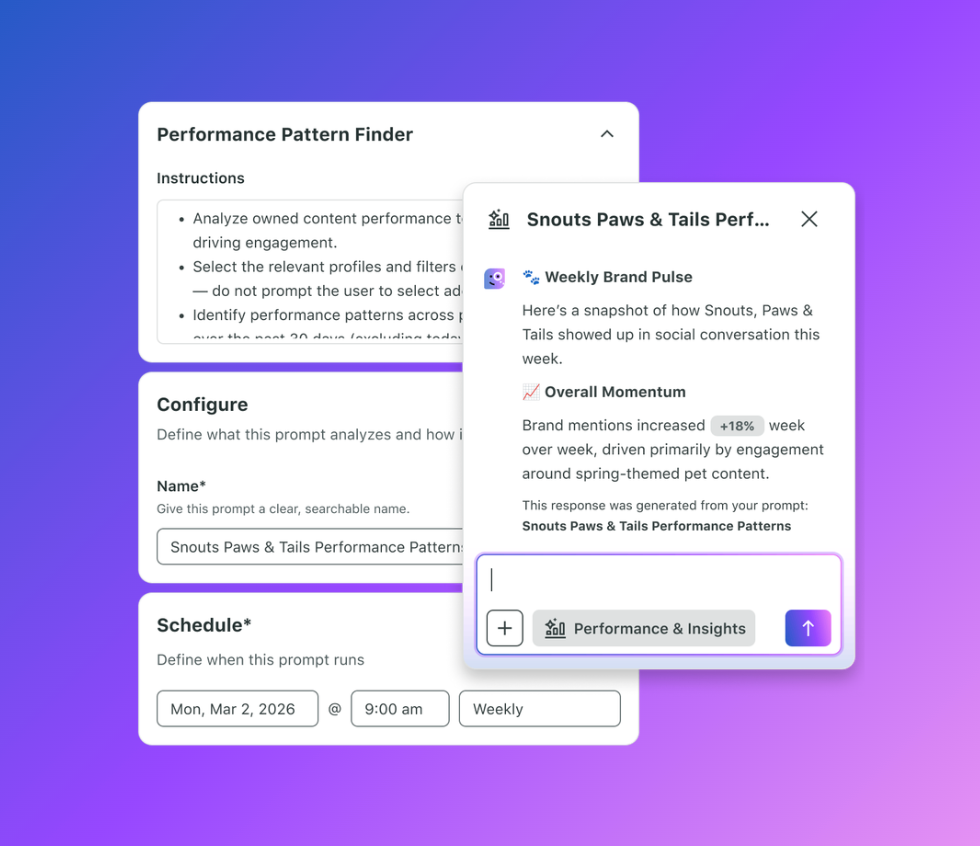
To ensure that analysis remains an ongoing operational habit rather than an ad-hoc project, Sprout unveiled Trellis Studio. This modular environment allows users to configure custom analytical skills—such as monitoring sentiment trends and volume spikes—and execute them on automated schedules aligned with corporate reporting cadences. Upon completion of a scheduled task, the system triggers a notification, inviting the user to engage in a dialogue with Trellis regarding the findings. To support flexible utilization across expanding teams, Sprout also introduced Trellis Plus: Shared Credits, an account-level pooling model that distributes AI usage across personnel rather than enforcing rigid per-user caps.
Contextualizing Insights with Broader Market Behaviors
While internal analytics illuminate how audiences interact directly with a brand’s owned channels, successful strategic planning requires a panoramic view of the wider macroeconomic and cultural landscape. Understanding what consumers say directly to a brand is only half the equation; organizations must also comprehend the broader discourse circulating about their enterprise and industry at large. To address this requirement, Sprout Social has integrated advanced listening and sentiment analysis tools designed to synthesize external market coverage.
A primary component of this contextualization layer is the introduction of Listening Topic Highlights. Operating continuously in the background, this feature automatically reviews an organization’s designated listening topics on a daily basis, isolating meaningful statistical shifts, and generating plain-language explanations detailing what changed and why it holds strategic importance. By surfacing these insights directly on the main Sprout dashboard, the platform eliminates the need for analysts to manually comb through dense charts or reconstruct fragmented media narratives. Teams can immediately transition from a high-level highlight to examining the underlying social posts or consulting Trellis for deeper exploratory dialogue.
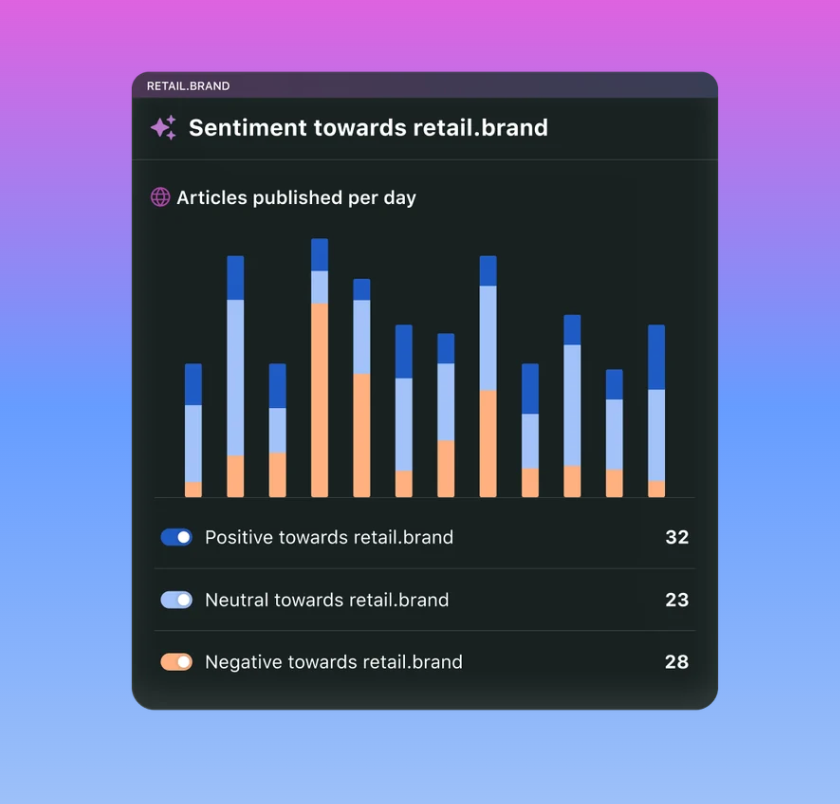
Expanding upon internal listening data, Sprout unveiled NewsWhip AI Sentiment Analysis during the Breaking Ground event. Engineered to ingest and evaluate global news coverage and web publications through the specific lens of an individual brand, the tool assesses how external news cycles impact public perception. It tracks proprietary messaging pillars and equips corporate leadership with definitive answers regarding how external media coverage affects brand equity. By quantifying news sentiment as positive, negative, or neutral on a daily basis, organizations can dynamically adjust their communication strategies in response to shifting public narratives.
Execution and Omnichannel Workflow Expansion
Insights and contextual intelligence hold little commercial value if they fail to inform downstream operational execution. Modern consumers fluidly transition across a diverse ecosystem of digital platforms, necessitating agile workflows that allow brands to meet audiences wherever conversations naturally occur. Sprout Social’s 2027 roadmap heavily emphasizes ecosystem expansion, enabling marketers to manage an increasingly fragmented channel strategy from a centralized operational hub.
Earlier in the year, Sprout extended its publishing capabilities to encompass Snapchat and Reddit, granting enterprise teams native access to communities that historically required separate, manual management workflows. Building upon this omnichannel expansion, Sprout announced the upcoming launch of YouTube Posts for the fourth quarter of 2026. This integration will allow creators and brands to schedule, publish, and manage community posts directly within their existing Sprout interface, streamlining audience engagement on one of the world’s largest video platforms.
Concurrently, Sprout Social is overhauling its Influencer Marketing AI Campaigns to eliminate administrative bottlenecks associated with partnership management. Under the upgraded framework, marketers can upload campaign briefs and allow integrated AI agents to configure campaign parameters, identify matching creators, and draft personalized outreach communications. Selected creators are then organized into a centralized, customizable table equipped with AI-driven summary columns that distill recent activity and content updates, sparing teams from manual document excavation.
In keeping with corporate disclosure standards, Sprout’s presentation of these upcoming product capabilities included formal forward-looking statements. Company representatives noted that projections regarding Q4 rollouts and 2027 features involve risks and uncertainties, and that actual commercial releases may vary. Detailed disclosures regarding these forward-looking statements and associated risk factors are maintained in the company’s official filings with the Securities and Exchange Commission, including its most recent Form 10-K and Form 10-Q documents.
Industry Perspectives: Enterprise Leaders Share Best Practices
To ground the technological discussion in operational reality, the Breaking Ground session featured a panel discussion with prominent social media executives: Jill Trimbach of Indiana University and Marie Obsuna of Bell Bank. Representing complex institutional environments, both leaders shared tactical reflections on navigating the communications landscape of 2026 and preparing for the strategic demands of the upcoming year.
Trimbach and Obsuna examined the indispensable workflows that sustain their daily operations, detailing protocols for rapid mobilization when unexpected cultural moments or viral crises accelerate across digital channels. The discussion underscored a shared consensus among enterprise social leaders: the necessity of breaking down internal organizational silos and establishing standardized, automated response frameworks. Attendees seeking further operational guidance were directed toward published institutional case studies detailing how Indiana University and Bell Bank scaled their respective social programs utilizing Sprout’s infrastructure.

Actionable Preparation: The 2027 Starter Checklist
Concluding the 30-minute broadcast, Sprout presented a pragmatic four-point starter checklist designed to help organizations secure an immediate operational advantage ahead of the new calendar year. The framework operationalizes the session’s core themes—analyzing, contextualizing, and acting—into tangible preliminary assignments:
- Initiate Tagging Infrastructure: Organizations lagging in data organization are advised to leverage AI-recommended tags for rapid categorization, while mature teams are encouraged to audit existing taxonomies for deeper analytical precision.
- Engage Trellis Chat: Marketers should initiate conversational queries regarding brand performance and industry benchmarks, utilizing Sprout’s dedicated AI Prompt Library for structured conversational templates.
- Deploy Trellis Skills: Teams are encouraged to configure automated analytical skills tailored to their internal reporting cadences to maintain continuous oversight of sentiment trends.
- Professional Development: Sprout recommended enrolling team members in its comprehensive Social Intelligence educational course to ensure personnel are fully proficient in advanced data strategy prior to the fiscal year transition.
By synthesizing sophisticated conversational AI, automated market listening, and expanded publishing integrations into a unified operational dashboard, Sprout Social’s Breaking Ground event provided enterprise organizations with a definitive blueprint for navigating the complexities of digital communication in 2027. The full webinar replay and associated educational resources remain accessible via the Sprout Social platform for industry professionals seeking a detailed walkthrough of the demonstrated capabilities.