The Ultimate Guide to Social Media Audience Segmentation and Live Data Intelligence


Modern enterprises operating in an increasingly digital economy face a paradox of abundance: while social media platforms offer an unprecedented goldmine of real-time insights into consumer preferences, behaviors, and motivations, traditional static marketing models are rapidly losing their efficacy. In the contemporary digital ecosystem, dividing consumer cohorts solely by static demographic details—such as age, self-reported income, or rigid geographic boundaries—no longer suffices for brand survival or competitive advantage. Instead, leading organizations are shifting toward intentional social audience segmentation driven by live conversation data, sentiment analysis, and dynamic behavioral tracking.
This evolution in audience intelligence empowers corporate decision-makers to optimize capital expenditures, uncover untapped market verticals, and drive sustainable revenue streams. However, social media audience segmentation is no longer viewed as a static, one-off marketing exercise conducted at the launch of a new campaign. Rather, it has transformed into a dynamic, cyclical business intelligence discipline designed to spot emerging opportunities, mitigate consumer fatigue, and ground long-term corporate strategy in unprompted consumer data.
Understanding the Macro Shifts Driving Audience Segmentation
The urgent necessity for advanced social media audience segmentation is largely underpinned by a profound degradation of consumer trust and attention across global digital channels. According to recent data from the Q1 2026 Sprout Pulse Survey, contemporary consumers have grown exceptionally particular regarding the content they choose to engage with online. Fully two-thirds of surveyed consumers—66%—reported feeling significantly more selective about their digital interactions compared to the previous year.

A primary contributor to this eroding trust is the proliferation of what industry analysts term "AI slop"—undifferentiated, one-size-fits-all content mass-produced by automated systems without regard for genuine consumer resonance. Over half of survey respondents, precisely 56%, noted that they encounter this generic, low-effort content often or very often on their feeds. Despite this widespread consumer alienation, numerous brands continue to pour capital into generic, high-volume content strategies. This misallocation of resources ultimately results in wasted advertising budgets, particularly as modern social algorithms increasingly prioritize relevance, authenticity, and engagement quality over raw reach.
Audience segmentation serves as the critical mechanism that enables brands to achieve genuine personalization and cultural resonance. By moving away from broad assumptions and focusing on distinct groups driving online conversations, organizations can tailor their messaging effectively without necessarily inflating their operational headcount or marketing budgets.
Defining Social Media Audience Segmentation and Its Core Pillars
At its core, social media audience segmentation is the systematic process of breaking down a broader target audience engaging across social networks into smaller, distinct groups based on shared characteristics, behaviors, or psychological interests. Unlike traditional market segmentation, which relies heavily on historical Customer Relationship Management (CRM) databases or periodic survey inputs reflecting past behavior, social segmentation draws directly upon real-time social data. This encompasses live conversational themes, micro-moments of engagement, and immediate sentiment shifts.
Segmentation represents a foundational pillar of modern social media intelligence, or SOCMINT. It allows organizations to transcend outdated audience assumptions by uncovering the distinct, active sub-cultures driving online discourse. Armed with these insights, corporate teams across customer care, product innovation, campaign planning, and executive leadership can make targeted decisions aligned perfectly with the current pulse of the market.
The Four Dimensions of Social Media Audience Segments
To build a robust segmentation framework, modern brands must analyze four primary dimensions of audience data: demographic, psychographic, behavioral, and geographic. While each provides a unique lens through which to view the consumer base, their true analytical power is unlocked when combined.
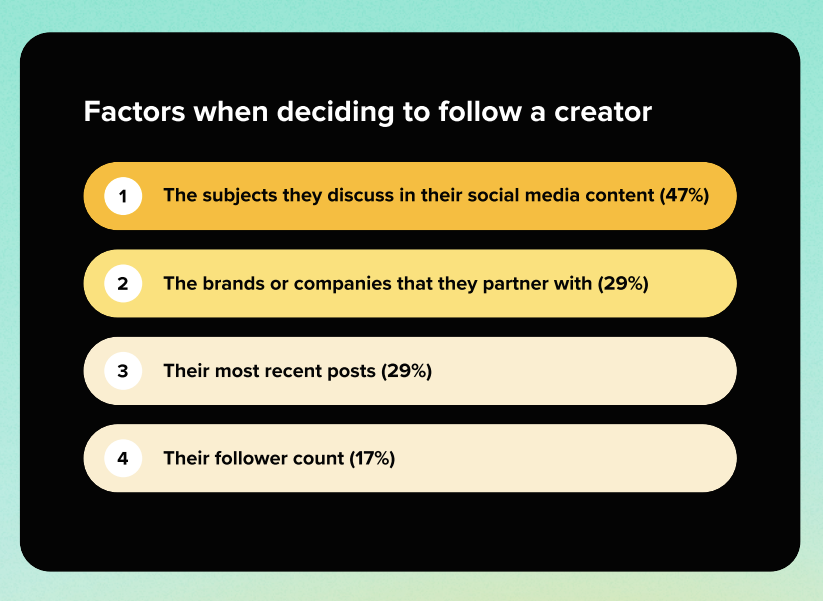
Demographic segmentation examines basic traits such as age, gender, and follower counts, which are typically gathered via self-disclosed profile information or network-level analytics. While demographics offer a reasonable baseline—such as noting that younger demographics gravitate toward TikTok and Instagram Reels while older users remain active on Facebook—they possess inherent limitations. Self-reported data is frequently inaccurate, as users routinely omit fields or enter false details to protect their digital privacy. Furthermore, demographic targeting is experiencing a sharp decline in predictive power. Data from the 2026 Influencer Marketing Report indicates that only 17% of consumers check an influencer’s follower count before deciding to follow them, while 47% prioritize content topic and behavioral alignment above all else. Consequently, demographics should serve merely as a starting point rather than the primary driver of a segmentation strategy.
Psychographic segmentation classifies individuals based on psychological criteria, including personal values, underlying attitudes, and internal motivations. By monitoring unprompted comments, posts, and shares, brands can decode the belief systems of their audience. For instance, an audience regularly discussing climate change and environmental stewardship can be grouped into an eco-conscious segment, allowing brands to pivot their messaging toward ethically sourced materials, sustainable supply chains, or community-led environmental initiatives.
Behavioral segmentation shifts the focus from what users believe to how they act. By observing digital habits—such as posting frequency, preferred content formats (e.g., carousels, static images, or short-form video), and comment section interactions—brands can uncover the underlying "why" behind consumer decision-making. Identifying a cohort consistently engaging with discount codes, promotional giveaways, and budget-conscious shopping content reveals a clear consumer motivation centered around price sensitivity and value optimization.

Geographic segmentation evaluates how physical location influences digital habits and purchasing power. Utilizing geotagged posts, regional dialects, location tags, and region-specific platform preferences (such as the dominance of Instagram in certain European and Asia-Pacific markets versus Facebook in North America), brands can tailor localized campaigns. However, geographic segmentation yields the highest ROI when paired with behavioral and demographic overlays—such as examining parents in Australia aged 35 to 44 discussing screen-time management and school readiness.
Essential Technological Infrastructure for Modern Segmentation
Executing a sophisticated segmentation strategy requires moving beyond manual data collection and adopting enterprise-grade technological tools. Modern organizations rely on three critical technological pillars: social listening platforms, CRM integrations, and artificial intelligence analysis.
Social listening tools transform segmentation from a reactive refinement tactic into an active discovery mechanism. Because social media platforms are saturated with unprompted, authentic consumer data, listening tools can surface emerging trends and audience segments that businesses did not even know to look for. Prominent examples of this phenomenon are well-documented across global brands. E.l.f. Cosmetics utilized social listening to identify an organic consumer trend wherein users repurposed empty foundation bottles into oversized custom lip glosses. By capitalizing on this community-led behavior with a dedicated campaign, e.l.f. generated over 85 million organic views, two million engagements, and more than 1,000 user-generated videos, ultimately leading to the launch of a limited-edition DIY Halo Gloss Kit. Similarly, oat milk pioneer Oatly monitored surging demand for matcha lattes across Reddit, X, Instagram, and TikTok, translating these social signals directly to their Research and Development teams to formulate a highly successful new beverage product line.
CRM integrations bridge the gap between social audience intelligence and first-party customer data. By connecting social listening platforms with enterprise tools like Salesforce or HubSpot, organizations can cross-reference social activity with lead status, customer lifetime value, and historical purchase data. This integration allows companies to validate whether emerging online segments are genuinely driving revenue and long-term retention or merely participating in passing digital fads.

Artificial intelligence analysis streamlines the operational lift required for large-scale data segmentation. AI-driven agents, such as Sprout Social’s Trellis, continuously monitor shifting engagement trends, sentiment anomalies, and audience signals across billions of data points, synthesizing complex datasets into executive-ready recommendations without requiring exhaustive manual tagging.
Step-by-Step Construction of a Social Media Segmentation Strategy
Deploying a sustainable audience segmentation strategy requires a disciplined, multi-stage framework that integrates seamlessly across departments.
Step 1: Define Business Objectives. Every segmentation initiative must begin with a clear corporate goal, whether it is driving brand awareness, capturing qualified leads, or accelerating online sales. Brand awareness initiatives necessitate focusing on top-of-funnel segments with broad reach and high share rates, whereas lead generation requires prioritizing high-intent behavioral cohorts who actively click product links or submit direct inquiries.
Step 2: Aggregate Social and Listening Data. Organizations must consolidate incoming data streams from native platform analytics, listening software, and third-party dashboards. Utilizing advanced Boolean search queries and AI-assisted query builders helps filter out irrelevant digital noise, ensuring that listening streams capture precise keywords, product names, and sentiment markers relevant to the brand’s core mission.

Step 3: Identify Patterns and Structured Themes. Rather than relying on vague shared interests, brands must establish specific listening themes that map directly to operational objectives—such as competitor complaints, product misconceptions, feature requests, or emerging customer frustrations. Structuring data into these distinct conceptual buckets allows teams to spot systemic operational gaps and formulate rapid commercial responses.
Step 4: Validate Segments Against Enterprise Data. Cross-referencing social segments with internal CRM and BI repositories ensures that observed digital behaviors translate into tangible customer value. Correlating social feature-request conversations with high-tier customer accounts validates segments prime for targeted upsell initiatives or exclusive product beta-testing programs.
Step 5: Activate Segments Across Cross-Functional Teams. Historically, social data has remained siloed within marketing departments. According to the 2026 Social Intelligence Report, only 36% of organizations allow social insights to inform cross-functional decision-making outside of marketing, with Research and Development utilizing such data merely 18% of the time. However, when segment insights are systematically routed to Customer Experience (CX) and Product teams—enabling them to proactively address recurring complaints, resolve onboarding friction, and refine self-service documentation—customer retention rates improve substantially.
Implications and Future Outlook for Enterprise Intelligence
As digital platforms continue to evolve, the distinction between static market research and dynamic social intelligence will define corporate market leadership. Organizations that relegate social media segmentation to a routine, isolated reporting function will find themselves increasingly disconnected from rapidly shifting consumer priorities. Conversely, enterprises that embrace audience segmentation as an agile, live intelligence discipline will secure a definitive competitive edge, ensuring long-term relevance, optimized capital deployment, and sustained customer loyalty in an unpredictable economic landscape.