Transport for London faces backlash over ambiguous public safety advertisement as commuters question design choices and accountability

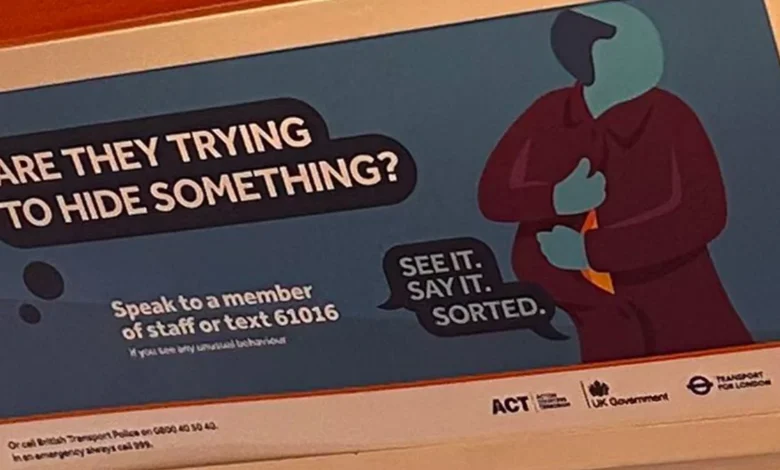
Transport for London (TfL) has found itself at the center of a significant public relations crisis following the appearance of a controversial advertisement across its network. The poster, which featured an abstract, minimalist illustration and the provocative tagline "Are they trying to hide something?", sparked immediate confusion and widespread outrage among commuters. The incident has raised critical questions regarding the efficacy of the "Corporate Memphis" design style in public service announcements (PSAs), the oversight of advertising space on public infrastructure, and the transparency of government-affiliated campaigns.
The Anatomy of the Controversy
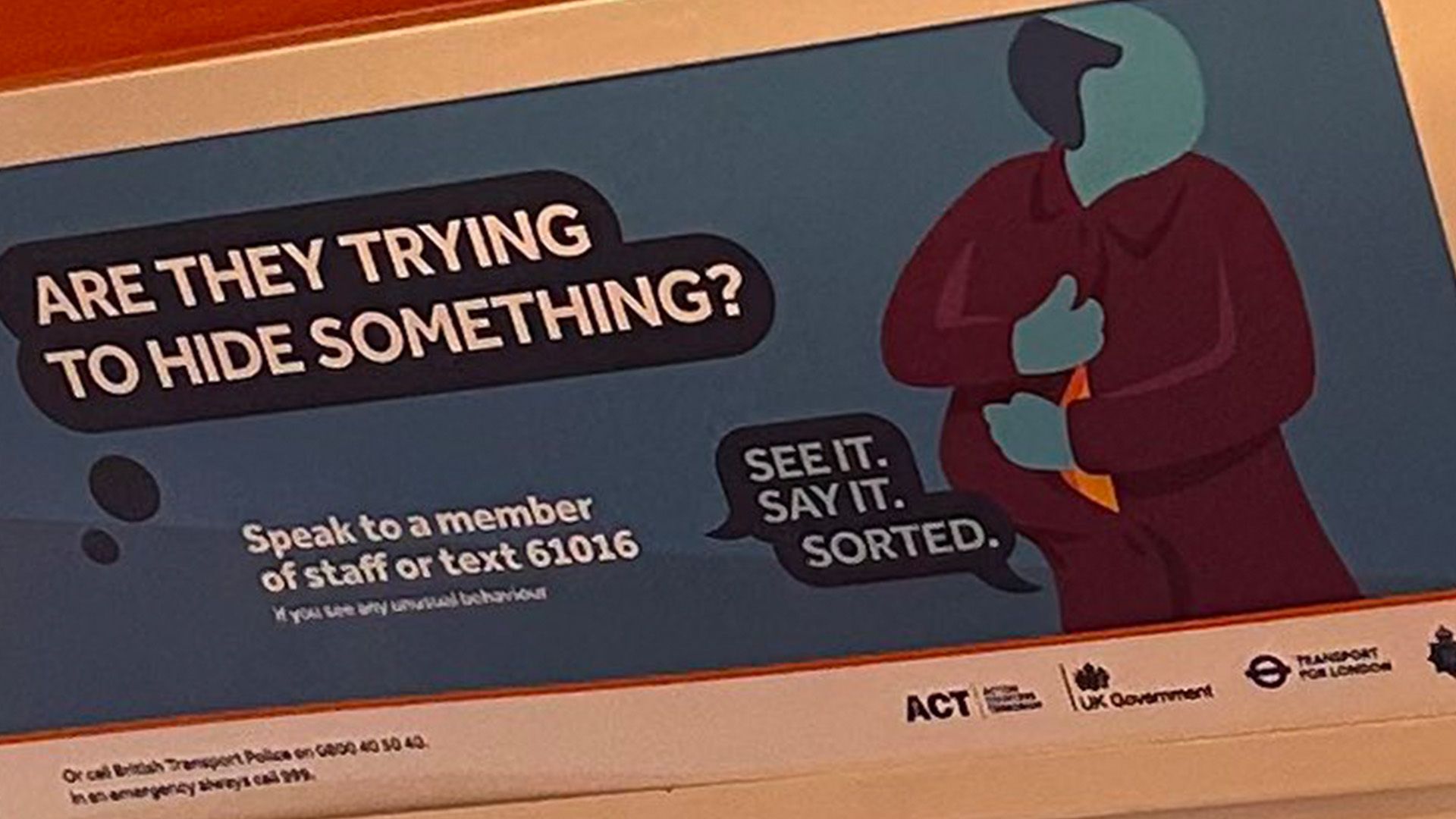
The advertisement, which began appearing on London’s public transport network in late October 2026, utilized a flat, characterless art style often associated with corporate branding. The design depicted a figure that many commuters interpreted as a woman wearing a hijab. Given the accompanying copy—"Are they trying to hide something?"—the juxtaposition of the imagery and the text was widely perceived as a discriminatory insinuation.
Social media platforms, particularly X (formerly Twitter), became the primary arena for public dissent. Commuters shared photographs of the posters, labeling them as "appalling" and "disgusting." The ambiguity of the art style, intended to be universal, instead became a canvas for political and social projection. Critics pointed out that in a city as diverse as London, the use of imagery that could be interpreted as targeting a specific religious or ethnic group in a security context was a significant failure of judgment.
One user on X remarked, "Suspicion, paranoia and ethnically ambiguous abstract art—1984 is here in full force." The discourse quickly evolved from criticisms of the design to deeper concerns regarding the messaging of state-funded or public-facing security campaigns. The debate highlighted a growing fatigue among the public regarding messaging that relies on surveillance-state rhetoric.
Chronology of Events
The timeline of the incident reflects a rapidly escalating series of public complaints followed by a confused institutional response:
- October 24–25, 2026: Reports of the posters begin to surface on social media as commuters spot them in various carriages across the London Underground network.
- October 25, 2026: Public outrage peaks as the images go viral. Users tag the Mayor of London, TfL, and relevant transport authorities demanding an explanation.
- October 25, 2026 (Late): TfL issues an initial response, acknowledging the complaints and stating that an investigation is underway.
- October 26, 2026: TfL issues a formal statement claiming the posters were "unauthorized" and the result of "flyposting"—the illegal placement of posters without consent. The organization asserts that the matter has been referred to the British Transport Police (BTP).
- October 26–27, 2026: Investigative scrutiny from the public and media outlets identifies inconsistencies in the "unauthorized" narrative, as some sources point to evidence that the posters may have been part of an official or semi-official campaign, potentially linked to BTP initiatives.
The "Corporate Memphis" Design Debate
The visual style used in the advertisement—known colloquially as "Corporate Memphis"—is characterized by flat, simplified human figures, vibrant colors, and a lack of specific facial features. While popular among tech companies and corporate entities for its perceived "friendliness" and "inclusivity," the incident on the London Underground has reignited a debate regarding its suitability for serious, high-stakes communication.
Design critics have long argued that the hyper-abstraction of Corporate Memphis can lead to "semantic void," where the lack of detail allows viewers to fill in the gaps with their own biases. When applied to security-related messaging, this abstraction can become counterproductive. If the intention was to show a man looking over his shoulder, the failure to render the figure with enough clarity to distinguish gender or intent suggests a fundamental disconnect between the designers and the real-world environment where the ad is placed.
Official Responses and Accountability
TfL’s attempts to distance itself from the campaign have been met with skepticism. In a series of now-deleted social media posts, the organization maintained that the posters were illegal flyposting. By invoking the British Transport Police, TfL attempted to reframe the incident as a criminal matter rather than a design or policy failure.
However, independent observers and journalists noted that the quality of the print and the strategic placement of the posters in protected advertising frames suggest a level of access that typical "flyposters" do not possess. If the posters were indeed placed by a third party, it highlights a major security vulnerability in the maintenance and monitoring of public advertising space. If, conversely, the campaign was commissioned by a government entity and later disavowed due to the backlash, it signals a significant breakdown in public trust and accountability.
Broader Implications for Public Advertising
The incident at TfL is not an isolated case but rather part of a growing trend in 2026, a year that has seen an unusually high number of "cancelled" or controversial ad campaigns. From corporate branding errors to government messaging failures, the intersection of rapid-fire social media reaction and legacy advertising methods has created a volatile environment for advertisers.
The primary lesson for institutions like TfL is the necessity of rigorous cultural sensitivity reviews and aesthetic vetting. Public safety messages, by definition, require clear, unambiguous, and inclusive language. When a PSA creates a "Rorschach test" for its audience, it ceases to be an effective communication tool and instead becomes a source of social friction.
Furthermore, the incident underscores the importance of transparency in the advertising supply chain. As digital and physical advertising become increasingly integrated, the ability for an organization to verify the origin of all content within its purview is paramount. The failure to do so in this instance has left TfL dealing with significant reputational damage that could take time to repair.
Conclusion
As the dust settles, the "Are they trying to hide something?" campaign serves as a cautionary tale for public sector communications. The controversy highlights the danger of prioritizing abstract design trends over clear, human-centric messaging. For the millions of daily commuters on the London Underground, the incident has served as a stark reminder of the power of visual media to either foster community or sow division.
As of late October 2026, the investigation into the origins of the posters remains a point of contention. Whether the result of an institutional oversight or a deliberate act of subversion, the episode has undoubtedly left a mark on the landscape of public discourse, ensuring that future PSA campaigns will likely face much higher levels of public and internal scrutiny before they reach the platform. The fallout from this event will likely influence internal policies at TfL regarding the vetting of third-party content and the visual standards required for any material displayed within the London transport network. The challenge moving forward will be to balance the speed of modern marketing with the responsibility inherent in public-facing information services.