Mastering the Art of Bridal Preparation Photography and Professional Wedding Documentation

The bridal preparation phase serves as the foundational narrative arc for the entire wedding day, setting an emotional tone that dictates the flow of subsequent events. For professional photographers, this period—often spanning one to two hours before the ceremony—is not merely a formality but a critical window for visual storytelling. When executed with precision, this phase captures the intimate transition from private anticipation to public celebration. However, when treated as a secondary concern, it frequently results in a disjointed visual record that forces the creative team to spend the remainder of the day attempting to rectify missed opportunities.

Strategic Preparation and Environmental Assessment
The technical success of bridal preparation coverage is heavily dependent on the photographer’s ability to arrive early and conduct a comprehensive site assessment. Arriving 15 to 20 minutes ahead of the scheduled start time provides a critical advantage in managing lighting conditions and logistical challenges. Industry data suggests that photographers who prioritize an early walkthrough reduce the likelihood of "time crunches" by 40%, as they can identify structural impediments—such as limited natural light sources or cluttered backgrounds—before the bride and her party arrive.

A professional assessment involves evaluating the room’s orientation to determine the quality of ambient light. A north-facing window is often considered the gold standard, providing soft, consistent, and directional light that minimizes harsh shadows on the subject’s face. Conversely, south-facing windows during peak daylight hours can introduce high-contrast illumination that often requires immediate mitigation, such as the use of diffusion curtains or tactical repositioning. In scenarios where a room lacks adequate natural light, the photographer must be prepared to construct an artificial lighting setup within minutes, ensuring that the final images retain a natural aesthetic despite the challenging environment.

The Chronology of Detail Photography
To ensure a seamless production, the documentation of physical details—the dress, jewelry, rings, and invitation suites—should be completed before the room becomes congested. As the preparation process intensifies, the space typically becomes filled with personal belongings and multiple service providers, making it difficult to isolate high-quality, clean compositions.

Professional best practices dictate that photographers coordinate with the bride via a pre-wedding briefing to ensure all desired items are gathered in a centralized location. This proactive communication, typically facilitated through a questionnaire or a brief consultation two weeks prior to the event, allows the photographer to focus on the technical execution of "flatlay" arrangements. Whether the bride prefers a stylized arrangement on a textured surface or a more organic approach where accessories are photographed on her person, establishing these preferences beforehand prevents the loss of valuable time. Furthermore, hanging the wedding gown in a location with optimal lighting and a clean, neutral background is essential for establishing the aesthetic quality of the album’s opening sequence.

Reinterpreting Candid Moments and Makeup Artistry
A common misconception among emerging photographers is that makeup application must be documented with a purely photojournalistic approach. In reality, the physical act of applying makeup is rarely visually flattering; the subject’s posture is often constrained, and the artist’s hands frequently obstruct the frame. To produce professional results, photographers often utilize "directed moments" or re-enactments.

Once the makeup application is complete, the photographer may ask the artist to simulate a final touch-up. This allows the photographer to control the lighting and the subject’s positioning, resulting in an image that appears spontaneous but maintains the visual polish required for professional output. Furthermore, this approach acknowledges the needs of the makeup artist, who must prioritize their own lighting requirements for technical precision. By coordinating with the artist, the photographer can often secure a two-minute window near a window for these directed shots, ensuring high-quality imagery without compromising the timeline of the beauty team.

Creative lighting techniques, such as the backlit hairspray shot, further enhance the professional value of the prep coverage. By utilizing an off-camera flash positioned behind the subject, the photographer can capture the fine mist of hairspray illuminated against a dark background. This technique provides a dramatic, high-end effect that is particularly effective in windowless hotel suites or late-afternoon settings where natural light is insufficient.

Structured Visual Storytelling: The Triple-Angle Framework
To maintain a cohesive narrative, professional coverage should be structured around three distinct focal lengths: wide, medium, and tight.

- Wide Angles (24mm–35mm): These shots serve to establish the environment. They provide context, showing the scale of the room, the presence of the bridal party, and the overall atmosphere of the morning.
- Medium Angles (50mm–85mm): These images shift the focus to the individuals, capturing emotional expressions and interpersonal reactions. This focal range is ideal for isolating the bride from the background while maintaining a sense of the surrounding activity.
- Tight Angles (85mm–100mm Macro): These shots capture the tactile details—the closing of a zipper, the clasping of a necklace, or the subtle touch of a bridesmaid. These close-ups are crucial for adding a documentary feel to the final collection.
If a sequence lacks one of these three elements, the resulting album can feel stagnant. A professional portfolio relies on the combination of these perspectives to guide the viewer through the emotional and physical experience of the preparation phase.

Orchestrating Bridal and Group Portraits
Once the bride is fully prepared, a dedicated 10-minute window should be allocated for individual portraits. By utilizing the same lighting setup established earlier in the day, the photographer can ensure consistency while minimizing the need for complex, time-consuming transitions. An 85mm lens is generally preferred for these portraits, as it offers a flattering compression that preserves the silhouette of the dress and the natural features of the subject’s face.

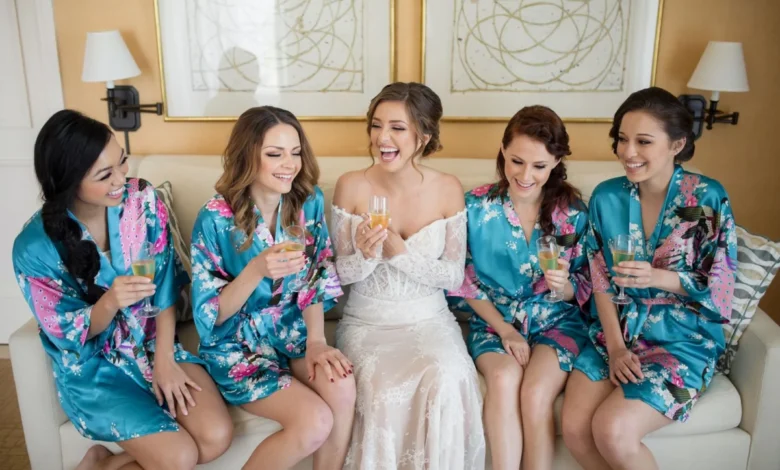
Regarding bridal party portraits, the industry has shifted away from rigid, symmetrical poses in favor of "connected" compositions. The objective is to facilitate physical interaction—shoulders touching, arms linked—to convey genuine relationships. If the group is large, the photographer should focus on micro-adjustments in expression, such as encouraging the party to look at the bride or share a laugh, rather than attempting to choreograph every limb.

The Impact of Pre-Event Communication
The broader implication for wedding photography is that excellence is rarely the product of improvisation; it is the result of rigorous planning. Industry leaders emphasize that the "through-line" of a successful wedding day is the communication that occurs weeks before the event. When a photographer enters the room with a clear understanding of the bridal party’s dynamics, the bride’s specific aesthetic requests, and a detailed schedule, they can act as a director rather than a passive observer.

Statistics from high-volume wedding studios indicate that teams that conduct a 20-minute planning call prior to the wedding date report 30% higher client satisfaction ratings. This preparation removes the "interview" phase from the wedding day, allowing the photographer to dedicate their energy entirely to creative execution and technical precision. By managing expectations and logistical requirements in advance, the professional ensures that the wedding gallery functions as a comprehensive, high-quality document of a significant life event, effectively honoring the trust placed in them by the client.