Bringing the Myth to Life: Christopher Nolan, Visual Effects, and the Practical Craft Behind The Odyssey


Christopher Nolan has long established a reputation for pushing the boundaries of cinematic storytelling through a distinct preference for practical filmmaking, large-format cameras, and ground-level world-building. Having previously explored complex narrative concepts such as memory manipulation in Memento, cloning in The Prestige, dream-folding architecture in Inception, space exploration in Interstellar, and historical survival in Dunkirk, the acclaimed auteur’s transition into ancient Greek mythology with an adaptation of Homer’s The Odyssey represents both a natural progression and a grand expansion of his thematic catalog. Though Nolan initially missed the opportunity to direct Wolfgang Petersen’s Troy early in his career, that unfulfilled venture laid the foundational groundwork for his eventual return to the Bronze Age. Central to The Odyssey is a recurring motif that dominates much of Nolan’s filmography: the desperate, driving human need to preserve and return to family. Following the protracted devastation of the Trojan War, protagonist Odysseus endures a grueling ten-year maritime odyssey to reunite with his wife, Penelope, and his son, Telemachus, navigating an archipelago of gods, monsters, and surreal geographical hazards.
Rather than approaching the legendary epic through standard fantasy conventions, Nolan and his creative collaborators chose to frame the ancient narrative through a different cinematic lens. Alongside longtime director of photography Hoyte van Hoytema, production designer Ruth De Jong, visual effects supervisor Andrew Jackson, and special effects supervisor Scott Fisher, Nolan treated The Odyssey with the methodological rigor of a science fiction film. Because historical and archaeological records from the Bronze Age remain remarkably scarce, the production team was forced to construct their universe from the ground up, blending historical speculation with high-concept world-building. Furthermore, Nolan incorporated stylistic elements of traditional horror and psychological tension into the storytelling, grounding the supernatural elements not in abstract computer-generated spectacles, but in the tactile, atmospheric terror experienced by the characters themselves.
Conceptualizing the Divine and the Natural World
One of the primary structural hurdles in adapting The Odyssey for modern audiences was translating the active, interventionist role of the Greek pantheon into a believable cinematic reality. In Homer’s original epic text, the gods frequently appear in human disguise or directly manifest before mortals. Nolan, however, chose a perspective more closely aligned with the psychological reality of Bronze Age humanity. According to the writer-director, the human characters in his adaptation encounter the divine through the overwhelming, unyielding forces of the natural world. Thunderstorms, lightning strikes, erratic sea states, and the howling wind rushing through coastal pines are interpreted by the characters not as ambiguous weather patterns, but as unmistakable, undeniable evidence of divine presence.
This creative choice shifted the narrative focus away from overt, magical interventions and toward an immersive point-of-view experience. By having characters perceive the gods speaking through nature and projecting divine identities onto the people around them, the production maintained a tight psychological grip on the audience. Production designer Ruth De Jong noted that this philosophy extended to the physical geography of Odysseus’s journey. Eschewing strict historical or geographical mapping—which remains heavily debated among classicists and historians—De Jong and Nolan deliberately avoided limiting the narrative strictly to the Mediterranean basin. By utilizing locations ranging from the sun-bleached coastlines of Morocco, Greece, and Italy to the dramatic, towering pine forests and rocky shores of Iceland and Scotland, the production created an expansive, mythological landscape that feels vast, disorienting, and completely immersive.
A Hybrid Methodology: Merging Practical Effects with Digital Innovation
At the core of The Odyssey’s production design is an unwavering commitment to tactility. Drawing heavy inspiration from the stop-motion animation pioneering of Ray Harryhausen and the legendary practical creature makeup work of artists like Rick Baker and Rob Bottin, Nolan insisted that the fantastical elements of the film possess physical weight and texture. Visual effects supervisor Andrew Jackson and special effects supervisor Scott Fisher spearheaded an exhaustive hybrid methodology, prioritizing practical builds on set before turning to digital augmentation.
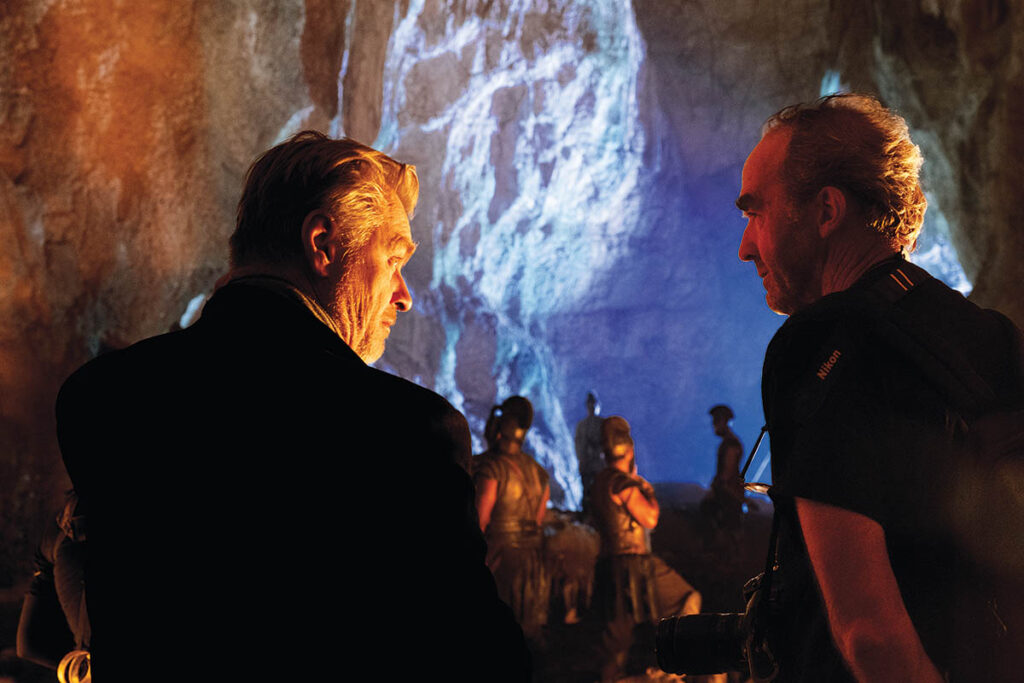
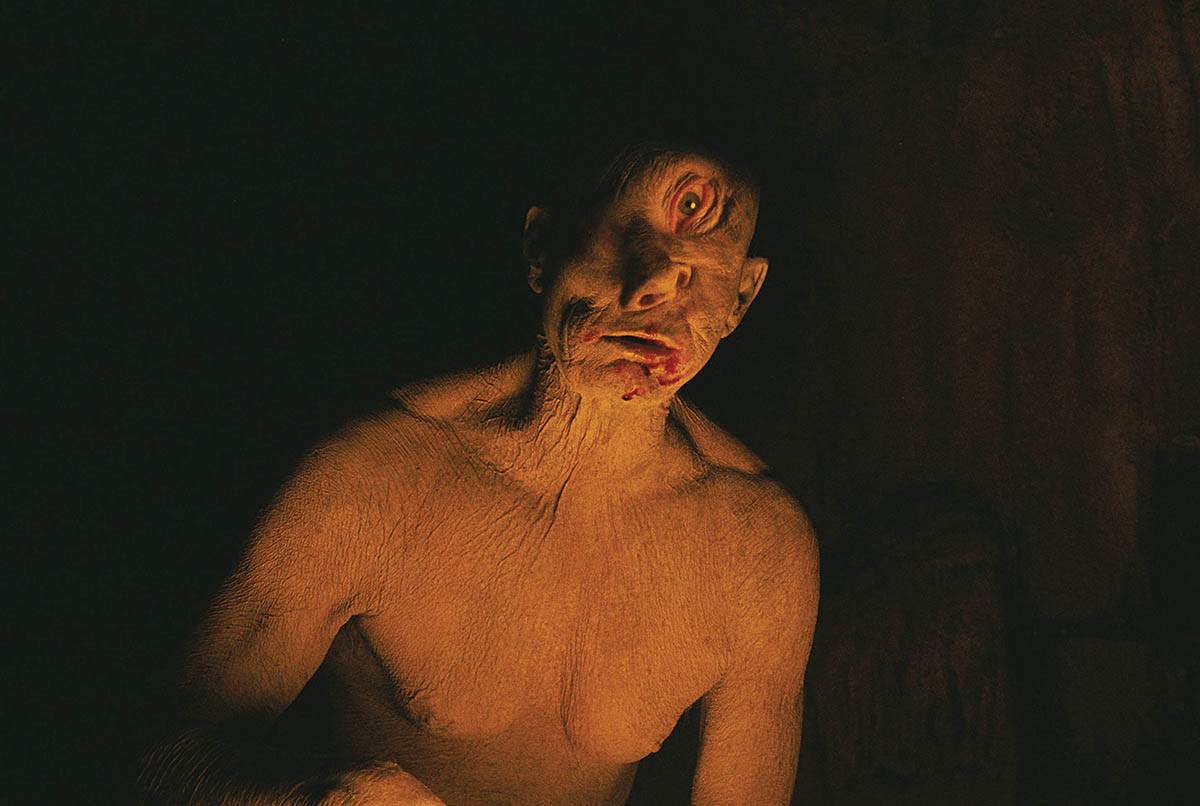
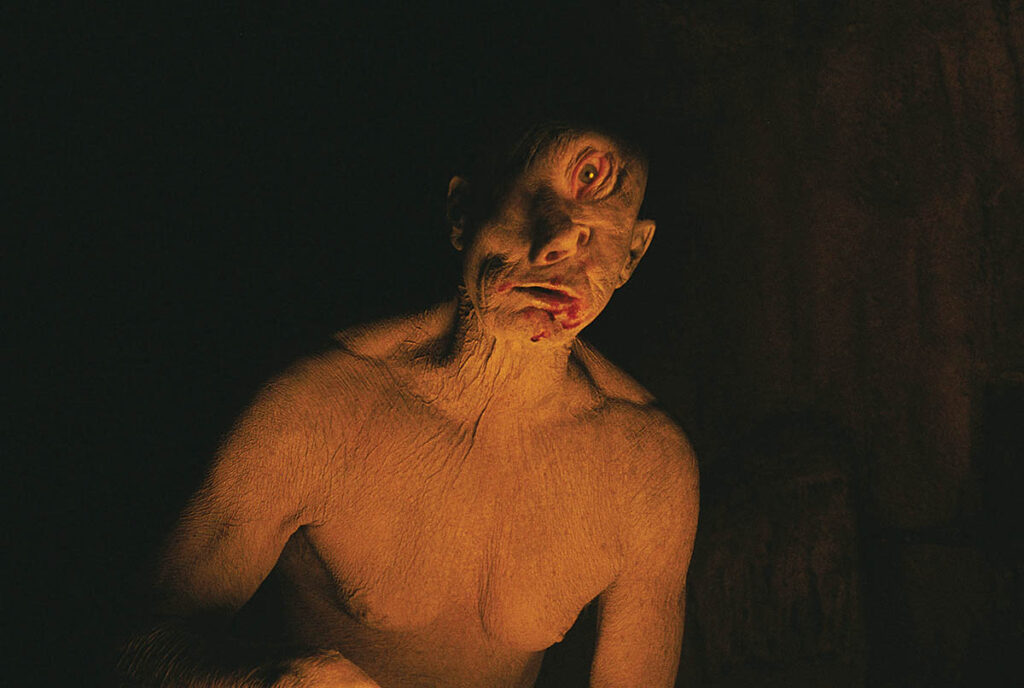
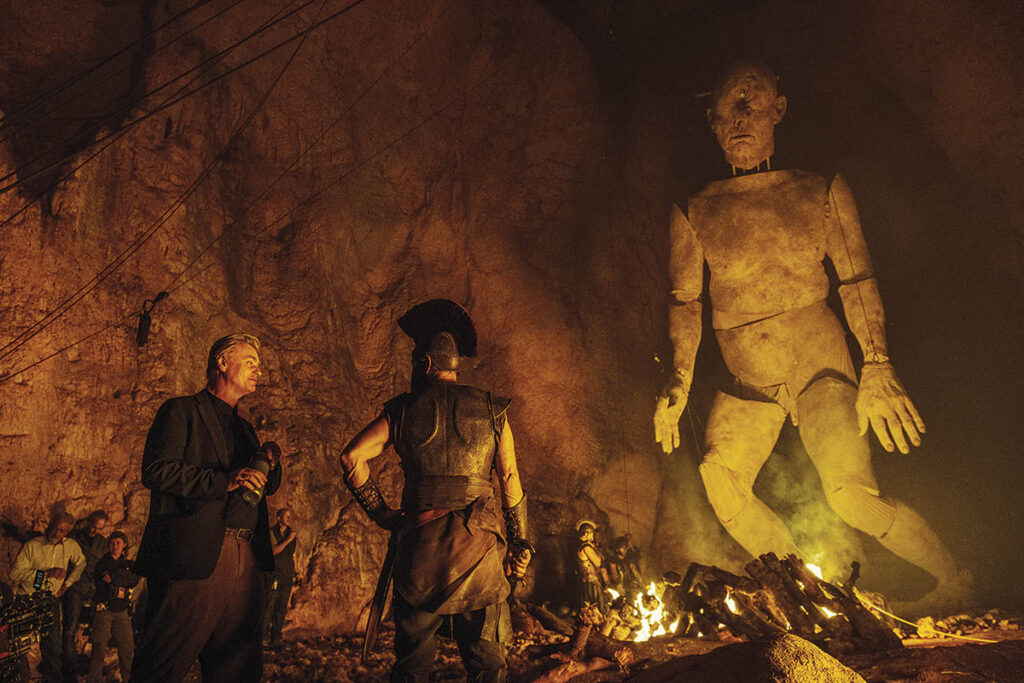
This philosophy was put to the test during the realization of the story’s legendary creatures and hazards, including the cyclops, the six-headed monster Scylla, and the terrifying whirlpool Charybdis. For the cyclops sequence, which was originally slated for a controlled stage shoot in Los Angeles, Nolan’s discovery of a rugged cave during location scouting in Greece forced an accelerated production schedule. The art and special effects departments had to construct a massive, 36-foot-tall puppet in a fraction of the originally allotted time. Inspired by the massive parade puppets utilized in France, Fisher’s team engineered an exceptionally lightweight marionette utilizing simple joints, ropes, and counterweights. This allowed the physical puppet to move with an erratic, uncanny realism that would have been exceptionally difficult to program via pure computer animation. For more complex physical interactions, an actor in advanced sculptural makeup was utilized on set, while DNEG later applied digital touch-ups and composite repairs to seamlessly blend the practical elements into the full-scale and miniature cave environments.
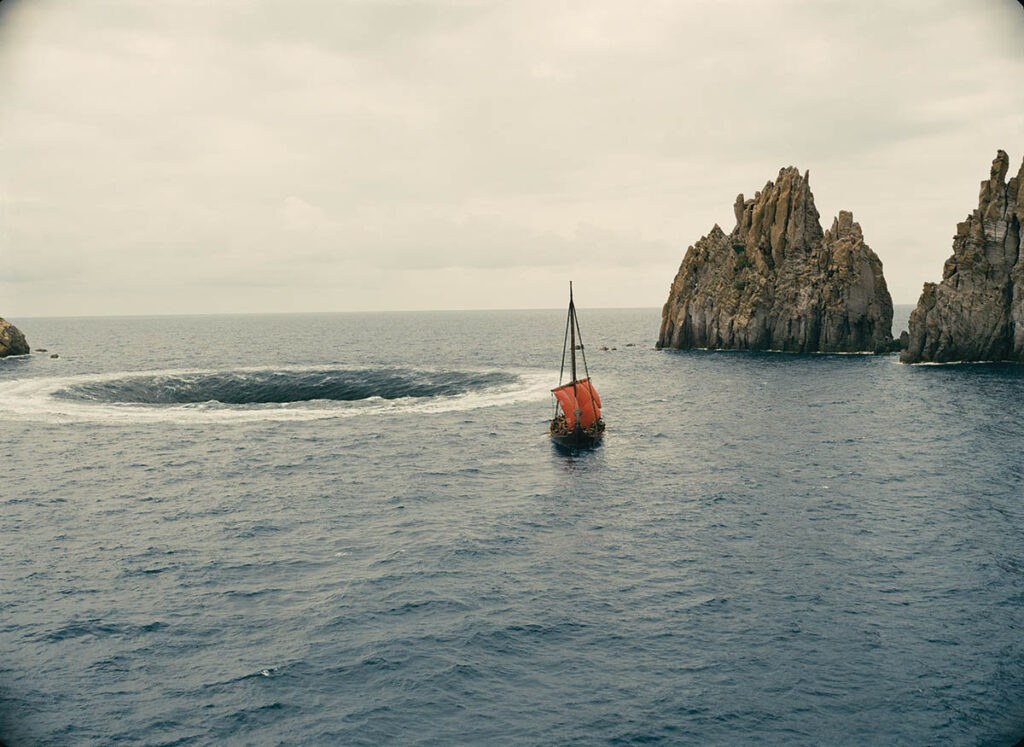
Similarly, the creation of Scylla relied on a massive, practical foam-and-wire puppeteered head. Special effects and stunt teams worked in tandem on set, using the physical rig to physically grab actors, smash breakaway set pieces, and violently disrupt ship models. This ensured genuine physical interaction between the actors and the beast—a notoriously difficult feat to achieve convincingly through purely digital means. For the aquatic vortex of Charybdis, the production adapted large-scale marine engineering, deploying boat-like thrusters in open-water environments to generate massive surface-water disturbances. These practical ocean disruptions were subsequently enhanced with complex digital water simulations for wide-angle shots illustrating the staggering depth of the whirlpool.
Principal Photography and Interdepartmental Coordination
Principal photography for The Odyssey spanned multiple international territories, requiring unprecedented logistical synchronization among departments. Separate art departments were established in every host country—including Morocco, Greece, Italy, Iceland, and Scotland—operating under strict disciplined protocols to ensure aesthetic continuity. Rather than functioning as isolated units, the cinematography, marine coordination, special effects, and visual effects teams operated as a single, cohesive entity. Constant communication between Ruth De Jong, Andrew Jackson, marine coordinator Neil Andrea, Scott Fisher, and Hoyte van Hoytema allowed the production to maintain visual fidelity across vastly different physical environments.
A prime example of this cross-departmental coordination was the construction of the Trojan Horse. Rejecting traditional depictions of the horse sitting harmlessly on wheels outside city gates, Nolan and De Jong reimagined the structure as a sunken, waterlogged relic discovered on a beach. Emphasizing the historical reality that the ancient Greeks were master shipbuilders and maritime craftsmen, the production designed the Trojan Horse using fine shiplap woodworking techniques, giving its head and legs a refined, highly engineered naval aesthetic.
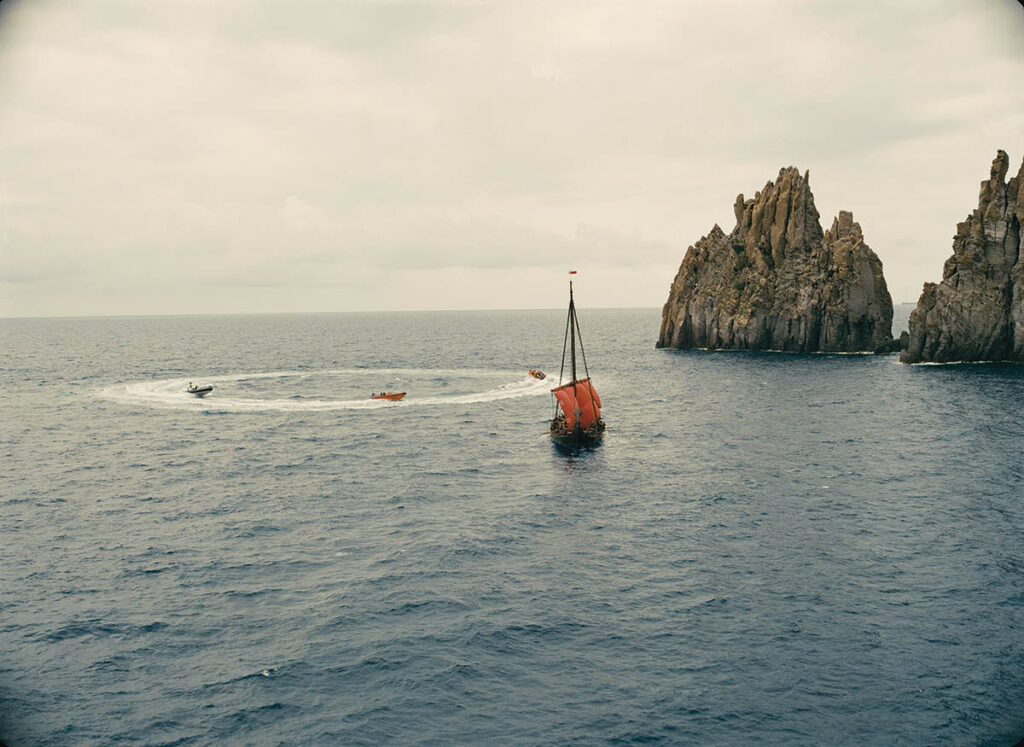
Water work also presented significant physical challenges. Sequences depicting the wrath of Zeus and violent maritime storms utilized a combination of open-ocean filming during genuinely inclement weather, high-powered fireboats blasting massive volumes of water to simulate torrential squalls, and controlled tank work situated on the Falls Lake stage at Universal Studios Hollywood. The studio stage hosted a sophisticated six-axis motion base submerged underwater, supporting a large section of a ship gimbaled to execute violent structural failures, such as mast collapses and hull splittings, which were later matched seamlessly with open-ocean footage.
Post-Production Workflow and Industry Implications
With approximately 400 visual effects shots finalized in the final cut, DNEG played a crucial role in bringing Nolan’s vision to the screen. Because a significant portion of the visual effects pipeline involved complex 2D compositing and multi-element layering, Jackson and his team worked closely with Nolan and editor Jennifer Lame to develop rapid post-visualization rough cuts. These preliminary composites allowed the editorial suite to edit sequences featuring the cyclops and other mythological hazards as if the digital creatures were present on set during principal photography, streamlining the editorial process despite the massive frame counts and complex spatial layouts.
Nolan’s handling of the production highlights a broader industry conversation regarding the definition and application of visual effects in contemporary cinema. The director has frequently cautioned against the common industry pitfall of conflating digital computer graphics with the broader spectrum of visual effects artistry. By relying heavily on in-camera techniques—such as the practical, in-camera face transitions used during the Circe sequence where men transform into half-pig hybrids—Nolan continues to champion a filmmaking philosophy that balances physical reality with digital enhancement.
The release of The Odyssey further cements Nolan’s thematic preoccupations, drawing explicit narrative parallels to his earlier works such as Interstellar and Dunkirk. The claustrophobic tension of soldiers trapped inside the hull of a sinking vessel in Dunkirk, for instance, directly mirrors the inescapable dread of Odysseus and his men trapped within the cyclops’s cave. By embracing the multifaceted nature of Homer’s epic, Nolan has crafted a cinematic experience that respects the historical and tactile weight of its mythical source material while expanding the technical horizons of modern blockbuster filmmaking.