The Evolution of Visual Effects: How Studios Transformed from Hired Hands to Core Creative Partners

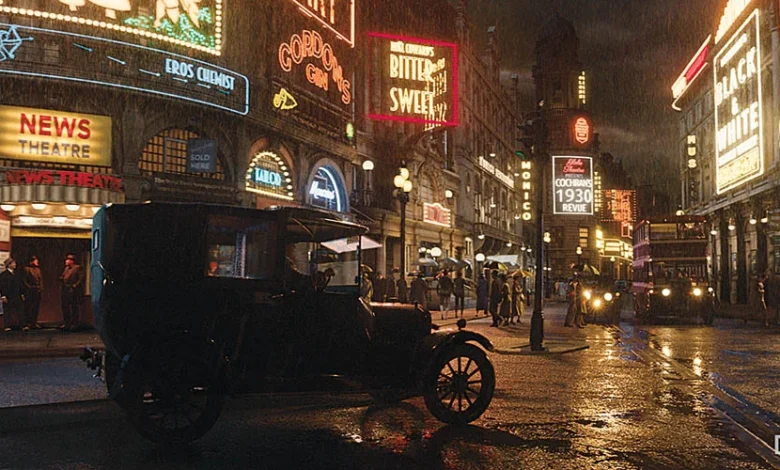
Over the past three decades, the visual effects (VFX) industry has undergone a radical transformation, evolving from an isolated post-production afterthought into a foundational element of modern filmmaking. As computer-generated imagery (CGI) has permeated nearly every facet of film and television production, visual effects studios have stepped out of the shadows. No longer viewed merely as technical service providers charged with executing isolated shots, contemporary VFX houses increasingly serve as vital creative partners, collaborating closely with directors, cinematographers, and production designers from the earliest conception stages to final delivery.
This paradigm shift reflects a maturing digital landscape. Today, studios and filmmakers possess extensive, collective experience with the visual effects pipeline, treating digital tools as a standard part of their creative toolkit rather than an experimental luxury. Yet, even as visual effects have become essential to modern storytelling, the industry navigates a complex web of workflow changes, economic readjustments, shifting audience expectations, and ongoing cultural ironies regarding how digital artistry is marketed to the public.
The Changing Ecosystem of Modern Production
The modern production landscape is characterized by extreme fluidity, with every film and television show establishing its own unique operational ecosystem. According to Chris Jones, founder and executive creative director of Zoic Studios, the structure of a project dictates how visual effects teams integrate with the broader production hierarchy.
In scenarios where a single studio acts as the sole visual effects vendor, distinct advantages emerge. Rather than piecemealing a project across a dozen different facilities—which can result in fragmented aesthetics and communication bottlenecks—a sole vendor gains a comprehensive, macro-level view of the entire production. This vantage point allows creative teams to contribute at a much higher level from the onset.
When a vendor-side visual effects supervisor is embedded early in the development process, they can actively help shape the creative vision while keeping budgetary constraints in mind. By building visual strategies within strict fiscal parameters right from the start, productions can maximize their creative output without suffering from runaway costs.

Conversely, traditional productions utilizing dedicated production-side VFX supervisors often benefit from a streamlined delegation of labor. In these environments, vendor studios are tasked with work specifically within their established wheelhouses, ensuring high execution quality. However, this fragmented approach can sometimes introduce inefficiencies or miscommunications if time-consuming tasks become isolated from the overarching creative direction. Both models present unique sets of operational advantages and disadvantages, forcing studios to remain adaptable.
The Vertical Shift: Early Integration and Previsualization
Historically, filmmaking followed a strictly linear pipeline: writing preceded pre-production, principal photography occurred next, and visual effects were appended as a downstream post-production phase. Today, that linear model has largely dissolved, replaced by a vertical, interconnected workflow.
Christa Tazzeo Morson, vice president of global partnerships and executive visual effects producer at Rocket Science VFX, notes that the COVID-19 pandemic and the widespread adoption of robust remote toolsets permanently altered industry timelines. Departments that once operated in silos now intersect much earlier in the front end of a project. Editorial, sound design, and visual effects are entering the production cycle significantly earlier, creating a dynamic, living blueprint of the final product long before cameras roll on principal photography.
Furthermore, art departments have increasingly integrated directly into visual effects studios. For projects requiring heavy research and development (R&D) or the creation of entirely new digital worlds and characters, major VFX vendors deploy extensive internal art departments. While initial concepts often originate on the production side, visual effects studios routinely adapt, refine, and expand those ideas into the digital realm.
Advanced real-time toolsets, particularly Epic Games’ Unreal Engine, have accelerated this integration. Morson highlights that Unreal Engine has revolutionized previsualization and real-time collaboration. By allowing production teams, directors, and artists to test camera blocking, lighting, and asset placement in real-time, the software elevates overall production quality and establishes a much stronger operational foundation before physical shooting begins.
Cross-Departmental Collaboration and Practical Realities

Despite the infinite possibilities unlocked by digital effects, industry veterans emphasize that visual effects should never exist for its own sake. Tom Mahoney, founder and partner of CoSA VFX, stresses that visual effects is uniquely positioned as one of the few departments that must interface with nearly every other branch of a production, from stunts and special effects to cinematography, wardrobe, makeup, transportation, and props.
This widespread interconnectivity requires proactive communication. Visual effects supervisors must coordinate closely with physical departments to establish operational parameters. For instance, if a prop is constructed with a specific reflective material that disrupts digital tracking, early communication allows teams to modify the physical item or plan a digital workaround.
At the core of this cross-departmental philosophy is a pragmatic guiding principle: if something can be achieved practically, safely, and cost-effectively in the physical world, it should be. Mahoney outlines three primary scenarios where visual effects are definitively justified:
- Physical Impossibility: When a shot cannot be captured physically, such as scenes set in deep space or fantastical environments.
- Safety Concerns: When executing a stunt or practical effect poses unreasonable physical risks to cast and crew.
- Logistical and Financial Efficiency: When physical execution is prohibitively expensive or logistically impractical relative to the narrative value, such as generating a single distant cruise ship on an open ocean horizon.
Bridging the Communication Gap
While technology continues to advance, human error remains one of the industry’s most persistent financial drains. Industry leaders universally point to miscommunication as a primary source of inefficiency, capable of inflating budgets and wasting hundreds of thousands of dollars through redundant work or incompatible asset handoffs.
Efforts to streamline communication internally within studios and externally with production partners remain an ongoing priority. Strengthening shorthand relationships between directors, producers, and VFX supervisors fosters trust and enables more intuitive, frictionless collaborations. Studios that successfully balance high-level technical execution with strong interpersonal relationships consistently outperform competitors in a relationship-driven market.
The Economic Reset: Post-Strike Equilibriums

The financial ecosystem of the entertainment industry has experienced seismic shifts over the last several years, shaped heavily by the global pandemic, the streaming boom, and subsequent labor disputes.
Following the initial disruptions of COVID-19, linear networks and streaming platforms engaged in an aggressive race for content volume, greenlighting a massive influx of projects that drove unprecedented demand for visual effects labor. However, financial realities quickly caught up with executive ambitions. Studio accountants, tasked with reining in soaring operational expenditures, recognized that the hyper-inflated spending model was unsustainable.
The historic actors’ and writers’ strikes provided the necessary catalyst for a widespread industry reset. Studios used the production hiatus to slam the brakes on runaway spending. Contrary to early expectations that the industry would instantly snap back to pre-strike production volumes once labor agreements were finalized, the market instead entered a prolonged calibration phase. Industry insiders note that the entertainment sector is only recently arriving at a new, sustainable economic equilibrium, characterized by more disciplined budgeting and targeted investments.
The Paradox of Modern Visual Effects: Taboo Marketing and Audience Expectations
An ongoing irony in contemporary Hollywood marketing is the simultaneous reliance on visual effects and their institutional erasure in publicity campaigns. While massive blockbusters and prestige dramas alike depend on hundreds—sometimes thousands—of digital shots to realize their cinematic visions, marketing campaigns frequently market films with the dubious claim that they utilized "no visual effects."
This disconnect affects artist morale profoundly. Chris Jones of Zoic Studios observes that artists enter the industry out of a passion for creation. Whether executing complex full-CG environments or subtle monitor composites, artists strive to deliver the highest possible quality within allotted timeframes. When studios downplay the presence of visual effects in promotional materials to appeal to perceived audience nostalgia for "pure" practical filmmaking, it can feel dismissive to the hundreds of technicians whose labor built the frame.
Nevertheless, industry professionals recognize this as a mostly external marketing phenomenon. Behind closed doors, filmmakers deeply understand the invaluable contributions of visual effects artists to the storytelling process, resulting in strong, collaborative working relationships on the ground.
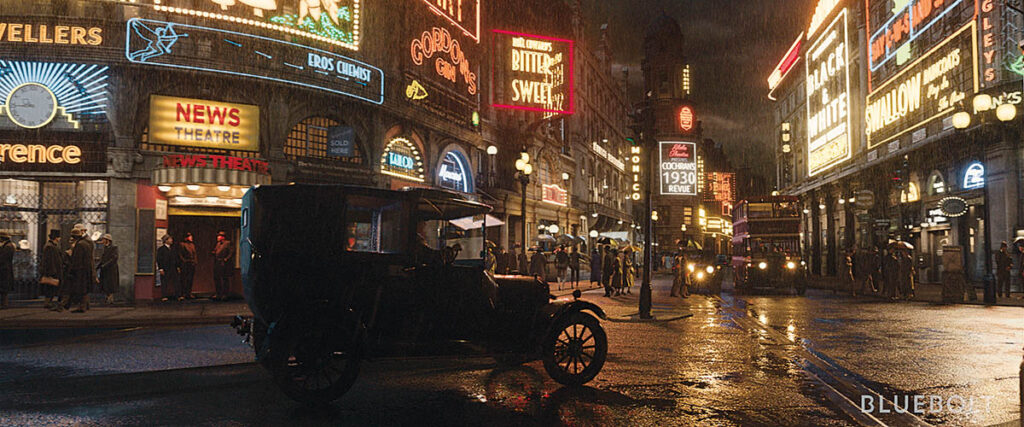
Henry Badgett, visual effects supervisor and creative director at BlueBolt, notes that public and audience expectations have fundamentally altered the VFX workload, particularly regarding invisible cleanup work. Fifteen years ago, a standard feature film might have featured a core set of major visual effects alongside minimal cleanup. Today, audience standards are so elevated that no film can be released with stray boom mics, wire rigs, or visual blemishes remaining in the frame. Consequently, minor cleanup and polish work have become mandatory components of the post-production pipeline, requiring dedicated financing and specialized studio intervention.
The Spectrum of Creative Collaboration
As digital tools become more accessible, even independent filmmakers can experiment with basic rendering software. However, specialized VFX studios operate on an entirely different scale. Modern indie films that once relied on a handful of digital shots now approach vendors with expansive, unconstrained lists of visual requirements, fundamentally informing what is shot, modified, or cut during production.
Collaborative dynamics vary widely depending on the director. Some visionary filmmakers—such as writer-director Robert Eggers, noted for his meticulous control over every frame—demand highly specific, bespoke visual artistry, bringing VFX teams along on a rigorous, highly disciplined creative journey. Other directors prefer a consultative approach, relying on visual effects studios to present options, toolsets, and recommendations to solve narrative challenges.
Ultimately, the visual effects industry has matured into an indispensable pillar of modern cinematic grammar. By embracing early integration, leveraging real-time technologies like Unreal Engine, and fostering deep cross-departmental communication, visual effects studios have solidified their status not as hired hands, but as essential architects of the modern moving image.
Related posts: