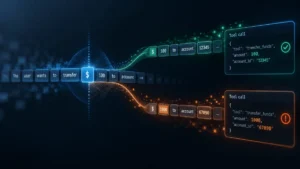
The 2026 AI Conference Circuit Shifts Focus from Static LLM Capabilities to Reliable Agentic Workflows and Live Data Integration


The global artificial intelligence conference circuit is undergoing a structural evolution. For years, the primary discourse dominating keynote speeches and developer workshops revolved around foundational model capabilities—answering the perpetual question of what a specific model could generate or compute. However, as the industry matures in 2026, the technical hurdles have shifted toward more complex engineering challenges. Modern event agendas are now dominated by operational constraints, such as ensuring AI agents run reliably on fresh web data, orchestrating dozens of external tools without architectural degradation, and scaling multi-agent systems in production environments.
This shift is quantifiably reflected in industry metrics and organizational scaling. The Linux Foundation has inaugurated a dedicated multi-city global events program for its newly formed Agentic AI Foundation to address the surging demand for standardized developer protocols. Concurrently, specialized developer platforms like AI Engineer have experienced explosive audience growth, drawing over 15 million views for their recorded technical sessions. Long-running industry fixtures are likewise pivoting; events such as OxyCon, which originated as traditional web scraping forums, have transformed into showcases for AI-native data extraction and autonomous data pipelines designed to continuously feed live information to autonomous agents.
The Evolution of Agentic Engineering and Architecture
The transition from static text generation to autonomous execution represents a fundamental paradigm shift in software engineering. Early implementations of large language models relied heavily on static datasets and prompt-response loops. Today, developers are tasked with deploying systems that dynamically interact with external APIs, execute code, and reason over unstructured, real-time web content.
This operational complexity has highlighted severe bottlenecks in developer tooling, protocol standardization, and reliability infrastructure. Without cohesive frameworks, multi-agent architectures frequently suffer from latency spikes, cascading error rates, and integration failures. Consequently, technical convenings scheduled for the fall and winter of 2026 are heavily focused on practical engineering, interoperability standards, and robust data pipelines rather than abstract theoretical discussions.
Chronological Guide to Fall and Winter 2026 AI Developer Events
For technology leaders, systems architects, and software developers mapping out their professional travel schedules or digital engagement strategies, a comprehensive calendar of premier events highlights the sector’s current trajectory.
OxyCon 2026
- Date: September 16, 2026
- Format: Virtual (Online)
- Cost: Free
- Overview: Organized by Oxylabs, OxyCon has established itself as the leading virtual forum dedicated exclusively to AI-native data extraction and web intelligence.
- Core Focus: The conference addresses the foundational challenge of how autonomous agents acquire real-time external data. Sessions emphasize advanced web scraping techniques, anti-bot bypass strategies, and the creation of resilient data pipelines that feed live web feeds directly into agentic reasoning engines.
- Target Audience: Data engineers and software developers whose autonomous agents rely on continuous, programmatic access to live internet data.
AGNTCon + MCPCon Europe
- Date: September 17–18, 2026
- Format: Hybrid (In-person at RAI Amsterdam, with global livestream)
- Overview: Co-produced by the Linux Foundation, this European flagship event serves as the primary gathering for stakeholders in agentic AI and the Model Context Protocol (MCP).
- Core Focus: Discussions center on agent interoperability, standardized protocol adoption, and security frameworks required for multi-vendor agent ecosystems.
- Target Audience: Systems architects and enterprise developers integrating agentic toolsets who need alignment on emerging industry standards.
The AI Conference 2026
- Date: September 29 – October 1, 2026
- Format: In-Person (Pier 48, San Francisco, California)
- Overview: Known for its vendor-neutral, builder-first ethos, this general-purpose AI conference provides a comprehensive technical overview of the current machine learning landscape.
- Core Focus: Real-world model deployment, infrastructure scaling, and evaluation methodologies for production-grade AI systems.
- Target Audience: Senior software engineers and technical directors seeking a broad, highly credible snapshot of enterprise AI maturity.
World Summit AI
- Date: October 7–8, 2026
- Format: In-Person (Taets Art & Event Park, Amsterdam)
- Overview: Anchoring Amsterdam’s broader "World AI Week," World Summit AI is a massive, cross-industry summit addressing the macro-economic and societal deployment of artificial intelligence.
- Core Focus: Enterprise adoption patterns, regulatory compliance, and cross-sector integration of agentic systems.
- Target Audience: Technical leaders and executive stakeholders evaluating the broader strategic implications of AI implementation across global markets.
AI Engineer New York
- Date: October 12–14, 2026
- Format: Hybrid (Sheraton Times Square, New York City, with online streaming)
- Overview: Operating as a practitioner-first technical conference, AI Engineer NY focuses strictly on the mechanics of building, evaluating, and maintaining LLM-driven applications.
- Core Focus: Practical implementation patterns, latency reduction, prompt engineering at scale, and rigorous production testing methodologies.
- Target Audience: Hands-on engineers and technical leads directly responsible for shipping and maintaining AI software.
AGNTCon + MCPCon North America
- Date: October 22–23, 2026
- Format: In-Person (San Jose, California)
- Overview: As the larger of the Linux Foundation’s two flagship agentic AI gatherings, the North American edition serves as the primary domestic hub for US-based developers.
- Core Focus: Deep dives into agentic workflows, protocol standardization under the Model Context Protocol, and enterprise governance for autonomous agents.
- Target Audience: North American software developers and engineering managers tracking agentic infrastructure standards.
Big Data Conference Europe
- Date: November 24–27, 2026
- Format: Hybrid (Vilnius, Lithuania, and online)
- Overview: One of Europe’s longest-running technical symposia for data engineering, the event has increasingly integrated advanced machine learning and MLOps into its core curriculum.
- Core Focus: The underlying data infrastructure required to support complex AI workloads, distributed data processing, and robust data ops frameworks.
- Target Audience: Data architects and MLOps professionals building the foundational data layers that power modern agentic systems.
NeurIPS 2026
- Date: December 6–12, 2026
- Format: Multi-hub physical presence (Atlanta, Sydney, Paris) alongside comprehensive virtual access
- Overview: As the premier academic institution on the global machine learning calendar, NeurIPS closes out the annual tech cycle with groundbreaking theoretical and applied research.
- Core Focus: Cutting-edge academic research, foundational algorithm design, and early-stage agentic intelligence models that will influence commercial software in subsequent years.
- Target Audience: Research scientists, advanced machine learning engineers, and technical innovators aiming to stay ahead of commercial product cycles.
Strategic Implications for the Technology Sector
Industry analysts note that the rapid proliferation of specialized conferences mirrors the pace of technological adoption. Because agentic AI is evolving at an unprecedented velocity, the primary value derived from these convenings extends beyond formal presentations. Informal peer-to-peer networking, hallway discussions regarding production failures, and early visibility into emerging protocols represent critical professional dividends for participating organizations.
For engineers and technical decision-makers mapping out participation for the remainder of 2026, event selection depends heavily on immediate organizational objectives. Teams focused on data ingestion pipelines are increasingly prioritizing virtual forums like OxyCon, while enterprise architects look toward Linux Foundation initiatives like AGNTCon for protocol standardization. Regardless of the specific technical track, industry consensus suggests that engagement with the broader developer ecosystem is essential for navigating the transition from experimental generative AI models to reliable, autonomous agentic architectures.
Related posts: