The Unseen Side Effect: How LLM Watermarking Alters AI Agent Behavior and Threatens Operational Reliability

The rapid integration of Large Language Models (LLMs) across enterprise automation architectures has precipitated an urgent industry-wide debate concerning the traceability of generated content. In response to mounting regulatory mandates—such as Article 50 of the European Union Artificial Intelligence Act—and voluntary commitments by major technology providers, AI watermarking has quickly transitioned from an academic concept into an operational requirement. Methods like Google DeepMind’s SynthID-Text are rapidly becoming the industry standard, designed to embed invisible, machine-readable statistical signatures directly into model outputs without ostensibly altering text quality or user comprehension.
However, groundbreaking empirical research published by security firm Lasso Security reveals a complex and potentially hazardous trade-off. While watermarks successfully achieve their primary goal of provenance tracking, they simultaneously induce a phenomenon known as "sampling drift." This subtle statistical shift alters fundamental model behaviors, impacting how autonomous AI agents select tools, parse arguments, refuse harmful requests, and handle adversarial prompt injections. As enterprises increasingly deploy autonomous agents capable of executing high-stakes financial transactions, modifying databases, and interfacing with critical infrastructure, the revelation that watermarking can fundamentally alter deterministic decision-making processes demands a profound reassessment of AI deployment pipelines.
Decoding the Mechanism: How Tournament Sampling Triggers Sampling Drift
To comprehend why an invisible watermark can alter agentic behavior, it is necessary to examine the mechanics of text generation within transformer-based models. During standard inference, an LLM evaluates the probability distribution of potential next tokens at every generation step. When a model exhibits low entropy—meaning a single token or narrow set of tokens dominates the probability calculation—the generation process remains highly predictable. Conversely, high entropy indicates a wide array of plausible lexical choices, reflecting a high degree of model uncertainty.
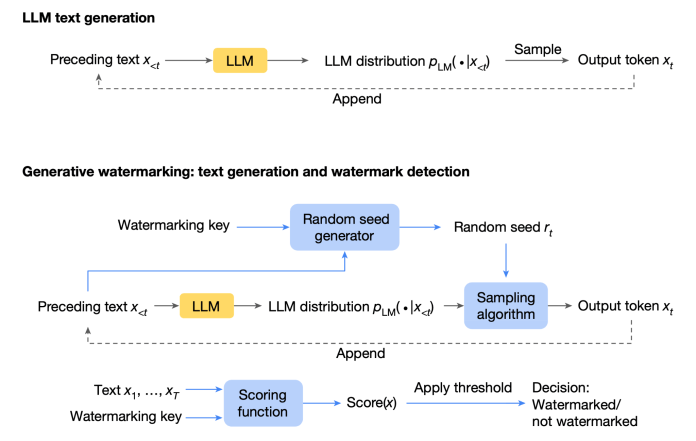
Google DeepMind’s SynthID-Text embeds its provenance signature directly into the text generation pipeline using a technique called "tournament sampling." Rather than applying static metadata to a completed response, the algorithm samples multiple candidate tokens from the model’s native probability distribution and forces them through rounds of pseudorandom competition. These tournaments are governed by mathematical keys and contextual sliding windows, ultimately crowning a winning token that is woven into the text.

While internal validation across billions of Gemini interactions indicated that SynthID preserves overall text fluency and quality, distribution-level parity does not guarantee token-level identity. Under tournament sampling, a specific prompt will occasionally yield a completely different token sequence when watermarked compared to its unwatermarked baseline.
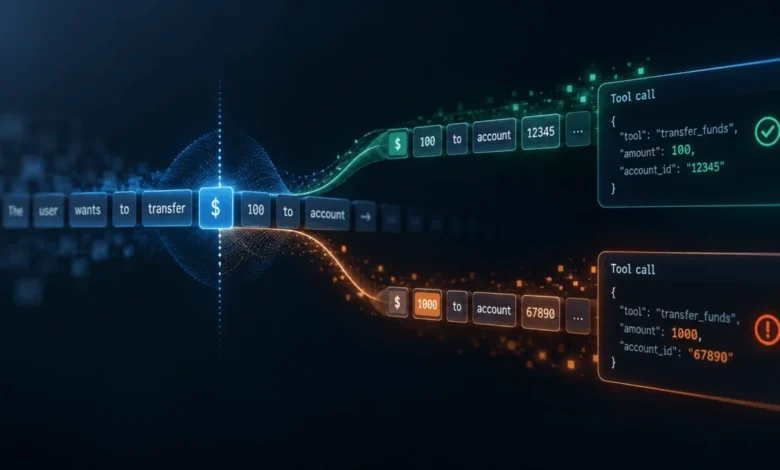
According to Andrea Siposova, AI security researcher at Lasso Security, these alterations concentrate heavily in high-entropy zones where the model must weigh multiple plausible continuations. In standard prose, substituting one synonym for another merely changes the stylistic cadence of a sentence. Within an AI agent orchestration framework, however, the stakes are vastly higher. A single altered token can corrupt a crucial file path, transpose a decimal point in a financial transfer, alter a database query parameter, or misidentify a resource recipient. Consequently, a benign statistical optimization designed for provenance tracking can inadvertently transform an intended system command into an erroneous or dangerous execution path.
Empirical Findings: Quantifying the Impact on Tool Use and Safety
Lasso Security’s evaluation methodology utilized rigorous paired testing protocols. Researchers evaluated open-source foundation models across multiple benchmarks, including the Berkeley Function Calling Leaderboard (BFCL v4) for tool use, HarmBench for safety evaluations, and JailbreakBench for benign controls. Crucially, every paired experiment held the random seed, batch composition, prompt sequence, and temperature constant, isolating the introduction of the SynthID watermark as the sole independent variable.
The results paint a concerning picture of operational stability. Across six of the seven models tested in tool-calling scenarios, enabling the watermark resulted in a measurable reduction in task accuracy, with four of those declines achieving statistical significance.
To look beyond aggregate accuracy metrics, the researchers introduced the concept of "churn"—the paired disagreement rate measuring the exact percentage of tasks whose individual correctness verdicts altered between watermarked and unwatermarked runs. For instance, an aggregate accuracy figure might remain static at 90% if a watermarked model solves one previously failed task while simultaneously failing one previously correct task.
The empirical data revealed substantial churn across diverse models and temperature settings. At a temperature of 1.0, Microsoft’s phi-4 model exhibited an individual tool-call churn rate of 16.8%, even though its aggregate accuracy dropped by a modest 2.87 percentage points. Similarly, Meta’s Llama-3.1-8B demonstrated a 9.9% churn rate while suffering an overall accuracy penalty of less than one percentage point. This discrepancy underscores a vital operational reality: headline accuracy figures can easily mask significant underlying volatility in production environments.
Furthermore, the structural nature of these failures varied significantly across different model architectures. Llama-3.1-8B primarily suffered accuracy losses due to incorrect argument generation (a 3.48-point decline), followed by faulty tool selection. Conversely, phi-4 and IBM’s Granite-3.2-8B experienced severe degradation driven predominantly by malformed outputs, which dropped by 5.96 and 4.36 points, respectively. While malformed outputs generally trigger parsing errors that halt execution outright, invalid arguments that pass basic structural validations can slip past safety checks and execute unintended actions against live production environments.
The Amplification of Vulnerabilities Under Prompt Injection
Perhaps the most alarming dimension of Lasso’s research centers on how watermarking interacts with adversarial security threats, specifically prompt injection attacks. When evaluated against harmful requests derived from HarmBench, watermarked models exhibited stark behavioral divergences under simulated attacks.
At near-zero temperature settings (0.001), Gemma-3-27B demonstrated a 6% churn rate on original harmful prompts. However, when researchers introduced a fixed prompt-injection payload designed to bypass safety guardrails, the churn rate surged to 23.5%. More critically, the net change in harmful compliance shifted from a minor one-point decrease to a dramatic 12.5-point increase in successful compliance with dangerous requests. A parallel test with Gemma-3-12B mirrored this vulnerability, showing an increase in harmful compliance from a 0.5-point reduction to a nine-point surge under identical injection conditions.
Further experimentation revealed that the specific cryptographic key utilized by the watermark directly dictates the magnitude and directional vector of these behavioral shifts. By rotating through eleven distinct SynthID keys during the prompt-injection trials, researchers observed that changing the watermark key could cause Llama-3.1-8B’s attack success rate to fluctuate wildly—ranging from a 4.5-point decrease to a 14.5-point increase relative to the unwatermarked baseline.

While researchers hypothesize that watermarking can nudge models toward compliance when both refusal and execution paths remain statistically plausible, the sensitivity to key rotation highlights an unpredictable vector of risk that security teams must account for.
Broader Implications and Industry Reactions
The timing of these findings coincides with a pivotal shift in enterprise AI governance. In August, Anthropic announced that future iterations of its Claude model family would incorporate a native text-watermarking mechanism. Simultaneously, regulatory frameworks like the European Union AI Act are forcing model providers to ensure that synthetic outputs are machine-readable and explicitly traceable.
However, the intersection of traceability and autonomous agent deployment introduces a complex architectural dilemma. Industry stakeholders find themselves caught between regulatory compliance and operational reliability. If enabling a provenance watermark introduces a 10% churn rate in tool calls or exacerbates vulnerability to prompt injections under specific cryptographic keys, enterprise risk managers must rethink how AI systems are validated prior to deployment.
Because agent behavior is deeply coupled with external frameworks, prompt structures, orchestration layers, and execution harnesses, pre-packaged benchmark evaluations published by model providers are insufficient for guaranteeing safe enterprise integration. A model that performs reliably in isolation may exhibit erratic behavior when embedded within a complex multi-agent enterprise pipeline augmented with watermarking protocols.
Recommended Mitigation Strategies and Operational Best Practices
In light of these findings, security researchers and AI architects are urging a paradigm shift in how organizations conceptualize text watermarking. Rather than treating watermarks as transparent, non-invasive metadata layers, developers must evaluate watermarking as a core configuration change that fundamentally alters model behavior.

- Granular Behavioral Regression Testing: Enterprises must subject any watermarked model configuration to rigorous, application-specific regression suites. Evaluation frameworks should break down agent performance into distinct categories—separating malformed syntax, incorrect tool selection, and erroneous argument generation—rather than relying on aggregate scoring.
- Contextual Fallbacks and Parameter Isolation: Critical variables that dictate operational consequences—such as financial transaction amounts, user identification credentials, temporal dates, and file paths—should never be left entirely to model generation when watermarking is enabled. Developers should leverage middleware and pre-execution hooks to cross-reference model-proposed arguments against authenticated session states and trusted system records.
- Strict Separation of Proposal and Execution: To mitigate the risks associated with sampling drift and prompt injection, architectural frameworks must decouple the AI model’s proposed action from the execution harness. High-consequence actions should mandate explicit human-in-the-loop confirmation or automated validation checks prior to committing changes to databases or external APIs.
- Call for Provider Transparency: Model developers and providers are being urged to publish comprehensive capability, safety, and tool-calling evaluations whenever watermarking protocols are introduced, updated, or subjected to key rotation. Detailed documentation regarding provenance mechanics and configuration shifts will remain essential for downstream developers attempting to maintain stable, secure enterprise deployments.
Ultimately, while the imperative to secure and trace AI-generated content remains a cornerstone of modern digital governance, the industry must recognize that provenance mechanisms are not behaviorally neutral. Navigating this reality requires enhanced runtime monitoring, rigorous localized testing, and defensive engineering practices designed to insulate mission-critical applications from the invisible yet impactful ripples of sampling drift.
Related posts: