OpenAI’s GPT-5.6 Unveiled: First Impressions and Strategic Deployment in a Competitive AI Landscape

The newest iteration of OpenAI’s flagship language model, GPT-5.6, has been released, prompting immediate and extensive testing by early adopters and AI specialists. Following its recent debut, an industry expert has shared comprehensive first impressions, comparing its capabilities against its predecessor, GPT-5.5, and rival models such as Anthropic’s Opus 4.8 and Fable 5. This assessment highlights GPT-5.6 as a significant, albeit incremental, advancement, offering both distinct advantages and considerations for optimal deployment. The expert’s initial judgment underscores its overall strength and recommends it as a valuable tool for various applications, particularly in software development workflows.
Initial Assessments and Performance Benchmarks
The anticipation surrounding GPT-5.6 stemmed largely from the robust performance of its predecessor, GPT-5.5, which had established itself as a formidable contender in the rapidly evolving field of large language models (LLMs). GPT-5.5 was often considered on par with, and in specific tasks like code review, superior to Anthropic’s Opus 4.8. This strong foundation set high expectations for GPT-5.6, which, on paper, promised further enhancements.
According to the expert’s extensive evaluation, GPT-5.6 generally represents an improvement across nearly all performance metrics when compared to GPT-5.5. The enhancements, while not revolutionary, are consistently present, suggesting a refinement of existing capabilities.
One area where GPT-5.6 reportedly shines is in code review. The model demonstrates a heightened ability to identify issues within codebases, exhibiting improvements in both precision and recall. Precision refers to the accuracy of reported bugs, ensuring that flagged issues are indeed legitimate, while recall measures the model’s capacity to detect all existing bugs. This dual improvement suggests GPT-5.6 is more reliable and comprehensive in its code analysis, potentially reducing the need for extensive human oversight in many development scenarios.
For actual code implementation tasks, GPT-5.6 shows a greater capacity for sustained effort and thoroughness. While GPT-5.5 was competent in task completion, the newer model appears to execute tasks with a more exhaustive approach, leading to slightly better outcomes. However, the expert notes that this particular improvement is incremental rather than a dramatic leap forward, suggesting a continuous refinement rather than a paradigm shift in coding capabilities.
Understanding GPT-5.6’s Architecture and Offerings
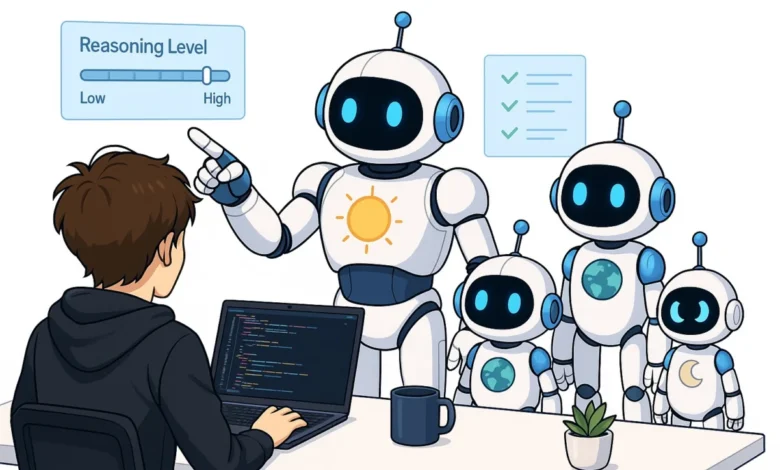
OpenAI has introduced GPT-5.6 with a more granular and customizable architecture, offering users greater control over performance and resource consumption. A key innovation is the introduction of three distinct model sizes, designated as Sol, Terra, and Luna, drawing nomenclature from celestial bodies to signify their scale:
- Sol: Representing the Sun, Sol is the largest and most advanced model, positioned as the frontier offering. It is designed for complex, high-stakes tasks requiring maximum intelligence and capability.
- Terra: Analogous to Earth, Terra is likely a mid-tier model, balancing performance with efficiency, suitable for a broader range of professional applications.
- Luna: Named after the Moon, Luna would typically be the smallest and most economical model, ideal for simpler tasks or scenarios where cost and speed are paramount over absolute peak performance.
Alongside these varied model sizes, OpenAI has also implemented different "reasoning levels," allowing users to dictate how long the model "thinks" before generating a response. This feature introduces a direct trade-off: longer reasoning times generally yield higher-quality, more nuanced responses, but at the cost of increased latency and potentially higher resource usage. This flexibility is critical for users to tailor the model’s behavior to specific task requirements and operational constraints.
Navigating Usage and Cost: A Critical Examination
While GPT-5.6 offers enhanced capabilities and flexible configurations, its advanced features introduce new considerations regarding usage limits and operational costs. The expert’s experience highlights a significant drawback: utilizing GPT-5.6 with higher reasoning levels, specifically "extra high" or "ultra thinking," can rapidly deplete usage limits. This has immediate implications for subscription-based users.
OpenAI recently removed the five-hour usage limit, at least temporarily, which provides some relief by focusing solely on weekly limits. However, even with this change, the consumption rate at elevated reasoning levels remains a concern. For subscribers, particularly those on higher-tier plans such as the $200 subscription, sustained use of the most advanced reasoning modes can quickly become prohibitive, making it challenging to utilize the model for extended periods or to run multiple instances concurrently.
Furthermore, the expert notes that employing the model with these high reasoning modes results in considerably slower response times, often exceeding expectations, especially for simpler tasks. This performance lag, coupled with the rapid consumption of usage credits, necessitates a strategic approach to model configuration. The expert has found it more practical to use "extra high thinking" for initial planning phases and then revert to a "medium reasoning level" for the actual implementation steps. This adaptive strategy helps mitigate the impact on usage limits and improves overall workflow efficiency.
This observation is particularly pertinent when considering public benchmarks, which often showcase the model’s capabilities under optimal, high-reasoning conditions. If practical usage constraints prevent users from consistently applying these highest reasoning levels due to cost or speed, the real-world effective performance might fall short of advertised benchmarks.
Regarding model sizes, the expert predominantly favors the Sol model due to its superior capabilities. While some benchmarks suggest that Terra with a higher reasoning level might occasionally outperform Sol with lower reasoning, personal testing did not reveal significant differences. Consequently, the strategy of pairing the Sol model with adjusted reasoning levels for different task phases remains the preferred approach.

Strategic Application: Best Practices for Developers
Optimizing GPT-5.6’s utility involves understanding its strengths and implementing specific techniques. For developers, one of the most compelling use cases identified is automated code review. The expert contends that GPT-5.6, particularly with its improved precision and recall, can largely obviate the need for human code reviews in many scenarios. While critical infrastructure or highly sensitive code might still warrant human scrutiny, for the majority of development tasks, GPT-5.6 offers a robust solution to prevent bugs from reaching production environments. This represents a significant shift in software development paradigms, potentially accelerating development cycles and freeing up human engineers for more complex problem-solving.
For actual code implementations, the expert suggests a hybrid approach, leveraging the strengths of multiple LLMs. The recommended workflow involves:
- Planning: Utilizing Claude Fable for the initial planning phase of an implementation.
- Execution: Transitioning to Claude Opus 4.8 for the actual execution and coding, as this combination has yielded superior results compared to using GPT-5.6 exclusively, even with varying reasoning levels for planning and implementation within GPT-5.6.
Another strong application for GPT-5.6 is "computer use" or "browser use." The model demonstrates impressive proficiency and speed in navigating web browsers, especially when operating at a medium reasoning level. This capability is invaluable for tasks such as end-to-end code verification, automated testing, or performing various actions within a browser environment, further enhancing developer productivity.
Techniques for Maximizing GPT-5.6 Effectiveness
To truly harness GPT-5.6’s potential, several techniques are crucial:
-
Adaptive Reasoning Levels: As previously noted, the expert advocates for a dynamic adjustment of reasoning levels. For complex planning stages, "extra high thinking" provides the necessary depth. Once the plan is established, switching to a "medium reasoning level" for implementation tasks is more efficient. This strategy balances response quality with resource consumption, recognizing that planning often requires more comprehensive contextual understanding than execution, which primarily follows an established blueprint.
-
Comprehensive Tool Access: A critical, yet often overlooked, aspect is ensuring GPT-5.6 has access to all necessary external tools and connectors. Similar to previous models like Claude Code, GPT-5.6 benefits immensely from integration with services such as Gmail, Google Calendar, Slack, and Playwright MCP. Providing this broad access enables the model to interact with the broader digital ecosystem, enhancing its problem-solving capabilities across diverse domains. OpenAI typically offers connectors comparable to those available for Anthropic models, making this integration straightforward.
-
Leveraging Banked Resets: A distinctive feature offered by OpenAI, often contrasting with Anthropic’s policies, is the provision of "banked resets." Unlike general usage limit resets that occur for all users at fixed intervals, banked resets are personal credits that users can trigger on demand to immediately reset their usage limits. This is particularly advantageous for periods of high, unexpected usage or when needing to overcome immediate token expenditure barriers. However, it’s important to note that activating a banked reset also recalibrates the timing of subsequent regular resets (e.g., the next five-hour limit or weekly limit will be pushed back). Despite this, banked resets remain a highly valuable resource for managing intensive AI workloads, and OpenAI has historically provided these to subscribers periodically.
Competitive Landscape and Market Implications
The release of GPT-5.6 intensifies the competition in the LLM market, particularly between OpenAI and Anthropic. While OpenAI continues to push the boundaries with models like GPT-5.6, Anthropic’s offerings, such as Claude Fable and Opus 4.8, remain strong contenders, especially in specific niches like complex planning or execution. The expert’s hybrid workflow, combining models from both companies, exemplifies the current state of the industry where developers are often selecting best-of-breed tools for different stages of a task rather than committing to a single vendor.
This dynamic environment fosters continuous innovation, compelling developers to stay abreast of the latest model releases and evaluate their efficacy for specific use cases. The trade-offs between raw performance, efficiency, cost, and developer experience are constantly shifting, requiring ongoing assessment to maintain optimal productivity and technological edge. The broader implication is a push towards more specialized and adaptable LLMs, alongside user interfaces that seamlessly integrate multiple models.
Conclusion
GPT-5.6 marks another significant step forward in the evolution of large language models. Its improved capabilities in code review, enhanced thoroughness in implementations, and impressive browser interaction skills make it a compelling tool for software development and beyond. However, its resource-intensive nature at higher reasoning levels necessitates careful management of usage limits and strategic application of its various configurations.
The expert’s current optimal coding setup—Claude Fable for planning, Opus 4.8 for execution, and GPT-5.6 for code review—underscores the emerging reality of a multi-model AI ecosystem. This approach leverages the distinct strengths of different models to create a highly efficient and effective workflow. As the AI landscape continues its rapid evolution, continuous experimentation and adaptation will remain paramount for users to fully harness the transformative potential of these advanced technologies. The ongoing race for AI supremacy benefits users by driving innovation and offering increasingly powerful tools, but also demands a nuanced understanding of their strengths, limitations, and operational costs.
Related posts: