The arrival of Tripo P2.0 marks a significant inflection point in the rapid evolution of generative artificial intelligence for 3D content creation. By addressing the long-standing industry bottleneck of mesh topology, the company is positioning its technology as a viable solution for professional production environments, ranging from independent game development to enterprise-grade virtual production.
Bridging the Gap: The Topology Challenge
For years, the primary critique leveled against AI-generated 3D models has been the quality of their geometry. Traditional generative models typically produce "triangulated" meshes—densely packed, irregular triangular polygons that are notoriously difficult for 3D artists to animate, rig, or modify. In a standard production pipeline, an artist must perform a manual or semi-automated process known as "retopology" to convert these messy meshes into clean, quad-based geometry suitable for deformation.
Tripo P2.0 attempts to solve this at the source. By moving to native quad topology, the model generates meshes that align more closely with professional standards. This shift is expected to reduce the time artists spend on manual cleanup by a substantial margin, potentially transforming how studios approach the prototyping and asset-filling stages of development.
A Chronology of Tripo’s Development
The trajectory of Tripo reflects the broader acceleration of the generative 3D sector. Following the initial public interest in 2D-to-3D generation models in early 2023, Tripo emerged as a key player by focusing on high-speed inference—the ability to generate a 3D asset in a matter of seconds rather than minutes.
- Early 2023: The foundational research into neural radiance fields (NeRFs) and 3D Gaussian Splatting began to move from academic laboratories into commercial product interfaces.
- Late 2023: Tripo introduced its initial iteration, which focused on rapid text-to-3D conversion, establishing a reputation for speed and ease of use.
- Mid-2024: The company began signaling a pivot toward "production-readiness," acknowledging that speed alone was insufficient for professionals who require topology that supports deformation and texturing.
- October 2024: The release of P2.0 serves as the culmination of these efforts, introducing features specifically designed for iterative workflows rather than one-off generation.
Key Technical Enhancements in P2.0
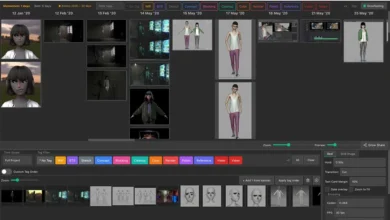
The technical specifications of P2.0 include several features that cater to the professional workflow. Beyond the native quad geometry, the introduction of multi-version generation allows users to generate several iterations of a prompt simultaneously. In a creative workflow, this provides a "bento box" of options, allowing designers to select the best geometry while maintaining a consistent stylistic baseline.
Perhaps most impactful is the "Mesh Edit" tool. Previously, if a generated asset had a minor defect—such as a misplaced limb on a character or an asymmetrical component on a vehicle—the user was required to regenerate the entire model. Mesh Edit allows the user to isolate a specific segment of the 3D asset and instruct the model to regenerate only that portion. This surgical approach to AI generation mimics the additive workflow familiar to 3D modelers using software like Blender or Maya, marking a departure from the "black box" nature of earlier generative models.
Industry Context and Supporting Data
The move toward production-ready AI comes at a time when the demand for 3D assets is outpacing the supply of skilled technical artists. According to recent industry reports, the global market for 3D rendering and visualization software is projected to grow at a compound annual growth rate (CAGR) of over 20% through 2030. Much of this growth is attributed to the expansion of the Metaverse, the integration of 3D assets into e-commerce, and the increasing complexity of mobile gaming.
For mid-sized studios, the cost of generating high-quality 3D assets is often a barrier to entry. If Tripo P2.0 can successfully reduce the manual labor hours required to prep a model from 10 hours to two, the economic impact for studios could be significant. Data from recent user surveys in the generative AI space suggests that "retopology and UV unwrapping" are cited as the most time-consuming tasks for 3D generalists, accounting for approximately 40% to 60% of total asset creation time.
Official Perspectives and Market Positioning
While Tripo has not issued a formal press release featuring quotes from its leadership team, the documentation provided alongside the P2.0 launch emphasizes the model’s "pipeline-first" philosophy. The company is actively positioning itself against competitors that focus solely on visual fidelity without regard for mesh structure. By prioritizing the "back-end" of 3D production—the topology—Tripo is signaling that it understands the needs of engineers and riggers, not just digital illustrators.
Industry analysts suggest that this strategy is a calculated move to capture the professional segment of the market. While consumer-facing tools often prioritize aesthetic "wow" factors, professional software is judged by its compatibility with existing toolsets. By ensuring its meshes are compatible with industry-standard software, Tripo is lowering the friction required for teams to adopt AI tools within their existing stacks.
Implications for the Future of 3D Content
The introduction of quad-based AI generation carries broader implications for the 3D industry. If native quad generation becomes the industry standard for AI models, the barrier between "AI-generated" and "hand-modeled" assets will begin to blur. This could lead to a future where 3D modeling becomes a more collaborative process between human artists and AI assistants, with the AI handling the base geometry and the artist focusing on high-level art direction, material refinement, and complex animation.
However, challenges remain. Critics of AI-generated geometry often point to the "uncanny valley" of topology—where a mesh might look clean on the surface but possess underlying errors that only manifest during character rigging or weight painting. The success of Tripo P2.0 will ultimately depend on its performance under the stress of professional animation pipelines. If the meshes generated are truly deformation-ready, the model could see widespread adoption in rapid prototyping, indie game development, and the creation of assets for real-time engines like Unreal Engine and Unity.
Looking Ahead
As Tripo continues to iterate on the P2.0 architecture, the industry will be watching to see how the platform handles complex, high-poly environments and organic character animation. The integration of Mesh Edit is a critical step in providing users with control, but the long-term viability of the model will be determined by its ability to integrate with third-party plugins and its consistency across diverse artistic styles.
For now, the release of P2.0 represents a measurable step forward in the maturation of generative 3D tools. By focusing on the structural integrity of the models rather than just their outward appearance, Tripo is addressing the most practical pain points of the creative workforce. As artificial intelligence continues to reshape the digital landscape, tools that prioritize workflow integration and technical standards will likely become the benchmarks by which all other generative models are measured.
For studios and independent creators looking to streamline their 3D pipelines, the capabilities introduced in P2.0 offer a compelling look at a future where the gap between an AI prompt and a production-ready asset is significantly narrowed. Further documentation and access to the model can be found on the company’s official website, providing a testing ground for those interested in evaluating these claims within their own specific production environments.
Related posts: