The Unseen Craft: How Ted Season 2 Pushed VFX Boundaries with AI, Fantasy Worlds, and a Fluffier Bear

While Seth MacFarlane is widely recognized for his unique brand of raunchy, boundary-testing comedy, his ambition extends equally into the realm of technological innovation, constantly seeking cutting-edge methods to bring his storytelling visions to life. This dedication to pushing creative and technical envelopes is nowhere more evident than in the Ted franchise, where the titular character, a fully computer-generated teddy bear, has successfully transitioned from two blockbuster feature films to two seasons of a popular streaming series on Peacock. For the eight-episode sophomore season of Ted, Co-Visual Effects Supervisors Blair Clark, known for his work on Hellboy (2019), and Hoyt Yeatman, whose credits include The Fly, were tasked with navigating an exceptionally diverse array of visual effects challenges. These ranged from constructing an elaborate fantasy world for a Dungeons & Dragons-themed episode and meticulously recreating a period-appropriate Bill Clinton using advanced machine learning techniques, to ensuring Ted himself appeared fluffier than ever before, all while maintaining the seamless illusion of a living, breathing character within the live-action world.
The Enduring Challenge of a CGI Protagonist: Ted’s Evolving Presence
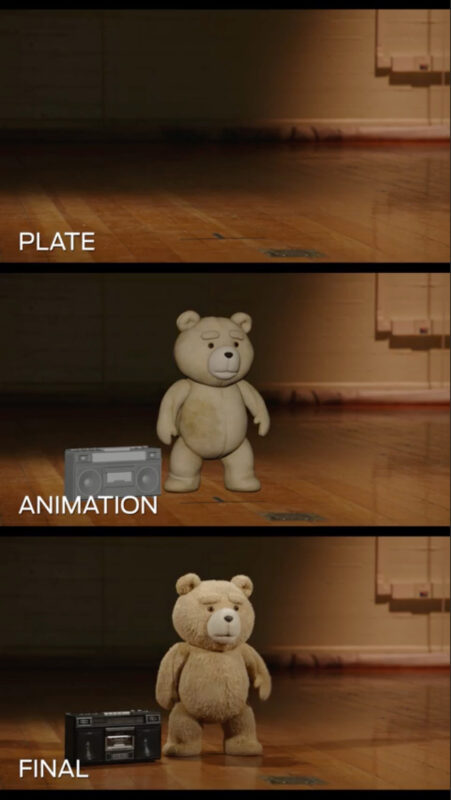
The very premise of Ted rests on a singular visual effects achievement: a fully CG protagonist who interacts realistically with live-action actors and environments. This commitment to a completely digital lead character sets the franchise apart in the landscape of television production. From its cinematic debut, Framestore has been the principal studio responsible for Ted’s animation, a testament to their deep understanding of the character’s nuances and MacFarlane’s specific vision. This long-standing relationship has fostered an unparalleled consistency in Ted’s movements, mannerisms, and overall presence, making him feel like an integral member of the cast rather than a digital construct.
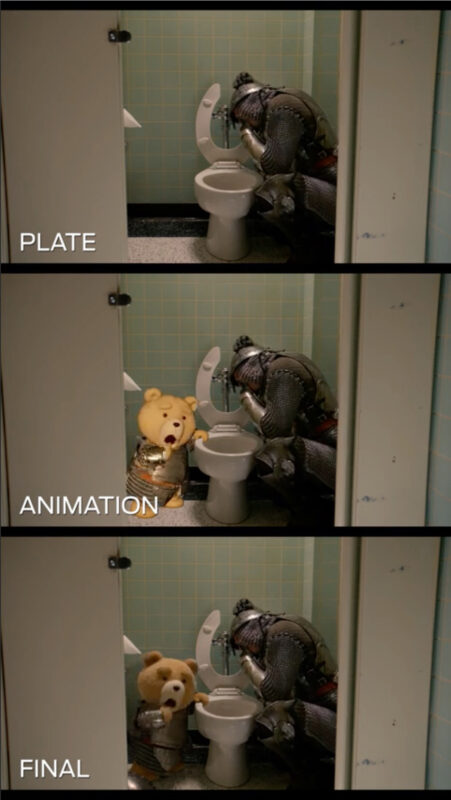
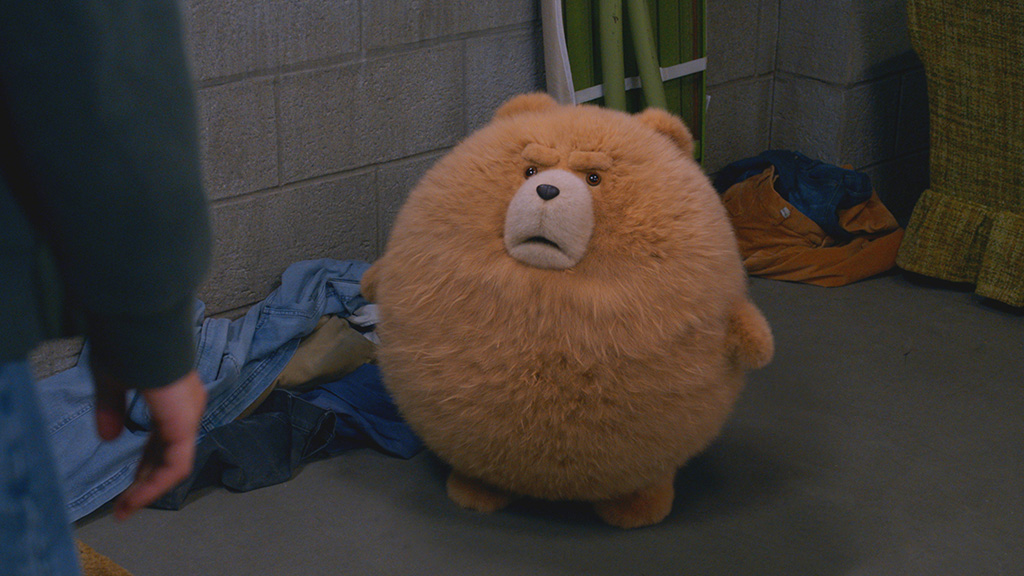
Clark elaborates on this continuous effort, noting, “Framestore in Melbourne did all the Ted work in this season. It was a continuation of a labor of love. The same team has been on the show since the first feature, so they had the recipe for his movements and mannerisms.” This institutional knowledge proved invaluable for the sophomore season, allowing the team to tackle new directives, such as making Ted appear exceptionally fluffy after emerging from a dryer – a visual gag that evolved into a popular meme. “Coming out of the dryer was the fluffiest he had ever been! That was artistic license. We had some where he was puffed up, but Seth wanted a full sphere of fur,” Clark recalls, highlighting MacFarlane’s precise creative input. Similarly, the meticulous animation extended to subtle actions like Ted coughing up furballs. Clark emphasizes that the success of such moments lay in "mainly the pantomime," stressing the delicate balance between expressive animation and grounding Ted in a believable reality. The goal, he explains, was to "keep Ted grounded in subtlety with his mannerisms and not going cartoony. Just go in enough so that people forget he is a CG character and buy him as another member of the cast." This philosophy underscores the core challenge and triumph of the Ted franchise’s visual effects: making the impossible seem utterly ordinary.
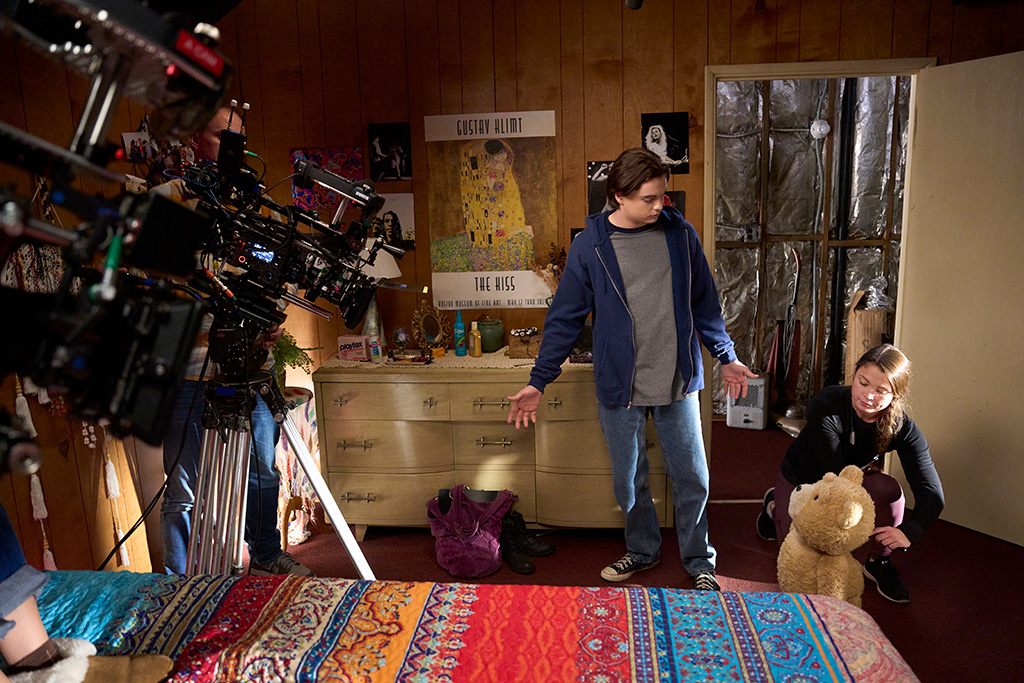
To facilitate seamless interaction on set, practical aids were indispensable. Various "stuffies" – physical teddy bear stand-ins – were created to assist with lighting, composition, eyelines, and actor interaction. For dynamic scenes, such as Ted being thrown, actor Scott Grimes honed his performance with a specialized stunt stuffie. Clark describes this process: “Most of that was the talent of Scott Grimes being able to throw something and make it feel believable, like a football. We had a stunt stuffie that had detachable arms, legs and head. Scott practiced with the torso [nicknamed ‘the egg’] to get a sense of the volume and mass. Then for the plate where Scott scoops Ted up and throws him, it’s all Scott pantomiming; he nailed it.” This blend of physical stand-ins and precise actor performance is critical in establishing the tangible presence of a purely digital character.
A Presidential Deepfake: Navigating AI for Bill Clinton’s Cameo
One of the season’s most ambitious and technically complex undertakings involved the recreation of mid-1990s Bill Clinton, with Seth MacFarlane himself portraying the former president. This challenge was compounded by a unique restriction: the studio had initially forbidden the use of general AI, reflecting broader industry concerns regarding generative artificial intelligence. Yeatman recounts the initial struggles: “Seth MacFarlane wanted to play mid-1990s Bill Clinton, and the studio had forbidden us from using any AI. This season we went in a bunch of different directions. There were a lot of effects that went outside of the realm of doing a Ted.”
The VFX team embarked on a traditional CG approach. Rights for news videos and presidential portrait photographs were secured from the William J. Clinton Presidential Library to create an accurate ZBrush sculpt of Clinton. However, a crucial hurdle emerged: MacFarlane’s head shape was fundamentally different from Clinton’s. This disparity necessitated a full CG head replacement. Gradient Effects was brought in to employ their proprietary software, Shapeshifter, to generate a 3D mesh of MacFarlane’s head, which was then meticulously applied to the Clinton rig based on the ZBrush sculpt. While an improvement, this method struggled to avoid the "uncanny valley" – the unsettling feeling generated by images that are nearly, but not quite, perfectly realistic.
The breakthrough came with Deep Voodoo, a visual effects house co-founded by South Park creators Trey Parker and Matt Stone, which specializes in AI-driven VFX. Yeatman explains their discovery: “We found Deep Voodoo in Venice, California, which is a visual effects house that does visual effects with an eye toward AI.” Deep Voodoo was developing an application that mimicked traditional CG head replacement but with the nuanced capabilities of AI. “They were literally trying to do what we do in CG, which is to lop the head off somewhere through the neck and replace the whole head with CG, including the hair, ears and the back of the head,” Yeatman notes.
The key advantage of Deep Voodoo’s approach was its AI’s profound understanding of the human face and, critically, human speech. This specialized AI was trained on Bill Clinton’s facial data, then applied to the plate footage, accounting for MacFarlane’s performance, existing lighting conditions, camera lensing, and tracking. The system rendered a 1024 x 1024 pixel window over MacFarlane’s head, serving as the replacement. Yeatman elaborates on the AI’s distinct benefits: “The advantage of using AI over CG is that it understands human speech well. This means you can look into the mouth and see the tongue moving. In animation, you can’t capture that, or the little nuances around the eyes and squints; AI does that perfectly. AI does all the heavy lifting that is not seen by the viewer but is felt by them. That’s the last 5% or 10% that you struggle with in traditional CG. AI was another tool in the visual effects arsenal.” He strongly emphasizes that this was not a "magic pushbutton" solution. The AI-generated element underwent the full standard visual effects pipeline, including compositing, multiple approval stages, and color grading, just like any other VFX shot. This sophisticated integration demonstrates the evolving role of AI as a powerful, specialized tool within the traditional VFX workflow, capable of achieving levels of photorealistic detail that are exceptionally challenging with conventional CG methods, particularly in capturing the subtle intricacies of human expression and speech.
Venturing into Fantasy: The Dungeons & Dragons Episode
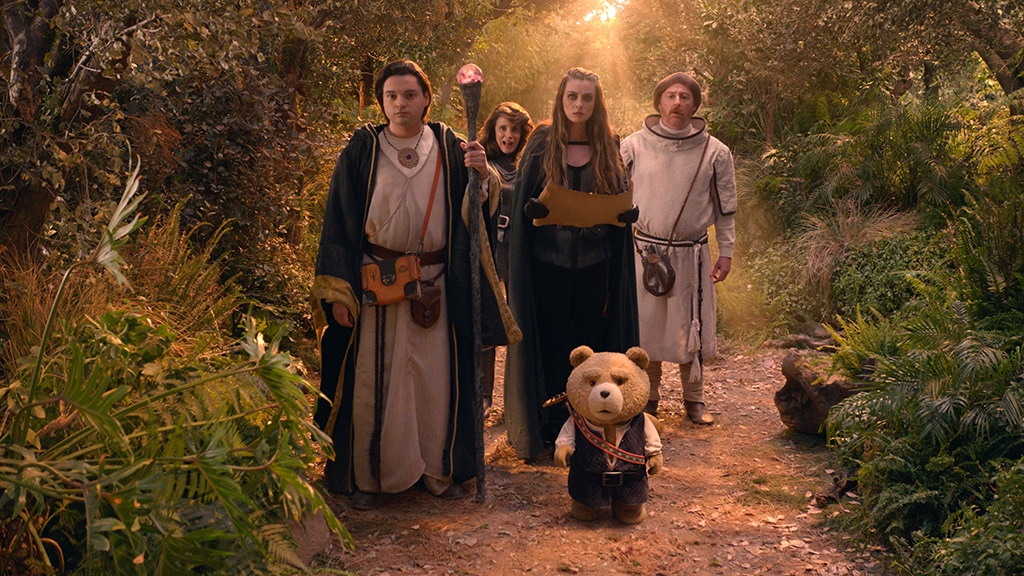
Episode 203 plunged Ted and his friends into a fantastical Dungeons & Dragons quest, presenting a dramatically different set of visual effects challenges. This sequence demanded extensive collaboration between the visual effects, art, and costume departments to create a cohesive and immersive fantasy world. Co-Visual Effects Supervisor Blair Clark shared specific guidelines for Ted’s appearance: "There were certain rules we had to follow with Ted. We never put shoes on him because they look like an orthopedic contrivance that’s ridiculous."
The core of the D&D environment was an expansive forest. The art department developed a comprehensive Unreal Engine previs (pre-visualization) to plan the camera movements and transitions, from sweeping vistas to close-ups of the actors on a path. A massive practical forest set was constructed on a stage, with immense bluescreen surrounding it. This presented immediate logistical hurdles. Yeatman humorously recalls, “The tree branches were less than eight or nine inches away from the bluescreen, which is typically a big no-no. You need at least 36 to 40 inches away so you can have a chance of lighting it.” The scale was staggering, with "over 3,000 linear feet of bluescreen that went 40 feet into the air."
Achieving the desired magical atmosphere involved complex lighting. The team aimed for "God rays" – shafts of light piercing through the branches – and subtle particulates floating in the air. As Yeatman explains, "But even with a large stage at Universal, you can’t get a single light source like the sun far enough back to get columnated rays to produce that naturally onstage." To overcome this, the set was meticulously LiDAR scanned, creating a volumetric digital representation of every plant, trunk, and rock. This precise 3D data allowed the VFX team to digitally track the camera and virtually place a key light, artificially generating the God rays and atmospheric particulates. These effects were created in layers and composited like a "clamshell" around the foreground, actors, midground, and background, seamlessly integrating the practical and digital elements. Digital set extensions were crucial to expand the forest beyond the physical stage, creating an illusion of boundless wilderness.
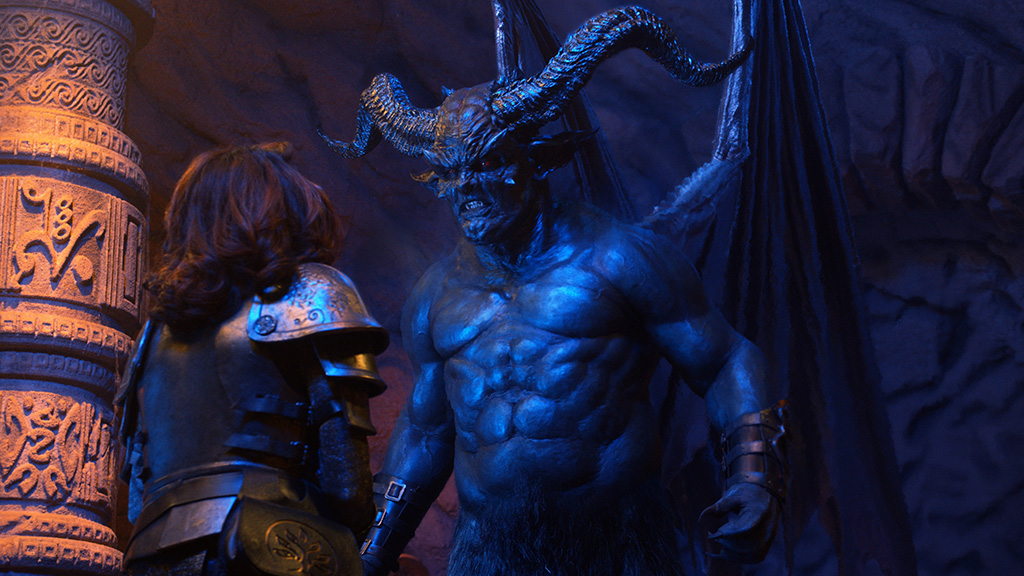
The D&D episode also featured the demon Dra’hul. For this character, practical prosthetics were enhanced with digital effects. Clark details the subtle but impactful augmentations: “We added wings, slimmed down the waist and did a treatment on the skin that was otherworldly or ethereal. Other than that, it was straight makeup. It looked great.” This approach exemplifies the strategic combination of practical and digital effects to achieve a believable creature design without over-reliance on pure CG, preserving the tangible quality of the performance.
Recreating 1990s Boston: Environmental VFX and Period Accuracy
Beyond fantasy realms, Ted Season 2 also required extensive environmental visual effects to faithfully recreate 1990s Boston. This involved transforming the backlots of Universal Studios Hollywood into period-accurate streetscapes, a challenge that demanded meticulous attention to detail and significant digital intervention. Seth MacFarlane’s discerning eye was a key factor, as Clark reveals: “Seth was keen on the trees. He would be like, ‘Those look like West Coast trees.’ Seth was very specific.” This level of detail highlights the director’s commitment to authenticity, even in background elements.
Many sequences involved characters driving through Boston, requiring traditional greenscreen techniques. Yeatman elaborates on the complexities: “Big chunks are driving in a car, which is more of a traditional greenscreen. We have three cameras running all the time, so we have to deal with multi-camera shoots, which is another part of the challenge of doing visual effects.” The team utilized plates from the previous season, some of which were shot on location in Boston. This presented its own challenges, as modern elements like contemporary cars had to be digitally removed and replaced to maintain period accuracy. For scenes set at a mansion, an advanced eight-camera array was deployed, providing "complete freedom on the stage," allowing for versatile camera angles and comprehensive environmental control. While a video wall might offer certain advantages, Yeatman notes that for the rapid pace and multi-camera setup of Ted, their current system proved highly effective. Additionally, scenes depicting snow-covered landscapes required practical additions like "powder paper" on the Universal backlot, which then had to be digitally extended to encompass entire neighborhoods, ensuring consistency across wide shots. This meticulous layering of practical and digital elements, combined with strict adherence to period detail, was essential in immersing viewers in the specified timeframe.
The Synergy of Practical and Digital: On-Set Workflow and Collaboration
The seamless integration of a CG character like Ted into a live-action environment relies heavily on a well-established on-set workflow and close collaboration between the visual effects team and the actors. Co-Visual Effects Supervisor Blair Clark played a pivotal role in this process, essentially embodying Ted during rehearsals. Yeatman explains, “Basically, on set, Blair is Ted. In rehearsals, Blair goes in like one of the other cast members. Seth will direct Blair where Ted needs to be, what he needs to do and the pacing.” This hands-on approach allows cameramen to frame shots and actors to develop their performances with a tangible, albeit temporary, representation of Ted.
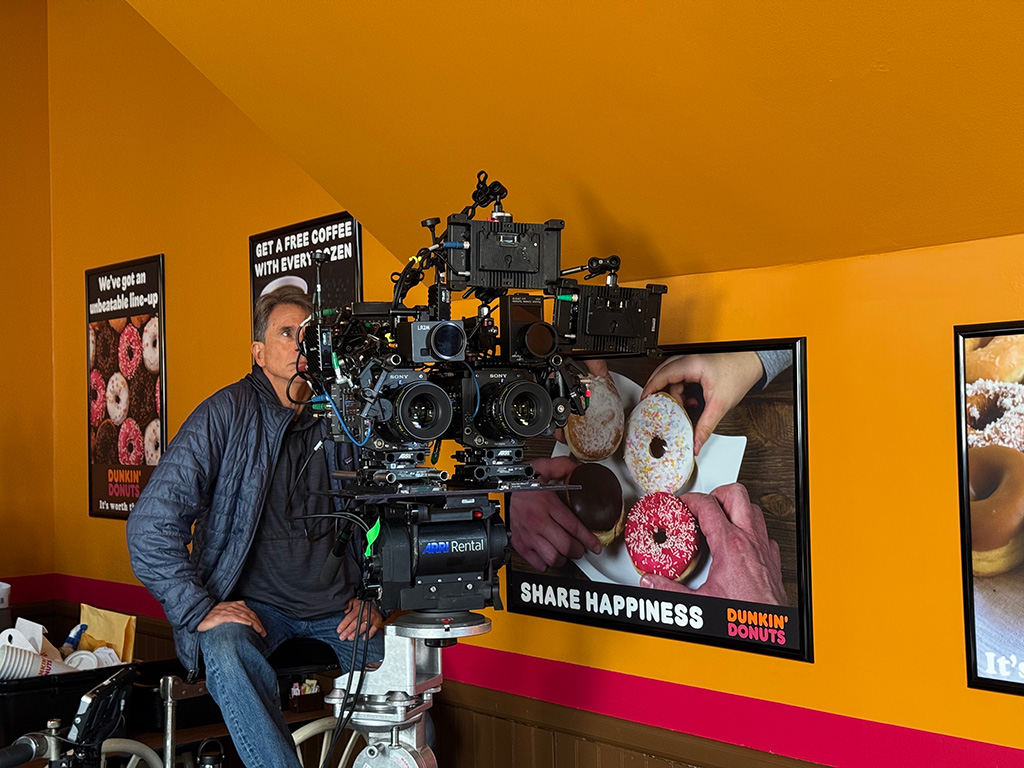
The ViewScreen Studio system provided real-time rough renders of Ted in the viewfinder, a valuable reference for some camera operators. Clark acknowledges its utility: “It was a good reference. We integrated it as much as possible with Framestore’s capabilities because it had to be seamlessly worked into their pipeline.” However, Yeatman points out its limitations for dynamic character animation: “ViewScreen is helpful for some cameramen to see, but the character may not be moving exactly as we rehearsed. It does nothing for the cast because they’re in front of the camera performing.”
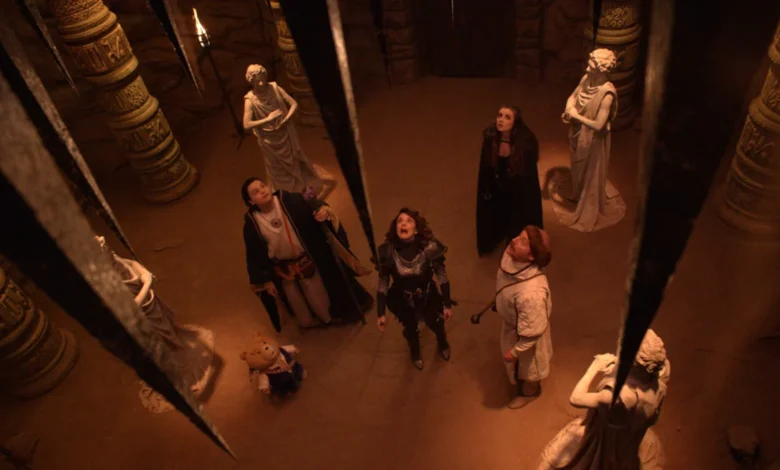
Where ViewScreen truly shone was in environmental visualization. For the D&D forest sequence, it allowed the team to "see beyond what we had physically on set." Yeatman recounts a specific instance: “We had an opening shot where the camera moves 24 feet, but it was actually a 64-foot crane in the Unreal Engine animatic that we had. It gives everyone an idea of where we have to be and where the camera has to be pointed.” Similarly, for a scene featuring spikes descending from a temple ceiling, ViewScreen was crucial for determining framing, set extensions, and the speed of the spikes. This highlights its utility as an environmental planning and visualization tool, rather than a primary solution for nuanced character performance.
The organic, almost improvisational workflow on Ted is likened to jazz by Yeatman, contrasting it with the structured nature of classical music. He explains, “In classical music, every single note is written down, but here you know the tune and melody and just get in there, and it organically happens.” This fluidity is possible due to the long-standing collaboration of the core team. “That’s what’s nice about Ted. These guys have been working [together for] so long on the features and episodes that they have it drilled down. That’s why it goes as smoothly as it does because everyone knows how it goes.” This deep familiarity and shared understanding enable the team to respond dynamically to creative demands, consistently delivering high-quality visual effects under tight episodic television schedules. The season also featured other inventive VFX, such as human actors digitally altered to appear as if they were made from stone, further showcasing the team’s versatility.
Behind the Scenes: A Collaborative VFX Ecosystem
The sheer scale of Ted Season 2’s visual effects is underscored by the fact that nearly 3,000 visual shots were completed across the eight episodes. This monumental task required a collaborative effort from a consortium of specialized visual effects studios. In addition to Framestore, which handled the bulk of Ted’s character animation, key contributions came from Studio Blackbird, Rising Sun Pictures, Deep Voodoo (for the Bill Clinton sequence), and Pitch Black. This distributed pipeline allowed the production to leverage specialized expertise and manage the immense workload inherent in such a VFX-heavy series.
The extensive environmental work, particularly in transforming the backlots of Universal Studios Hollywood into the distinct aesthetic of 1990s Boston, was a significant undertaking. Clark’s anecdote about Seth MacFarlane’s keen eye for East Coast trees ("Those look like West Coast trees") illustrates the meticulous level of detail required and the director’s specific vision for every aspect of the show’s visual landscape. Yeatman and Clark, as co-supervisors, are committed to staying abreast of the latest technological advancements and integrating them strategically. Yeatman concludes, “Blair and I stay up on the latest greatest [tech] and make sure it works before we put it into practice. We want to give Seth the greatest amount of freedom that he can have and still achieve a good look. Sometimes we do stuff that looks crazy. But with the technology that we have in our back pocket, we can pull it out, make some shots that look cool and make the day, which is probably the biggest thing that we’re all working on.” This philosophy of continuous innovation and strategic application of technology ensures that Ted remains at the forefront of character-driven visual effects in television.
Implications for the Future of Visual Effects in Episodic Television
The production of Ted Season 2 offers significant insights into the evolving landscape of visual effects, particularly within episodic television. It highlights a sophisticated blend of traditional VFX artistry with emerging technologies, demonstrating how specialized AI, far from being a "magic pushbutton," can be integrated as a powerful tool to achieve unprecedented levels of detail and realism in specific applications, such as nuanced facial recreation. The success with the Bill Clinton sequence underscores AI’s potential to address persistent challenges like the "uncanny valley" in photorealistic human digital doubles, especially when dealing with subtle speech patterns and facial expressions.
Furthermore, the season reinforces the critical importance of a cohesive, experienced visual effects team, exemplified by Framestore’s long-standing stewardship of the Ted character. This continuity ensures consistency and allows for the organic development of character nuances over multiple productions. The innovative use of practical sets augmented by advanced digital extensions, LiDAR scanning, and real-time visualization tools like ViewScreen Studio showcases a pragmatic approach to complex world-building, balancing efficiency with creative ambition within the demanding schedules of television production.
Ted Season 2 stands as a testament to Seth MacFarlane’s vision for combining irreverent comedy with cutting-edge visual effects. It illustrates how the boundaries of what is possible in episodic storytelling are continually being expanded through strategic technological adoption, collaborative innovation, and the relentless pursuit of seamless digital artistry. As digital technology continues to evolve at a remarkable pace, productions like Ted will undoubtedly continue to push these envelopes, setting new benchmarks for character animation, environmental realism, and the strategic integration of advanced tools like AI in the pursuit of compelling visual narratives.