Perfect Color on Every Monitor! Dell Color Management 4.0 Remote Collaboration

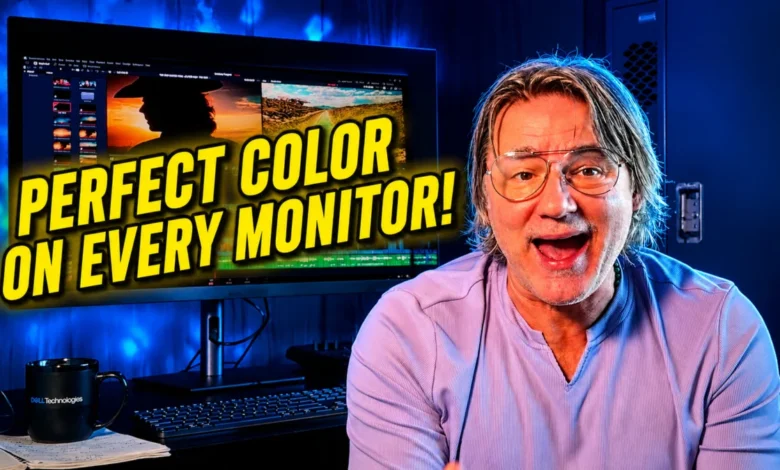
In the demanding world of professional post-production, the unwavering confidence in an image’s fidelity is not merely a preference but a fundamental requirement. Color, contrast, and saturation transcend abstract details; they form the bedrock upon which every creative decision is made, influencing narratives, evoking emotions, and ensuring brand consistency. The introduction of Dell Color Management Software (DCM) 4.0 marks a significant advancement in addressing the critical need for visual precision, particularly within increasingly complex and geographically dispersed creative workflows. This latest iteration of Dell’s proprietary color management solution is engineered to synchronize and calibrate compatible Dell monitors with unparalleled accuracy, guaranteeing that every member of a creative team, regardless of their physical location, perceives the identical visual reference.
The modern landscape of digital content creation has been profoundly reshaped by a confluence of factors, including the exponential growth of media consumption, the proliferation of high-resolution formats, and the paradigm shift towards remote and hybrid work models. These developments have amplified the challenges associated with maintaining color consistency across diverse display environments. Historically, discrepancies in monitor calibration could lead to costly revisions, prolonged approval cycles, and fundamental disagreements within creative teams. DCM 4.0 directly confronts these issues, enabling editors, colorists, directors, producers, and clients to review the same frame from different rooms, cities, or even continents, with the assurance that their visual perception is perfectly aligned. This capability fosters a "shared visual language," transforming creative conversations from debates about monitor accuracy into focused discussions on artistic merit and storytelling.
The Evolving Landscape of Digital Content Creation and Remote Work
The early 2020s witnessed an unprecedented acceleration in the adoption of remote work strategies across nearly all industries, and the creative sector was no exception. While digital tools for collaboration in project management and communication rapidly matured, the specialized requirements of color-critical workflows presented a unique hurdle. A graphic designer in New York, a video editor in London, and a director in Los Angeles needed to simultaneously evaluate the same visual asset, from a film’s grading to a product’s packaging design. Without a standardized, synchronized approach to display calibration, variations in white point, gamma, luminance, and color gamut across different monitors could lead to significant misinterpretations. These inconsistencies often resulted in a frustrating cycle of feedback and revision, undermining efficiency and potentially compromising artistic intent.
Prior to robust solutions like DCM 4.0, achieving even a semblance of color consistency across multiple workstations required labor-intensive manual calibration processes, often involving expensive hardware calibrators and specialized software. Even then, maintaining that consistency over time, or extending it to remote team members, remained a formidable challenge. Factors such as display aging, environmental lighting conditions, and even slight variations in display panel manufacturing could introduce perceptible color shifts. The market for professional displays and color management tools has therefore seen continuous innovation, driven by the escalating demands for visual fidelity in everything from blockbuster films and high-end commercials to scientific visualization and medical imaging. The global market for professional displays alone has been projected to reach over $15 billion by 2027, underscoring the critical importance of solutions that enhance their utility and accuracy.
Technical Foundations: Understanding Color Management and Display Standards
At its core, color management is a systematic approach to ensuring that colors are reproduced accurately and consistently across various devices—from cameras and scanners to monitors and printers. This involves three primary components:
- Calibration: Adjusting a display’s hardware settings (brightness, contrast, white point, gamma) to meet a specific target.
- Profiling: Creating an ICC (International Color Consortium) profile that describes the unique color characteristics of the calibrated display. This profile acts as a translator, allowing color management systems to accurately convert colors for that specific device.
- Conversion: Using these profiles to transform color data from one device’s color space to another, maintaining visual integrity.
Professional workflows often operate within specific industry-standard color spaces. For broadcast television and video, Rec. 709 is the prevailing standard, while cinema productions frequently utilize DCI-P3 for digital projection. For print and graphic design, sRGB and Adobe RGB are common. The challenge arises when different displays, even from the same manufacturer, exhibit subtle variations in their ability to accurately render these color spaces. Uncalibrated monitors might display a warmer or cooler white point, a higher or lower luminance, or a compressed dynamic range, all of which can drastically alter the perception of an image. For instance, a subtle color cast on an uncalibrated monitor could lead a colorist to overcompensate, introducing an unintended tint into the final product that appears incorrect on a properly calibrated display.
DCM 4.0 directly tackles these technical complexities by providing a streamlined, software-driven solution for precision calibration and synchronization. It leverages Dell’s deep understanding of its UltraSharp display hardware, allowing for granular control over panel characteristics. This integration between software and hardware is crucial, as it enables the system to achieve a level of accuracy and consistency that generic third-party solutions might struggle to match. The software is designed to mitigate the effects of display drift over time, ensuring that once calibrated, the monitor maintains its accuracy for extended periods, reducing the need for frequent recalibration.
Dell’s Commitment to Visual Precision: A Legacy of Innovation
Dell’s journey in professional displays has been characterized by a consistent focus on delivering high-performance monitors tailored for demanding users. The UltraSharp series, in particular, has long been a staple in creative studios and corporate environments, recognized for its robust build quality, ergonomic design, and color accuracy capabilities. The evolution of Dell’s color management software reflects a proactive response to the growing sophistication of digital media workflows. While earlier versions of DCM laid the groundwork for individual monitor calibration, DCM 4.0 represents a significant leap forward by emphasizing networked synchronization and remote capabilities.
This progression aligns with a broader industry trend where hardware manufacturers are increasingly bundling sophisticated software solutions with their professional-grade displays. The intent is to provide a comprehensive ecosystem that not only offers superior panel technology but also the tools necessary to unlock its full potential for color accuracy and consistency. The integration of DCM 4.0 with specific award-winning hardware, such as the Dell UltraSharp U3226Q 4K monitor, highlights Dell’s commitment to creating optimized solutions for its users. The "4.0" designation implies a continuous development cycle, building upon user feedback and technological advancements to deliver increasingly refined and powerful tools. This iterative approach ensures that Dell’s offerings remain at the forefront of professional display technology, adapting to the ever-changing demands of creative professionals.
DCM 4.0: Bridging the Remote Gap and Fostering Collaborative Confidence
The core innovation of DCM 4.0 lies in its ability to extend precision color calibration beyond a single workstation to an entire distributed network of compatible Dell UltraSharp monitors. This functionality is transformative for remote collaboration, effectively dismantling geographical barriers that once hindered color-critical decision-making. Imagine a scenario where a film’s director, based in Europe, needs to approve the final color grade being performed by a colorist in North America. With DCM 4.0, both individuals, each viewing the footage on their respective Dell UltraSharp monitors, can be confident that they are seeing the exact same image—identical skin tones, shadow detail, highlight rendition, and overall color balance.
This synchronized consistency means that creative conversations can progress without the ambiguity that arises from disparate visual references. Instead of wasting valuable time questioning whether one monitor is warmer, brighter, flatter, or more saturated than another, teams can focus entirely on the creative work itself. This leads to faster, more informed decision-making and significantly streamlines the approval process. For filmmakers and post-production teams, DCM 4.0 is more than just monitor software; it is a shared visual language that fosters trust and efficiency. It empowers every stakeholder to speak from the same reference point, reducing subjective interpretations and ensuring that the final output aligns precisely with the creative vision.
The implications extend beyond just color grading. In visual effects, artists can ensure that composite shots blend seamlessly, with consistent lighting and color temperatures. In graphic design, brand colors are maintained with absolute fidelity across all stages of production, from initial concept to final proof. For photographers, the nuanced details of an image, from tonal transitions to subtle textures, can be judged with clarity and consistency, regardless of who is reviewing it or where they are located. This level of confidence not only improves the quality of the final product but also enhances team morale and productivity by eliminating a significant source of frustration and rework.
Industry Perspectives and Expert Commentary
Industry experts have long recognized the critical need for robust color management in professional workflows. "The cost of color inconsistency in post-production can be staggering," states Dr. Evelyn Reed, a leading consultant in digital media workflows. "Rework due to misaligned color perception not only drains budgets but also delays project timelines, impacting release schedules and client satisfaction. Solutions like Dell Color Management 4.0 represent a significant return on investment by preemptively addressing these issues."
A spokesperson for Dell, in a recent statement regarding the launch, emphasized the company’s dedication to empowering creative professionals: "Our goal with DCM 4.0 is to remove the technical barriers that often impede creative flow in distributed environments. We understand that in creative fields, visual trust is paramount. By ensuring perfect color consistency across our UltraSharp displays, we are enabling teams to collaborate more effectively, make faster decisions, and ultimately, produce higher quality content without compromise." This sentiment is echoed by many post-production supervisors who have expressed the challenge of onboarding new remote talent while maintaining rigorous color standards. "The ability to easily set up and synchronize a new remote workstation with the established studio standard is invaluable," comments Mark Jenkins, Head of Post-Production at a major animation studio. "It cuts down on training time and ensures immediate productivity, knowing that everyone is literally on the same page, visually speaking."
Broader Market Impact and Future Outlook
The introduction of Dell Color Management 4.0 is poised to have a broader impact on the professional display market and the future of creative workflows. By setting a high bar for integrated hardware-software color solutions, Dell is likely to spur further innovation from competitors. As remote and hybrid work models continue to evolve, the demand for seamless, reliable, and accurate collaborative tools will only intensify. DCM 4.0 demonstrates a clear path forward for how display manufacturers can contribute to this ecosystem, moving beyond simply providing high-resolution panels to offering comprehensive solutions that address the entire lifecycle of visual content creation.
Furthermore, the principles behind DCM 4.0—precision, synchronization, and remote accessibility—are highly relevant to emerging technologies such as virtual reality (VR), augmented reality (AR), and the nascent metaverse. As these immersive platforms mature, the need for absolute color fidelity and consistent visual experiences across diverse hardware will become even more pronounced. A consistent visual language will be essential for building believable and engaging digital worlds. Dell’s proactive development in this area positions it strongly for future advancements in these cutting-edge fields.
In conclusion, Dell Color Management 4.0 represents a significant leap forward for professional post-production and remote creative collaboration. By ensuring perfect color consistency across compatible Dell UltraSharp monitors, it eliminates a major source of friction and inefficiency in distributed workflows. It empowers creative teams with a shared visual language, fostering trust, accelerating decision-making, and ultimately elevating the quality of digital content. As the creative industries continue to embrace global talent and flexible work arrangements, solutions like DCM 4.0 will be indispensable tools, cementing Dell’s role as a vital partner in the ongoing evolution of visual excellence.
Related posts: