Native Instruments and A. G. Cook Launch SuperStarSaw Synthesizer to Redefine the Legacy of the Supersaw Sound

Native Instruments, a global leader in the digital music production industry, has officially announced the release of Super*Saw (marketed as SuperStarSaw), a groundbreaking software synthesizer developed in close collaboration with the influential producer and PC Music founder A. G. Cook. This release marks a significant milestone in the evolution of digital sound design, specifically targeting the "supersaw"—a sound that has defined the landscape of electronic dance music, trance, and hyperpop for nearly three decades. By condensing traditionally labor-intensive stacking workflows into a singular, highly expressive interface, Native Instruments aims to provide both professional producers and bedroom enthusiasts with a tool that balances historical reverence with futuristic experimentation.
The launch, celebrated at Baltic Studios in London, highlights a strategic shift in Native Instruments’ approach to instrument design, moving toward artist-centric tools that embody specific musical ideologies. A. G. Cook, whose production credits include high-profile collaborations with Charli XCX, Caroline Polachek, and Oklou, as well as critically acclaimed solo projects like 7G and Apple, served as the primary visionary behind the instrument’s architecture. The partnership represents a convergence of Native Instruments’ technical engineering prowess and Cook’s idiosyncratic, boundary-pushing approach to pop and electronic music.
The Historical Context of the Supersaw Sound
To understand the significance of SuperStarSaw, one must look back to the mid-1990s, an era defined by the "virtual analog" revolution. In 1996, the Roland JP-8000 synthesizer introduced the "Supersaw" waveform to the world. Unlike a standard sawtooth wave, which is a fundamental building block of subtractive synthesis known for its buzzy, harmonically rich profile, the supersaw functioned by mimicking the sound of seven sawtooth oscillators detuned against one another.
This innovation allowed for a massive, lush, and "wall-of-sound" texture that became the backbone of the burgeoning trance and rave movements. It provided the euphoric leads heard in countless anthems, offering a level of thickness and sonic density that was previously difficult to achieve with hardware limitations. As music production transitioned from hardware to Digital Audio Workstations (DAWs) in the 2000s, the supersaw remained a staple, though achieving the perfect "stack" often required complex layering, heavy processing, and significant CPU overhead.
A. G. Cook’s work over the last decade has been instrumental in re-contextualizing this sound for the modern era. Through his PC Music collective, Cook took the earnest, stadium-sized energy of 90s rave and pushed it into "hyper-real" territory. By exaggerating the digital sheen and the aggressive detuning of the supersaw, he helped birth the "hyperpop" aesthetic—a genre defined by its maximalist production and high-contrast sonic palettes.
Technical Architecture: The Pink and Green Layers
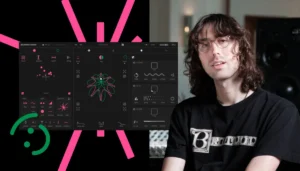
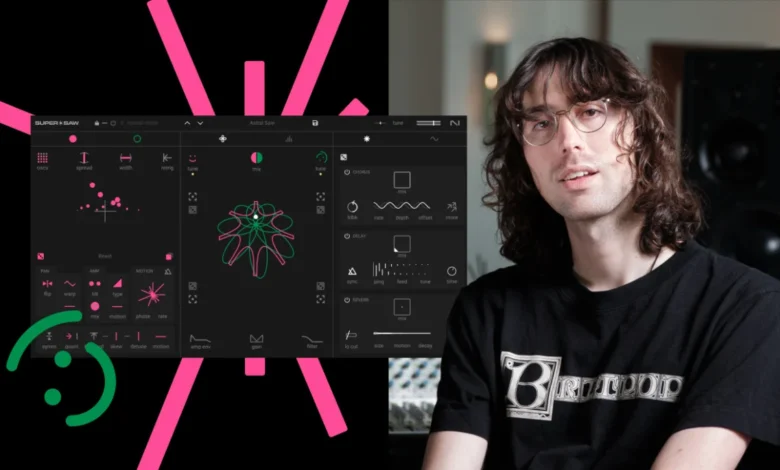
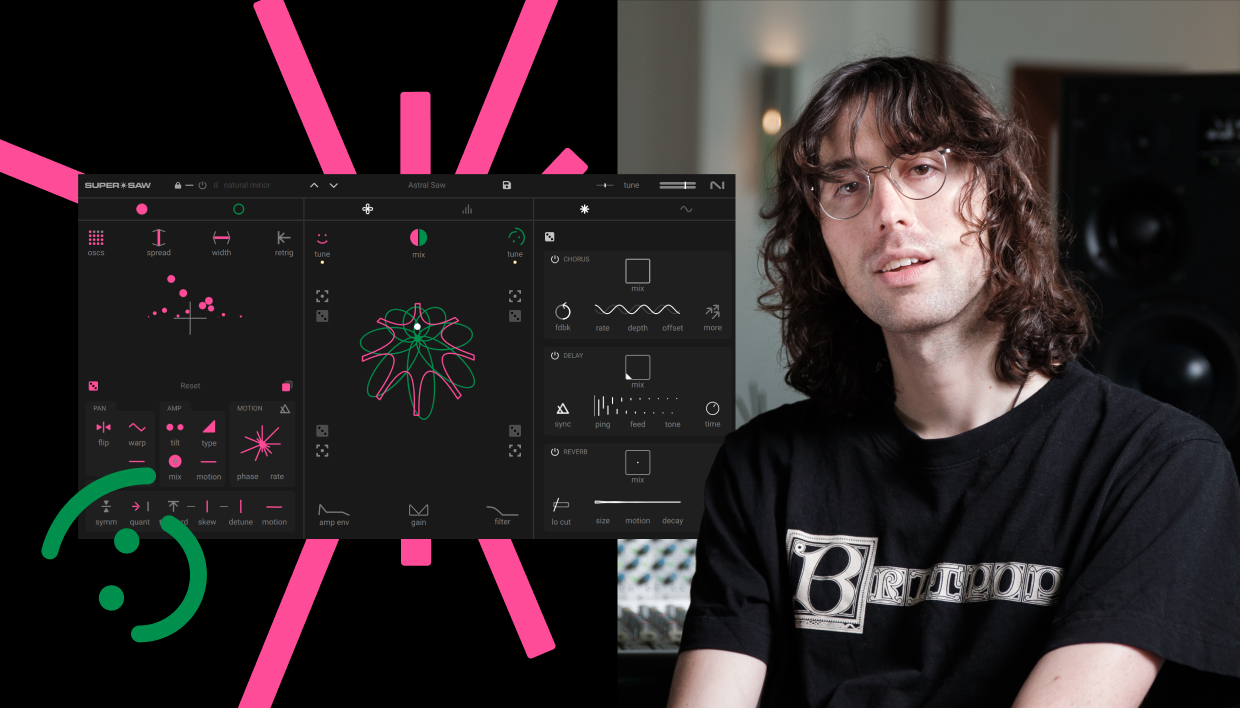
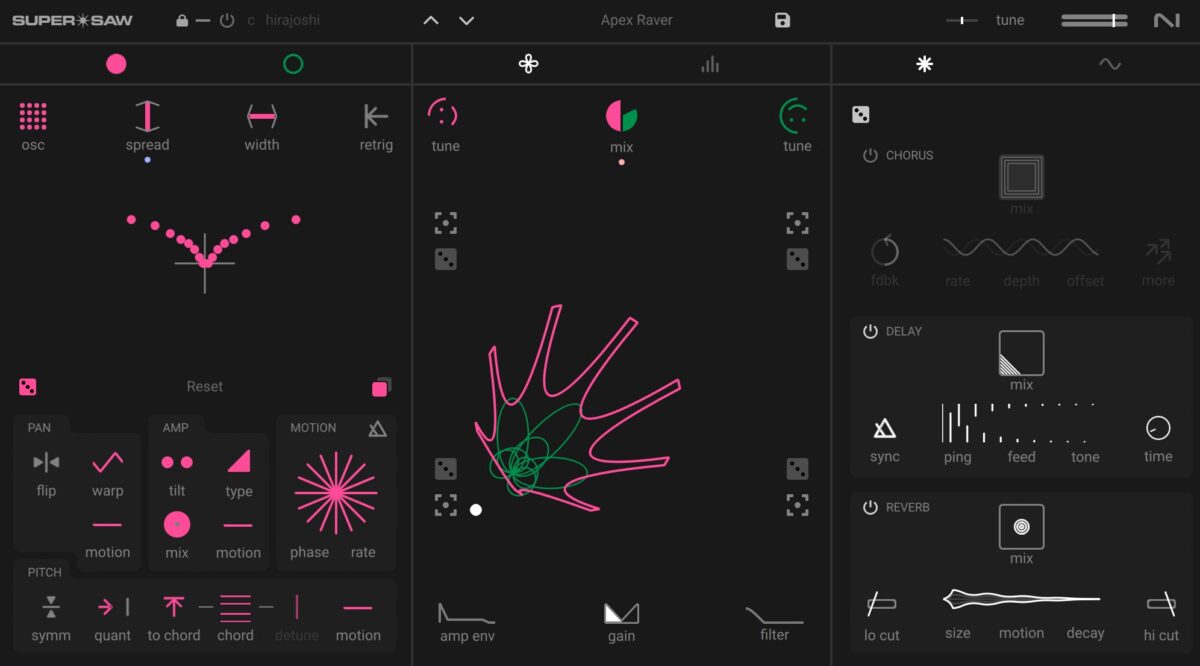
SuperStarSaw departs from the traditional, menu-heavy interface of modern wavetable synthesizers, opting instead for a streamlined, performance-oriented design. The instrument’s core architecture is built around a dual 8-voice sawtooth oscillator system. These oscillators are organized into two distinct, color-coded layers: pink and green.
According to Cook, this dual-layer philosophy is central to his production method. He describes the relationship between the two layers as a "comedic duo," where one layer provides the stable, fundamental anchor of a sound, while the other is free to undergo extreme modulation, detuning, or rhythmic fluctuation. This allows for a complex interplay between consonance and dissonance, a hallmark of Cook’s signature style.
The interface features several key innovations designed to facilitate real-time creativity:
- The 4-Corner Morpher: A central control hub that allows users to transition smoothly between four different states of the synth. This can include shifts in chord shapes, detuning intensity, or modulation depth, enabling the kind of organic movement that previously required hours of manual automation.
- The Star-Shaped Modulator: A unique LFO/envelope hybrid that can be mapped to various parameters, including panning, amplitude, and pitch. This modulator is designed to inject "motion" into the sound, preventing the static, "flat" quality that can sometimes plague digital synthesis.
- Randomization and Fluidity: The inclusion of "dice" icons for randomization encourages accidental discovery, a process Cook cites as essential to his creative flow. By clicking these, producers can instantly generate new textures that they might not have arrived at through deliberate programming.
From Tedious Workarounds to Intuitive Workflow
A primary driver for the creation of SuperStarSaw was the frustration Cook experienced with traditional production methods. In the professional sphere, creating a "signature" supersaw sound often involved duplicating tracks, applying slightly different fine-tuning to each, and managing a sprawling array of plugins to ensure the sound remained cohesive.
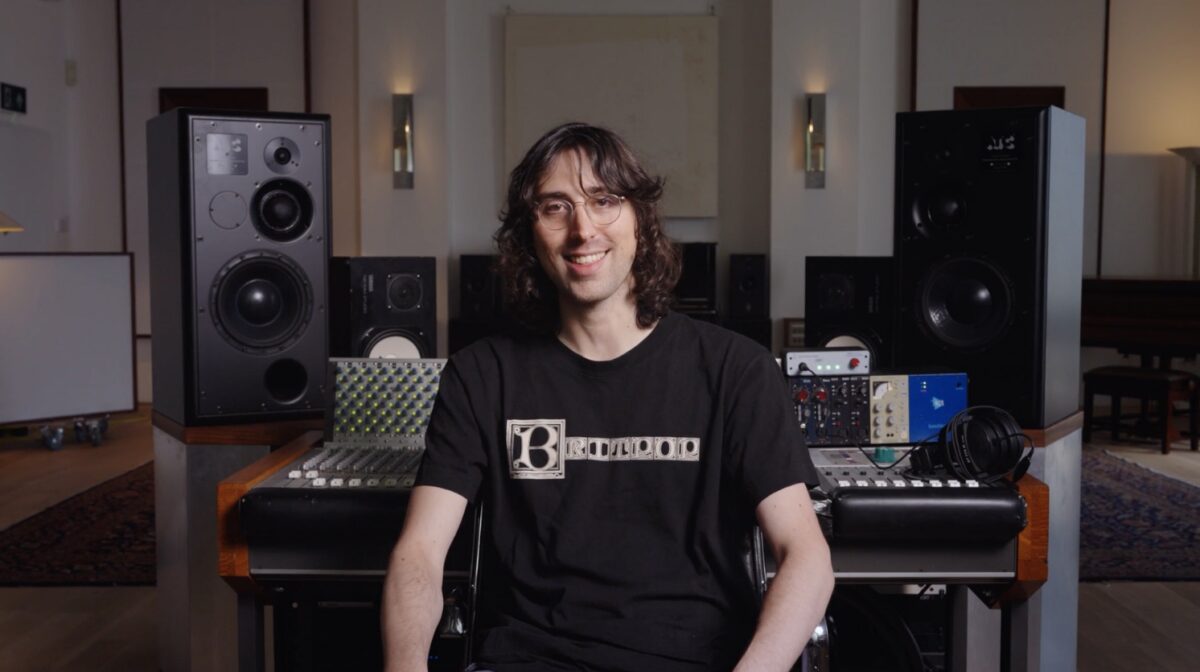
Cook referenced his track "Stargon" as a prime example of the "painful" manual labor involved in high-level stacking. Before the advent of this plugin, producers had to meticulously line up automation lanes to ensure that multiple synth instances moved in sync. SuperStarSaw effectively eliminates this friction. By housing these complex interactions within a single engine, the instrument allows the producer to "play" the stack as a living, breathing instrument rather than a static arrangement of files.
This efficiency is not merely a matter of convenience; it changes the nature of the output. When the barrier to experimentation is lowered, producers are more likely to push the instrument to its "limits." Cook notes that in his own music, he often pushes the stacking so far that the sound ceases to be heard as a musical chord and instead becomes a "block of sound" or a percussive element. This "maximalist" approach is a defining characteristic of modern avant-pop and experimental club music.
Market Positioning and Industry Implications
The release of SuperStarSaw comes at a time when the VST (Virtual Studio Technology) market is increasingly saturated with "all-in-one" synthesizers like Xfer Records’ Serum or Vital. While these tools offer near-infinite possibilities, there is a growing trend toward "boutique" plugins that do one specific thing exceptionally well.
Native Instruments’ decision to partner with an artist of A. G. Cook’s caliber suggests a strategy of "ideological design." Rather than competing on the number of features, SuperStarSaw competes on its point of view. It is an instrument designed for a specific aesthetic—one that embraces the "digital-ness" of the computer rather than trying to perfectly replicate the imperfections of 1970s analog hardware.
Industry analysts suggest that this move will likely resonate with a younger generation of producers who view the computer as their primary instrument. The "post-internet" aesthetic, which values high-definition textures and hyper-processed vocals, finds a natural home in the SuperStarSaw engine. Furthermore, by making these high-end production techniques accessible through a single interface, Native Instruments is further democratizing the professional "pop" sound.
Broader Impact on the Electronic Music Community
The launch of SuperStarSaw is expected to have a ripple effect across various sub-genres. In the world of EDM and Trance, the plugin offers a fresh take on a classic sound, potentially revitalizing genres that have relied on the same supersaw patches for years. In the experimental and "deconstructed club" scenes, the ability to morph and "break" the sound in real-time provides a new tool for sonic destruction.
The collaborative nature of the project also sets a precedent for future software developments. By involving artists in the fundamental design process—rather than just having them curate a preset pack—Native Instruments is ensuring that their tools are aligned with the actual needs and workflows of contemporary creators.
Cook views the plugin as a "coda" or "epilogue" to his recent body of work, including his albums 7G, Apple, and Britpop. The pink-and-green color scheme of the plugin directly mirrors the visual identity of his Britpop era, signaling a deep integration between his musical output and the tools he uses to create it. For the wider community, it offers a window into the mind of one of the 21st century’s most influential producers.
Conclusion: The Future of the "Stack"
As digital music production continues to evolve, the distinction between "sound design" and "composition" is increasingly blurred. Tools like SuperStarSaw facilitate a workflow where the texture of the sound is just as important as the melody or the rhythm. By focusing on the "power of the stack," Native Instruments and A. G. Cook have provided a definitive answer to the question of how a 30-year-old waveform can still feel like the future.
The instrument is now available for purchase and integration into all major DAWs. As producers begin to incorporate SuperStarSaw into their projects, the "archetypal 90s invention" is poised to undergo another metamorphosis, moving from the rave anthems of the past into the unexplored territories of the next decade’s pop music. Whether used for shimmering, delicate chords or "wall-of-sound" leads, the SuperStarSaw stands as a testament to the enduring power of the sawtooth wave and the infinite possibilities of the digital realm.
Related posts: