Native Instruments and A. G. Cook Launch SuperStarSaw Synthesizer to Redefine the Legacy of the Stacked Sawtooth Wave

The landscape of digital music production has undergone a significant transformation with the official release of Super*Saw (stylized and pronounced as SuperStarSaw), a specialized software synthesizer developed through a landmark collaboration between Native Instruments and the influential producer A. G. Cook. This partnership marks a pivotal moment in the evolution of virtual instruments, as it seeks to condense the complex, high-octane sound design of the "hyperpop" era into a streamlined, expressive tool. Native Instruments, a titan in the music technology industry for over two decades, has increasingly leaned into artist-led instrument design, and the SuperStarSaw represents the latest iteration of this strategy, targeting a new generation of producers who prioritize texture, density, and immediacy over traditional analog modeling.
A. G. Cook, the founder of the now-legendary PC Music label and a primary architect of the modern pop sound through his work with artists like Charli XCX, Caroline Polachek, and Oklou, has long utilized the "supersaw" as a cornerstone of his sonic palette. The supersaw—a sound characterized by multiple sawtooth waves stacked and detuned against one another—first gained prominence during the digital and virtual analog revolution of the mid-1990s. While it was originally a hallmark of trance and rave anthems, Cook and his contemporaries repurposed the sound to create the "wall-of-sound" aesthetic that defines 21st-century maximalist pop. The launch of SuperStarSaw is designed to bridge the gap between the technical difficulty of achieving these sounds and the creative necessity for speed in modern studio environments.
The Historical Evolution of the Supersaw Wave
To understand the significance of the SuperStarSaw, one must look back to the technological shifts of the late 1990s. In 1996, the Roland JP-8000 synthesizer introduced the "Super Saw" oscillator, a feature that allowed producers to emulate the sound of seven simultaneous sawtooth oscillators using a single digital source. This innovation was a response to the limitations of earlier analog synthesizers, which struggled to maintain pitch stability when multiple oscillators were stacked and required massive amounts of hardware real estate to achieve a "thick" sound.
The supersaw quickly became the defining sound of the European trance movement, powering the euphoric leads of artists like Ferry Corsten and Armin van Buuren. However, as the 2000s progressed, the sound fell into a period of stylistic saturation. It wasn’t until the 2010s, with the emergence of the "deconstructed club" and hyperpop movements, that the supersaw was reclaimed. A. G. Cook was central to this revival, using the waveform not for trance melodies, but as a textural, almost percussive force. In his hands, the supersaw became a tool for "sonic overstimulation," pushing digital instruments to the point of beautiful, controlled distortion.
Technical Architecture: The Pink and Green Paradigm
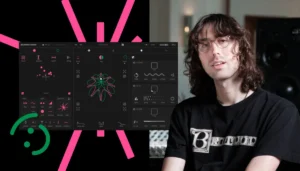
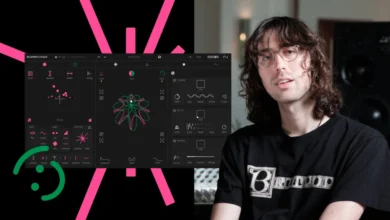
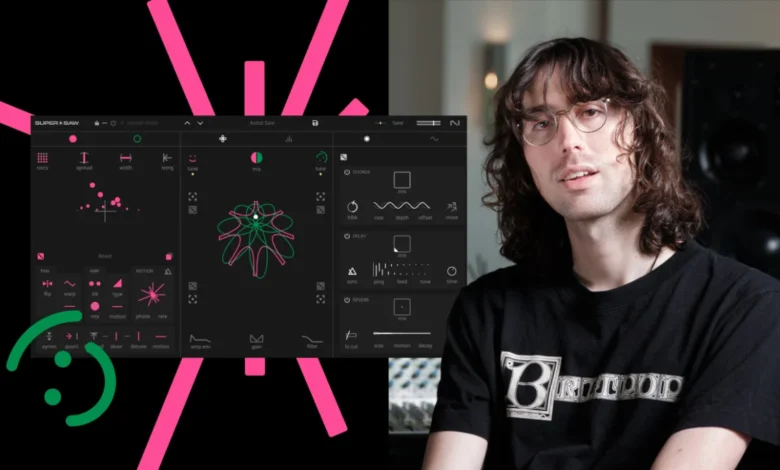
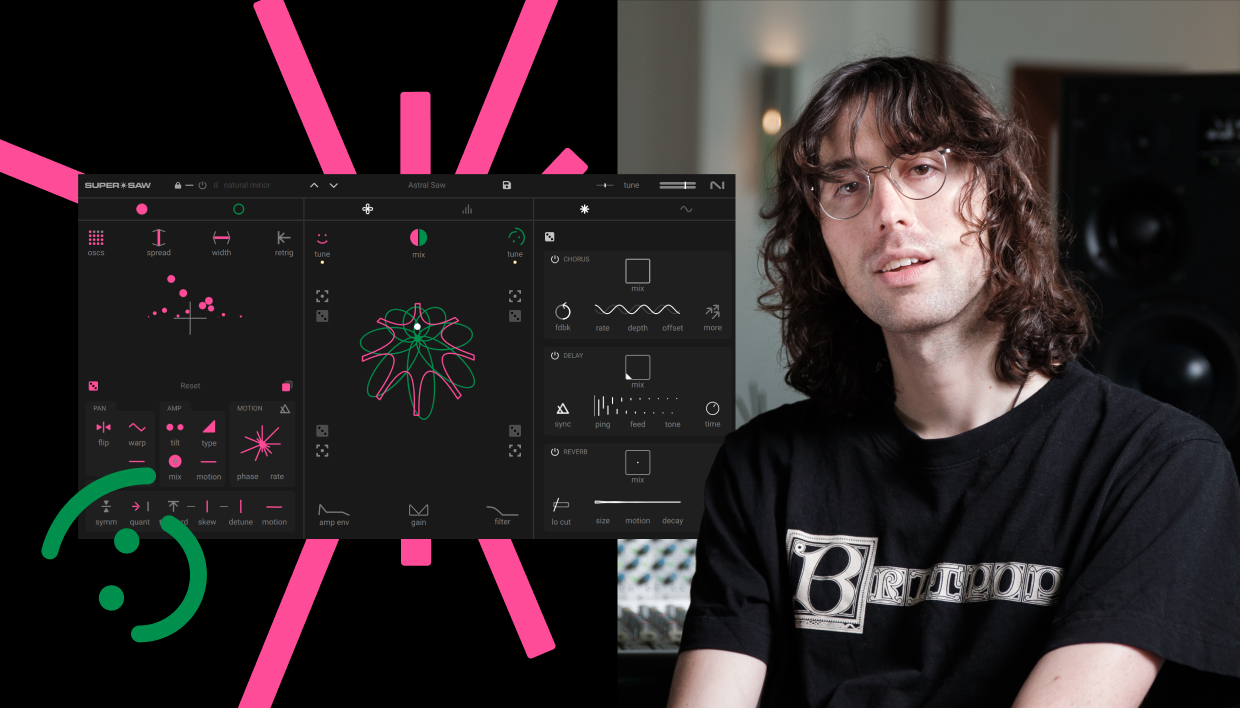
The SuperStarSaw is built upon a dual-layer architecture that reflects Cook’s specific production philosophy. The interface is divided into two distinct, color-coded layers: pink and green. This visual choice is not merely aesthetic; it corresponds to the dual-nature approach Cook takes when building complex patches. Each layer features an 8-voice sawtooth oscillator system, allowing for a total of 16 stacked waves per instance of the plugin.
According to Cook, the two-layer system functions like a "comedic duo." One layer—often the green—might be used to provide a stable, fundamental harmonic anchor, while the pink layer is pushed into "chaotic" territory with extreme detuning, panning, and modulation. This allows producers to maintain the melodic integrity of a chord progression while simultaneously generating the "fizz" and "grit" that characterizes modern electronic music.
A standout feature of the instrument is the "4-corner Morpher." This XY-pad style controller allows users to transition smoothly between different states of the synth in real time. Rather than relying on static automation curves within a Digital Audio Workstation (DAW), producers can perform their sound design, shifting from a clean, singular wave to a massive, detuned stack with a single mouse movement or MIDI controller input. This emphasis on "playability" is a direct response to the "tedious workarounds" that Cook noted were previously required to achieve these sounds.
Addressing Workflow Inefficiencies in Modern Production
Before the development of SuperStarSaw, creating a signature "A. G. Cook-style" lead often required a high degree of technical labor. Producers would typically have to duplicate multiple tracks of the same synthesizer, manually adjust the fine-tuning of each instance, and coordinate complex automation across several different plugins to create movement. This process, while effective, often stifled the creative flow.
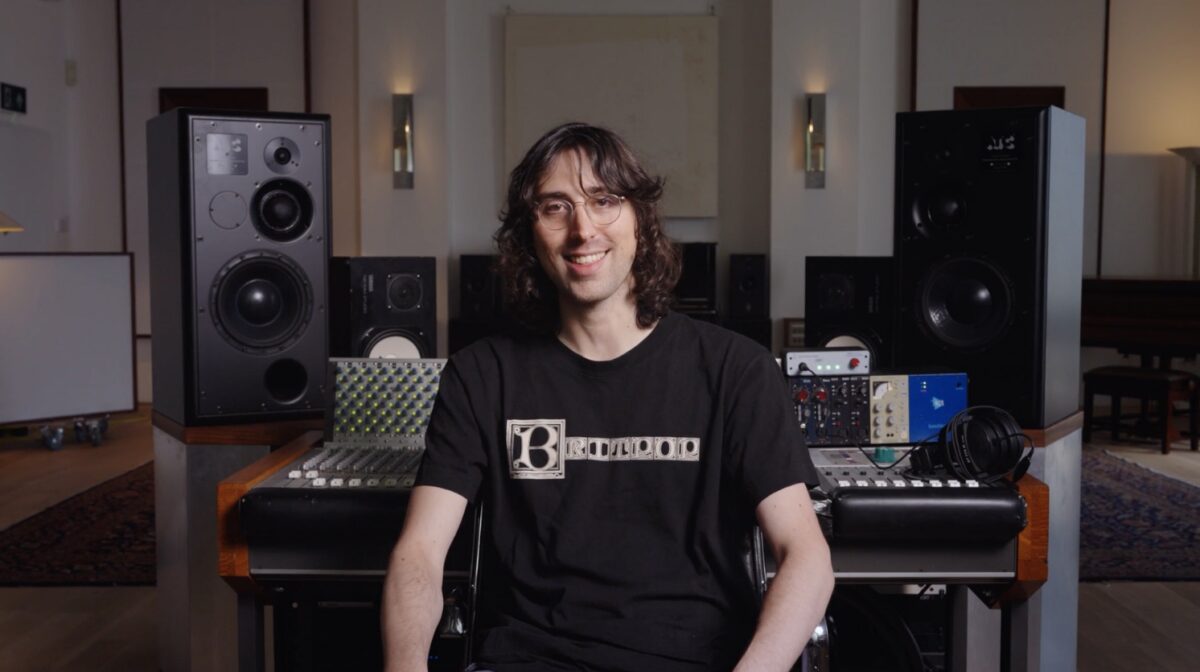
"Doing some of those more classic A. G. Cook-style supersaw sounds can sometimes be the slowest part of my process," Cook stated during a launch event at Baltic Studios in London. He cited his track "Stargon" as an example of a production that required meticulous, time-consuming alignment of various plugins to achieve the desired chordal thickness. By consolidating these functions into a single interface, SuperStarSaw effectively democratizes a sound that was previously the domain of high-level sound designers.
The instrument also features a "star-shaped modulator," a unique LFO (Low-Frequency Oscillator) that can be mapped to various parameters including pitch, amplitude, and panning. This modulator provides the "motion" that prevents digital sounds from feeling static or "dead." In a market saturated with "all-in-one" synthesizers like Xfer Records’ Serum or Vital, Native Instruments’ decision to release a highly specialized, single-waveform instrument represents a shift toward "ideological" tools—plugins designed around a specific musical concept rather than general-purpose utility.
Market Context and the Rise of Artist-Designed VSTs
The release of SuperStarSaw comes at a time of significant growth in the global music production software market. According to recent industry reports, the Virtual Studio Technology (VST) market is expected to grow at a CAGR (Compound Annual Growth Rate) of over 7% through 2030. Within this market, there is an increasing demand for "curated" sounds. Modern producers, often working on tight deadlines for social media content or streaming releases, are moving away from the "blank slate" approach of modular synthesis in favor of instruments that offer a distinct "vibe" or "sonic signature" out of the box.
Native Instruments has been at the forefront of this trend. Their "Play Series" and various artist collaborations have sought to capture the essence of specific genres—from lo-fi hip-hop to cinematic scoring. By partnering with A. G. Cook, Native Instruments is tapping into the influential "PC Music" aesthetic, which has moved from the underground into the mainstream, as evidenced by the global success of Charli XCX’s Brat summer. The SuperStarSaw is positioned as the definitive tool for this specific aesthetic, potentially becoming as essential to the 2020s pop sound as the Yamaha DX7 was to the 1980s.
Broader Implications and Industry Impact
The release of SuperStarSaw is likely to have several long-term implications for the music industry. First, it signals a move toward "functional minimalism" in plugin design. By limiting the synthesizer to only sawtooth waves, the developers have forced users to explore the depth of a single harmonic structure rather than getting lost in endless oscillator types. This "limitation as a creative tool" is a concept frequently championed by Cook.
Secondly, the instrument represents a "full-circle" moment for the supersaw waveform. What was once a digital approximation of analog warmth in the 90s has now become a digital icon in its own right. The SuperStarSaw does not attempt to sound "analog" or "vintage"; instead, it celebrates its digital nature, embracing the "blocks of sound" that occur when oscillators are pushed to their mathematical limits.
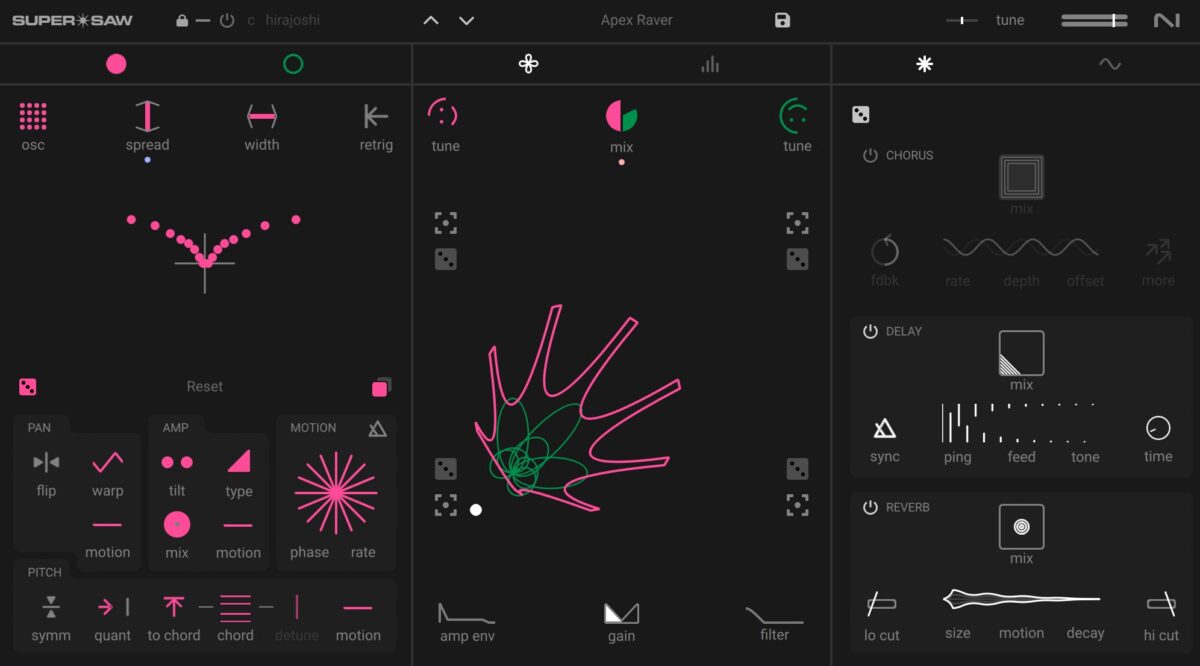
Industry reactions have been largely positive, with early adopters noting the plugin’s ability to create "instantly usable" textures for high-energy genres like Eurodance, Hardstyle, and Hyperpop. For professional sound designers, the inclusion of randomization features (the "dice" button) and the ability to copy settings between the pink and green layers provides a fast-paced environment for generating new ideas.
Chronology of Development and Future Outlook
The development of SuperStarSaw began following the release of A. G. Cook’s ambitious 2020 albums 7G and Apple. During the production of these records, which featured 49 tracks and a massive array of digital textures, the need for a more efficient supersaw tool became apparent. Native Instruments and Cook collaborated over the subsequent years to refine the UI (User Interface) and the underlying DSP (Digital Signal Processing) to ensure the synth could handle 16 voices of sawtooth waves without excessive CPU (Central Processing Unit) strain.
The visual design of the plugin also aligns with Cook’s 2024 album Britpop, which heavily features the pink and green color palette. This cross-media branding—linking the sound of the album directly to the tool used to create it—suggests a new era of "integrated" artist releases, where the music and the software used to make it are launched as part of a unified creative ecosystem.
As the music industry continues to embrace the "hyper-digital" aesthetic, tools like SuperStarSaw will likely play a crucial role in shaping the radio hits of the next decade. By taking a 30-year-old musical idea and "extending the family tree," as Cook describes it, Native Instruments has provided a bridge between the rave culture of the past and the pop-dominated future. The SuperStarSaw is now available for purchase and integration into the Komplete ecosystem, marking a new chapter in the ongoing dialogue between technology and artistic vision.
Related posts: