Jennifer Hudson’s Anthem Performance at World Cup Final Sparks Global Debate Over Commercialization and Host Nation Representation

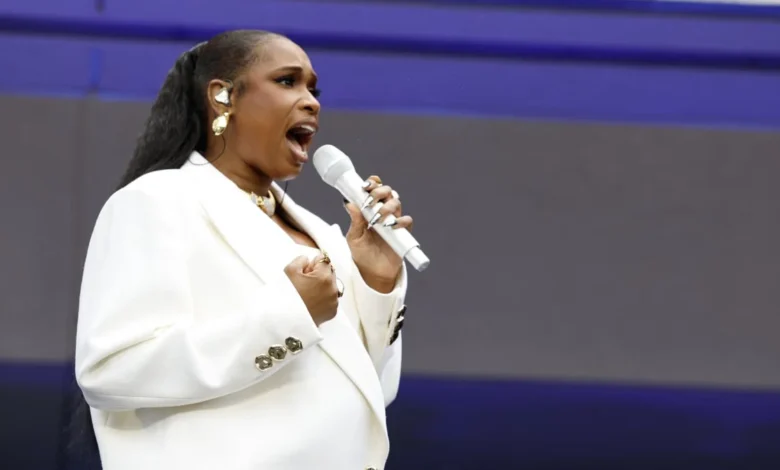
The United States national team may not have advanced to the final of the prestigious FIFA World Cup, but "The Star-Spangled Banner" is nonetheless set to echo through the stadium before the culminating match. On July 14, FIFA officially announced that Grammy Award-winning artist and talk show host Jennifer Hudson would deliver a "special rendition" of the American national anthem. This performance is slated to precede the World Cup final on Sunday, July 19, at the New York New Jersey Stadium, more commonly known as MetLife Stadium. The highly anticipated match will feature a clash between European powerhouse Spain and South American giants Argentina.
The announcement immediately ignited a fervent debate among soccer enthusiasts globally, with a recurring question surfacing across social media platforms and sports forums: Why is the U.S. national anthem being performed at a final that does not feature the American team? The answer, according to FIFA, is less about the competing nations on the pitch and more about the geographical location of the momentous event itself.
FIFA’s Rationale: Honoring the Host Nation
Jennifer Hudson’s performance of "The Star-Spangled Banner" is positioned as an integral part of FIFA’s pre-game closing ceremony. This elaborate event is scheduled to commence at 1:30 p.m. ET, a full 90 minutes before the official kickoff at 3 p.m. ET. The ceremony is designed to be a comprehensive celebration, marking the culmination of the tournament’s journey across its three host countries: Canada, Mexico, and the United States. Given that the final match is being held on American soil, in East Rutherford, New Jersey, Hudson’s rendition is intended to symbolically represent the host nation.
It is crucial to note that this pre-game performance of the U.S. anthem will not supersede the traditional protocol for the competing teams. Following Hudson’s act and the broader closing ceremony, both Spain and Argentina will still have their respective national anthems played immediately prior to kickoff, adhering to the standard international soccer practice. This dual-anthem approach, however, has done little to quell the skepticism among a segment of the global fan base.
Public Outcry and the ‘Americanization’ Debate
The decision has been met with a mixed, and often critical, reception from soccer fans worldwide. Many online commentators swiftly pointed out that the United States is sharing hosting duties for the expansive 2026 World Cup with Canada and Mexico. This fact has led to questions regarding the absence of their national anthems in the pre-final festivities, fueling a perception of an unbalanced representation. The criticism extends beyond mere omission, tapping into a broader sentiment about the "Americanization" of the World Cup.
Social media platforms became a hotbed of discussion, with fans expressing concerns that FIFA is increasingly injecting elements characteristic of American sports entertainment – particularly the Super Bowl – into the traditionally more austere World Cup experience. Critics argue that the emphasis on celebrity performances and extended pre-game and halftime spectacles distracts from the purity of the sport itself. This perceived shift is seen by some purists as a dilution of the World Cup’s unique cultural identity, favoring commercial appeal over established football traditions. The reactions highlighted a clear divide between those who welcome the enhanced entertainment value and those who advocate for preserving the tournament’s historical ethos.
Historical Context and Evolving Spectacle
While the current situation has generated considerable buzz, the concept of performing the host nation’s anthem at a World Cup final not involving its team is not entirely without precedent, though it remains a rare occurrence. When the United States last hosted the men’s World Cup in 1994, renowned saxophonist Kenny G performed "The Star-Spangled Banner" during the closing ceremony. This performance took place before Brazil and Italy contested the final at the Rose Bowl in Pasadena, California.
However, a key distinction can be drawn. The 1994 performance by Kenny G was part of the closing ceremony, which traditionally features a broader cultural celebration, rather than being explicitly framed as a host nation’s anthem performance immediately preceding the finalists’ anthems. The current iteration, integrated into a multi-act pre-game event, feels more akin to the pre-game hype found in major American sporting events, contributing to the "Americanization" narrative.
The Grand Entertainment Extravaganza
Jennifer Hudson’s anthem performance is just one facet of an unprecedented entertainment lineup designed to elevate the World Cup final beyond a mere football match. The pre-game closing ceremony is set to be a star-studded affair, headlined by rapper Post Malone. Other notable performers scheduled to take the stage include global pop icon Robbie Williams, vocalist Nicole Scherzinger, Italian sensation Laura Pausini, and popular streamer IShowSpeed. Adding to the intrigue, Hollywood superstar Tom Cruise is also confirmed to make a special, yet unspecified, appearance.
But the entertainment does not stop there. In a historic first for the FIFA World Cup, the tournament will feature an elaborate halftime show. This 11-minute performance, curated by Coldplay frontman Chris Martin, boasts an eclectic mix of international talent. The lineup includes legendary pop figures Madonna and Shakira, K-pop sensation BTS, global superstar Justin Bieber, Nigerian Burna Boy, renowned Venezuelan conductor Gustavo Dudamel, and the celebrated PS22 Chorus, who will perform alongside Coldplay. Adding a family-friendly touch, beloved characters from Sesame Street and The Muppets are also slated to participate. This expansive halftime spectacle is not merely for entertainment; it also serves a philanthropic purpose, supporting the FIFA Global Citizen Education Fund, an initiative dedicated to expanding access to education and soccer programs for children worldwide.
This unprecedented extension of the halftime break has drawn significant criticism from traditional soccer fans. Many view it as another clear attempt to import the commercial and entertainment-driven structure of American sports, particularly the NFL’s Super Bowl halftime show, into the World Cup. Previous complaints during the tournament about entertainment-heavy opening ceremonies and the controversial "hydration breaks"—which some viewers believe are strategically utilized to create additional television advertising opportunities—underscore this growing apprehension.
The Business of Football: FIFA’s Strategic Play in the U.S. Market
The extensive entertainment slate and the prominent inclusion of American cultural elements become clearer when viewed through the lens of FIFA’s overarching financial strategy. The global football governing body anticipates generating a record $13 billion during the current World Cup cycle. A significant portion of this ambitious revenue target is intrinsically linked to penetrating and expanding its footprint within the lucrative North American market, particularly the United States.
The investment in attracting American viewers, including those who do not typically follow soccer, is already showing dividends. Fox’s English-language group-stage broadcasts for the tournament averaged more than 5 million viewers, nearly doubling the audience recorded for the same stage in 2022. Furthermore, the U.S. team’s matches garnered substantially larger Spanish-language audiences on Telemundo and Peacock compared to the previous World Cup, highlighting the diverse appeal and growth potential within the American demographic.
In this context, Jennifer Hudson singing the American anthem, alongside a host of other celebrities, transcends a simple ceremonial act. It transforms into a strategic maneuver. While the American team may have exited the competition, the American audience, and the immense financial capital attached to it, remain profoundly central to FIFA’s commercial objectives. The decision reflects a calculated effort to broaden the tournament’s appeal beyond its traditional fan base, tapping into the vast entertainment consumption habits of the U.S. market. It’s a testament to the belief that a blend of sport and spectacle can unlock unparalleled commercial success, even if it means navigating the sensitivities of long-standing football traditions.
Broader Implications and the Future of the World Cup
The debate surrounding the World Cup final’s entertainment lineup underscores a fundamental tension in modern global sports: the delicate balance between preserving historical traditions and embracing commercial expansion. For purists, the World Cup is a celebration of football’s essence, where the game itself, the rivalries, and the shared global passion should be paramount. Any perceived ‘gimmick’ or excessive entertainment is seen as a distraction, a betrayal of the sport’s soul.
Conversely, FIFA, like many international sports organizations, operates in an increasingly competitive global entertainment landscape. To grow, to secure record revenues, and to attract new generations of fans, particularly in markets where soccer is not the dominant sport, a more expansive and inclusive approach to spectacle is often deemed necessary. The U.S. market, with its immense population, disposable income, and established appetite for grand, star-studded events, represents an unparalleled opportunity for FIFA.
The 2026 World Cup, with its unprecedented three-nation co-hosting arrangement and expanded 48-team format, is already set to be a tournament of many firsts. The entertainment choices for its final, therefore, can be seen as a bellwether for the future direction of the competition. Will FIFA continue to lean into the entertainment model, risking alienation of some traditional fans, or will it find a more harmonious blend? The reactions to Jennifer Hudson’s anthem performance and the elaborate halftime show serve as a critical barometer for this ongoing evolution.
How to Watch the World Cup Final and Closing Ceremony
For those eager to witness both the pre-game spectacle and the highly anticipated match, Spain and Argentina will face off in the World Cup final on Sunday, July 19. The venue is the New York-New Jersey Stadium in East Rutherford, New Jersey.
The closing ceremony, featuring Jennifer Hudson and other celebrity performers, is scheduled to commence at 1:30 p.m. ET. The match itself is slated for kickoff at 3 p.m. ET.
English-language coverage of the event will be broadcast on Fox and will also be available for streaming through Fox One and the Fox Sports app. For Spanish-language viewers, comprehensive coverage will be provided on Telemundo and Peacock. Peacock has confirmed that all 104 matches of the tournament, including the final, are streaming live in Spanish, ensuring accessibility for a wide audience. As the world tunes in, the final promises to be a showcase not just of athletic prowess, but also of FIFA’s ambitious vision for the future of global football entertainment.