Native Instruments Launches SuperStarSaw Synthesizer in Collaboration with PC Music Founder A. G. Cook to Redefine the Iconic 90s Sound

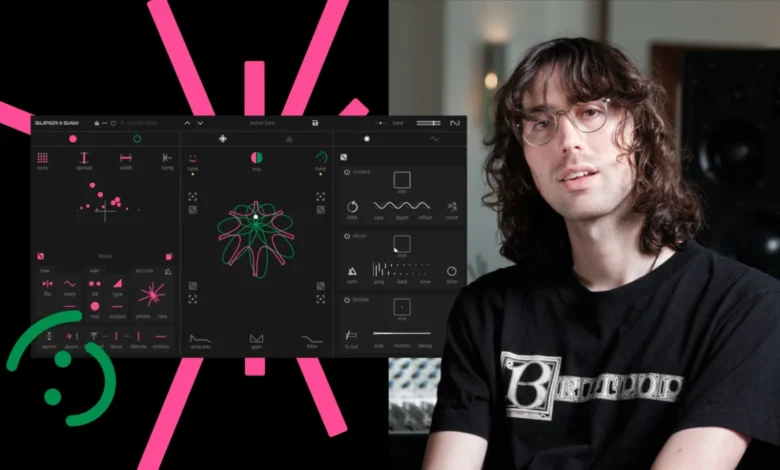
Native Instruments has officially announced the release of Super*Saw, a specialized software synthesizer developed in close partnership with the influential producer, songwriter, and PC Music founder A. G. Cook. Known phonetically as "SuperStarSaw," the instrument is designed to streamline the creation of the "supersaw" sound—a thick, harmonically rich texture created by stacking multiple sawtooth waves. While the supersaw has been a staple of electronic music since the mid-1990s, this new collaboration aims to push the digital boundary of the waveform, offering a modern interface that prioritizes expressivity and chaotic experimentation over traditional, static sound design.
The launch marks a significant moment for Native Instruments, as it aligns the veteran music technology company with one of the most forward-thinking figures in contemporary pop and electronic music. A. G. Cook, who recently concluded a decade-long run as the head of the PC Music label, has been a pivotal force in the "hyperpop" movement, contributing heavily to the sonic identity of artists such as Charli XCX, Caroline Polachek, and Oklou. The Super*Saw plugin is presented not merely as a tool for recreation, but as a distillation of Cook’s specific production philosophy, which often involves pushing digital instruments to their breaking points to achieve "maximalist" textures.
The Historical Context of the Supersaw Waveform
To understand the significance of the Super*Saw release, it is necessary to examine the history of its namesake. The "Supersaw" first gained prominence in 1996 with the release of the Roland JP-8000, a digital synthesizer that utilized "virtual analog" technology. Unlike traditional analog synthesizers of the 1970s and 80s, which were often limited by the number of physical oscillators available, the JP-8000 allowed users to stack seven sawtooth waves on a single oscillator. When these waves were slightly detuned against one another, they created a massive, shimmering wall of sound that became the defining characteristic of late-90s trance, hardstyle, and euphoric rave music.
As music production transitioned from hardware to Digital Audio Workstations (DAWs) in the early 2000s, the supersaw remained a vital component of the producer’s toolkit. However, achieving the level of complexity found in modern pop and experimental music often required tedious manual labor. Producers frequently had to duplicate tracks, apply individual pitch automation, and coordinate dozens of plugins to achieve a "wall of sound" effect that felt organic and moving rather than static. Native Instruments and A. G. Cook designed Super*Saw specifically to eliminate these "workarounds," condensing a complex stacking workflow into a single, playable interface.
A Visionary Collaboration: The A. G. Cook Philosophy
A. G. Cook’s involvement in the project brings a unique aesthetic and philosophical perspective to the software. Throughout his career, Cook has been fascinated by the tension between the "pristine" nature of digital audio and the "ugly" artifacts that occur when that audio is pushed to extremes. His solo albums, such as 7G, Apple, and the recent Britpop, serve as masterclasses in this approach, featuring sounds that transition seamlessly from delicate acoustic-style melodies to aggressive, distorted blocks of digital noise.
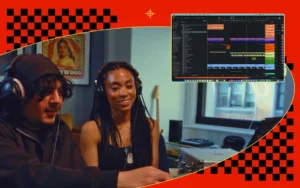
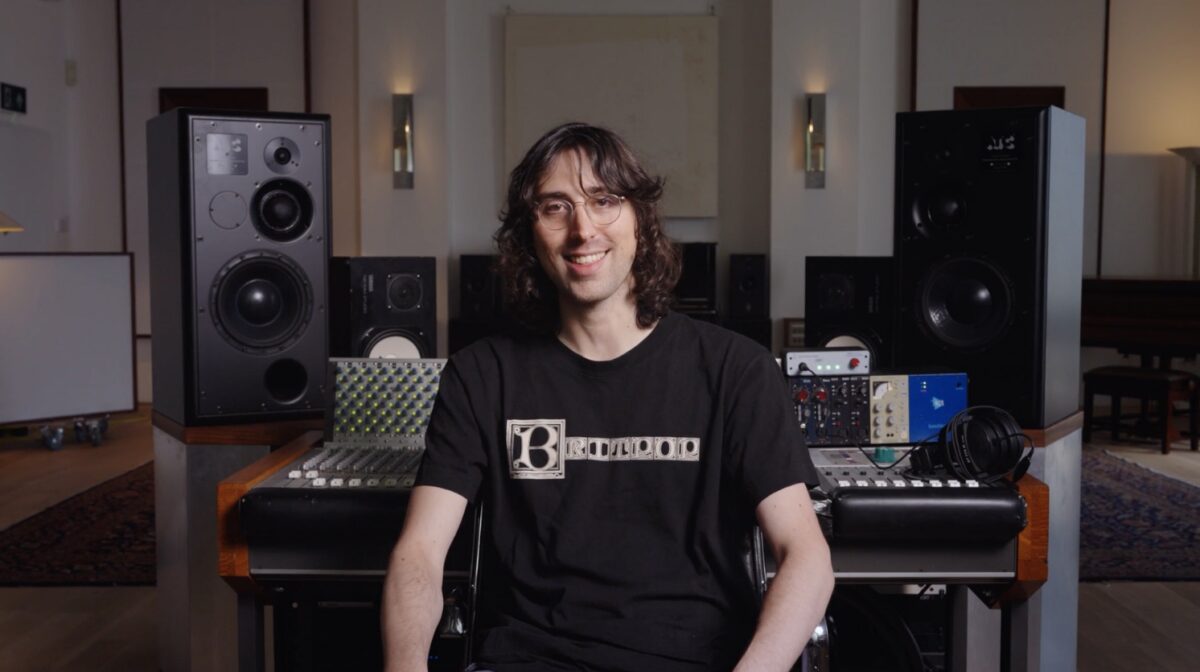
In a recent discussion at Baltic Studios in London, Cook reflected on the ambition behind the plugin, noting that creating a signature synthesizer had been a long-term goal. He described the process as "extending the family tree" of a musical idea that began in the 90s. For Cook, the supersaw is the "archetypal" 90s invention because it represents the moment digital technology surpassed the physical limitations of analog hardware. By focusing exclusively on the sawtooth wave, the Super*Saw plugin encourages producers to explore the infinite variations within a single, simple waveform.
Cook’s production style is often characterized by a "minimal versus maximal" duality. He frequently uses supersaws not just for harmony or melody, but as a form of percussion. In tracks like "Mad Max," the saw waves are stacked so densely that they lose their identity as chords and become "blocks of sound." The Super*Saw plugin was built to facilitate this specific type of sonic manipulation, allowing users to move from a single, sharp wave to a chaotic, detuned mass of sound with minimal effort.
Technical Specifications and Architecture
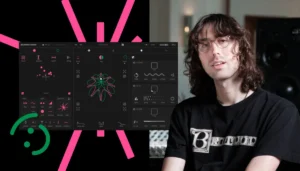
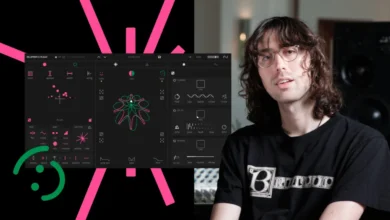
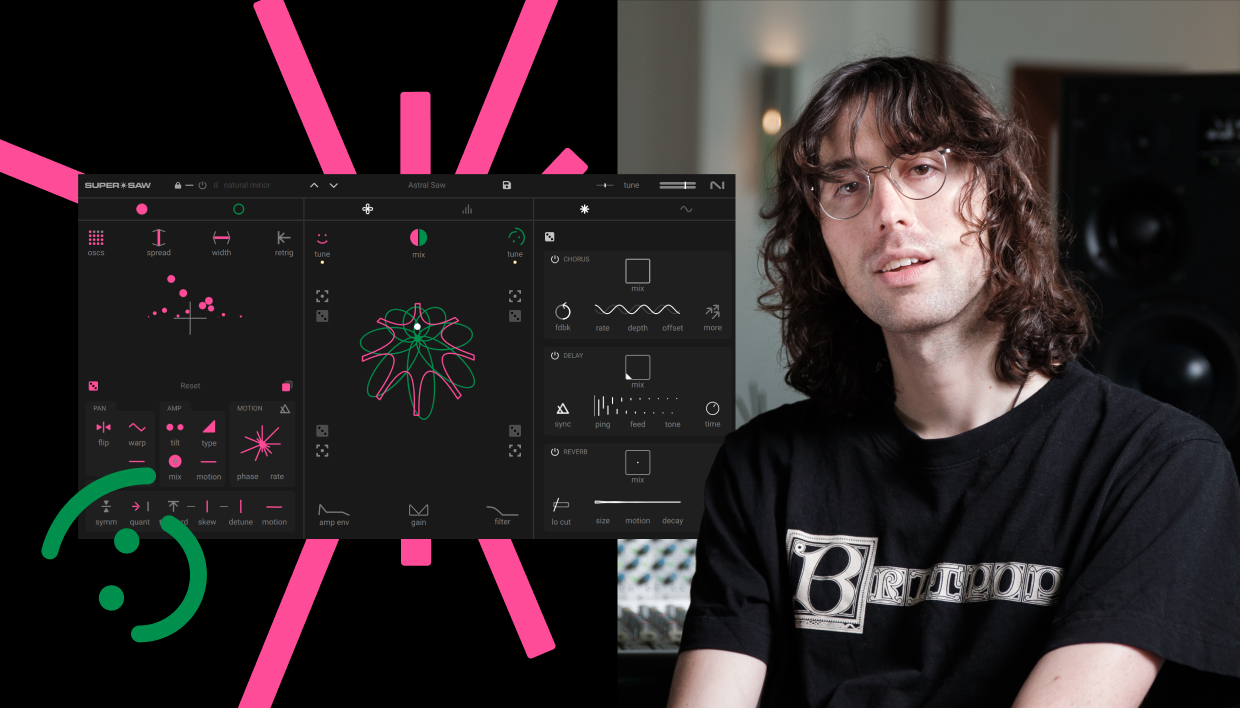
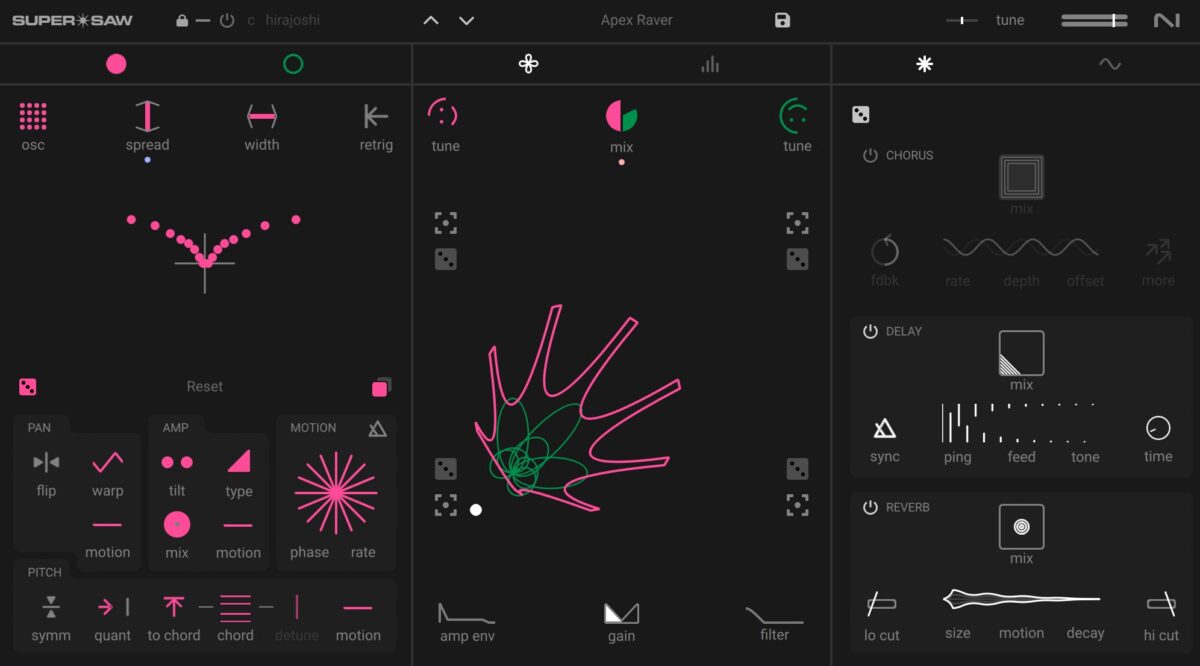
The architecture of SuperSaw is built around a dual 8-voice sawtooth oscillator system, providing a total of 16 waves that can be manipulated simultaneously. The interface is divided into two distinct, color-coded layers: Pink and Green. This design choice is a direct reference to the aesthetic of Cook’s Britpop* album and serves a functional purpose in sound design.
The Dual-Layer System
Cook conceptualizes the two layers as a "comedic duo," where one layer provides the stable, fundamental frequency while the other layer is free to explore more radical modulations and detuning. This allows for a "thick" sound that remains musically grounded. Users can copy settings between layers or randomize them independently to discover unexpected textures.
The 4-Corner Morpher
A standout feature of the plugin is the 4-corner Morpher, a performance-oriented control that allows producers to blend between four different states of the synthesizer. This includes transitions between different chord shapes, detuning rates, and modulation depths. This feature addresses the "static" nature of many software synths, enabling the kind of real-time movement that defines Cook’s work with artists like Charli XCX.
The Star Modulator
Reflecting the "SuperStar" branding, the synth includes a star-shaped modulator. This unique LFO (Low-Frequency Oscillator) can be mapped to various parameters, including panning, amplitude, and pitch. By adjusting the "motion" of the stack, producers can create sounds that feel like they are "breathing" or swirling through the stereo field, a technique common in modern hyperpop and electronic dance music.
Solving the "Workaround" Dilemma in Modern Production
One of the primary motivations for developing Super*Saw was the frustration Cook experienced with traditional production methods. During the creation of his track "Stargon," Cook found himself bogged down by the technical requirements of his own sound. He was forced to use multiple plugins and meticulously align automation lanes to achieve the specific detuned chord progression he envisioned.
"It was a real pain to get all the automation right," Cook stated during the launch event. "It never felt like I was playing the synths or interacting with them in a musical way."
By consolidating these functions—spread, width, detune, and multi-voice stacking—into a single instrument, Native Instruments has created a tool that prioritizes the "flow state" of the artist. The plugin allows for immediate results, making it accessible to bedroom producers while providing the depth required by professional sound designers. This democratization of complex synthesis is a hallmark of Native Instruments’ broader strategy in the software market.
Broader Implications for the Music Industry
The release of SuperSaw comes at a time when 90s and early-2000s aesthetics are experiencing a massive resurgence in global pop music. The "Y2K" revival has brought the sounds of eurodance, trance, and bubblegum pop back into the mainstream, as evidenced by the success of albums like Charli XCX’s Brat*. By providing a dedicated tool for the supersaw sound, Native Instruments is positioning itself at the center of this cultural trend.
Furthermore, this collaboration signals a shift in how music technology companies interact with artists. Rather than simply offering an "artist preset pack," Native Instruments has integrated Cook into the actual design and "ideology" of the instrument. This leads to a more authentic product that reflects the genuine needs of a working producer. For Cook, the plugin serves as a "coda" or "epilogue" to his recent body of work, transforming his personal sonic palette into a versatile tool for the public.
Availability and Integration
Super*Saw is now available through the Native Instruments website and is compatible with major DAWs including Ableton Live, Logic Pro, and FL Studio. It is designed to work within the Komplete ecosystem, offering NKS (Native Kontrol Standard) support for seamless integration with Kontrol keyboards and Maschine hardware.
As the industry moves toward more specialized, "vibe-focused" plugins, SuperSaw stands out for its narrow focus and high level of execution. It does not attempt to be a "do-it-all" synthesizer like Native Instruments’ flagship Massive X; instead, it masters a single, iconic sound and provides the tools to reinvent it for a new generation. Whether used for shimmering pop pads, aggressive rave leads, or experimental percussive blocks, SuperSaw represents the next chapter in the evolution of the stacked sawtooth wave.
Related posts: