Morphoice Releases EightyTen Beta Emulating Vintage Roland JX-8P and SuperJX-10 Synthesizers

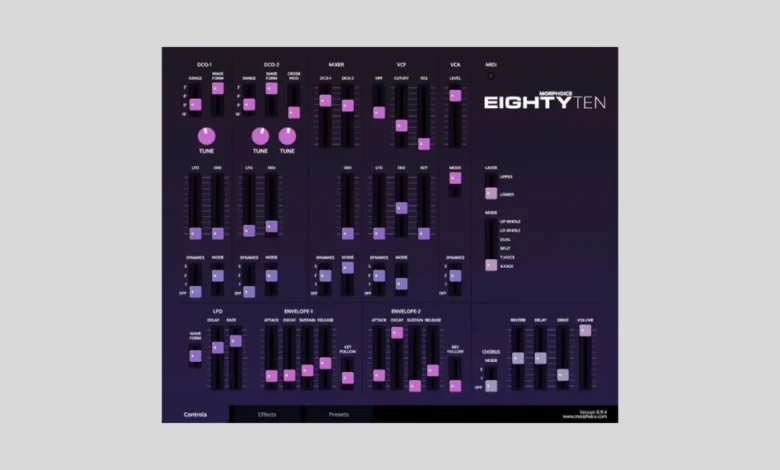
Developer Morphoice has announced the official beta release of EightyTen, a sophisticated software synthesizer designed to emulate the architecture and sonic characteristics of two iconic Roland instruments from the mid-1980s: the JX-8P and the SuperJX-10. This release marks the latest entry in a rapidly expanding portfolio of vintage-inspired digital signal processing (DSP) tools from the developer, following the recent launches of Unstable, EightySix, and EightyEight. EightyTen is currently available as a free beta for macOS, Windows, and Linux users, offering a dual-engine synthesis environment that seeks to bridge the gap between classic analog warmth and modern digital flexibility.
The release of EightyTen represents a strategic move by Morphoice to capture the specific aesthetic of the "post-Jupiter" era of Roland synthesis. While the developer’s previous offerings focused on the voltage-controlled oscillator (VCO) grit of the Yamaha CS-80 and the Roland Jupiter-8, EightyTen pivots toward the digitally controlled oscillator (DCO) era. This period of synthesizer history was defined by a shift toward tuning stability and more complex modulation routing, providing a distinct alternative to the earlier, more erratic analog designs.
Historical Context: The Evolution of the Roland JX Series
To understand the significance of EightyTen, it is necessary to examine the hardware that inspired it. The Roland JX-8P was released in 1985, a time when the synthesizer market was being disrupted by the digital FM synthesis of the Yamaha DX7. Roland’s response was to refine their analog technology, utilizing DCOs to ensure the instrument remained in tune while offering a more streamlined, "high-tech" interface that moved away from the forest of sliders found on the Juno and Jupiter series.
The JX-8P became famous for its lush, cinematic pads and its ability to produce metallic, percussive textures that rivaled digital synths, thanks to its innovative cross-modulation capabilities. Shortly thereafter, Roland released the SuperJX-10 (and its rack-mount counterpart, the MKS-70), which essentially housed two JX-8P engines in a single chassis. This allowed for 12-voice polyphony and the ability to layer two different sounds—referred to as "Tones"—to create massive, complex timbres. EightyTen aims to replicate this dual-engine workflow, allowing users to stack patches and achieve the same "wall of sound" effect that made the SuperJX a favorite for film composers and session musicians in the late 80s.
Technical Architecture and Sound Engine
The core of EightyTen lies in its faithful reproduction of the JX-series signal path. The plugin utilizes a dual-DCO structure per voice. A critical feature of this architecture is Cross Modulation (X-MOD), which allows the frequency of one oscillator to modulate another. This functionality is the primary reason the JX series could produce "FM-style" sounds—such as bells, chimes, and aggressive stabs—while remaining fundamentally an analog subtractive synthesizer. This specific feature was famously utilized in the synth-brass hook of Chaka Khan’s "I Feel For You," a sound that EightyTen is designed to recreate with high accuracy.
The filtering section of EightyTen mirrors the hardware’s 24 dB/octave resonant low-pass filter, known for its smooth, liquid character. Unlike the more aggressive filters found in competing American synthesizers of the time, the Roland filter was prized for its transparency and musicality. The plugin also includes the non-resonant high-pass filter found on the original units, which is essential for thinning out low-end frequencies in complex mixes.
Modulation is handled by two ADSR envelope generators per voice, alongside a comprehensive velocity and aftertouch response system. One of the historical criticisms of the original JX-8P was its lack of dedicated knobs for editing; users were forced to use a data entry slider or purchase the expensive PG-800 external programmer. Morphoice has solved this ergonomic hurdle by integrating a PG-800-style interface directly into the plugin, providing immediate access to every parameter without the need for menu diving.
Modern Enhancements and Integrated Effects
While EightyTen is rooted in 1980s hardware, Morphoice has included several modern additions that expand the instrument’s versatility. The most notable inclusion is the "DarkStar" reverb, an algorithmic processor inspired by the Strymon BigSky’s "Cloud" setting. This allows the synth to produce vast, ambient soundscapes that go far beyond the capabilities of the original hardware.
Additionally, the plugin features a dedicated lo-fi tape delay module, catering to the current demand for "nostalgic" and "vaporwave" aesthetics. To address the sometimes-polite nature of DCOs, Morphoice has integrated the "HeatBurn" drive and distortion circuit. This allows users to add harmonic saturation and grit, pushing the clean Roland sound into more aggressive, industrial territories. Finally, the signature Roland stereo chorus—a staple of the brand’s 1980s identity—is included with its classic "Slow" and "Fast" modes, providing the requisite width and movement to pads and leads.
The Morphoice Development Timeline
The release of EightyTen is part of a rapid-fire development cycle that has seen Morphoice become a prominent name in the freeware and budget-friendly plugin scene. The developer’s timeline over the past 18 months highlights a clear focus on classic Japanese synthesis:
- February 2025: Release of "Unstable," an emulation of the Yamaha CS-80, focusing on the drift and instability of vintage VCOs.
- May 2026: Release of "EightySix," a tribute to the Roland Juno-6, emphasizing the simplicity and iconic chorus of the entry-level classic.
- June 2026: Release of "EightyEight," a deep-dive emulation of the Roland Jupiter-8, capturing the flagship power of the early 80s.
- July 2026: Release of "EightyTen," merging the JX-8P and SuperJX-10 architectures.
This trajectory suggests a systematic approach to recreating the most significant milestones of the analog era, providing modern producers with a comprehensive toolkit of "vintage" textures within a unified ecosystem.
Licensing Model and Beta Observations
Morphoice has adopted a unique "Free Beta" distribution model through the Gumroad platform. Currently, users can download EightyTen at no cost to participate in the testing phase. However, the developer has indicated that future stable versions may transition to a paid model. To incentivize early support, a contribution of $10 or more during the beta period grants the user a "lifetime license," ensuring continued access to the software even after it exits the free beta phase.
Industry analysts note that this "crowdsourced" approach to beta testing allows independent developers to iron out bugs across various operating systems (macOS, Windows, and Linux) while building a loyal user base. It also democratizes access to high-quality synthesis, as the $10 entry point for a lifetime license is significantly lower than the subscription fees required for services like Roland Cloud or the high retail prices of "Elite" emulations from brands like Arturia or Softube.
Broader Impact on the Music Production Industry
The release of EightyTen arrives at a time when the "hardware vs. software" debate has largely shifted toward a focus on workflow and accessibility. Original SuperJX-10 units and MKS-70 rack modules have seen a steady increase in price on the secondary market, often reaching prices between $1,500 and $2,500. Furthermore, these vintage units are prone to component failure, particularly regarding their vacuum fluorescent displays and internal power supplies.
By providing a stable, digital alternative that includes the features of the rare PG-800 programmer, Morphoice is making the "JX sound" accessible to a new generation of producers who may not have the budget or the technical expertise to maintain 40-year-old hardware. The inclusion of Linux support is also a notable highlight, as the Linux audio community is often underserved by major plugin developers.
Conclusion and Future Outlook
EightyTen stands as a comprehensive homage to a specific, sophisticated era of Roland’s history. By combining the architectures of the JX-8P and the SuperJX-10, Morphoice has created a tool that excels at both nostalgic 80s pop recreations and modern cinematic sound design. While the software remains in beta, its feature set—ranging from the authentic X-MOD and 24dB filters to the modern DarkStar reverb—suggests a highly polished product that punches well above its weight class.
As the beta progresses, the community’s feedback will likely refine the CPU efficiency and MIDI implementation of the plugin. For now, EightyTen offers a compelling reason for synthesists to revisit the DCO era, proving that the "cleaner" side of analog history still has plenty of warmth and character to offer the modern recording studio. Those interested in the project are encouraged to secure the lifetime license during this early phase, as Morphoice continues to solidify its reputation as a key player in the vintage emulation market.
Related posts: