Native Instruments and A. G. Cook Launch SuperStarSaw Synthesizer to Redefine the Legacy of the Stacked Sawtooth Wave

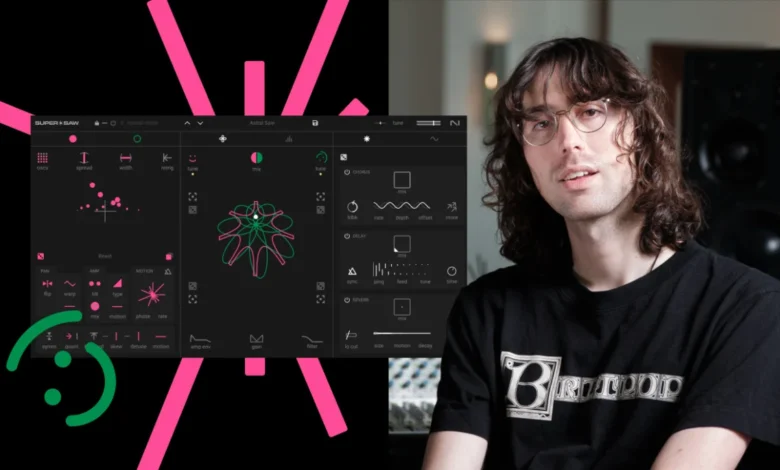
Native Instruments has officially announced the release of Super*Saw, a specialized software synthesizer developed in close collaboration with A. G. Cook, the influential producer and founder of the PC Music collective. Known phonetically as SuperStarSaw, the instrument represents a significant departure from multi-engine workstations, focusing exclusively on the "supersaw" sound—a timbre that defined the electronic dance music of the 1990s and has since become a cornerstone of contemporary hyperpop and experimental electronic music. This partnership marks a strategic move by Native Instruments to integrate artist-driven workflows into its technical ecosystem, blending high-end digital signal processing with the idiosyncratic production techniques of one of the industry’s most progressive creators.
The supersaw sound first gained prominence with the release of the Roland JP-8000 in 1996. Unlike traditional analog oscillators, the digital "Super Saw" wave utilized multiple sawtooth oscillators detuned against one another to create a thick, lush, and harmonically rich texture. While originally intended to emulate the massive sounds of multiple analog synthesizers, it inadvertently birthed new genres, providing the lead voices for trance, hardstyle, and eventually the "wall-of-sound" aesthetics favored by modern pop producers. Native Instruments and Cook have sought to modernize this concept, moving beyond simple emulation to create a tool that treats the sawtooth wave as a malleable, expressive medium.
The Architectural Vision of SuperStarSaw
The development of SuperSaw was driven by Cook’s desire to eliminate the technical friction often associated with complex sound design. In his previous works, including his 49-track album 7G and the critically acclaimed Apple*, Cook frequently employed massive stacks of oscillators to achieve his signature sound. However, these textures often required labor-intensive workarounds in Digital Audio Workstations (DAWs), involving the duplication of tracks, manual pitch automation, and the synchronization of dozens of individual plugin instances.
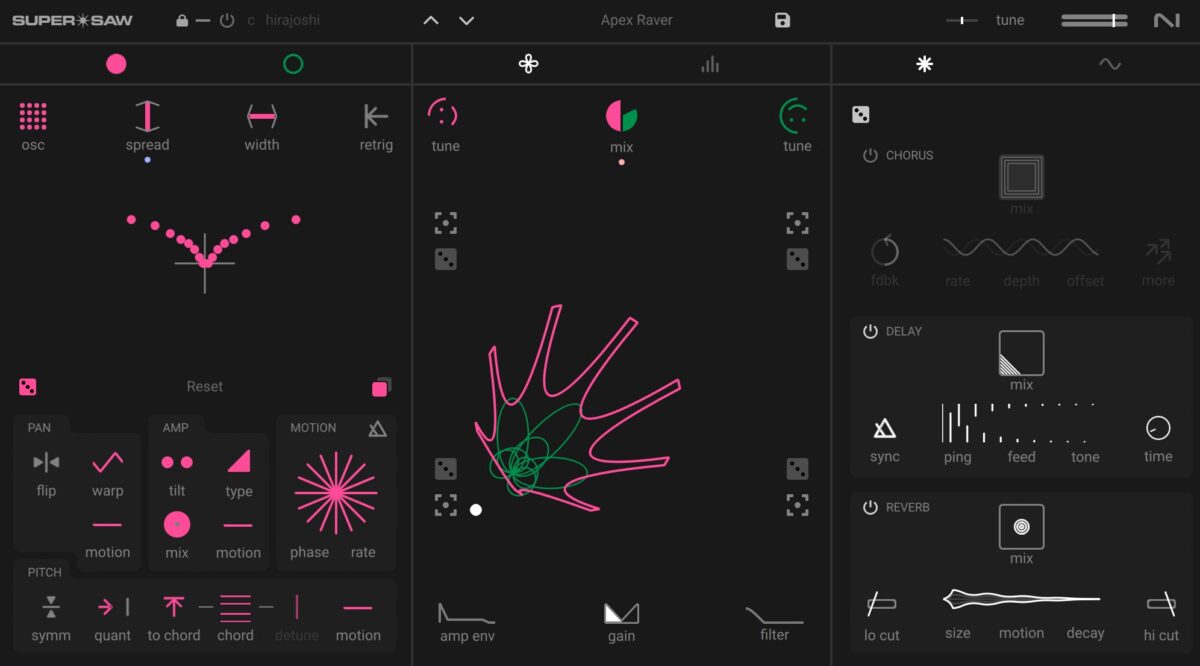
Super*Saw addresses these inefficiencies through a dual-layer architecture. The interface is divided into two distinct, color-coded sections: pink and green. Each layer contains an eight-voice sawtooth oscillator system, allowing for a total of 16 oscillators per note. This "comedic duo" approach, as Cook describes it, allows one layer to provide a stable, fundamental harmonic anchor while the second layer is pushed into extreme modulation or detuning. The visual design of the plugin reflects this binary philosophy, utilizing high-contrast colors and a minimalist layout that prioritizes immediate sonic feedback over deep-menu diving.
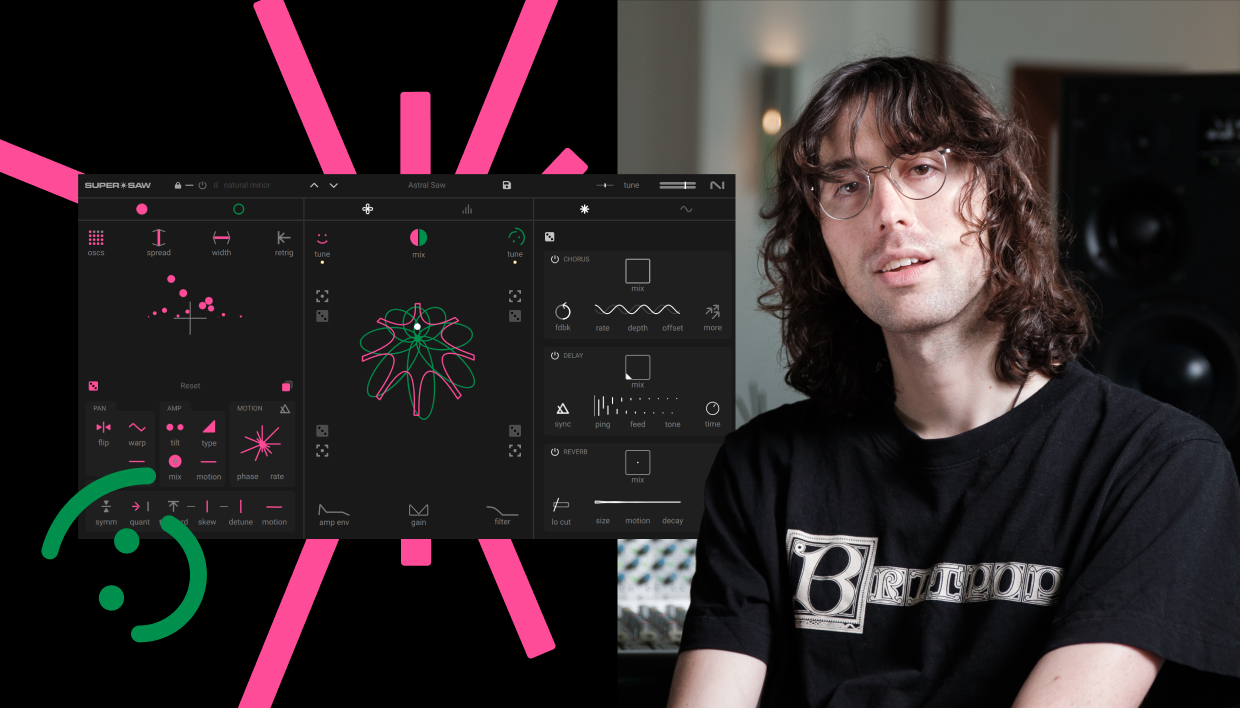
Central to the instrument’s playability is the "4-corner Morpher." This XY-style control allows users to transition smoothly between four different states of the synth, interpolating parameters such as chord shapes, detune rates, and filter positions in real-time. This feature is particularly relevant for live performance and dynamic arrangement, enabling a sound to evolve from a thin, percussive pluck to a massive, shimmering chordal wash without the need for complex automation lanes.
Historical Context: From Virtual Analog to Hyperpop
To understand the significance of Super*Saw, one must look at the chronology of digital synthesis. The late 1990s marked the "Virtual Analog" revolution, where digital signal processors (DSPs) began to reliably mimic the behavior of voltage-controlled oscillators. The Roland JP-8000’s Super Saw wave was the pinnacle of this era, offering a level of polyphonic thickness that was physically and financially impossible for most producers using traditional analog gear.
By the early 2010s, the sound had become a cliché of mainstream EDM. However, A. G. Cook and the PC Music label reclaimed the texture, utilizing its "digital-ness" as a point of pride. In the hands of Cook and collaborators like SOPHIE and Charli XCX, the supersaw was pushed into "hyper" territory—extremely detuned, heavily compressed, and often used as a percussive element. Cook’s 2016 track "Superstar" served as a definitive showcase for this aesthetic, where the arrangement pivots from a delicate piano to a towering wall of sawtooth waves.
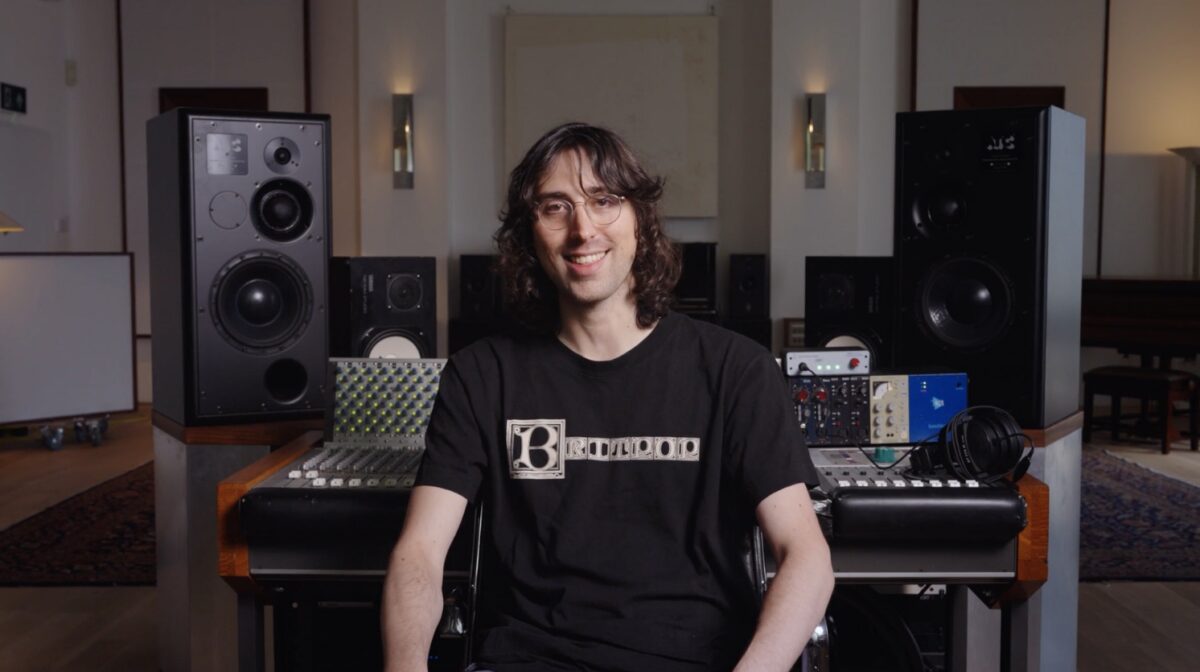
SuperSaw is the technical culmination of this decade-long exploration. It formalizes the "Cook-style" workflow into a single instrument. During the product’s launch event at Baltic Studios in London, Cook noted that the plugin serves as an "epilogue" to his recent creative cycle, which included the release of his album Britpop*. By condensing his personal production "hacks" into a streamlined interface, Native Instruments is offering the broader music community a shortcut to high-concept digital textures that previously required expert-level engineering.
Technical Specifications and Modulation Capabilities
Under the hood, Super*Saw utilizes Native Instruments’ advanced wavetable and subtractive synthesis engines, optimized for low CPU overhead despite the high oscillator count. The modulation system is anchored by a star-shaped modulator, a visual nod to the "SuperStarSaw" name. This modulator can be mapped to various destinations, including panning, amplitude, and pitch, allowing for the rhythmic "pumping" or "fizzing" effects that are characteristic of modern rave music.
Key features of the synth include:
- Dual 8-Voice Oscillators: 16 total oscillators per voice with independent control over spread and width.
- The Morpher: A macro-control system for four-way interpolation between saved states.
- Motion Control: A specialized modulator for creating complex rhythmic movement.
- Global Effects: Integrated processing chains specifically tuned to enhance the harmonic density of sawtooth waves.
- Randomization: A "dice" function that allows for intelligent randomization of parameters, encouraging accidental discovery.
The inclusion of a randomization feature highlights a shift in software design philosophy. Rather than presenting the user with an infinite array of choices, Super*Saw limits the palette to a single waveform but provides infinite ways to break and reshape it. This "limitation as liberation" approach is a hallmark of Cook’s production style, where the focus remains on the emotional impact of the sound rather than the complexity of the patch.
Industry Implications and Market Impact
The release of Super*Saw reflects a broader trend in the music technology industry: the rise of the "signature instrument." Companies like Native Instruments are increasingly moving away from the "Swiss Army Knife" approach—where one plugin tries to do everything—toward specialized tools built around a specific artist’s "sonic DNA." This follows successful models seen with companies like Spitfire Audio and Arturia, who have collaborated with composers like Hans Zimmer and electronic pioneers like Jean-Michel Jarre.
For Native Instruments, this collaboration strengthens their position within the avant-pop and experimental electronic communities. While their flagship products like Massive and Kontakt remain industry standards for film scoring and mainstream production, Super*Saw targets a younger, more experimental demographic that values aesthetic identity and workflow speed.
Industry analysts suggest that the "boutique" nature of Super*Saw could signal a new era for Native Instruments’ product development. By leveraging the cultural capital of artists like A. G. Cook, the company can create "cult classic" plugins that maintain relevance through their association with specific musical movements. Furthermore, the focus on "playable" and "expressive" interfaces aligns with the growing popularity of MIDI Polyphonic Expression (MPE) and the demand for software that feels more like a physical instrument and less like a spreadsheet.
Broader Cultural Resonance
Beyond the technical specifications, Super*Saw represents a full-circle moment for the digital aesthetic. For years, the music production world was obsessed with "analog warmth" and the imperfect saturation of vintage hardware. A. G. Cook and the hyperpop movement challenged this hierarchy, arguing that the "cold," "plastic," and "unapologetically digital" sounds of the 90s and 2000s possessed their own unique beauty and emotional resonance.
By naming the synth SuperSaw and styling it with the pink-and-green palette of his Britpop era, Cook is cementing the legacy of this digital sound. The instrument is designed not just to make music, but to make a specific kind* of music—one that is high-definition, high-energy, and deeply rooted in the possibilities of computer-based composition.
As the lines between underground experimentalism and global pop continue to blur, tools like Super*Saw play a vital role. They democratize the sounds used by top-tier producers, allowing a bedroom musician in any part of the world to access the same "wall of sound" that defines a Charli XCX record. Cook’s philosophy of "extending the family tree of a musical idea" suggests that while the supersaw began in the 90s, its most interesting iterations are likely still to come.
Native Instruments’ Super*Saw is currently available as a standalone plugin and as part of the Komplete ecosystem. Its arrival marks a definitive moment where the "tedious workarounds" of the past meet the "intuitive workflows" of the future, providing a new generation of creators with the means to stack, warp, and redefine the sound of the sawtooth wave.