The Digital Dilemma: Why Navigating the Modern Internet Requires a New Literacy for the Age of Artificial Intelligence

The modern internet is a paradox: it is an essential utility for daily life and a hostile environment for the human mind. While the digital age has democratized access to information, global communication, and essential government services, it has simultaneously eroded the cognitive foundations required to distinguish fact from fiction. For the average citizen, the internet is not merely a tool; it is a workplace, a bank, a primary news source, and an inescapable social ecosystem. Yet, as the architecture of the web shifts toward AI-generated content and hyper-personalized engagement algorithms, the basic human instinct for truth is being outpaced by a deluge of synthetic, deceptive, and manipulative information.
The challenge of navigating this landscape is compounded by the fact that the digital world is designed specifically to discourage reflection. Social media platforms, which now serve as the primary news source for more than half of all American adults, are engineered to prioritize speed, emotional reaction, and perpetual consumption. In this environment, the "infinite scroll" and autoplay features serve a singular purpose: to maintain user attention at the expense of critical engagement.
The Evolution of the Information Crisis: A Brief Chronology
The transition from a curated web to the current era of "AI slop" did not happen overnight. The timeline of this degradation can be traced through several critical inflection points:
- 2004–2010 (The Rise of Social Feed): The introduction of algorithmic news feeds transformed the internet from a destination-based web (where users sought specific sites) to an attention-based web (where content finds the user).
- 2016–2020 (The Disinformation Watershed): The global recognition of coordinated inauthentic behavior, or "bot farms," began to reshape political discourse. During this period, the weaponization of social media for geopolitical influence became a mainstream concern.
- 2022–2023 (The Generative AI Explosion): The public release of advanced Large Language Models (LLMs) and image generators lowered the barrier to entry for content creation. Suddenly, creating high-quality, deceptive, or misleading content became near-instantaneous and virtually free.
- 2024–2025 (The Indistinguishability Threshold): Industry analysts now mark this as the era where the sheer volume of AI-generated content has eclipsed human-authored content, leading to a "dead internet" scenario where a majority of online interactions occur between non-human agents.
Data and the Scale of the Problem
The metrics surrounding the current state of the internet are staggering. Recent data from industry observers, including Cloudflare, suggests that non-human traffic—driven by "agentic bots" and automated scrapers—now accounts for approximately 57.4% of total internet traffic. This means that for every human user scrolling through a feed, there are more than 1.3 automated bots performing actions, posting comments, or scraping data.
The impact of this reality on the average user is profound. A 2025 survey conducted by the Pew Research Center revealed that nearly half of American adults find it difficult to discern whether the information they encounter online is true or false. This uncertainty is exacerbated by the professionalization of misinformation. Misinformation watchdog NewsGuard reports that the social media ecosystem is now saturated with AI-generated "slop"—low-quality, mass-produced content designed to harvest clicks through emotional manipulation.

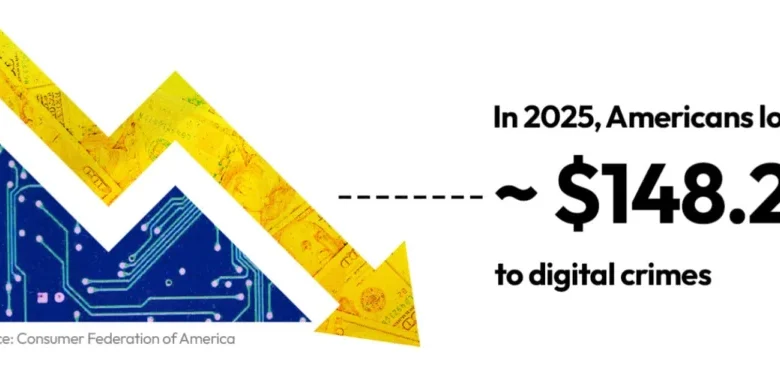
Furthermore, the economic implications of this environment are severe. In 2025 alone, digital crimes and scams resulted in estimated losses of $148.2 billion in the United States. These scams are increasingly sophisticated, utilizing "friendly" or "cutesy" AI chatbots to build rapport with users before deploying malicious links or requests for financial information. The human desire for a "frictionless" digital experience—where AI agents act as personal concierges—is being exploited as a primary security vulnerability.
The Institutional Vacuum in Media Literacy
While the threat to the public has grown exponentially, the educational infrastructure has largely failed to adapt. Chuck Salter, president and CEO of the News Literacy Project, notes that the vast majority of U.S. states do not mandate comprehensive news and media literacy instruction in K-12 classrooms. A 2024 survey by the National Association for Media Literacy Education found that a mere 12% of schools integrate media literacy into their core curriculum.
This lack of formal training leaves the responsibility of "fact-checking" to the individual, who is often unequipped to handle the nuance of modern disinformation. Educators and public health officials have begun to sound the alarm; in 2023, the U.S. Surgeon General issued an advisory regarding the impact of social media on mental health, explicitly calling for intentional media literacy instruction as a necessary public health intervention. Without a standardized approach, the burden of verification falls on an adult population where roughly 25% read at the lowest literacy level, making them uniquely susceptible to the psychological triggers of viral misinformation.
The Design Choice: Why Platforms Favor Manipulation
Critics argue that the current state of the internet is not an accidental byproduct of technology, but a deliberate design choice by Big Tech firms. Marijus Briedis, Chief Technology Officer at NordVPN, explains that the foundational architecture of the modern feed is inherently hostile to truth. "Feeds are built to move you quickly and reward things that provoke a reaction," Briedis states. "That is a design choice, and it happens to be the exact environment where synthetic content performs best."
This structural bias is reinforced by the decline of human moderation. In recent years, major platforms including Meta and X (formerly Twitter) have significantly reduced their human-led content moderation teams. These cuts, often justified as efficiency measures or responses to claims of political bias, have left the platforms reliant on AI-powered tools to police content. The result is a cycle where AI identifies and flags content, but often fails to understand context or intent, leading to a "middle-of-the-road" approach that allows highly opinionated or deceptive content to flourish if it remains within the platform’s engagement guidelines.
Cultivating Agency: The Path to Digital Resilience
As the internet continues to evolve, the consensus among experts is that users must transition from passive consumers to active, skeptical agents. Andrew Jones, co-founder of the AI security firm Adaptive Security, suggests that the primary defense against digital manipulation is, counterintuitively, to slow down.

"Every autoplay, every infinite scroll, every push notification trains us to react in a second and move to the next post," Jones notes. "Protecting yourself doesn’t take a technical background. It takes the conscious decision to build a pause into your everyday routine."
This pause serves as a vital cognitive circuit breaker. When a user stops to ask, Why am I still scrolling? Why was this specific piece of content served to me? Why does this account want me to feel this particular emotion?, they reclaim a portion of their agency from the algorithm.
However, experts caution that this skepticism must not devolve into total cynicism. There is a fine line between healthy inquiry and the abandonment of objective truth. Chuck Salter warns that cynicism is a dangerous trap, as it allows individuals to reject any information that challenges their existing biases, effectively retreating into echo chambers where "the truth" becomes whatever feels most comfortable.
The Future of the Connected World
The long-term implications of this digital climate are significant. As deepfakes and voice clones become more accessible, the "Indistinguishability Threshold"—the point at which human senses can no longer differentiate between real and synthetic media—is being breached. The consequence, as noted by Briedis, is a potential collapse of institutional trust. "Once people understand that anything can be faked, they start doubting the real things too," he warns. "You do not get that back easily."
Moving forward, the preservation of a functional public sphere will likely require a multi-faceted approach. This includes increased regulatory scrutiny of platform design, such as the ongoing legal challenges regarding addictive features like infinite scroll; a renewed focus on national education standards that prioritize digital forensics; and a cultural shift toward offline validation.
Ultimately, the most effective tool in the digital age remains the human capacity for critical thought. By choosing to stay tethered to the real world—engaging in direct, face-to-face discourse and verifying viral claims through trusted, human networks—users can begin to mitigate the influence of a digital environment that is, by design, trying to deceive them. The internet will continue to move at the speed of light, but the intelligence required to navigate it must remain stubbornly human.
Related posts: