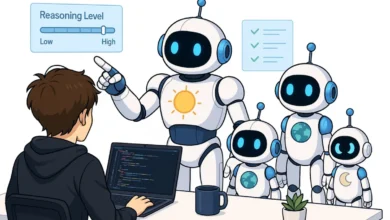
The Self-Improving AI Harness: Ushering in a New Era of Autonomous Agent Optimization

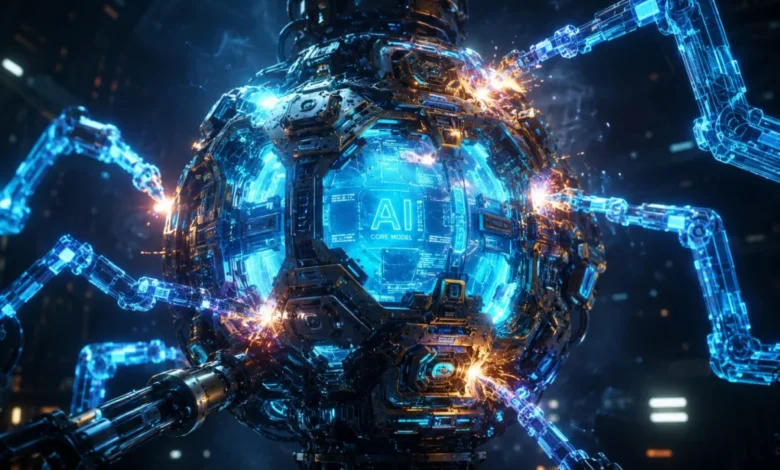
While the spotlight often illuminates breakthroughs in large language models (LLMs), a quieter yet equally profound revolution is underway in the underlying infrastructure that connects these powerful models to real-world applications: the AI runtime harness. This sophisticated layer, encompassing execution logic, system prompts, memory management, and tool configurations, is increasingly recognized as the critical determinant of an AI application’s overall performance and utility. Historically, optimizing these harnesses has been a manual, labor-intensive process, but recent advancements in AI frameworks are introducing a paradigm shift, enabling AI agents to autonomously analyze, test, and enhance their own runtime environments.
The Unseen Engine: Understanding the AI Harness
At its core, an AI harness functions as the operational system for an AI model. While the model itself provides raw reasoning capabilities, the harness furnishes the essential structure and context needed for that reasoning to be applied effectively in a dynamic environment. Think of it as the nervous system and motor functions for the brain (the LLM). Prominent examples of agent harnesses in action include development tools like Cursor and Aider, or advanced coding assistants such as Anthropic’s Claude Code and Microsoft’s Cline. These systems demonstrate that a model’s intelligence is only as effective as its ability to interact with, understand, and act upon the external world, which is precisely the harness’s role.
For developers seeking tailored behavior from their AI applications, the traditional routes—training a model from scratch or fine-tuning existing open-weight LLMs—present significant hurdles. Both are prohibitively expensive in terms of computational resources and time, and are fraught with complexities ranging from data curation to model convergence issues. Consequently, the harness has emerged as the most accessible and cost-effective lever for engineers to exert control and customize AI application behavior. However, the rapid proliferation of new and updated models means that manually crafting and continuously updating these harnesses becomes an unsustainable and error-prone chore, demanding a more scalable and automated solution.
The Revelation of Complexity: The Claude Code Leak
The true intricacy and importance of modern AI harnesses were vividly underscored in March 2026, when the source code for Anthropic’s Claude Code—a highly regarded AI coding assistant—was inadvertently leaked. What security researchers and developers discovered upon analyzing its architecture was far from a simple chat wrapper. Instead, it revealed a highly sophisticated, multi-agent orchestrated system.
This revelation dismantled the prevailing notion that a single, monolithic agent could effectively manage all aspects of understanding, planning, and coding within a single, ever-expanding context window. Claude Code’s architecture demonstrated a strategic separation of concerns, where a primary "lead agent" was tasked with analyzing the initial user request, subsequently delegating specialized subtasks to other agents. These subagents would then independently handle specific functions like testing, documentation generation, or debugging, often operating in parallel.
This complex orchestration was held together by what researchers termed an "agentic loop." This continuous execution process involves the model iteratively gathering context, performing an action using a specific tool, observing the outcome of that action, and then adjusting its subsequent approach before repeating the cycle. To manage this intricate dance of delegation and iteration without losing sight of the user’s overarching intent, the harness employed a meticulously structured memory and control system. The leak provided an unprecedented look into the engineering behind leading AI agents, confirming that the harness is not merely an afterthought but a meticulously designed, core component that dictates an agent’s operational efficacy.
While such general-purpose harnesses perform admirably out of the box, optimizing them for highly specific, niche applications presents a unique set of challenges. Modern harnesses are often deeply interconnected systems, making manual adjustments a precarious endeavor. A developer might tweak a system prompt to resolve one particular edge case, only to inadvertently introduce a regression or silently disrupt the agent’s tool-calling mechanism in a different, seemingly unrelated task. This "whack-a-mole" problem highlights the urgent need for more robust and automated optimization methods.
Self-Harness: An Autonomous Iterative Optimization Loop

Responding to these pressing challenges, a groundbreaking framework dubbed "Self-Harness" was introduced, proposing an iterative, autonomous loop that empowers AI agents to improve their own scaffolding. Published in June 2026 (arXiv:2606.09498), this framework leverages the wealth of information contained within execution traces to drive self-correction. It operates in three distinct, yet interconnected, stages:
- Weakness Mining: The process begins with the agent executing a series of tasks against a carefully curated evaluation dataset. During these runs, the system produces detailed execution traces, meticulously logging every tool call, any error messages encountered, and the model’s responses. Crucially, the Self-Harness framework then analyzes these extensive logs not just for generic software bugs, but to identify model-specific failure patterns—nuances in how the AI misinterprets instructions, misuses tools, or falls short in specific scenarios.
- Harness Proposal: Once weaknesses are identified, the agent transitions into the role of a "proposer." Leveraging its own reasoning capabilities, it generates minimal, highly targeted code or prompt modifications designed specifically to rectify the identified deficiencies within the harness. This stage ensures that changes are precise and focused, avoiding broad, potentially disruptive alterations.
- Proposal Validation: The proposed updates to the harness are not immediately adopted. Instead, they undergo a rigorous regression testing phase. This critical step ensures that while a proposed edit might successfully address a newly identified edge case, it does not inadvertently break previously functional tasks. If a regression is detected, the proposed edit is rejected, preventing cascading failures and maintaining the overall stability and performance of the system.
The efficacy of Self-Harness was dramatically demonstrated on Terminal-Bench-2.0, a challenging benchmark for AI agents operating in shell environments. The base model frequently struggled with ambiguous file errors, a common pitfall. Instead of requiring a human developer to painstakingly debug and write a patch, the Self-Harness loop autonomously analyzed the failure traces. It then generated and implemented new executable rules, such as a strict command-retry discipline to prevent duplicate sequential commands, a mechanism to force the agent to recreate missing artifacts upon encountering file errors, and instructions to persist environment variables across shell sessions.
The results were compelling: the framework yielded significant performance gains on standard benchmarks without altering the model’s foundational weights. For instance, the MiniMax M2.5 model, a mid-tier LLM, saw its pass rate jump substantially from 40.5% to an impressive 61.9%. This improvement was particularly noteworthy because the solutions were tailored entirely to MiniMax M2.5’s unique performance profile, showcasing the framework’s ability to optimize for specific model characteristics.
For developers eager to implement this concept today, even without an official plug-and-play package, the pathway involves heavily instrumenting application trace logs, curating robust validation datasets of core tasks, and employing an external LLM for the weakness mining phase to analyze logs and generate proposals. Automating the evaluation gate is paramount to ensure that updates do not introduce performance regressions, thus safeguarding production stability.
HarnessX: Composable Architectures and Co-Evolutionary Learning
In parallel to Self-Harness, researchers at Xiaomi unveiled "HarnessX" (arXiv:2606.14249), another innovative framework that approaches harness optimization from a different, yet complementary, angle. HarnessX formalizes the harness as a structured software artifact, meticulously breaking down agent behavior into discrete, manageable components. These components include context assembly, memory management, tool ecosystems, and control flow mechanisms.
The core design principle of HarnessX is modularity. Every specific behavior or function within the harness is implemented as an independent "processor." These processors are designed like Lego blocks, plugging into precise lifecycle hooks within the system. This modular architecture offers unprecedented flexibility, allowing developers to easily swap, add, or remove components without destabilizing or breaking the surrounding operational pipeline. This composability drastically simplifies the customization and maintenance of complex agent systems.
HarnessX adapts these modular blocks using an advanced, trace-driven evolution engine called AEGIS, which operates as a four-stage multi-agent pipeline:
- Digester: This agent meticulously analyzes execution traces to pinpoint the exact location and nature of failures within the current harness configuration.
- Planner: Based on the insights from the Digester, the Planner devises a high-level strategic approach to address and rectify the identified architectural gaps.
- Evolver: The Evolver agent then translates the Planner’s strategy into actual code-level edits, generating modifications for the specific harness processors. These proposed changes are then subjected to isolated tests to confirm their intended effect.
- Critic: The final stage involves the Critic agent, which rigorously assesses the proposed edits. Its role is twofold: to detect any instances of "reward hacking" (where an agent finds a loophole to achieve a superficial gain without actual improvement) and to enforce a deterministic gate that rejects any updates that regress past performance on critical tasks.
The most striking innovation of HarnessX is its concept of harness-model co-evolution. This addresses a fundamental limitation in traditional AI development: optimizing only the harness can hit a "scaffolding ceiling" if the underlying model lacks the intrinsic reasoning capacity to fully exploit new tools or configurations. Conversely, training only the model can hit a "training-signal ceiling" if the harness never prompts it to utilize its advanced capabilities effectively.
HarnessX resolves this by interleaving harness evolution with model training through a shared replay buffer, utilizing a technique called cross-harness Group Relative Policy Optimization (GRPO). GRPO is a reinforcement learning algorithm that refines an AI’s output by generating multiple potential answers and evaluating their quality relative to the group’s average. Every time the harness improves its structural strategy (e.g., by adding a new tool or refining control flow), the model simultaneously learns to exploit that new configuration, and vice versa. This symbiotic relationship ensures that both components advance in tandem.
Experimental results underscore the power of co-evolution. While harness evolution alone provided a significant 14.5% average performance gain across diverse benchmarks like ALFWorld, GAIA, and SWE-bench Verified, the addition of model co-evolution yielded an additional 4.7% performance boost. This demonstrates that co-evolution effectively breaks the individual capability ceilings often encountered in traditional agent deployment, leading to synergistic improvements.

The researchers have generously open-sourced the HarnessX codebase on GitHub, making this advanced framework accessible to the wider developer community. Developers can clone the repository, run the installation script, and define their agent’s scaffolding using intuitive YAML configurations. The repository includes built-in integrations for popular third-party modules, such as MemPalace for sophisticated long-term memory management, and connects with distributed training frameworks like VERL, enabling engineering teams to implement harness-model co-evolution on their own local infrastructure.
A New Frontier in AI Development: Loop Engineering and Continual Learning
These pioneering frameworks, Self-Harness and HarnessX, represent more than just incremental improvements; they intersect directly with and significantly advance two major movements in production AI: loop engineering and continual learning.
Loop engineering involves designing agent systems around systematic, multi-step feedback loops rather than simplistic, single-shot prompt-response interactions. In practice, this often leads to "loopmaxxing"—agents iterating endlessly within an application session without clear optimization signals, resulting in wasted tokens and computational resources. Self-Harness and HarnessX fundamentally shift this optimization loop from the real-time application runtime (the user session) to a meta-runtime (the developer’s deployment environment). This allows the system to optimize its own foundational code and configuration based on clear, verifiable signals and rigorous testing, moving beyond inefficient runtime trial-and-error.
This meta-loop directly facilitates continual learning, a crucial capability for AI systems. Continual learning allows AI to adapt to new data and evolving environments over time without suffering from "catastrophic forgetting," a phenomenon where a model overwrites its past knowledge and capabilities when learning new tasks. By enabling agents to ingest environmental execution traces and safely rewrite their scaffolding without altering the foundational base-model weights, the application can natively improve its behavior as it gathers more real-world information. The sophisticated evaluation architectures inherent in these frameworks act as a crucial balancing mechanism, weighing new feature adaptation against strict regression testing to safeguard production stability. This represents a significant leap towards truly adaptive and robust AI systems.
Reshaping the AI Developer Landscape
The emergence of self-improving harnesses signals a clear and profound shift in how AI applications will be conceived, built, and maintained.
- From Prompt Tweakers to Feedback Architects: The era of artisanal, manual prompt engineering, where developers painstakingly craft and iterate on individual prompts, appears to be nearing its end. The focus for developers will increasingly move away from patching individual tool calls or fine-tuning prompts in isolation. Instead, their role will evolve towards designing and building the sophisticated infrastructure, robust trace logging mechanisms, and comprehensive evaluation datasets that make agent self-improvement possible. The core skill set will shift towards architectural design of learning systems, rather than just direct interaction with models.
- An Alternative to Pure Scaling: These advancements underscore that scaling massive foundation models is not the sole, nor always the most efficient, path to achieving superior AI performance. The HarnessX testing, for example, revealed that smaller, open-weight models like Qwen 9B gained the most substantial performance improvements from dynamic scaffolding enhancements. This has significant implications for democratizing advanced agent capabilities, demonstrating that sophisticated, high-performing behavior does not exclusively require access to the largest, often proprietary, models. It opens avenues for more resource-efficient and accessible AI development.
- Collaboration Over Replacement: As foundation models continue to grow in size and absorb an ever-increasing array of base capabilities, the role of the harness does not diminish. Rather, its scope expands. It becomes the critical interface that connects these powerful models to richer, more complex enterprise environments, managing intricate workflows, integrating with legacy systems, and ensuring compliance with specific business logic. The harness will continue to be the bridge between generalized AI intelligence and specialized real-world application.
However, a pragmatic caveat accompanies these transformative capabilities. Automating the harness optimization process demands significant computational overhead during the improvement phase. This often necessitates the use of frontier models themselves to act as the meta-agents responsible for analyzing traces and rewriting code. For engineering teams, the challenge thus shifts from the manual writing of execution logic to the sophisticated management of multi-tier execution costs and the rigorous validation gates of these complex, self-correcting systems.
Democratizing Advanced AI and Future Outlook
The implications of self-improving harnesses extend far beyond individual performance gains. By making advanced optimization accessible and automated, these frameworks promise to democratize the development of sophisticated AI agents. Smaller teams and organizations, previously constrained by the costs and expertise required for extensive model fine-tuning or manual harness optimization, can now leverage these autonomous systems to build highly capable AI applications. This could accelerate innovation across various industries, from automated customer service and personalized learning platforms to advanced scientific discovery and complex code generation.
Looking ahead, the next frontier will likely involve further refinement of these meta-learning loops, potentially integrating ethical guardrails and safety mechanisms directly into the self-improvement process. As AI agents gain the ability to modify their own operational logic, ensuring these modifications align with human values and safety protocols will become paramount. The research community will also focus on standardizing these frameworks, making them even more plug-and-play, and exploring their application in novel domains where adaptive intelligence is crucial. The self-improving AI harness marks a pivotal moment, moving us closer to truly autonomous and continually evolving AI systems that can adapt, learn, and optimize themselves in dynamic, real-world environments.
Related posts: