Navigating the 2026 Holiday Retail Landscape: How Brands Are Rewriting the Playbook for Early Black Friday Social Commerce

Retailers are facing an unprecedented shift in consumer behavior as holiday shopping preparations kick off earlier than ever. Driven by economic anxieties, shifting consumer trust metrics, and the rapid expansion of social commerce, brands are being forced to completely rethink their seasonal strategies. According to recent industry metrics from the third quarter of 2026, 78% of social media users plan to utilize digital platforms as much as, or more than, they did in previous years to discover and purchase holiday gifts. This profound behavioral shift places social networks on equal footing with traditional physical brick-and-mortar storefronts, with 46% of consumers identifying social channels as their primary destination for gift discovery.
To capture consumer attention in a highly saturated digital ecosystem, forward-thinking enterprises are no longer treating Black Friday as a single-day event. Instead, the traditional post-Thanksgiving rush has expanded into a multi-day commercial marathon encompassing Small Business Saturday and Cyber Monday. Industry analysts note that this evolution is heavily influenced by external economic pressures, which are fundamentally reshaping how shoppers approach discretionary spending.
Economic Pressures and Changing Consumer Mindsets

The macroeconomic landscape heading into the fourth quarter of 2026 is defined by consumer caution and financial vigilance. Data indicates that 69% of shoppers harbor heightened concerns regarding rising retail prices driven by impending or active tariff implementations. In response to these financial pressures, 56% of surveyed consumers intend to reduce their overall holiday spending compared to previous years.
This financial constraint has directly altered consumer timelines. More than a third of shoppers—specifically 36%—are initiating their holiday purchasing cycles significantly earlier in the year. Their primary objective is to circumvent anticipated tariff-related price surges and secure goods before inventory constraints tighten. Consequently, brands are encountering a compressed, highly competitive market where traditional marketing approaches often fall short. Earning consumer trust now requires rigorous planning, transparent communication, and targeted engagement well in advance of the November holiday.
Strategic Pillars for Modern Social Campaigns
To cut through the noise of early seasonal advertising, successful brands are deploying multifaceted social media strategies that move beyond generic discount announcements. Data shows that nearly a quarter of consumers (23%) evaluate the originality of holiday-specific social content when deciding where to allocate their purchasing dollars. Furthermore, an identical percentage places high value on the responsiveness and quality of a company’s social media customer service teams.
To meet these evolving consumer expectations, marketing executives are implementing five core content frameworks designed to maximize engagement and conversion.
Influencer Collaborations and Micro-Targeting
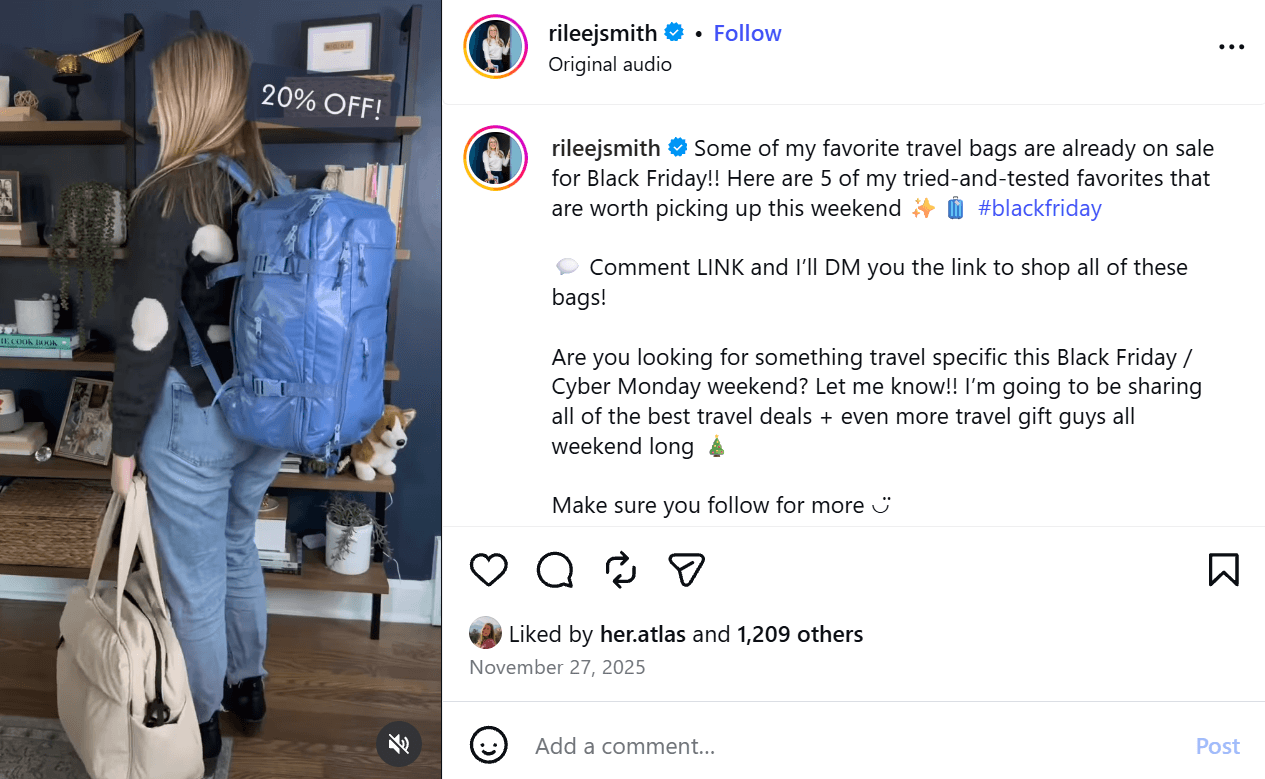
Collaborating with digital content creators allows brands to reach high-intent niche audiences across diverse demographics, ranging from fashion enthusiasts to consumer tech hobbyists. Rather than prioritizing vanity metrics such as massive follower counts, contemporary marketing campaigns focus heavily on discoverability and hyper-relevant context. Small businesses and global enterprises alike are leaning into micro-influencer marketing to establish authenticity.
Data confirms that promotional codes distributed by trusted creators remain the single most influential factor driving social commerce purchases, with 30% of shoppers citing influencer-shared discounts as their primary catalyst for holiday spending. Successful campaigns frequently feature creators demonstrating products in real-world scenarios, transparently showcasing the tangible utility and value of featured items.
Interactive Giveaways and Contests
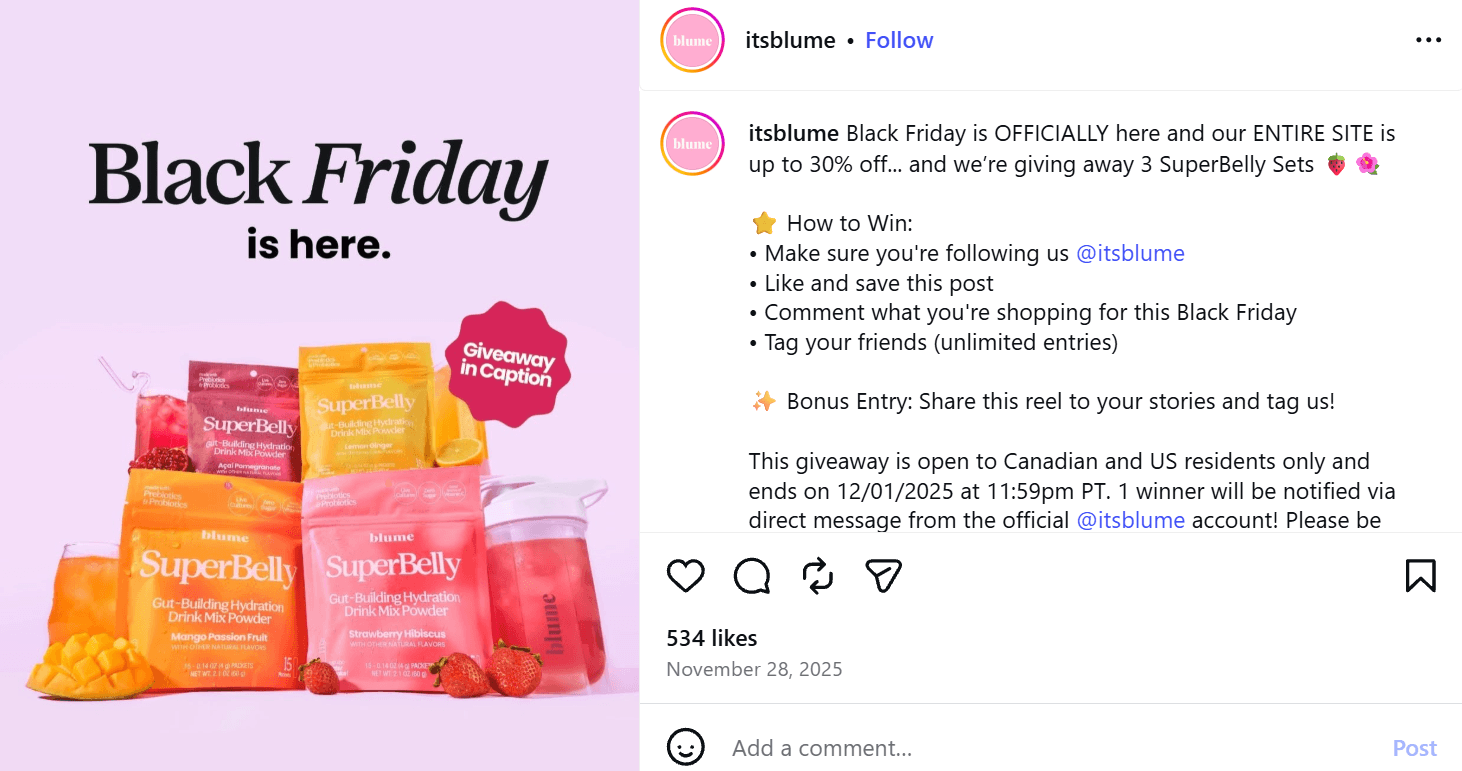
Engagement-driven initiatives, such as structured social media giveaways and contests, continue to serve as powerful catalysts for brand awareness, lead conversion, and community growth. By requiring specific user interactions—such as tagging peers, sharing content, or following official brand profiles—companies can rapidly amplify their algorithmic reach. When paired with larger seasonal sale announcements, these interactive campaigns create a dual-purpose funnel that introduces prospective buyers to both free merchandise opportunities and broader weekend discounts.
Loyalty Programs and Exclusive Access
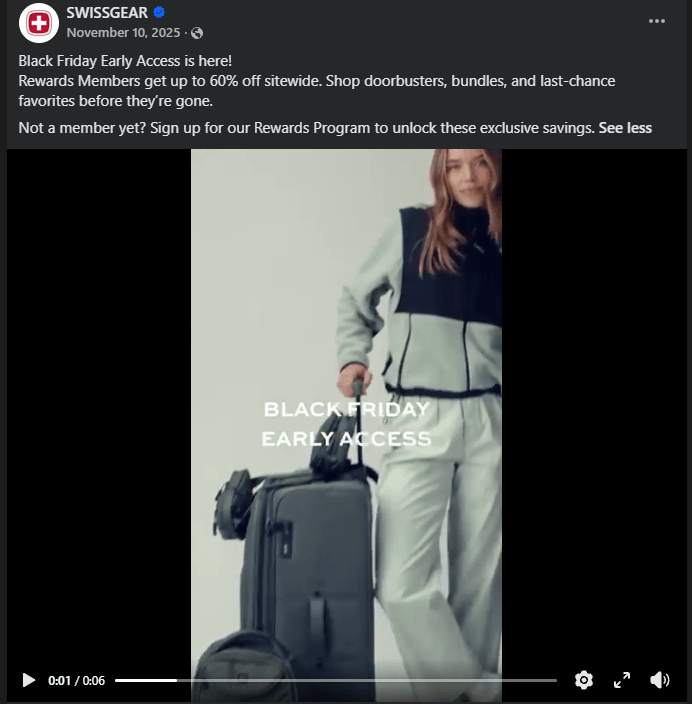
In an economic climate where every dollar is carefully budgeted, loyalty and rewards programs offer a strategic advantage for customer retention. Brands are leveraging social channels alongside email marketing to grant repeat shoppers early access to steep seasonal discounts and curated product bundles. Offering early-bird savings validates the consumer’s need for fiscal prudence while signaling that the brand acknowledges the value of their long-term patronage.
Omnichannel Integrations
Modern consumers rarely complete their shopping journeys within a single digital ecosystem. Shoppers routinely alternate between platforms like TikTok, Instagram, Reddit, and Pinterest while simultaneously engaging with traditional digital touchpoints and physical retail locations. To counteract digital fatigue, leading brands execute synchronized omnichannel activations. These campaigns bridge the gap between social media platforms, conversational chatbots, email marketing funnels, and real-world brick-and-mortar experiences to ensure a frictionless consumer journey from discovery to checkout.
Community-Inspired Initiatives and Social Responsibility
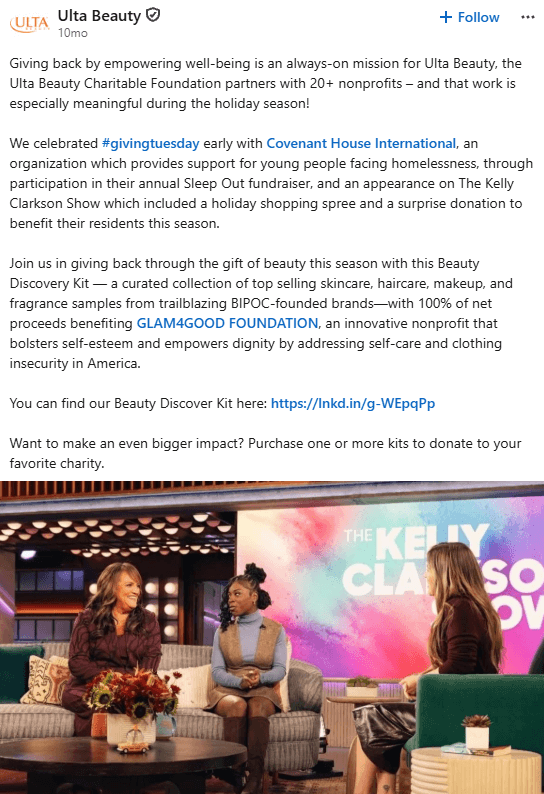
Brand communities—defined by individuals who share an emotional connection to a company’s mission—play an instrumental role in seasonal sales conversions. By aligning holiday campaigns with the personal values of their core audiences, brands can foster deep brand loyalty and encourage organic advocacy. Initiatives that bridge seasonal retail events with philanthropic efforts, such as participating in GivingTuesday campaigns through specially curated product bundles, allow companies to demonstrate corporate social responsibility while meeting consumer demand for values-driven commerce.

Actionable Execution Tactics for Q4 Success
Successfully executing a holiday social campaign requires rigorous advance preparation and operational discipline. Industry experts recommend implementing seven foundational tactics to optimize performance throughout the fourth quarter:
-
Prioritize Early Opt-Ins: Build preliminary brand awareness by incentivizing new followers and email newsletter subscribers with exclusive early-bird discount codes, thereby widening the top of the marketing funnel before peak shopping days arrive.
-
Execute Creative A/B Testing: Deploy preliminary campaign assets early in the season to evaluate performance across different content formats, comparing the engagement metrics of short-term video assets against static graphics to determine optimal audience resonance.
-
Leverage Advanced Creator Vetting: Utilize AI-driven semantic search tools to identify and vet content creators whose historical posting themes align naturally with specific campaign parameters, ensuring authentic product integration.
-
Optimize Digital Profiles: Refresh profile imagery, banner art, and bio sections across all social channels to reflect holiday themes and incorporate direct links to seasonal landing pages.
-
Automate Customer Care Workflows: Implement robust social media management platforms and conversational AI tools to manage the surge in seasonal inquiries, meeting consumer expectations for rapid response times within one to two hours.
-
Segment Audience Messaging: Tailor promotional content to distinct market segments rather than relying on generalized messaging, ensuring that product recommendations align with the specific preferences of diverse buyer personas.

-
Measure Campaign Impact Comprehensively: Aggregate reach, engagement, and conversion metrics through centralized reporting dashboards to evaluate campaign efficacy in real time and inform future strategic planning.
Case Studies in Seasonal Innovation
Analyzing successful real-world campaigns provides valuable insight into how major corporations adapt these principles to drive measurable revenue.
Glossier’s Employee-Driven Advocacy
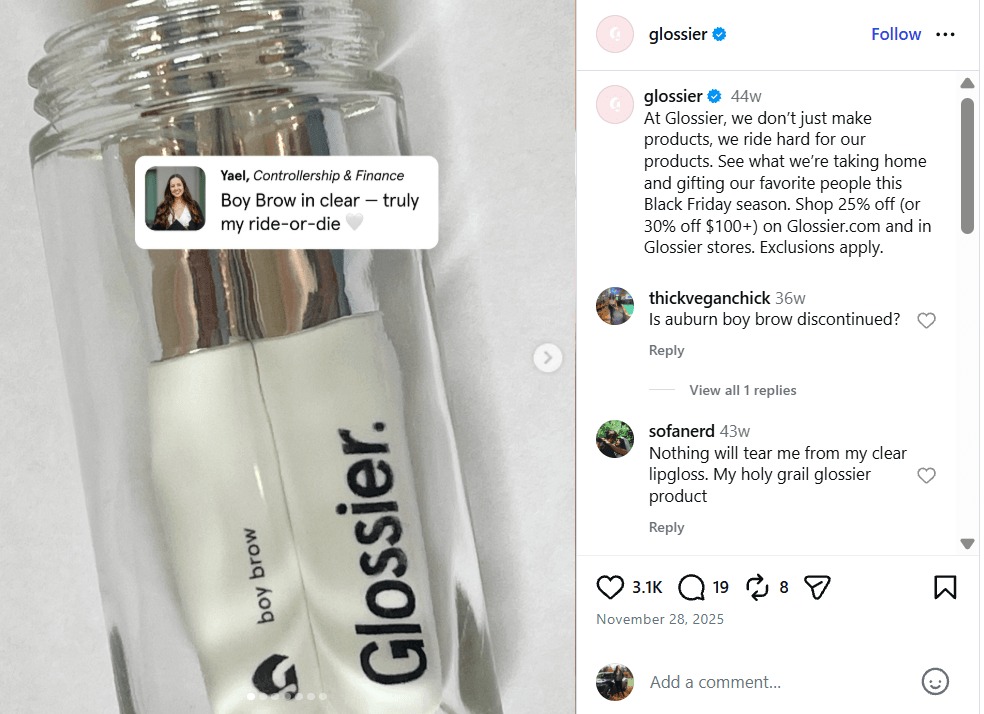
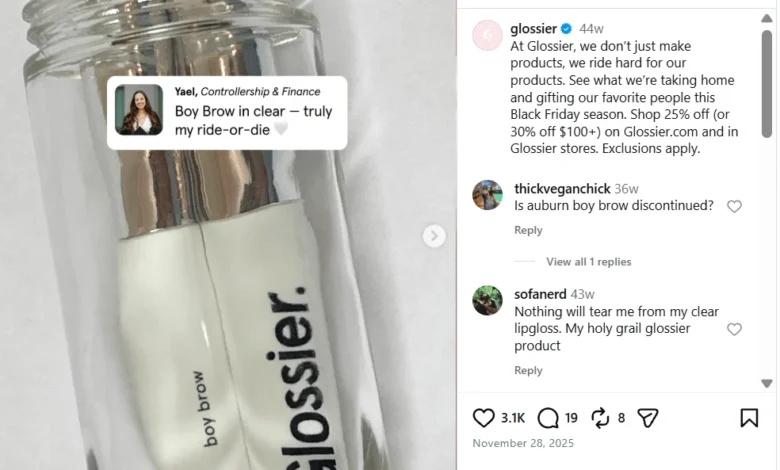
Cosmetics brand Glossier bypassed traditional external influencer networks by turning inward, recruiting internal employees to model and recommend products for their own holiday gifting needs. Presented through approachable carousel posts, this employee-generated content tapped into the growing consumer demand for humanized, relatable brand interactions. With consumer data indicating that 40% of shoppers frequently discover products through employee advocacy, this strategy delivered authentic word-of-mouth promotion without the operational overhead of a large-scale influencer campaign.
Lowe’s Nostalgic Bucket Giveaway
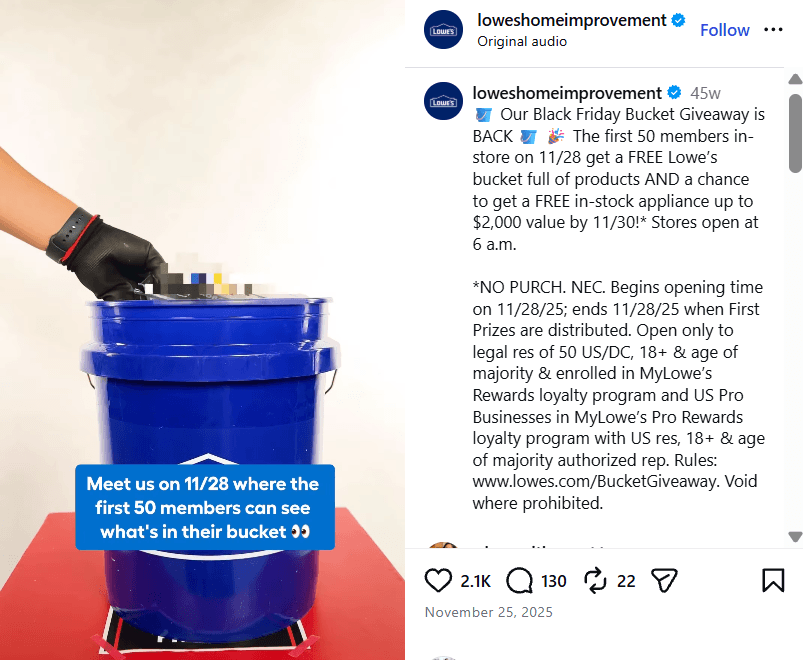
Home improvement retailer Lowe’s successfully blended historical retail nostalgia with modern unboxing culture through its strategic Black Friday Bucket Giveaway. Rewarding the first fifty loyalty members in line at physical locations with a branded blue bucket—each carrying a chance to win a $2,000 appliance voucher—the brand generated immediate foot traffic. The campaign’s social promotion relied on strategic mystery, prompting an influx of user-generated content as ecstatic customers recorded and shared their unboxing experiences online.
GoPro’s Community-Centric Humor
Action camera manufacturer GoPro continued to leverage its highly engaged user base by curating holiday social content directly from community-submitted media. By featuring a balance of high-adrenaline sports footage, humorous lifestyle moments, and relatable imagery, GoPro reinforced its brand identity as an authentic extension of its customers’ lived experiences.
Broader Implications and Market Outlook
The rapid evolution of social commerce during the 2026 holiday season underscores a permanent structural change in global retail. As economic factors continue to shape consumer purchasing habits, the boundary between entertainment, social connection, and e-commerce will continue to blur. Brands that master the art of early engagement, authentic influencer partnerships, and responsive digital customer care will be best positioned to capture market share and build enduring consumer loyalty well beyond the fourth quarter.
Related posts: