The evolution of the modern web platform has reached a critical inflection point where the traditional reliance on third-party JavaScript libraries is being fundamentally challenged by native browser capabilities. For over a decade, developers have routinely populated their package.json files with utility libraries to handle essential tasks like date formatting, HTTP requests, and accessibility primitives. However, a significant shift is occurring as browser vendors accelerate the standardization of high-level features. This transition creates an opportunity for development teams to drastically reduce their JavaScript bundle sizes, improve performance, and enhance security by offloading complex operations to the browser engine itself.
The WebDX Community Group has formalized this shift through the "Baseline" initiative. Baseline provides a clear, objective framework that identifies which features are ready for cross-browser production use. By classifying features as "Newly" or "Widely" available, the initiative removes the ambiguity that previously forced developers to bundle polyfills or heavy libraries "just in case" a user’s browser lacked support. This progress represents the culmination of years of collaborative work across the W3C and major browser engine teams to close the feature gap that once necessitated a bloated external dependency ecosystem.
The Anatomy of Dependency Bloat
In a typical mid-sized application, it is common to find between 60KB and 90KB of minified and gzipped JavaScript dependencies that replicate functionality now native to the web platform. This bloat is rarely the result of poor engineering; rather, it is a byproduct of the "if it isn’t broken, don’t touch it" mentality that governs legacy codebases. Because the primary focus of most teams is feature delivery and security—often managed through routine npm audit checks—the potential for "feature replacement" is frequently overlooked.
The economic and performance implications of this technical debt are significant. Every kilobyte of JavaScript must be downloaded, parsed, and compiled by the browser. On mobile devices, particularly those with constrained processing power or high-latency network conditions, this overhead directly correlates to increased First Input Delay (FID) and slower Largest Contentful Paint (LCP) scores. By systematically auditing dependencies against the current Baseline standard, organizations can reclaim significant performance budgets without compromising functionality.
Chronology of Native Browser Evolution
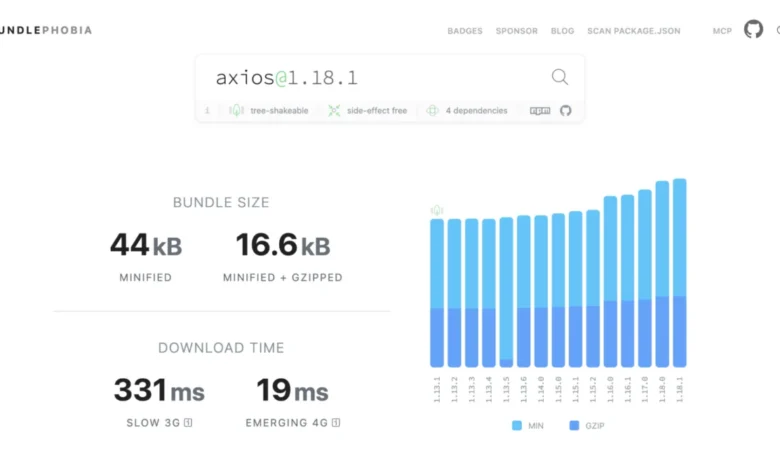
The timeline of this transition began in earnest with the maturation of the Intl API, which moved internationalization—previously a source of heavy third-party code—directly into the browser. This was followed by the standardization of the fetch API, which provided a cleaner, native alternative to legacy XHR-based libraries like axios.

More recently, 2024 and 2025 marked a period of rapid advancement in UI primitives. The introduction of the <dialog> element simplified the creation of accessible modals, while the Popover API and CSS anchor positioning resolved the long-standing "z-index" wars and complex geometry calculations that previously required libraries like Popper.js or Tippy.js. Most recently, the inclusion of Object.groupBy and advanced Set methods in ECMAScript standards has begun to marginalize common Lodash utility functions, further streamlining the modern developer toolkit.
A Structured Framework for Auditing Dependencies
To effectively manage this transition, engineering teams are encouraged to adopt a rigorous three-step decision framework before removing any dependency.
- Baseline Compatibility: Determine if the native replacement is "Widely" available. If it is only "Newly" available, teams must analyze their user base. For internal enterprise applications where the browser environment is controlled, immediate adoption is feasible. For public-facing sites, a feature-detection guard or a progressive enhancement strategy is required to maintain support for the long tail of older browsers.
- Comparative Cost Analysis: Replacing a library is not always a reduction in size. In cases like the
TemporalAPI for date manipulation, the necessary polyfills for older browsers can sometimes outweigh the size of a lightweight library likedayjs. A net reduction in bundle size must be confirmed through a bundle analyzer before finalizing the removal. - Functional Parity: Libraries often include "hidden" features—such as interceptors in HTTP clients or specific animation hooks in modal libraries—that native features might not immediately replicate. Developers must ensure that the "native-only" approach covers the specific use cases of their application, or that they are prepared to write minimal custom code to bridge the gap.
Industry Implications and Future Outlook
The broader impact of this shift is a move toward a "Platform First" development philosophy. By reducing the number of dependencies, teams decrease their "supply chain risk." Recent history has shown that third-party package vulnerabilities, such as those found in widely used open-source libraries, can pose significant security threats. Native browser APIs, maintained by global standards bodies and browser vendors, offer a more secure and stable foundation.

However, the industry remains cautious regarding the "Temporal" stage of web development. While the Temporal API is a massive improvement over the archaic Date object, its status as a non-Baseline feature means that broad-scale adoption is currently premature. This serves as a reminder that the goal is not to eliminate all libraries, but to eliminate those that have been rendered obsolete by the evolution of the web.
Conclusion
The data indicates that the "internationalization" and "UI primitives" clusters represent the most immediate "quick wins" for development teams. By offloading these tasks to the browser, a team can realistically shed 40KB to 60KB of gzipped JavaScript. As browsers continue to standardize complex features—such as upcoming advancements in DOM-based storage and advanced form validation—the gap between "needing a library" and "the browser does this" will continue to narrow.
The most effective strategy is to implement a quarterly dependency audit. By treating the browser as a living, evolving platform rather than a static target, developers can ensure their applications remain lightweight, performant, and secure. This practice of "handing back" functionality to the platform is not merely an optimization exercise; it is a fundamental component of building a more sustainable and accessible web ecosystem for all users. As the Baseline project continues to update its database of web features, the barrier to entry for this cleanup process will continue to lower, making it an essential practice for modern front-end engineering teams.
Related posts: