The cold engineering of the modern passport photo is not a portrait but a biometric enrollment sample

Your passport photo was rejected not because of an aesthetic failing, but because of a mathematical one. That soft, barely perceptible gradient of shadow under your jaw, or the slight tilt of your head, represents a failure to meet the precise geometric tolerances required by automated biometric recognition systems. In the modern era of global travel, the passport photo has been stripped of its role as a likeness of the individual and repurposed as a high-fidelity data input. It is no longer an image intended for human eyes to admire; it is an "enrollment sample" designed to be parsed, digitized, and distilled into a string of numbers.
The transition from a manual, human-checked system to an automated, algorithmic one has fundamentally altered the standards for government-issued identity documents. When a clerk returns your photo, they are not judging your appearance; they are enforcing a strict engineering datasheet mandated by international standards.
The Evolution of Standardization: From Manual to Machine
For decades, passport photos were primarily judged by human inspectors. The primary concern was whether the person standing at a border crossing looked like the person depicted in the document. However, as the volume of international air travel increased, the capacity for manual verification reached a breaking point.
The International Civil Aviation Organization (ICAO), a specialized agency of the United Nations, developed Doc 9303 to harmonize the machine-readable features of travel documents. This document, alongside standards set by the International Organization for Standardization (ISO) and the International Electrotechnical Commission (IEC), forms the bedrock of modern biometric requirements. These regulations ensure that whether you are clearing customs in Tokyo, London, or New York, the underlying mathematical representation of your face remains consistent.
The Mathematics of Identity
To understand why the rules are so rigid, one must look at the technical requirements of face-recognition software. The goal of these systems is to convert a visual image into a "faceprint"—a numerical representation or embedding of the face.
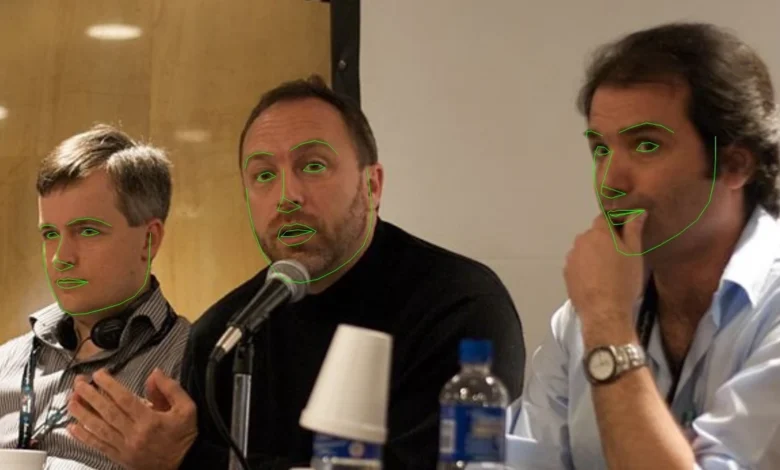
The process begins with "landmark detection." The software identifies fiducial points: the inner and outer corners of the eyes, the tip of the nose, the corners of the mouth, and the contours of the jaw. In early 2000s-era systems, this involved mapping approximately 80 nodal points and measuring the distances between them. Today, deep neural networks ingest these landmarks and collapse the face into a vector, often consisting of hundreds or thousands of numerical values.
The system performs a "canonical alignment," which digitally rotates and scales the image so that the eyes and mouth sit at a standard coordinate. When you approach a border gate, the camera takes a "live" photo, converts it into a similar vector, and calculates the Euclidean distance between that live vector and your stored passport vector. If the distance falls below a pre-set threshold, the system confirms a match. If the numbers drift too far apart—perhaps because of a shadow, a smile, or a change in lighting—the system triggers a "false non-match," requiring manual intervention by an officer.
The Geometry of the Frame
The specific rules regarding head size—typically between 50% and 69% of the total image height—exist because of pixel density requirements. Software requires a predictable number of pixels between the pupils to resolve the fine structure of the face. According to ICAO and ISO standards, a minimum of 90 pixels between eye centers is required, with 120 pixels preferred for higher-quality digital chips.
If the head is too small in the frame, the algorithm lacks the necessary resolution to identify key landmarks. If the head is too large, the image risks "clipping," where the crown or chin falls outside the frame. The requirement for a plain, off-white background is similarly functional; it ensures the "segmentation" process—the separation of the head from the background—occurs without interference from shadows or busy patterns that could cause edge-detection errors.
Why Smiles and Shadows Break the System
The prohibition of broad smiles in many jurisdictions is rooted in the deformation of facial geometry. When a person smiles, the cheeks rise, the eyes narrow, and the relative positions of the nose and mouth shift. Because the system relies on the distance between these points, a smile fundamentally alters the "faceprint."
While some agencies, such as the U.S. State Department for online renewals, have softened their stance to allow a "natural smile," they strictly forbid showing teeth. This middle ground is a compromise between human expectations of a "pleasant" photo and the mathematical need for a consistent, low-variance input.
Shadows, however, remain the most common point of failure. A shadow is not a fixed anatomical feature; it is an environmental variable. A shadow cast by a side light at a home photo studio will not exist under the flat, overhead lighting of an airport terminal. Because the matching software interprets shadows as physical features, an unevenly lit photo can effectively "change" the shape of a person’s nose or jaw in the eyes of the machine, leading to a rejected match.
The Expansion of the Biometric Network
The rigorous standard once reserved for international passports is now migrating into the domestic sphere. The U.S. Customs and Border Protection (CBP) has implemented biometric facial comparison at 238 airports. As of April 2025, the Transportation Security Administration (TSA) has deployed over 2,100 second-generation credential-authentication scanners, with plans to expand coverage to over 400 airports.
The goal is an ambitious, if not controversial, vision: a frictionless travel experience where the face serves as the boarding pass. The "PreCheck Touchless ID" program is currently the vanguard of this effort. Yet, the implications of this shift are profound. Data retention policies vary by jurisdiction; while the CBP currently deletes images of confirmed U.S. citizens within 12 hours, the storage of non-citizen biometric data can extend up to 75 years in federal databases.
Analysis: The Cost of Efficiency
The shift toward automated biometric verification reflects a trade-off between individual expression and system efficiency. From the perspective of the Department of Homeland Security or international transit authorities, the "boring" photo is a triumph of consistency. It reduces the rate of false negatives, minimizes queue times, and allows for the high-throughput processing of millions of passengers.
However, researchers note that the reliance on these systems is not without criticism. A study by the National Institute of Standards and Technology (NIST) suggested that facial recognition performance is highly algorithm-specific and that no universal standard for "best" expression exists. Some research even indicates that, under certain conditions, a natural smile could theoretically improve recognition performance, yet neutral expressions remain the global standard because they are easier to replicate and verify manually.
The broader implication is that the definition of a "valid" photograph has shifted from a human-centric portrait to a machine-centric data point. As face-recognition technology moves from airports into banks, state DMV offices, and even personal smartphones, the requirement for a "clean" faceprint will likely become a prerequisite for participation in modern society.
The next time a passport photo is rejected, the rejection is not a critique of the subject’s appearance. It is an acknowledgment that the input provided to the system was too "noisy" to be reliably processed. In an age where your face is increasingly being converted into a persistent, searchable digital record, the strict adherence to lighting, crop, and pose is no longer a matter of bureaucratic fussiness. It is the price of admission to a highly automated, digitized global infrastructure.