Mandarin Oriental The Landmark Hong Kong Reimagined: Joyce Wang Studio Unveils Its Second Historic Transformation

More than a decade after initially redefining the interior landscape of Mandarin Oriental The Landmark in Hong Kong, Joyce Wang Studio has completed a comprehensive second renovation of the luxury property. Spanning all 109 guest rooms and suites, the grand mansion foyer, the wellness spa, and the footprint of the former MO Bar, this ambitious redesign shifts the property’s design narrative toward a deeply localized exploration of Hong Kong’s architectural heritage. Principal designer Joyce Wang and her team have successfully orchestrated a physical and conceptual evolution that repositions the hotel as a contemporary urban sanctuary, seamlessly blending the private intimacy of a historic colonial estate with the dynamic pulse of modern-day Hong Kong.
A Decade of Evolution: The Chronology of Transformation
The partnership between Mandarin Oriental The Landmark and Joyce Wang Studio dates back over ten years, during which the studio’s original design established a benchmark for sleek, cosmopolitan luxury in the heart of Central Hong Kong. However, as design paradigms shifted toward hyper-locality and experiential storytelling, the ownership and design teams recognized an opportunity to refresh the property.
Planning for the second-phase renovation commenced several years ago, culminating in a phased rollout that temporarily closed select zones of the hotel before unveiling the complete transformation. Rather than updating the existing aesthetic incrementally, Wang’s team undertook a total reinvention of the key guest touchpoints. The comprehensive scope included the complete overhaul of all 109 accommodations, the reimagining of the arrival experience and mansion foyer, a wellness-focused redesign of the spa, and the spatial transformation of the former MO Bar into a cohesive extension of the mansion concept. This methodical, multi-year undertaking reflects a growing trend among ultra-luxury hospitality brands aiming to anchor their properties more firmly in the cultural geography of their host cities.
Conceptual Foundations: The Lived-In Mansion and Colonial Heritage
At the heart of the newly renovated Mandarin Oriental The Landmark is the conceptual framework of a lived-in private mansion. Wang drew primary inspiration from the colonial country manors historically frequented by the Tai Kwuns—influential figures and colonial-era administrators—of a bygone era. This historical lens allowed the design team to celebrate the enduring architectural beauty of heritage homes that continue to captivate contemporary observers.
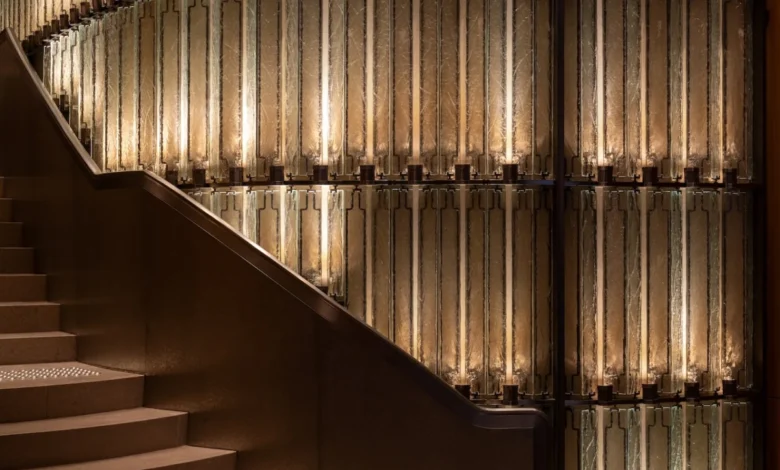
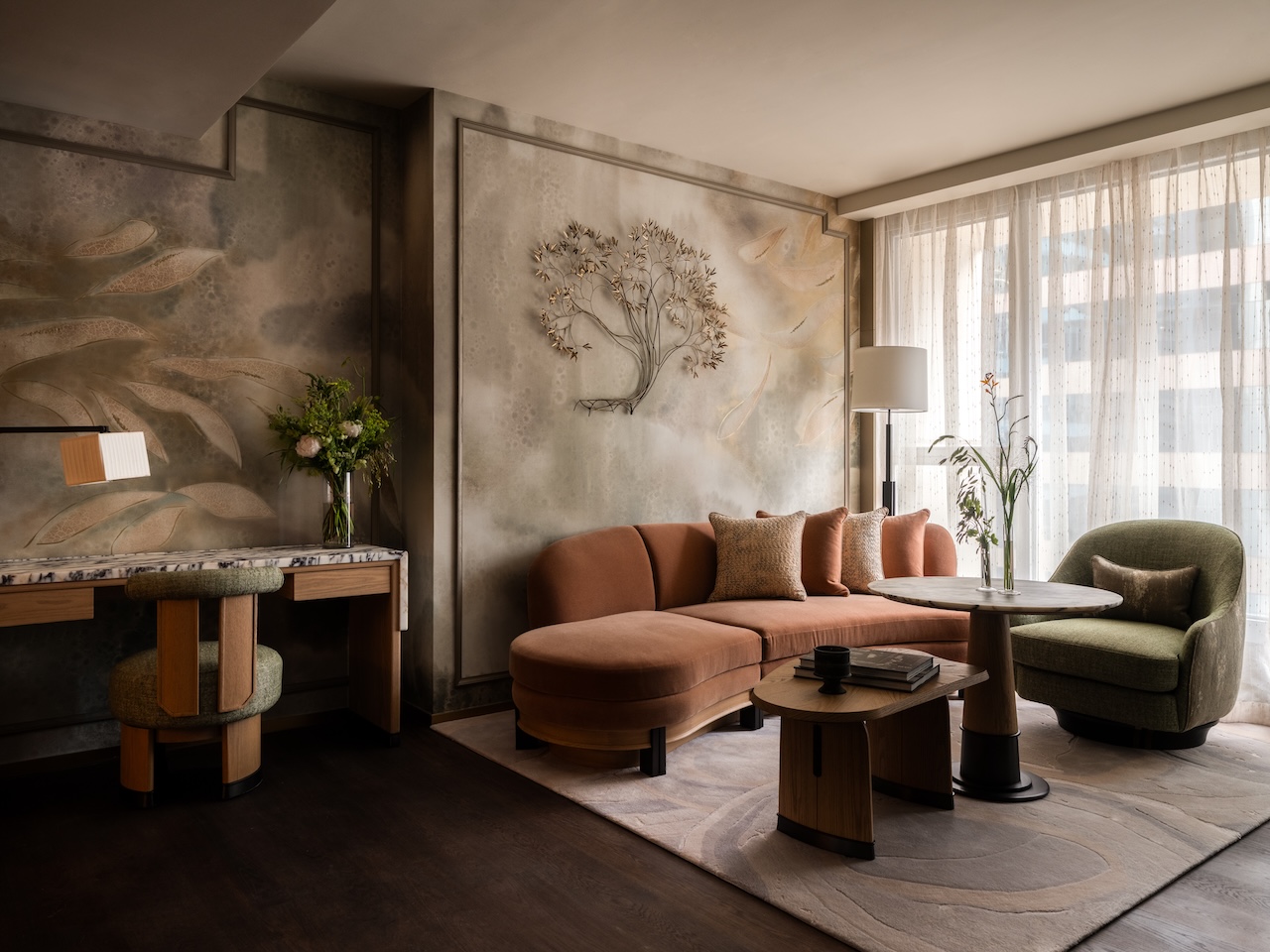
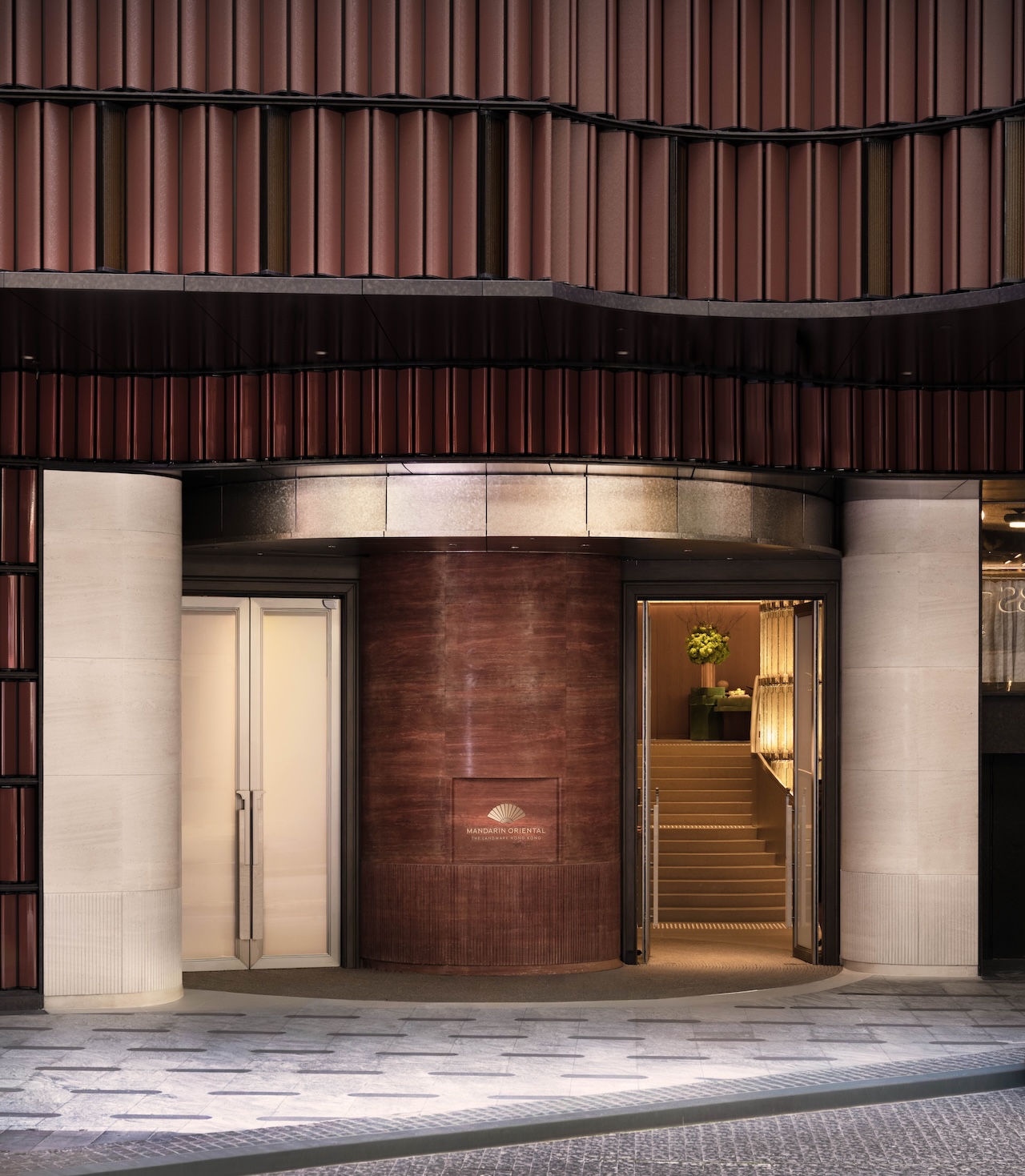
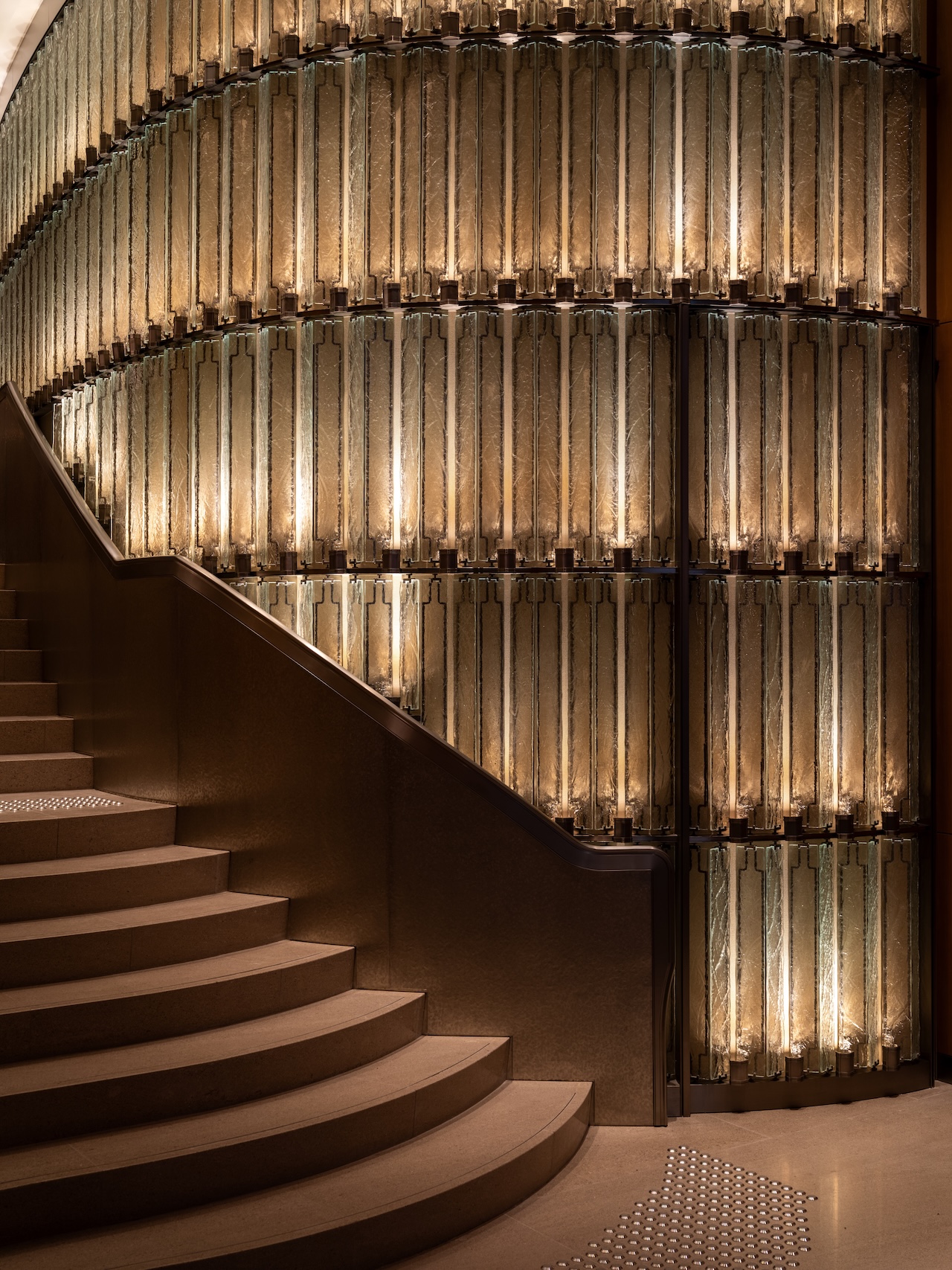
The color palette acts as a fundamental storytelling device, anchored by rich greens and warm oranges. These hues pay direct homage to Hong Kong’s dual character: the lush, subtropical gardens that punctuate the urban environment and the terracotta tones defining the city’s historic architecture. Upon entering the ground floor, guests are greeted by an arrival sequence that transitions from classic architectural gestures to contemporary detailing. The foyer features a harmonious mix of natural stone, warm timber, textured wallcoverings, and custom églomisé glass—reverse-painted glass panels that catch and refract light to create an immediate sense of quiet opulence.
Guiding guests through this arrival sequence is an undulating staircase accompanied by thoughtfully integrated artwork bays and sculptural plinths. These spatial devices are carefully scaled to mimic the grand entrance halls of private residences, establishing an intimate residential scale that counters the cavernous feel common in large urban hotels.
Weaving the City into the Fabric: Design Motifs and Materiality
One of the most striking achievements of the Joyce Wang Studio redesign is the subtle, pervasive integration of Hong Kong’s iconic skyline and urban fabric into the architectural details. Rather than relying on overt tourist clichés, the studio abstracted the city’s skyline into bespoke design motifs used across multiple mediums. Custom carpets, woven tapestries, and intricate églomisé glass installations feature abstract representations of the Hong Kong skyline, appearing in the main lobby, elevator banks, and guest room corridors.
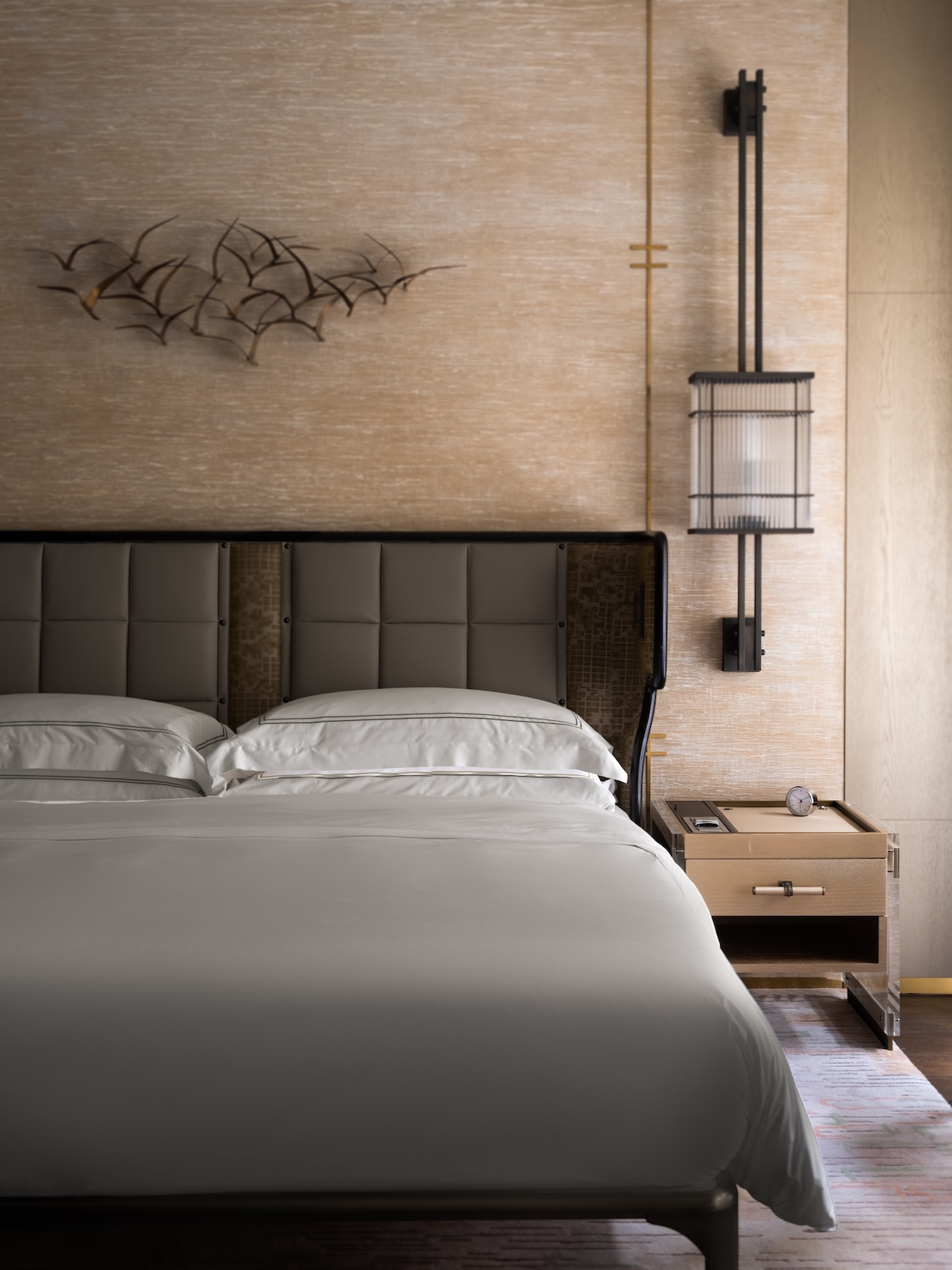
Within the 109 rooms and suites, the material narrative deepens. Custom-designed rugs draw their intricate geometric patterns directly from Hong Kong’s historic brickwork traditions. These textiles rest upon lightened timber flooring, establishing a bright, airy foundation that maximizes the natural light penetrating the high-rise windows. Walls are finished in a tactile cracked gesso, providing subtle texture that plays against luxurious Fromental wallcoverings incorporating delicate, hand-painted and silk elements.
The integration of art throughout the property was treated as a foundational pillar rather than an afterthought. According to Joyce Wang, the curatorial program was executed with strict intellectual rigor, ensuring every piece possesses an intentional backstory. The resulting collection brings together a diverse roster of emerging and established artists from both local and international backgrounds.
To further cement the concept of the hotel as a refined pied-à-terre, the rooms and public spaces are appointed with sculptural vases, artisanal vessels, and decorative objects. These elements were specifically chosen to emulate pieces accumulated organically over time within a private home, lending an authentic, lived-in patina to brand-new interiors.
Industry Context and Strategic Implications
The completion of Mandarin Oriental The Landmark’s second renovation arrives at a critical juncture for Hong Kong’s luxury hospitality sector. As international tourism rebounds and high-end travelers increasingly seek hyper-authentic, culturally resonant experiences, standardized luxury design is rapidly losing ground to narrative-driven interior architecture.
By pivoting away from the cosmopolitan anonymity that characterized much of luxury hotel design in the 2010s, Mandarin Oriental has positioned The Landmark as a cultural touchstone within Central’s hyper-competitive financial district. Industry analysts note that investments in deep, localized redesigns help properties command higher average daily rates (ADR) and secure stronger guest loyalty among affluent travelers who prioritize design pedigree and historical continuity.
Furthermore, the collaboration with Joyce Wang Studio underscores the value of long-term creative partnerships. By entrusting the second major renovation to the same studio that defined its predecessor, the hotel ensured a seamless evolution of its brand identity—honoring the past success of the property while boldly steering it toward a more deeply contextualized future.
Conclusion
The revitalization of Mandarin Oriental The Landmark Hong Kong by Joyce Wang Studio stands as a masterclass in modern hospitality renovation. By synthesizing the architectural history of colonial-era manors with the vibrant textures of contemporary Hong Kong, the design team has transformed a premier urban hotel into a sophisticated residential sanctuary. Through meticulous attention to material integrity, a rigorous art program, and a cohesive conceptual narrative, the property successfully bridges its storied past with the evolving expectations of global travelers, securing its status as an architectural and interior design landmark for years to come.