Beyond the Hero Shot: The Evolution of Casual Photography and the Rise of the Visual Series

The modern photographer often encounters a recurring professional and personal dilemma: how to reconcile the impulse to document a moment with the constraints of a non-photographic environment. Whether navigating a family vacation or moving between time-sensitive commitments, the ability to stop, adjust a tripod, and refine a composition is frequently absent. This reality has given rise to the "safety frame"—a series of rapid, handheld exposures taken in quick succession to ensure at least one usable image. However, these frames often lead to a subsequent period of decision fatigue during post-processing, where the photographer struggles to identify a single definitive image from a cluster of variations.
The Dynamics of Spontaneous Capture
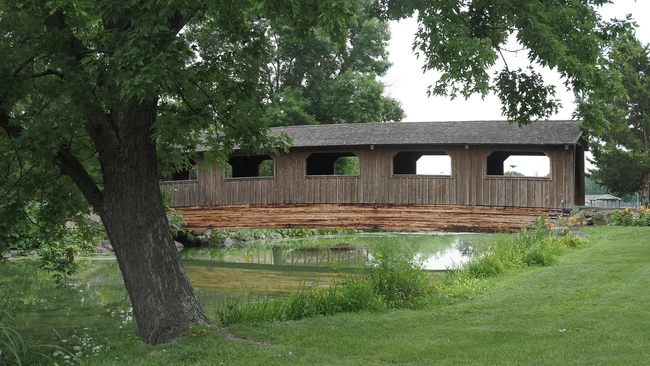
Field reports from amateur and professional photographers alike indicate that the pressure to capture a subject while in motion—such as walking through a city park or crossing a public structure—leads to a specific type of visual data collection. In scenarios where a photographer is accompanied by family or professional associates, the window for composition is typically reduced to seconds.
Data from recent photographic surveys suggest that hobbyist photographers are increasingly moving away from the "single-shot" mentality. Instead, they are adopting a technique of rapid-fire exposure, often capturing four to six frames of a single subject from varying perspectives. While this practice provides an insurance policy against technical failures like motion blur or missed focus, it introduces a logistical challenge: the accumulation of near-identical files in software catalogs such as Adobe Lightroom or Capture One.
The Paradox of Choice in Digital Culling
The transition from the field to the digital darkroom is where the "paradox of choice" becomes most apparent. When a photographer returns from an outing with multiple iterations of the same subject, the act of culling often shifts from an artistic exercise to an analytical one. Industry experts note that photographers frequently default to technical scrutiny—zooming to 100% to evaluate sharpness, chromatic aberration, or edge-to-edge clarity—rather than evaluating the emotive quality of the images.
This analytical process can lead to "analysis paralysis," a state where the photographer finds none of the frames sufficient to serve as a solitary "hero shot." This often results in either the abandonment of the images entirely or the over-processing of multiple variations, both of which can lead to a sense of creative fatigue.
Transitioning to the Visual Study
A shift in methodology is currently gaining traction among visual storytellers: the abandonment of the "hero shot" in favor of the "visual study." By treating these rapid-fire images as a cohesive set rather than a collection of candidates for elimination, photographers are finding new avenues for creative expression.
This approach encourages the viewer to understand the subject through its various facets—a wide context shot, a close-up detail, a low-angle perspective, and a candid observation. In this framework, the success of a photograph is no longer measured by its singular perfection but by its contribution to the narrative of the series. If a specific frame fails to align with the sequence, it is discarded, not because it is technically flawed, but because it is contextually redundant.
The Neuroscience of Intuitive Photography
The act of shooting on the move provides a unique window into a photographer’s subconscious visual baseline. When time constraints prevent the application of formal rules—such as the Rule of Thirds, the Golden Ratio, or deliberate lighting adjustments—the photographer is forced to rely on muscle memory and raw intuition.
According to behavioral analysis within the arts, these "uncalculated" frames reveal an individual’s true visual preferences. When the analytical brain is bypassed, the photographer’s inherent tendencies emerge: the inclination toward wide-angle environmental storytelling versus the preference for tight, geometric abstractions. Consequently, these quick frames serve as a more honest reflection of a photographer’s style than their highly curated, deliberate portfolio work.
Implications for Modern Workflow
For the modern creative, the implication is clear: the workflow must evolve to accommodate the spontaneity of the modern lifestyle. Instead of viewing the "safety frame" as a failure of planning, it should be viewed as a primary tool for environmental documentation.
Industry analysis suggests that the future of digital asset management will continue to emphasize organizational structures that support serial photography. Software developers are increasingly looking at ways to group images automatically based on proximity and time-stamping, allowing users to evaluate groups of photos as a single project rather than an individual file-by-file basis.
Historical Context and Technical Shifts
The evolution of this practice is intrinsically linked to the history of mobile photography. In the early 20th century, the introduction of the Leica 35mm camera revolutionized street photography by allowing photographers like Henri Cartier-Bresson to capture the "decisive moment." Unlike the large-format studio cameras of the era, which required extensive setup, the portable rangefinder encouraged movement and series-based shooting.
Today, the proliferation of high-performance mirrorless cameras and smartphones has accelerated this evolution. With continuous shooting modes capable of capturing 20 to 30 frames per second, the "safety frame" has expanded from a few shots into a massive data stream. The challenge for the contemporary photographer is not the lack of content, but the mastery of the selection process.
Professional Perspectives on Culling
Leading editors in the photography industry emphasize that the ability to edit—to curate a series—is perhaps the most vital skill a photographer can possess. A common recommendation is to set a strict time limit for the initial review phase. By forcing a decision within a constrained timeframe, the photographer is more likely to rely on gut instinct rather than technical obsession.
"The goal," notes a prominent photography educator, "is to move from being a collector of files to a curator of experiences." When a photographer stops searching for the ‘perfect’ frame and starts looking for the ‘connected’ frame, the result is a more authentic and impactful body of work.
Conclusion: Embracing the Collective Image
The move toward treating spontaneous, on-the-move photography as a series rather than a hunt for a single winner offers several benefits:
- Reduced Cognitive Load: By focusing on the series, the photographer removes the pressure of selecting the ‘best’ individual image.
- Enhanced Storytelling: Multiple perspectives provide a more holistic view of the subject, creating a richer narrative than a single, static image.
- Self-Discovery: These images provide an unfiltered look at the photographer’s natural inclinations and visual style.
As the pace of modern life continues to dictate the terms of our creative output, the ability to adapt and find meaning in the "hurried" shot becomes an essential skill. By reframing these moments as intentional studies, photographers can turn the potential for disappointment into an opportunity for growth and genuine visual documentation. The next time you find yourself with only seconds to spare, remember that the goal is not to capture the perfect frame, but to capture the experience in a way that allows the photos to converse with one another long after the walk is over.