The Monumental Fluidity of Paper: Korean-Born Artist Jae Ko Makes Her Belgian Solo Exhibition Debut in Antwerp

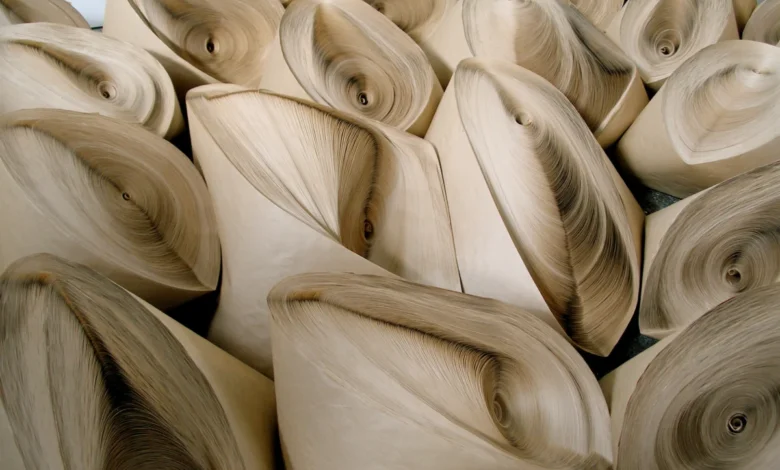
At first glance, the saturated spirals of blue, magenta, and emerald green that populate Jae Ko’s latest sculptures appear to be carved from dense timber, shaped from heavy clay, or weathered out of stone. Yet, upon closer inspection, the material underwriting these intricate forms is remarkably ordinary: paper. For more than four decades, Korean-born artist Jae Ko has challenged the perceived limitations of everyday paper products, elevating discarded office supplies, adding machine rolls, and recycled kraft paper into monumental, highly textured works of art.
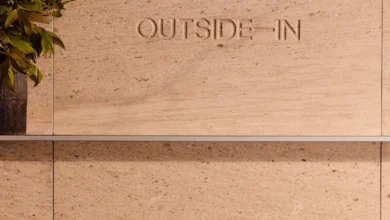
This lifelong exploration is currently on full display in Striated, Ko’s landmark solo exhibition at the 22MUSE Gallery in Antwerp, Belgium. Running through November 28, 2026, the exhibition marks a significant milestone in the artist’s career, serving as her first-ever solo presentation in Belgium. Bringing together a curated selection of formative pieces from her extensive archive alongside a sprawling, site-specific installation crafted explicitly for the Antwerp venue, Striated offers international audiences a profound look at an artist who treats paper not as a fragile medium, but as a vehicle for architectural weight and geological scale.

Main Facts and Exhibition Overview
Striated occupies the sunlit rooms of 22MUSE Gallery, presenting a comprehensive survey of Ko’s sculptural methodology. The exhibition’s title directly references the fine parallel lines, grooves, and striations that characterize the artist’s physical manipulation of paper rolls. By gathering works that span decades of production, the gallery highlights Ko’s unique ability to transform industrial and consumer paper waste into organic, fluid structures.
The centerpiece of the exhibition is a newly commissioned, site-specific installation designed to interact directly with the architectural framework of the Antwerp gallery. Surrounding this new creation are wall-mounted sculptures and floor-bound clusters that showcase Ko’s mastery over color and form. Utilizing traditional Japanese sumi ink—derived from soot—alongside vibrant, highly saturated synthetic pigments, Ko introduces a rich palette of deep blues, fiery reds, sunny yellows, and tranquil violets.
Despite the ephemeral nature of the base material, the resulting sculptures possess an undeniable physical presence. The accumulation of thousands of individual layers grants the works a visual and actual weight that completely subverts expectations, forcing viewers to reconsider the structural integrity of paper when subjected to intense pressure, repetition, and time.

Chronology and Artistic Evolution
Ko’s artistic trajectory is deeply rooted in a cross-cultural upbringing and a nomadic professional life that has spanned multiple continents. Born in Seoul, South Korea, Ko initially developed her foundational artistic skills in her home country before relocating to Japan to pursue further studies. Immersed in Asian artistic traditions—including the meticulous discipline required for sumi-e and calligraphy—she developed an early appreciation for the expressive qualities of ink and paper.
In the later stages of her career, Ko moved to the United States, ultimately establishing her studio on Maryland’s Eastern Shore. This geographic transition played a crucial role in shaping her sculptural language. The dense, fast-paced urban environments of Seoul and her early life contrasted sharply with the sweeping marshlands, coastal winds, and organic rhythms of the American Eastern seaboard.
Over a career spanning more than 40 years, Ko’s process evolved from simple experimentation with discarded office supplies into a rigorous, physically demanding sculptural practice. Throughout the 1990s and 2000s, her reputation grew through institutional exhibitions across the United States, including major presentations at the American University Museum in Washington, D.C., and prominent permanent or semi-permanent installations in corporate and civic spaces, such as major technology headquarters and legal institutions. The 2026 exhibition at 22MUSE Gallery represents the culmination of this four-decade evolution, introducing her transatlantic body of work to the European contemporary art market on a solo platform for the first time.

Methodological Process: The Interplay of Labor and Nature
The creation of a Jae Ko sculpture is a masterclass in endurance, patience, and material transformation. The process begins with industrial, unspooled rolls of adding machine paper or kraft paper. Rather than casting or carving in the traditional sense, Ko engages in a deeply physical dialogue with the material. She uncoils, twists, rolls, folds, stacks, and compresses the paper by hand and through mechanical pressure.
Depending on the desired aesthetic and structural outcome, Ko subjects the paper to various environmental and chemical treatments. Some pieces are submerged in vats of sumi ink, absorbing the dark, rich liquid unevenly to create shadowy gradients. Others are treated with vivid modern dyes. In certain experimental phases, Ko has even buried her paper sculptures in the earth, allowing natural moisture, soil acidity, and microorganisms to organically weather and sculpt the material.
This reliance on natural forces reflects Ko’s broader conceptual framework. While her sculptures rarely mimic specific plants or geographical locations, they serve as metaphors for the slow, relentless geological and biological forces that shape the natural world. Concepts such as erosion, seismic shifting, tectonic pressure, organic growth, and tidal accumulation are rendered visible through the undulating ridges of her paper stacks.

Art historians and critics frequently draw parallels between Ko’s work and ancient natural formations. The concentric rings visible in her tightly coiled spirals evoke the cross-sections of centuries-old trees, while her expansive, flowing wall installations mirror the strata of sedimentary rock or glacial ice sheets. Furthermore, Ko has frequently cited the bristlecone pine trees of the American West—ancient conifers whose trunks are perpetually twisted and stripped by harsh winds—as a profound conceptual influence on her work’s dynamic tension between fragility and resilience.
Supporting Data and Market Context
The contemporary art market for sustainable, material-focused sculpture has experienced steady growth over the past decade, driven by institutional and collector interest in ecologically conscious practices. By utilizing discarded office supplies and recycled paper, Ko’s work naturally aligns with broader discussions surrounding sustainability and the circular economy in contemporary art.
Galleries and institutions increasingly value artists who can bridge the gap between traditional craftsmanship and conceptual rigor. 22MUSE Gallery’s decision to host Striated underscores the rising European demand for mid-career and veteran international artists whose practices transcend regional boundaries. While primary market pricing for monumental paper sculptures involves complex considerations regarding conservation, structural stability, and display conditions, works of Ko’s caliber have historically found homes in prominent private collections, corporate art programs, and university museums across North America. Her expansion into the Belgian gallery circuit signifies an important bridge toward broader European institutional acquisition.

Broader Impact and Implications
The presentation of Striated in Antwerp carries broader implications for how contemporary sculpture engages with materiality in the digital age. In an era dominated by synthetic plastics, 3D printing, and digital fabrication, Ko’s heavy reliance on analog, highly tactile labor offers a counter-narrative. The visible presence of every fold, crease, and compressed edge serves as an unvarnished record of human time and physical exertion.
Furthermore, the exhibition challenges traditional hierarchies of sculptural mediums. By proving that humble, disposable office paper can be engineered to withstand gravity, project monumental volume, and endure for decades, Ko redefines what constitutes a "permanent" art material. The tension she creates between the inherent fragility of paper and the unyielding durability of her compressed forms serves as a poignant reminder of the strength found in accumulation and unity.
As Striated continues its run at 22MUSE Gallery through November 28, 2026, it offers both seasoned collectors and casual gallery-goers a rare opportunity to witness the synthesis of Eastern aesthetic traditions, Western environmental influences, and uncompromising physical dedication. Through her meditative manipulation of paper, Jae Ko continues to map the invisible forces of time, ensuring that the quiet debris of daily commerce is elevated into a timeless geological monument.