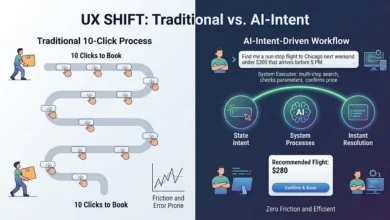
Digital Transformation Lessons: Why Organizations Are Still Failing the AI Adoption Test

The current surge in Artificial Intelligence (AI) adoption across global enterprises mirrors the chaotic, top-down implementation patterns seen during the digital transformation boom of the 2010s. Research from consultancy firms, including McKinsey and Gartner, consistently indicates that despite massive capital investment in AI tools—ranging from generative language models to automated workflow suites—productivity gains remain elusive for many organizations. Industry experts argue that the failure to achieve expected ROI is rarely a result of technological limitations, but rather a profound misunderstanding of the human and cultural components inherent in organizational change.
A Decade of Déjà Vu: The Digital Transformation Precedent
To understand the current friction in AI deployment, one must look back at the "Digital Adaptation" era of 2014. During that period, organizations rushed to implement Content Management Systems (CMS), Customer Relationship Management (CRM) platforms, and internal intranets. The prevailing corporate mindset was that digitizing internal processes would automatically result in improved operational efficiency.
Data from the Project Management Institute (PMI) at the time suggested that over 70% of digital transformation initiatives failed to meet their stated objectives. The primary culprit was a "technology-first" philosophy, where IT departments selected software based on vendor promises rather than employee usability or customer needs. Today, that cycle is repeating. Instead of CRM rollouts, the focus has shifted to Copilot Studio licenses and enterprise-grade generative AI, yet the strategy remains identical: centralized procurement, minimal role-specific training, and the expectation that employees will seamlessly integrate these complex tools into their daily workflows.
The Human Capital Gap: Why Productivity Isn’t Enough
The disconnect between management’s expectations and staff behavior is rooted in a fundamental misalignment of incentives. Senior management often views AI as a lever for efficiency—a way to force "more work into the same eight-hour day." For the average employee, however, AI adoption presents an existential risk rather than a productivity boost.
According to a 2023 report by the World Economic Forum on the Future of Jobs, nearly 75% of companies surveyed intend to adopt AI technologies, with many acknowledging that this will lead to a displacement of traditional roles. When staff members view a new tool as a precursor to their own obsolescence, their motivation to master that tool is effectively neutralized.
Moreover, procedural knowledge—the deep, nuanced expertise employees build over years of practice—cannot be replaced by a chatbot overnight. Forcing staff to abandon proven workflows in favor of AI without providing adequate time to experiment or fail leads to "performative adoption," where employees log into the tools to satisfy management but rely on traditional, slower methods to actually complete their work.
The Rise of Shadow AI and Security Implications
The history of corporate IT is littered with the rise of "Shadow IT"—the practice of employees using unauthorized software (like Dropbox or Google Docs in the early 2010s) to bypass restrictive, inefficient company systems. Today, this has evolved into "Shadow AI."
When official corporate tools are too restrictive, overly governed, or simply ineffective for specific niche tasks, employees are increasingly turning to personal accounts on platforms like OpenAI’s ChatGPT or Anthropic’s Claude. A survey conducted by Blackberry in 2023 found that over 75% of organizations have considered or implemented bans on generative AI tools due to data privacy concerns. Yet, these bans are often counterproductive. By driving the usage underground, organizations lose visibility into where proprietary data is being uploaded, creating a significantly higher security risk than if they had provided secure, sanctioned pathways for experimentation.
Creating a Culture of Safe Experimentation
The transition to an AI-augmented workplace requires a shift from a culture of compliance to one of "safe failure." In many current corporate environments, KPIs are rigid, and errors are penalized, which is antithetical to the trial-and-error nature of learning new technologies.

Industry analysts suggest that the most successful organizations are those that treat AI adoption as a change-management project. This involves three distinct pillars:
- Peer-Led Adoption: Rather than relying on top-down memos or generic training seminars, organizations should identify internal "AI enthusiasts"—employees who have already begun experimenting with AI on their own initiative. By formalizing these pockets of innovation and allowing these employees to demonstrate practical, role-specific successes to their peers, organizations generate organic, "social proof-based" adoption.
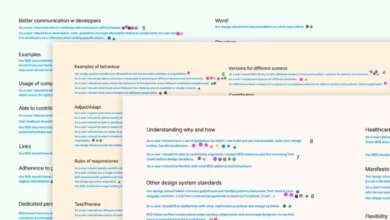
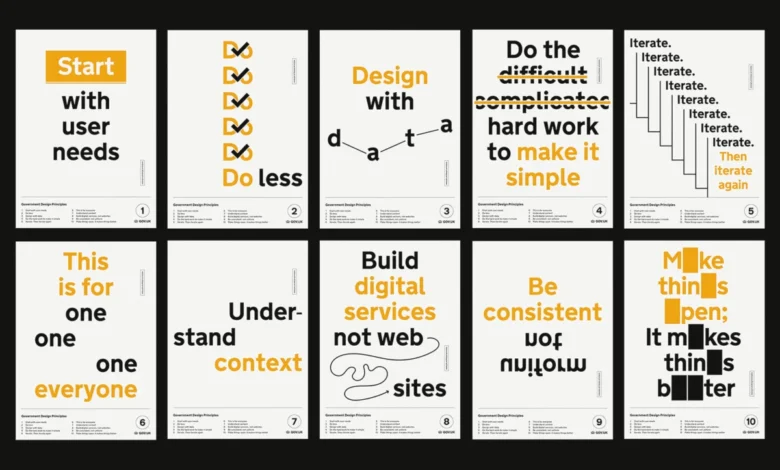
- Adaptive Governance: Instead of voluminous, prohibitive policy documents, companies should adopt simple, principle-based guidelines. These frameworks, similar to the UK government’s digital design standards, empower staff to use their professional judgment rather than paralyzing them with fear of disciplinary action for minor, non-malicious errors.
- Incentivized Upskilling: Organizations must pivot the narrative from "doing more with less" to "doing higher-value work." By explicitly linking AI proficiency to career advancement and professional development, companies can turn a perceived threat into a career opportunity.
Economic and Strategic Implications
The long-term economic implications of these adoption strategies are significant. Companies that fail to integrate AI into their culture risk a two-fold decline: they lose the competitive advantage that AI could provide, and they experience a brain drain as top talent leaves for organizations that offer a more progressive, AI-literate environment.
Analysis from the Boston Consulting Group (BCG) suggests that while AI adoption can increase task efficiency by up to 40% in certain sectors, these gains are only realized when the workforce is adequately supported. The "hidden costs" of poor implementation—decreased employee morale, the security risks of Shadow AI, and the wasted capital on unused software licenses—often outweigh the initial cost of the technology itself.
Conclusion: Moving Beyond the Hype
The narrative surrounding AI must move away from the technological "farce" of mass, blind deployment. The lessons from the digital transformation era are clear: technology is merely the substrate upon which organizational change is built.
To succeed in the current era, leadership must prioritize the human experience. This means acknowledging the fear of displacement, providing the necessary time for employees to unlearn old habits and learn new ones, and creating a safe environment where experimentation is encouraged rather than feared. As the technology continues to mature, the gap between organizations that successfully navigate these human hurdles and those that continue to view AI as a simple "plug-and-play" solution will only widen, ultimately defining the leaders and laggards of the next decade.