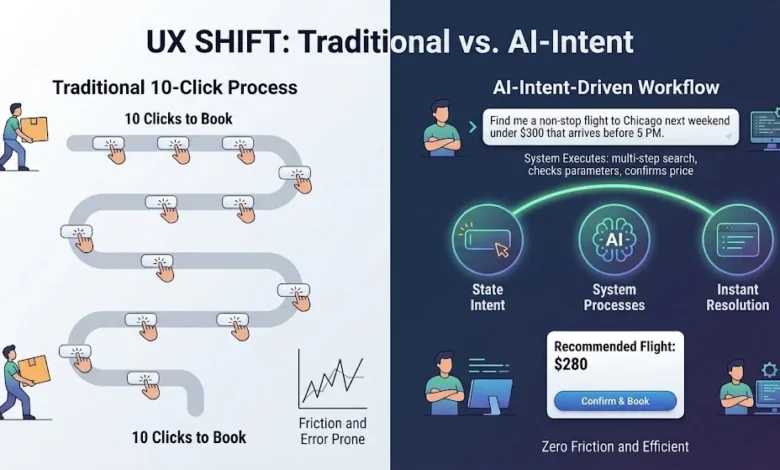
For decades, the digital landscape has been defined by the point-and-click paradigm, a rigid structure of menus, forms, and navigation paths that forced users to adapt to the machine’s logic rather than the other way around. Today, that contract is undergoing a fundamental transformation as artificial intelligence shifts the focus from manual interaction to intent-driven design. This evolution represents a departure from the traditional Graphical User Interface (GUI), which has dominated software development since the advent of the Xerox Star and the Apple Macintosh, toward a model where systems anticipate human goals and execute the necessary labor in the background.
The shift toward "no-interface" design, a concept popularized by practitioners like Golden Krishna, suggests that the ultimate goal of modern web development is to minimize the friction between a user’s objective and the desired outcome. As large language models (LLMs) and autonomous agents become more sophisticated, the web is transitioning from a series of static pages to a dynamic, intent-aware environment.

A Chronology of Interface Evolution
The history of software interaction is marked by distinct eras of increasing abstraction. In the 1970s and 80s, the introduction of the GUI revolutionized computing by replacing text-based command lines with visual metaphors. This "point-and-click" era, which peaked in the early 2000s with the expansion of the commercial web, required users to navigate complex hierarchies of menus and multi-step forms to complete even simple tasks.
By the 2010s, the industry began to prioritize "mobile-first" and "responsive" design to address the limitations of smaller screens. However, the fundamental paradigm remained the same: users were expected to orchestrate the software, providing the inputs, monitoring the progress, and verifying the outputs.
The current transition began in earnest around 2022–2023, catalyzed by the mass adoption of generative AI. This period marked the emergence of "chat-first" interfaces and proactive search engines. Today, we are witnessing the third phase: the rise of Generative UI, where the interface itself is rendered on-the-fly based on the specific context of the user’s request.
The Friction of the Traditional Web
To appreciate the significance of this shift, one must examine the inefficiencies of the legacy model. A standard consumer workflow, such as booking a flight, serves as a prime example of high-friction interaction. Historically, this process involved navigating a dozen screens, managing filter sliders, interpreting raw data tables, and reconciling disparate search results across multiple browser tabs.
Recent industry data suggests that this manual orchestration is becoming a significant productivity bottleneck. According to internal research from various productivity-focused software firms, the average professional spends up to 30% of their digital workday navigating interfaces—inputting data, managing window management, and handling repetitive clicks—rather than performing the creative or analytical tasks they initially set out to accomplish. This "administrative tax" on digital labor is exactly what intent-driven design aims to abolish.
Pillars of the New Paradigm
The transition to intent-driven design is supported by three technological and philosophical pillars that are currently being integrated into modern web platforms.
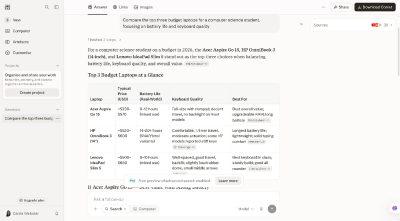
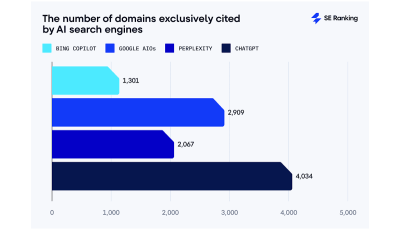
First is the shift to High-Level Goal Specification. Instead of requiring a user to define the parameters of a task through granular inputs, modern AI-driven platforms accept natural language objectives. Systems like Perplexity AI exemplify this, by synthesizing information from across the web into a single, cohesive answer, effectively eliminating the need for a user to open multiple tabs or evaluate dozens of search results manually.
Second is the implementation of Generative UI. Traditional web architecture relies on static layouts designed by human teams. In contrast, platforms such as Vercel’s v0 demonstrate how interfaces can be created in real-time. If a user expresses a need for a complex financial calculation, the system does not simply provide a link to a calculator; it renders a functional, context-specific widget directly within the interface. Once the task is finished, the widget disappears, keeping the workspace uncluttered.
Third is the move toward Autonomous Agent Execution. Modern UX design is shifting away from "prevention-based" safety measures—such as constant pop-up warnings—toward "recovery-based" design. Because AI agents handle the backend execution, designers are prioritizing frictionless "undo" features and transparent audit logs. This allows users to retain control while delegating the repetitive, error-prone aspects of the workflow to the machine.
Industry Perspectives and Ethical Considerations
The shift toward AI-mediated interaction has not gone unnoticed by major design institutions. The Nielsen Norman Group has published extensive research on the "AI Paradigm," noting that the transition from command-based interaction to outcome-specification requires a new set of usability heuristics.
However, this transition introduces significant risks. The "black box" problem remains a primary concern for designers and engineers. When a system makes decisions on behalf of the user, the lack of transparency can lead to confusion. If a user receives an unexpected result, they often lack the diagnostic tools to understand why the AI reached its conclusion. Organizations like Google, through their PAIR (People + AI Research) initiative, have advocated for mandatory feedback loops, where systems must explicitly state the interpretation of the user’s goal before executing the action.
Furthermore, the Stanford Human-Computer Interaction Group has warned of the "illusion of control." There is a fine line between helpful automation and invasive, patronizing software. The Center for Humane Technology has also emphasized the need for "responsible defaults," urging designers to ensure that high-stakes actions—such as financial transactions or data privacy changes—always remain under human oversight, even in an era of autonomous agents.
The Broader Economic Impact
The move toward intent-driven design represents a fundamental change in how digital value is measured. For decades, the industry standard for success was "engagement," typically measured by time spent on a page, click-through rates, and session length. Websites were intentionally engineered to maximize these metrics, often at the expense of user efficiency.
The new philosophy, aligned with the "Time Well Spent" movement, reverses these metrics. The primary measure of success for a digital tool is now its ability to facilitate "seamless, invisible completion." A platform that solves a user’s problem in one second is now objectively more valuable than one that keeps the user engaged for ten minutes of manual navigation.
Future Implications for UX Design
For UX designers, this shift necessitates a change in professional focus. The role is moving away from the static construction of buttons, forms, and navigation bars toward the orchestration of AI experiences. Designers must now become architects of intent, mapping out how systems interpret human goals and ensuring that generative components remain consistent, accessible, and ethical.
As we look toward the future, the integration of ambient computing and contextual awareness will likely push this trend further. Systems will become increasingly proactive, utilizing device metadata and historical interaction patterns to trigger actions before a user even explicitly states a goal.
The death of the button, therefore, is not the death of design. Rather, it is the birth of a more sophisticated craft—one where the highest achievement is not the creation of a stunning interface, but the design of a system so intuitive and effective that it becomes entirely invisible to the user. The web of the future will not be measured by the beauty of its architecture, but by the efficiency with which it disappears.