Bvlgari Brings Monumental Serpenti Public Art Installation to New York City High Line

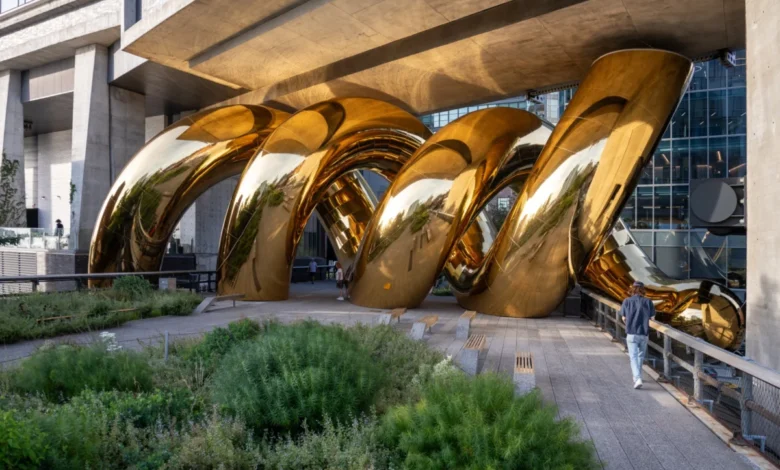
For nearly a century, the iconic Bvlgari serpent has served as a hallmark of luxury design, winding its way around the wrists, fingers, and necks of high-society patrons and global style icons. Today, that legendary motif is breaking free from the confines of traditional jewelry boxes and scaling up to monumental proportions. Beginning September 10, the Roman luxury house has transformed a stretch of the New York City landscape with its latest cultural endeavor, marking a significant milestone for the brand in the United States.
Opening to the public along the iconic elevated park known as the High Line, auruBOROS – Urban Memory and Collective Dream stands as Bvlgari’s very first public art installation in the United States. Commissioned under the umbrella of the house’s expansive and ongoing Serpenti Infinito project, the temporary exhibition represents a bold fusion of high-end jewelry heritage, contemporary architecture, and urban placemaking. The ambitious work was conceived and executed by Berlin-based multidisciplinary artists Marco Canevacci and Yena Young of Plastique Fantastique, a creative group celebrated worldwide for pushing the boundaries of spatial design through inflatable pneumatic structures.
The Genesis and Architectural Concept of auruBOROS
Plastique Fantastique is renowned for its site-specific, air-driven installations that temporarily alter existing architectural environments, introducing surreal, immersive elements into everyday urban spaces. For this collaboration, Canevacci and Young drew inspiration from the ancient, mythological symbol of the ouroboros—the cyclical serpent devouring its own tail. However, rather than preserving the closed, eternal loop of the traditional symbol, the artists deliberately chose to fracture the geometry.
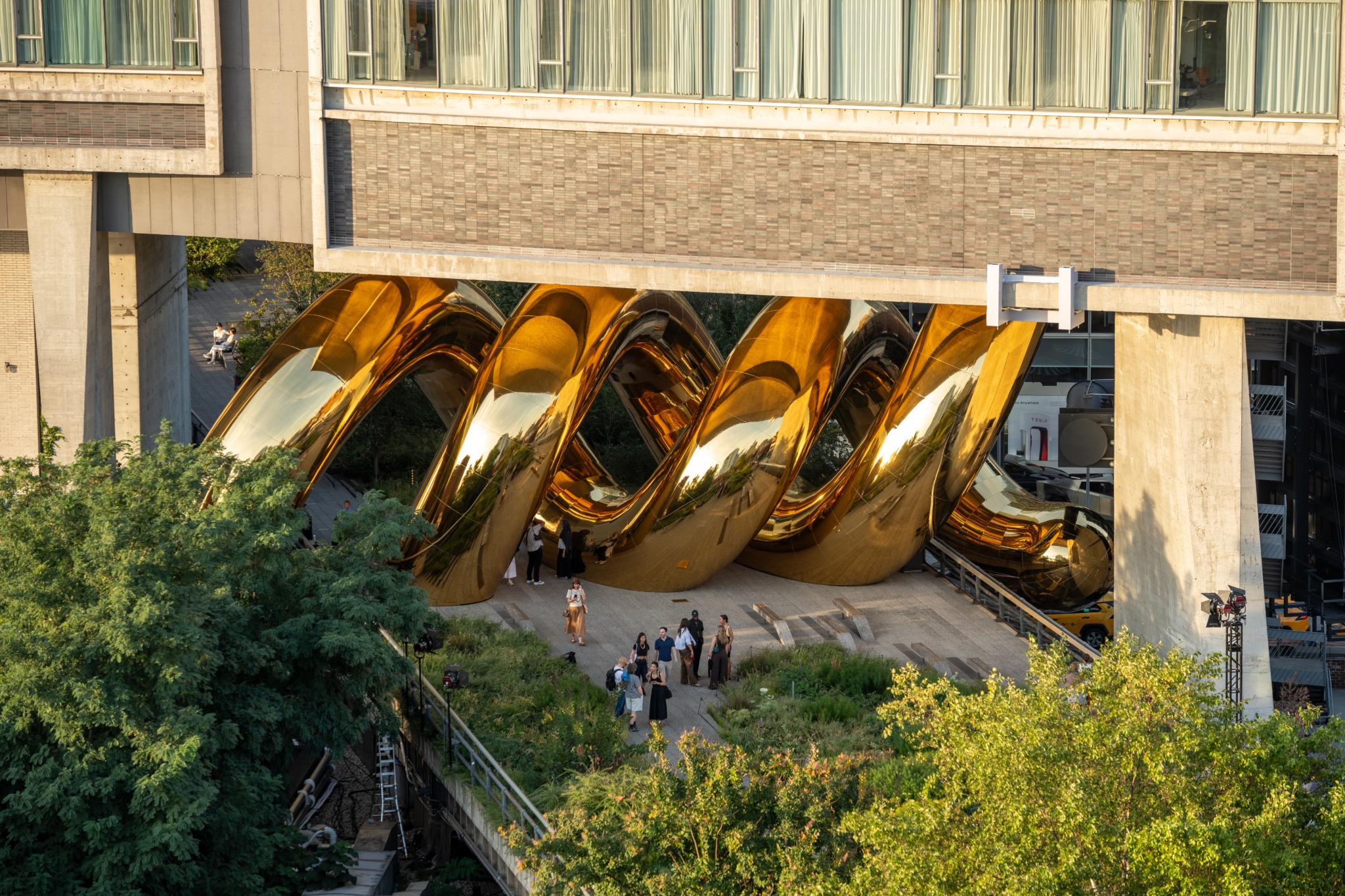
By opening the loop, the conceptual serpent is permitted to slither directly into the architectural fabric of New York City. The installation manifests as an array of colossal golden coils that appear to burst forth from beneath the structure of The Standard hotel before undulating seamlessly into the verdant, elevated linear park of the High Line. The resulting visual experience occupies a fascinating liminal space between sculpture and built architecture, introducing a gleaming, extraterrestrial-like artifact into the familiar, post-industrial infrastructure of Manhattan’s Meatpacking District.
According to the creators, the physical properties of the installation are entirely bound to its environment. The brilliant, mirror-like gold finish of the pneumatic structure acts as a dynamic canvas. Throughout the day, the sculpture absorbs and reflects its surroundings—capturing towering brick facades, lush native vegetation, passing pedestrians, shifting weather patterns, and the ever-changing Manhattan sky. Consequently, no two viewing experiences are identical, as the artwork evolves organically with the rhythm of the city.
A Masterclass in Ephemeral Engineering
Despite its commanding visual presence and the illusion of solid, precious metal, the entire structural integrity of auruBOROS relies on air. Built using lightweight, flexible materials pressurized to maintain its monumental shape, the installation subverts conventional expectations of permanence associated with both luxury jewelry and civic monuments.
This deliberate contradiction was central to the artistic vision of Canevacci and Young. While the gold aesthetic evokes the timeless, enduring value of fine jewelry, the object itself is inherently fragile, transient, and light. Emphasizing this fleeting nature, the monumental serpent is scheduled to remain on the High Line for a strictly limited engagement of just eleven days, operating from September 10 through September 20 at Little West 12th Street.

The temporary nature of the installation underscores a broader contemporary trend within luxury brand marketing and cultural patronage: the embrace of experiential, ephemeral art. By trading permanent store displays for short-term public spectacles, heritage brands are increasingly positioning themselves as patrons of public art, offering immersive cultural touchpoints that resonate with modern consumers who value experiences over static product presentations.
Chronology and Event Timeline
The rollout of the auruBOROS installation and its accompanying product lines follows a carefully orchestrated timeline designed to maximize cultural impact and media engagement during New York Fashion Week:
- September 8–9, 2026: Private media previews, architectural photography sessions, and VIP walkthroughs take place on the High Line, generating early digital buzz across design and fashion publications.
- September 10, 2026: The public installation officially opens to New York City residents and international tourists at Little West 12th Street.
- September 10–20, 2026: The eleven-day public exhibition window during which visitors can experience the shifting reflections of the gold pneumatic structure against the backdrop of the High Line and The Standard hotel.
- Mid-September 2026: Concurrent with the art installation, Bvlgari debuts a curated collection of three new Serpenti Tubogas high-jewelry pieces and an exclusive minaudière at select boutiques, drawing direct inspiration from the city’s rich artistic history.
- September 20, 2026: The auruBOROS installation closes, with the pneumatic structure deflated and removed, leaving only digital archives and collective urban memories in its wake.
Official Statements and Brand Strategy
The Serpenti Infinito project represents an ongoing global initiative by Bvlgari to explore the multifaceted cultural and artistic interpretations of its most famous motif. By partnering with avant-garde artists like those at Plastique Fantastique, the brand bridges the gap between centuries-old goldsmithing traditions and cutting-edge contemporary design.
While Bvlgari executives have emphasized the cultural motivations behind the commission—framing the installation as a gift to the city of New York and a meditation on collective urban memory—industry analysts note the powerful commercial synergy at play. The timing of the exhibition coincides with one of the city’s busiest cultural and fashion weeks, ensuring maximum foot traffic and global media impressions.

Furthermore, the simultaneous release of targeted product lines—specifically the three new Serpenti Tubogas iterations and the New York-inspired minaudière—creates a direct pipeline from public cultural engagement to retail conversion. Consumers captivated by the monumental serpent on the High Line are naturally channeled toward select boutiques to experience the house’s wearable artistry.
Broader Impact and Implications for Public Art in Urban Spaces
The integration of corporate sponsorship into public park infrastructure is a well-established practice in major metropolitan areas, yet collaborations of this specific architectural scale remain relatively rare. The High Line, managed by Friends of the High Line in partnership with the New York City Department of Parks & Recreation, has long served as an open-air gallery for contemporary art, hosting a rotating roster of sculptures, murals, and performances.
However, the arrival of auruBOROS introduces a unique dialogue between commercial luxury heritage and public civic space. Critics and urban planners observe that such installations can breathe new life into familiar pathways, encouraging pedestrians to pause, interact with their environment, and reconsider the architecture they navigate daily. By utilizing pneumatic technology, the artists also minimized the physical and environmental footprint typically associated with the installation and removal of heavy public art, pointing toward more sustainable, lightweight methodologies for future urban exhibitions.
As urban centers increasingly seek ways to revitalize public spaces post-pandemic, temporary, immersive art installations that blend architecture, sculpture, and brand storytelling are likely to become more prevalent. Bvlgari’s venture onto the High Line demonstrates that the boundaries between corporate patronage, contemporary art, and public civic engagement are increasingly porous—offering a blueprint for how luxury heritage houses can leave a monumental, if fleeting, mark on the modern global city.