Price Latimer and the Evolution of Sustainable Design From Amarillo Museum of Art to Alkemis Paints Crystalline Innovations


The trajectory of Price Latimer’s career offers a compelling study in how early exposure to fine art can catalyze a lifelong commitment to aesthetic rigor and environmental stewardship. As the co-founder of Alkemis Paint, Latimer has transitioned from a student of the avant-garde to an entrepreneur reshaping the interior design industry through the lens of sustainability and mineral science. Her journey, which began in the Texas Panhandle and traversed the high-stakes art worlds of New York and Los Angeles, culminates in a business model that treats wall pigment not merely as a decorative choice, but as a critical intersection of health, ecology, and artistic expression.
Foundations in Amarillo and Academic Development
Latimer’s aesthetic sensibilities were forged in Amarillo, Texas, a city perhaps best known for its proximity to the rugged beauty of the Palo Duro Canyon. Growing up just doors away from the Amarillo Museum of Art (AMoA), she was exposed to a permanent collection that featured luminaries such as Georgia O’Keeffe, Larry Bell, and Louise Nevelson. This early immersion provided a foundational understanding of light, form, and color. O’Keeffe’s influence is particularly resonant, given the artist’s own history as an instructor in the region during the late 1910s, where she captured the vibrant, oxidized hues of the local landscape—a palette that would later inform Latimer’s own product development.
Following her formative years in Texas, Latimer pursued a Bachelor of Fine Arts at the Rhode Island School of Design (RISD). This period was instrumental in refining her technical vocabulary and connecting her with a network of visionaries. Her subsequent move to New York City saw her working under neo-conceptual artist Peter Halley. Halley’s work, known for its exploration of "cells" and "conduits" and its use of Day-Glo colors, likely influenced Latimer’s understanding of how color functions within structured environments. During this time, she also contributed to Index, a magazine founded by Halley that served as a cultural barometer for the indie art and fashion scenes of the late 1990s and early 2000s.

Professional Diversification and the Path to Entrepreneurship
Before co-founding Alkemis Paint in 2021, Latimer’s career was marked by a diverse range of roles that bridged the gap between fine art and commercial application. In Los Angeles, she moved from the gallery world into the hospitality sector, serving as the Chief Creative Officer for a pizza restaurant venture. This role required a pivot toward operational design and brand identity, skills that would prove essential for her later entrepreneurial efforts.
Her tenure with Kartell, the renowned Italian furniture manufacturer, added another layer of expertise. Working as a consultant for architects and interior designers, Latimer facilitated the furnishing of high-end offices and large-scale hospitality projects. This experience highlighted a recurring gap in the market: while furniture and lighting had seen significant strides in sustainable manufacturing, the paint industry remained heavily reliant on petrochemicals and synthetic binders.

The Emergence of Alkemis Paint
In 2021, Latimer partnered with Maya Crowne to launch Alkemis Paint. The company was founded on the principle that the surfaces surrounding human inhabitants should be as healthy as they are beautiful. Traditional interior paints are often a primary source of Volatile Organic Compounds (VOCs), which contribute to indoor air pollution and can cause long-term health issues. Furthermore, the reliance on acrylic and latex binders means that most modern paints are essentially liquid plastics that shed microplastics into the environment over time.
Alkemis Paint differentiates itself through a proprietary formulation that utilizes clear quartz. By pairing this mineral base with a specific mix of natural pigments and minerals, the company creates a finish that is vapor-permeable, or "breathable." This prevents the growth of mold and mildew—a common issue with plastic-based paints that seal moisture into walls. The use of quartz also provides a unique refractive quality, allowing the paint to interact with natural light in a way that synthetic pigments cannot replicate.

Core Inspirations: The "Friday Five"
Latimer’s creative philosophy is deeply informed by five specific cultural and natural touchstones that illustrate her commitment to "offbeat, weird hidden gems" and environmental preservation.
1. The Radical Aesthetics of Leigh Bowery
Latimer cites Leigh Bowery, the 1980s London club icon and performance artist, as a primary influence. Bowery’s work, which treated the human body as a sculptural canvas, challenged traditional notions of gender, sexuality, and beauty. For Latimer, Bowery represents the ultimate blurring of the lines between life and art. His collaborations with Lucian Freud and Nick Knight underscore his status as a "cultural provocateur" whose influence persists in the avant-garde today.

2. The Geological Palette of Palo Duro Canyon
The second-largest canyon in the United States, Palo Duro Canyon, serves as a literal and figurative source of inspiration for Alkemis Paint. The canyon’s striations—featuring shades of maroon, lavender, and ochre formed by millennia of erosion—inspired specific colors in the Alkemis collection, such as "Hoodoo 53." Latimer views the canyon not just as a natural wonder, but as a historical stronghold for the Comanche people and a site of profound artistic heritage.
3. Land Art and The Lightning Field
Walter de Maria’s The Lightning Field (1977), commissioned by the Dia Art Foundation, remains a pinnacle of land art. Located in a remote area of New Mexico, the installation consists of 400 stainless steel poles arranged in a grid. Latimer’s experience visiting the site emphasizes the meditative quality of art when placed in dialogue with the vastness of the American Southwest. This relationship between permanent structures and shifting natural light is a key component of her design ethos.

4. Marine Conservation and Scuba Diving
An avid diver since her teens, Latimer’s obsession with the "underwater kingdom" is a driving force behind Alkemis Paint’s environmental mission. The paint industry is a major contributor to waterway pollution; by removing petrochemicals from their formulas, Alkemis seeks to mitigate the impact of human habitation on fragile marine ecosystems.
5. The Conceptual Philosophy of Yoko Ono
Referencing Yoko Ono’s Acorn and specifically "Cleaning Piece III," Latimer advocates for a life led with compassion and empathy. Ono’s "thought experiments" serve as a reminder that the creative process is as much about internal refinement and kindness as it is about external production.

Notable Collaborations and Industry Impact
Since its inception, Alkemis Paint has secured high-profile collaborations that validate its standing in both the art and design sectors.
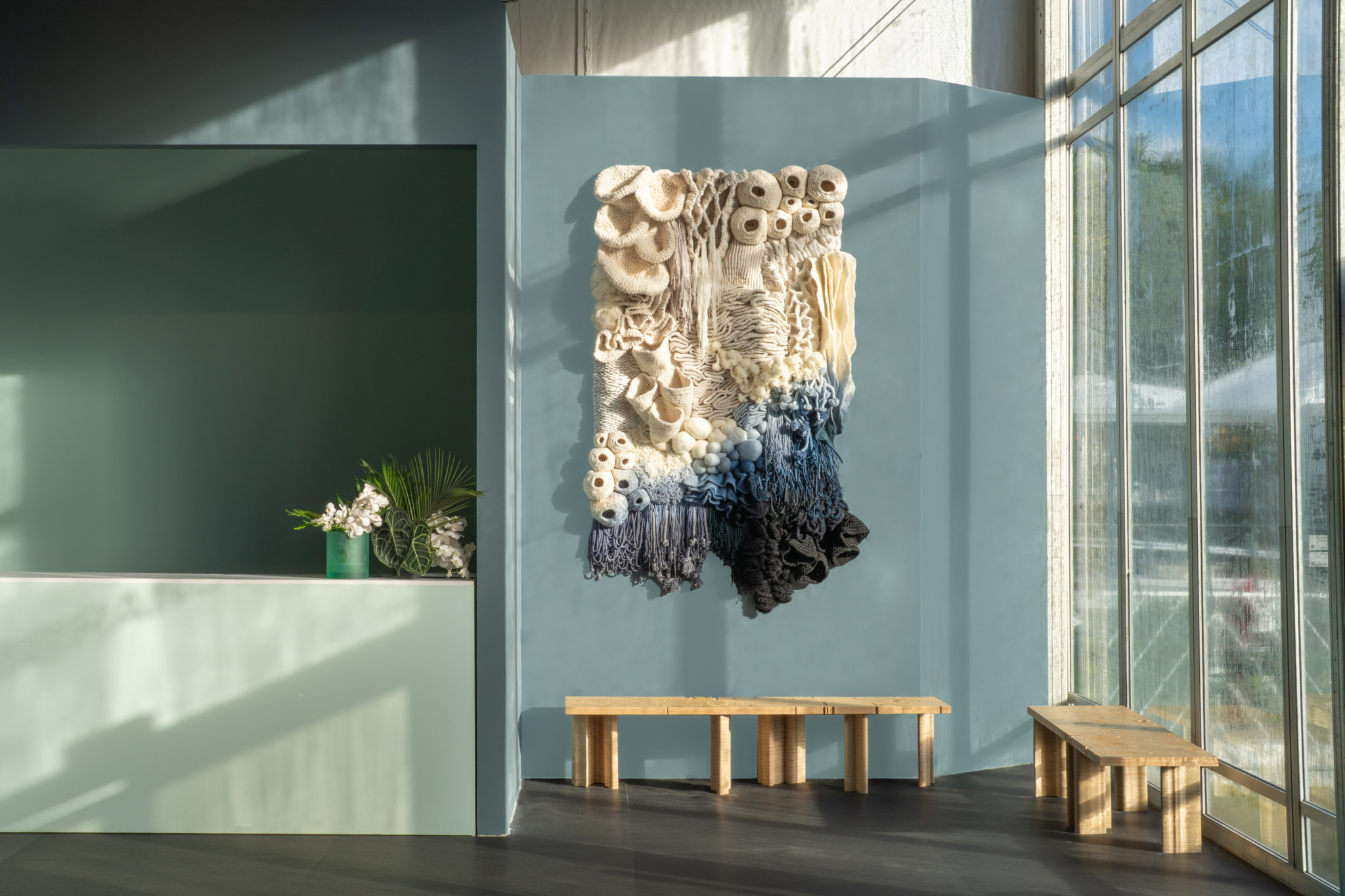
- RISD Museum: Returning to her alma mater, Latimer collaborated on the paint palette for the Liz Collins: Motherlode exhibition. This project celebrated Collins’ radical experiments with fiber and abstract patterns, using Alkemis’ natural pigments to enhance the tactile nature of the textile works.
- Design Miami: For three consecutive years, Alkemis has provided custom palettes for this premier global design forum. This partnership has allowed the company to demonstrate how sustainable materials can meet the rigorous aesthetic demands of the world’s leading curators and collectors.
- Objects USA: In collaboration with R & Company and muralist Nick Kuszyk, Alkemis executed a series of complex gradient walls for the Objects USA exhibition. This moved beyond the "white box" gallery standard, using color to guide visitors through a chronological narrative of American craft and design.
- Collaborations with Artists: The company has also served as the backdrop for the work of Roberto Lugo, a ceramicist and activist who reimagines classical pottery through the lens of social justice.
Analysis of Broader Implications
The rise of companies like Alkemis Paint reflects a broader shift in the $150 billion global paint and coatings market. As consumers become increasingly aware of the "wellness" factor in home design, the demand for non-toxic, bio-based materials is projected to grow significantly. According to industry reports, the green building materials market is expected to reach over $500 billion by 2030, driven by both regulatory changes regarding VOC emissions and a cultural shift toward "conscious living."

Price Latimer’s work sits at the vanguard of this movement. By integrating the high-concept world of fine art with the technical requirements of sustainable manufacturing, she is proving that environmental responsibility does not require a sacrifice in aesthetic quality. Her career suggests that the future of design lies in "alchemy"—the ability to take raw, natural elements like quartz and mineral pigments and transform them into tools for modern, healthy living. As Alkemis Paint continues to expand its footprint in galleries and homes alike, Latimer remains focused on the "weird hidden gems" of the world, ensuring that her brand stays rooted in the authentic, the natural, and the avant-garde.