Advanced Visual Effects Drive Seth MacFarlane’s Vision for Ted Season 2, Blending Cutting-Edge AI with Immersive World-Building

Seth MacFarlane, a name synonymous with audacious, boundary-pushing comedy, has consistently demonstrated an equally fervent commitment to technological innovation in realizing his ambitious storytelling. This dedication is perhaps nowhere more evident than in the Ted franchise, where the titular fully computer-generated (CG) teddy bear has seamlessly transitioned from two successful feature films to a hit streaming series on Peacock. For the eight-episode sophomore season of Ted, the creative team, spearheaded by Co-Visual Effects Supervisors Blair Clark and Hoyt Yeatman, embarked on a journey fraught with diverse visual effects challenges, pushing the envelope to deliver an experience that is both hilariously raunchy and visually stunning. This season demanded a meticulous recreation of 1990s Boston, the construction of an elaborate Dungeons & Dragons fantasy world, and even the digital resurrection of a period-appropriate Bill Clinton, leveraging sophisticated machine learning techniques and unprecedented levels of fur simulation for Ted himself.
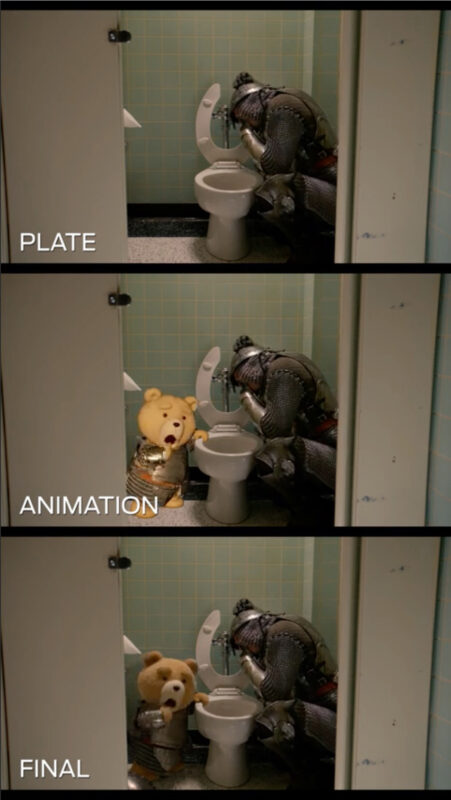
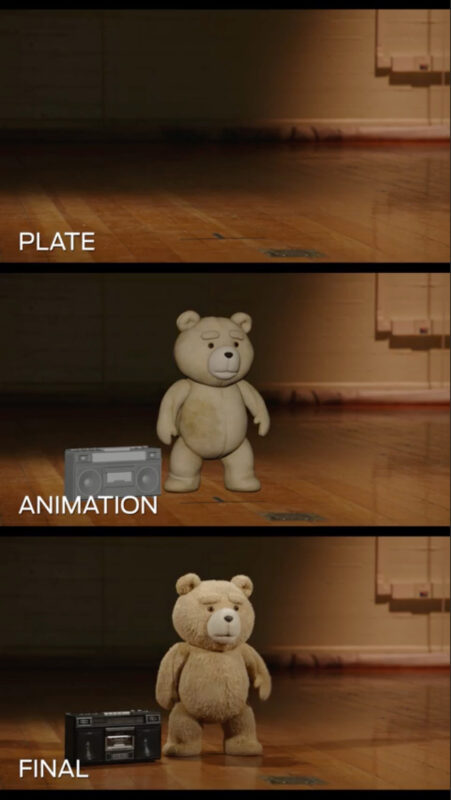
The Ted series, serving as a prequel to the films, dives into the formative years of John Bennett (Max Burkholder) and his foul-mouthed, sentient teddy bear, Ted (voiced by MacFarlane), in the 1990s. The premise, while comedic, places an immense burden on visual effects, as Ted is not merely a supporting character but the protagonist, requiring flawless integration into every scene. Framestore, a global leader in visual effects, has been the consistent force behind Ted’s animation across both feature films and the two streaming seasons, ensuring a continuity of character, movement, and mannerisms that is crucial for audience immersion. The visual effects team’s mandate for Season 2 extended far beyond perfecting Ted; it involved crafting entire worlds and character transformations that elevated the show’s comedic and narrative scope.
The Uncanny Challenge of Recreating Bill Clinton with AI
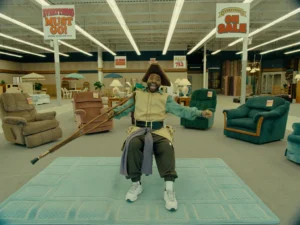
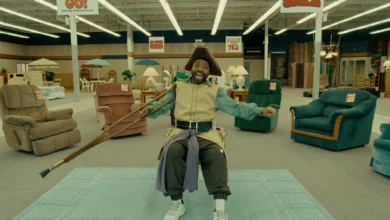
One of the season’s most ambitious and technologically complex endeavors involved recreating a mid-1990s Bill Clinton for a scene where Seth MacFarlane himself was to portray the former U.S. President. This task presented a unique blend of creative vision and technical hurdles, particularly due to initial studio directives against the use of artificial intelligence. As Co-Visual Effects Supervisor Hoyt Yeatman noted, "This season we went in a bunch of different directions. There were a lot of effects that went outside of the realm of doing a Ted. Seth MacFarlane wanted to play mid-1990s Bill Clinton, and the studio had forbidden us from using any AI." This prohibition forced the team to first explore traditional CG methods.
The initial approach involved acquiring rights for news videos and presidential portrait photographs from the William J. Clinton Presidential Library. These assets were crucial for creating an accurate ZBrush sculpt of Clinton. However, a significant anatomical discrepancy quickly emerged: MacFarlane’s head shape differed substantially from Clinton’s. This necessitated a full CG head replacement. Gradient Effects was brought in to employ their proprietary software, Shapeshifter, which created a 3D mesh of MacFarlane’s head. This mesh was then applied to the Clinton rig, based on the meticulously crafted ZBrush sculpt. While an improvement, the traditional CG head replacement struggled to overcome the pervasive "uncanny valley" effect—a phenomenon where realistic but imperfect human facsimiles evoke repulsion rather than empathy. The subtle nuances of human expression, particularly around the mouth and eyes during speech, proved incredibly difficult to replicate convincingly through manual animation and modeling.
Faced with this persistent challenge, the team reconsidered their options. Their search led them to Deep Voodoo, a visual effects house in Venice, California, founded by South Park creators Trey Parker and Matt Stone, known for their innovative use of AI in visual effects. Deep Voodoo was developing an application specifically designed for head replacement, merging AI’s strengths with a traditional VFX pipeline. Yeatman elaborated on their pivot: "Typically, most AI is generated by a text prompt or an image and text prompt, not actually having to deal with photography and a plate where lighting, performance and lensing are established. We found Deep Voodoo in Venice, California, which is a visual effects house that does visual effects with an eye toward AI."
Deep Voodoo’s proprietary application was, at its core, attempting to achieve what traditional CG head replacement aimed for: seamlessly replacing a performer’s head with a digital one, including hair, ears, and the back of the head. The key difference, however, lay in its AI-driven understanding of the human face and, critically, human speech. The AI model had to be rigorously trained on Bill Clinton’s facial features and speech patterns. Subsequently, it analyzed MacFarlane’s performance on the plate, factoring in lensing, camera tracking, and on-set lighting conditions. The system then rendered a 1024×1024 window that seamlessly replaced MacFarlane’s head with a hyper-realistic, AI-generated Clinton face.
Yeatman underscored the transformative advantage of this AI integration: "The advantage of using AI over CG is that it understands human speech well. This means you can look into the mouth and see the tongue moving. In animation, you can’t capture that, or the little nuances around the eyes and squints; AI does that perfectly. AI does all the heavy lifting that is not seen by the viewer but is felt by them. That’s the last 5% or 10% that you struggle with in traditional CG. AI was another tool in the visual effects arsenal." This highlights a crucial shift in VFX: AI is not a replacement for artists but a powerful new instrument that can solve previously intractable problems, particularly in achieving the subtle realism that often defines the difference between "good" and "believable." The AI-generated element was not a final product but integrated into a standard visual effects pipeline, undergoing compositing, multiple approval processes, and color grading, ensuring it met the show’s high production standards. This pioneering use of AI for a major live-action character replacement in a series demonstrates a significant step forward in virtual human technology, subtly yet profoundly impacting audience perception of authenticity.
Forging Fantasy: The Dungeons & Dragons Quest
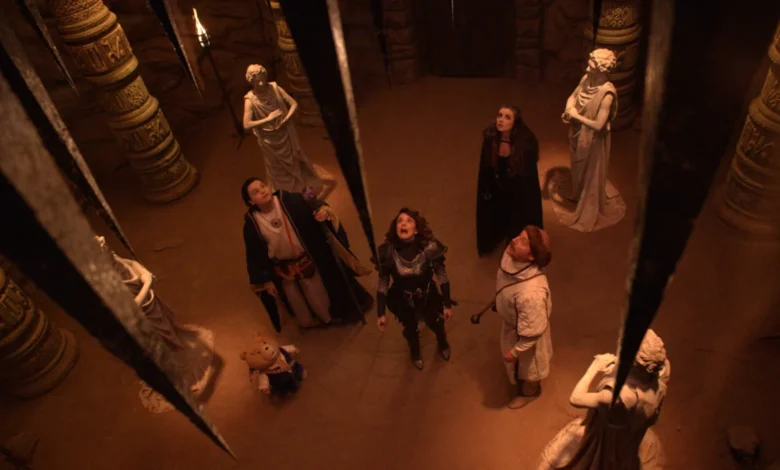
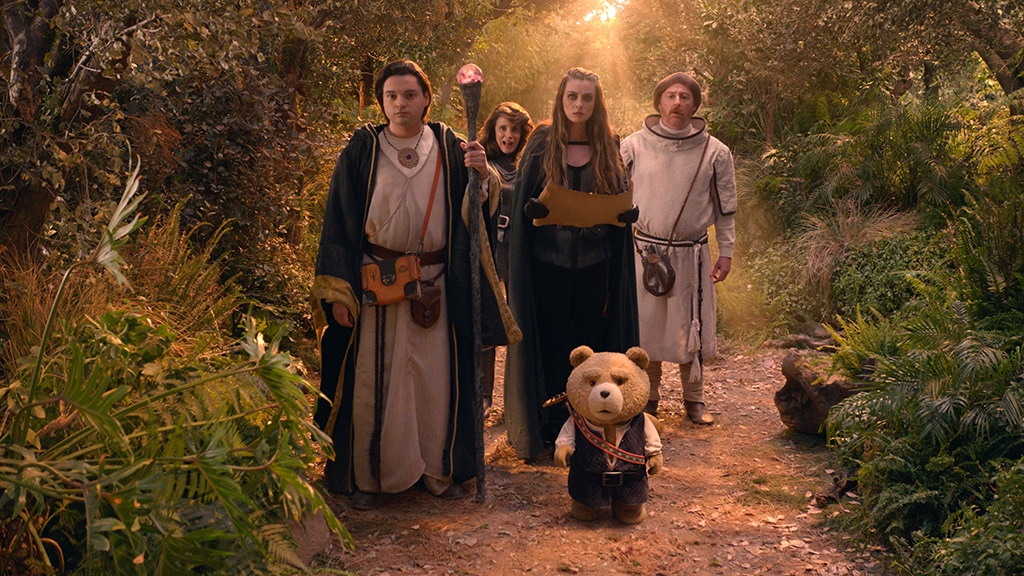
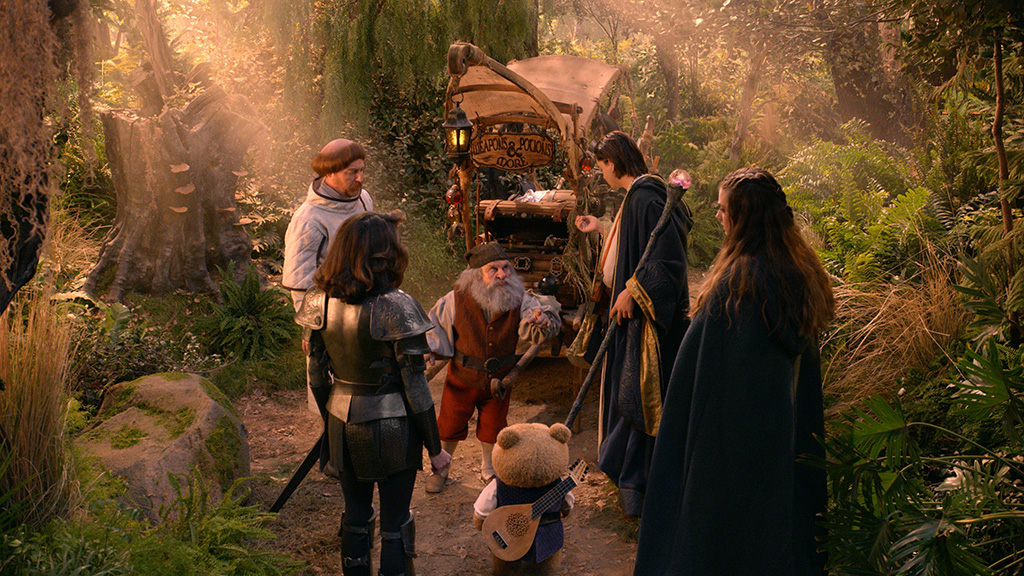
Episode 203 plunged Ted and John into a fantastical Dungeons & Dragons-themed quest, demanding an entirely different suite of visual effects expertise. This sequence necessitated a seamless blend of practical set builds and extensive digital environments. Close collaboration between the visual effects, art, and costume departments was paramount. A key rule established early on for Ted’s appearance was that he would never wear shoes, a detail that, while seemingly minor, ensured his iconic teddy bear aesthetic remained intact.
The team utilized Unreal Engine for comprehensive previs (pre-visualization) of the sequence. This allowed them to meticulously plan camera movements and environmental transitions, from sweeping vistas to intimate forest paths, long before principal photography began. The practical forest build on a Universal Studios soundstage was immense, featuring over 3,000 linear feet of bluescreen stretching 40 feet high. However, its sheer scale presented significant challenges, particularly the close proximity of tree branches to the bluescreen – a typical "no-no" in VFX due to lighting and keying difficulties. Yeatman humorously recalled, "The tree branches were less than eight or nine inches away from the bluescreen, which is typically a big no-no. You need at least 36 to 40 inches away so you can have a chance of lighting it."
Achieving the desired "magical feel" with "God rays" filtering through the branches proved another hurdle. On a stage, creating a single light source powerful and distant enough to produce naturally columnated rays is practically impossible. The solution involved advanced digital techniques: LiDAR scanning of the practical set provided a precise volumetric representation of every plant, trunk, and rock. This data was then used in the digital realm to accurately track the camera in 3D, allowing the VFX team to digitally "fill" the CG area with atmosphere, artificially place a key light, and generate the desired God rays. These rays were meticulously composited in layers, creating a realistic depth and interaction with the foreground, actors, midground, and background elements. Digital set extensions seamlessly expanded the practical forest, ensuring the environment felt endless and immersive.
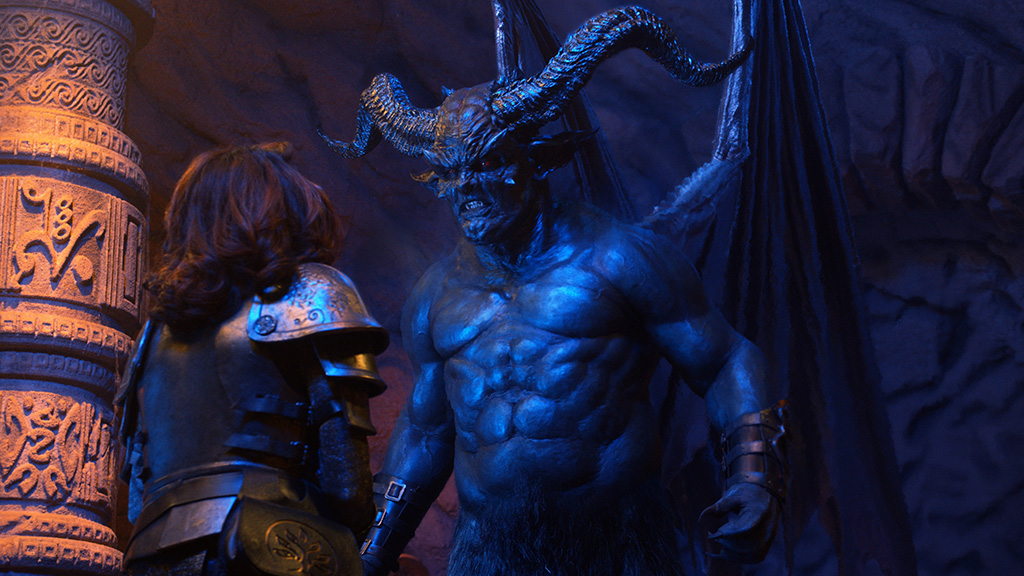
The episode also featured the demon Dra’hul, brought to life through a combination of practical prosthetics and digital enhancements. Clark explained, "We added wings, slimmed down the waist and did a treatment on the skin that was otherworldly or ethereal. Other than that, it was straight makeup. It looked great." This hybrid approach is common in modern VFX, where practical effects provide a tangible base for actors and lighting, while digital augmentation elevates the creature to a fantastical level.
The Evolution of Ted: Fluffier Fur and Seamless Interaction
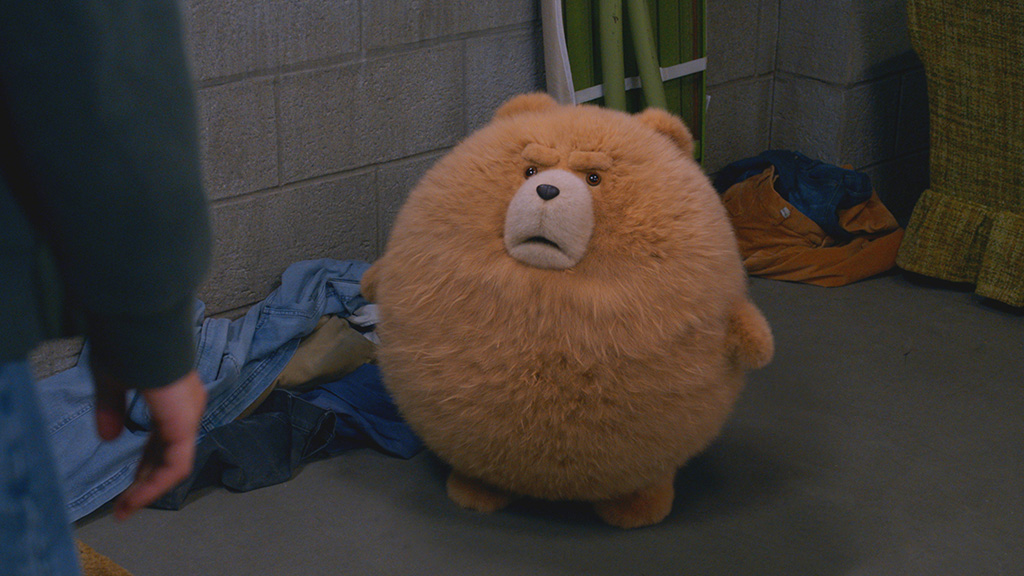
Ted himself continued to be a central focus of VFX innovation. Framestore’s Melbourne team, having been involved since the first feature film, maintained the character’s unique recipe of movements and mannerisms, ensuring consistency across the franchise. A recurring gag involving Ted emerging from a dryer demanded he be "fluffier than ever." Blair Clark noted, "Coming out of the dryer was the fluffiest he had ever been! That was artistic license. We had some where he was puffed up, but Seth wanted a full sphere of fur." This creative demand pushed the boundaries of fur simulation, requiring highly detailed dynamic fur that could react realistically to movement and environment, yet also achieve an exaggerated, comedic "sphere of fur" look.
Another comedic element, Ted coughing up furballs, relied heavily on subtle animation and pantomime. Clark emphasized the importance of keeping Ted grounded: "The success in that was mainly the pantomime. It wasn’t a struggle, but part of the trick was to keep Ted grounded in subtlety with his mannerisms and not going cartoony. Just go in enough so that people forget he is a CG character and buy him as another member of the cast." This philosophy underscores the challenge of animating a CG protagonist in a live-action world: achieving a level of realism and nuanced performance that allows audiences to suspend disbelief and accept the character as a genuine part of the narrative.
Ted’s physical interactions, such as being thrown, also required meticulous planning. Actor Scott Grimes’ talent was crucial in making these moments believable. For rehearsals and on-set interactions, a "stunt stuffie" of Ted, featuring detachable limbs and head (nicknamed "the egg" for its torso), was used. This allowed Grimes to practice the weight, volume, and trajectory of throwing Ted, perfecting his pantomime for the actual takes where Ted would be digitally inserted.
Real-Time Visualization and Environmental Transformation
ViewScreen technology remained an invaluable tool for animating Ted in real-time on set. It provided a crucial reference for filmmakers, allowing them to visualize Ted’s placement and performance within the scene as it was being shot. Clark stated, "It was a good reference. We integrated it as much as possible with Framestore’s capabilities because it had to be seamlessly worked into their pipeline."
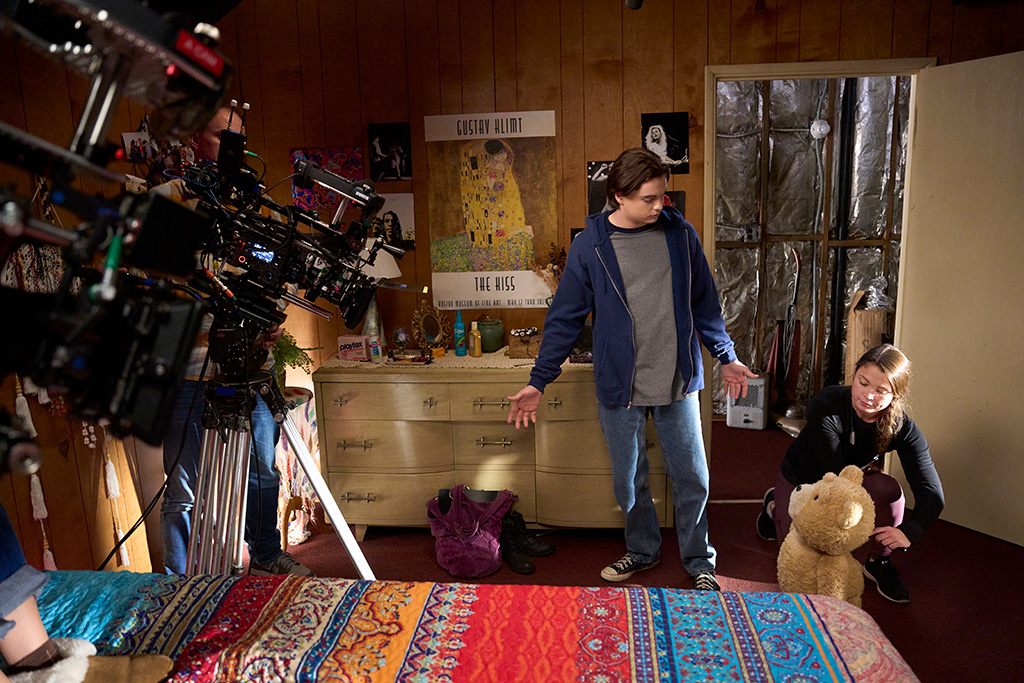
Co-Visual Effects Supervisor Blair Clark’s unique role on set further streamlined the process. During rehearsals, Clark would physically embody Ted, allowing Seth MacFarlane to direct Ted’s pacing, blocking, and actions as if he were another cast member. This organic interaction significantly aided the actors in developing their performances and helped cameramen frame shots effectively. Yeatman likened this process to jazz improvisation: "In classical music, every single note is written down, but here you know the tune and melody and just get in there, and it organically happens. That’s what’s nice about Ted. These guys have been working [together for] so long on the features and episodes that they have it drilled down. That’s why it goes as smoothly as it does because everyone knows how it goes."
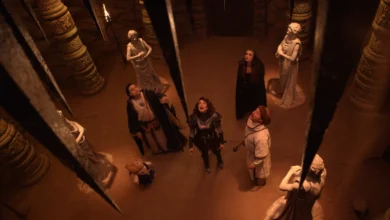
While ViewScreen proved less effective for dynamic character interactions, its environmental applications were highly beneficial. For instance, in the D&D forest sequence, it allowed the team to visualize beyond the physical set, integrating a 64-foot crane move from an Unreal Engine animatic into a 24-foot practical crane shot. This provided immediate feedback on framing and camera angles for digitally extended environments. Similarly, for a tense sequence in a temple ceiling where spikes descended, ViewScreen helped determine the speed of the spikes and visualize set extensions, ensuring proper framing and dramatic impact.
The visual effects team, including Framestore, Studio Blackbird, Rising Sun Pictures, Deep Voodoo, and Pitch Black, collectively contributed to nearly 3,000 visual effects shots for the season. A significant portion of this work involved transforming the backlots of Universal Studios Hollywood into period-accurate 1990s Boston. This environmental work required meticulous attention to detail, especially given Seth MacFarlane’s keen eye for authenticity. Clark recalled, "Seth was keen on the trees. He would be like, ‘Those look like West Coast trees.’ Seth was very specific."
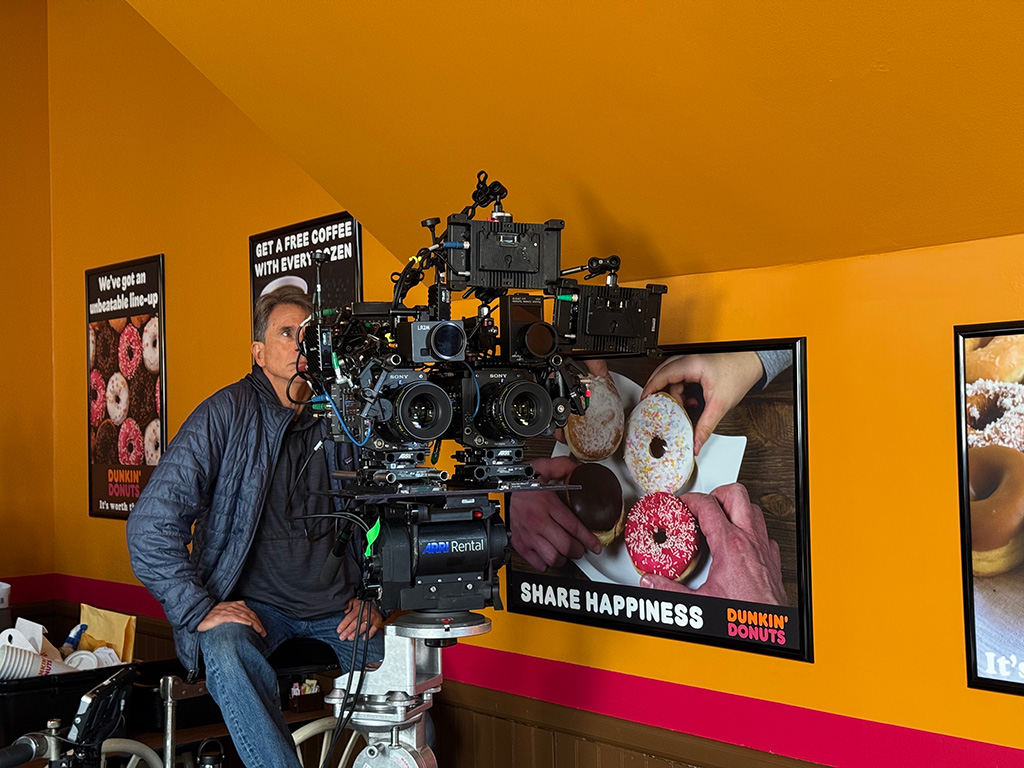
Recreating 1990s Boston presented its own set of challenges. Driving scenes, often shot with traditional greenscreen techniques, required handling multi-camera setups. The team had to meticulously remove anachronistic elements like modern cars from previously shot Boston plates. For mansion scenes, an advanced eight-camera array system provided unparalleled freedom for directors and cinematographers, allowing them to point the camera anywhere on stage with the confidence that the background would be seamlessly composited. While video walls could offer similar benefits, the speed and complexity of the Ted production, with multiple cameras blazing, made the array system a practical and effective solution. Even environmental elements like snow required careful digital extension, as powder paper applied to parts of the backlot needed to be seamlessly integrated across entire neighborhoods for wider shots.
The Future of VFX in Television
The work on Ted Season 2 exemplifies the increasing sophistication of visual effects in television, blurring the lines between feature film and episodic production. Co-Visual Effects Supervisors Hoyt Yeatman and Blair Clark, veterans in the field, continuously adapt to the rapid evolution of digital technology. Yeatman affirmed their proactive approach: "Blair and I stay up on the latest greatest [tech] and make sure it works before we put it into practice. We want to give Seth the greatest amount of freedom that he can have and still achieve a good look. Sometimes we do stuff that looks crazy. But with the technology that we have in our back pocket, we can pull it out, make some shots that look cool and make the day, which is probably the biggest thing that we’re all working on."
The successful integration of cutting-edge AI for character recreation, sophisticated environment building using game engines, and highly detailed character animation positions Ted Season 2 not just as a comedic success, but as a technical marvel. It demonstrates how advanced visual effects are no longer merely about spectacle but are integral to character development, narrative authenticity, and creative freedom, ensuring that even a raunchy teddy bear can deliver a visually compelling and immersive experience. The lessons learned and techniques pioneered in Ted Season 2 will undoubtedly influence future productions, particularly in the expanding landscape of high-quality streaming content.