When Reality Meets the Rendering Engine: MSCHF and Lexus Upend Automotive Design with MOTOMORPHOSIS in New York

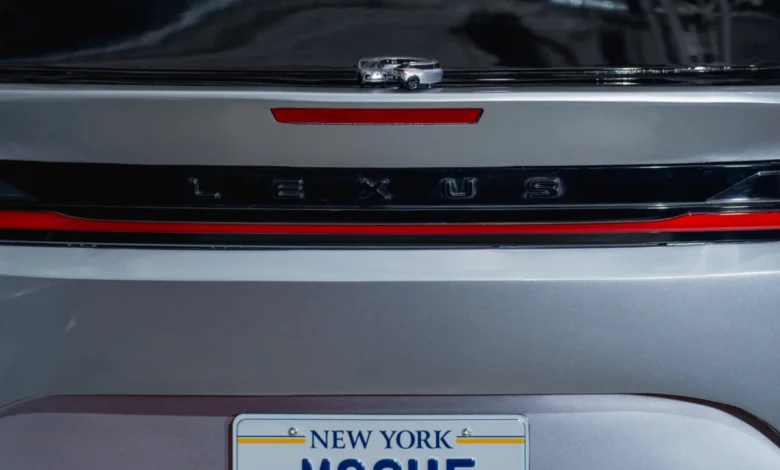
The intersection of contemporary art, corporate commissioning, and digital distortion has once again yielded striking results through the collaborative efforts of the Brooklyn-based art collective MSCHF and luxury automaker Lexus. Unveiled to the public during New York’s prestigious Armory Week, a new exhibition titled MOTOMORPHOSIS challenges traditional perceptions of industrial design by giving tangible, physical mass to the surreal artifacts typically confined to computer-generated 3D modeling environments. By taking two production-line luxury vehicles—the Lexus RZ 450e battery-electric SUV and the Lexus RX 450h+ plug-in hybrid—and subjecting them to radical, sculpture-altering transformations, MSCHF has initiated a provocative conversation about the boundaries separating digital rendering from physical manufacturing.
Main Facts of the Exhibition
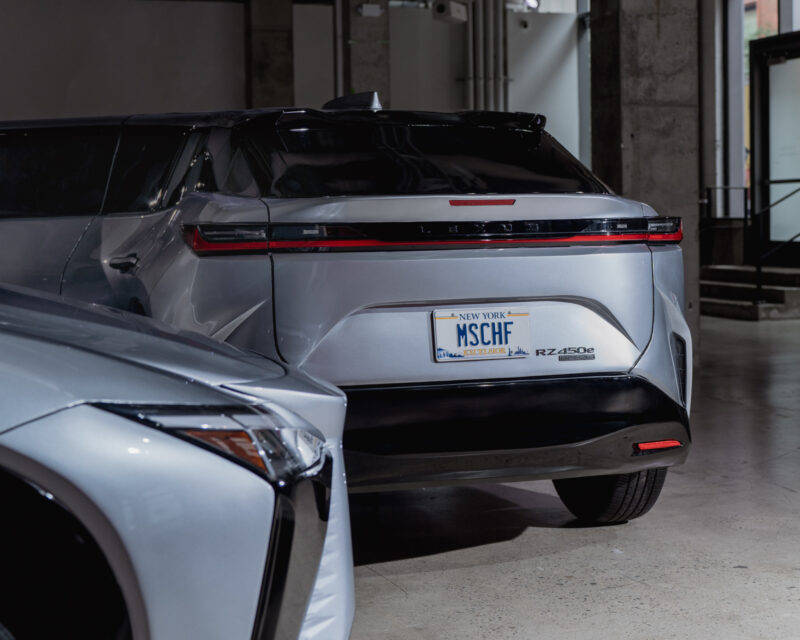
Staged at Chelsea Industrial in New York City, the MOTOMORPHOSIS exhibition presents two heavily modified automobiles alongside their standard, factory-produced counterparts. This side-by-side arrangement is not merely aesthetic; it serves a functional role in emphasizing the extremity of MSCHF’s sculptural interventions.
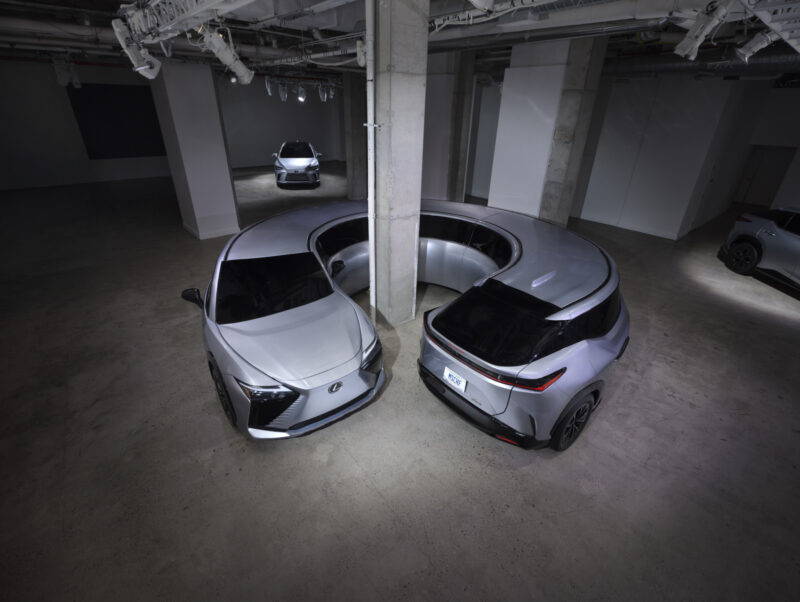
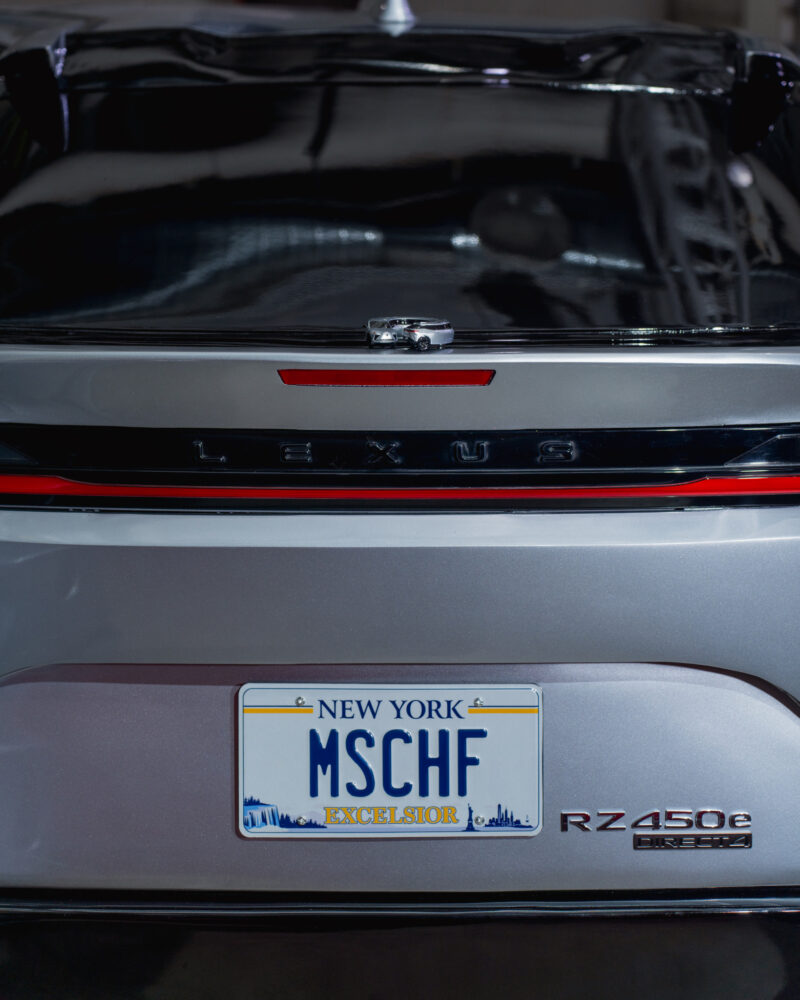
The first of these transformed vehicles, designated by the collective as the Circle Car, is constructed from a Lexus RZ 450e. In this piece, the vehicle’s chassis and body are dramatically stretched, bent, and curved until the front and rear bumpers seamlessly meet in a continuous, closed loop. The result is a mathematically impossible geometric form that completely strips the vehicle of its utility while preserving its distinct automotive finishes, badging, and metallic sheen.
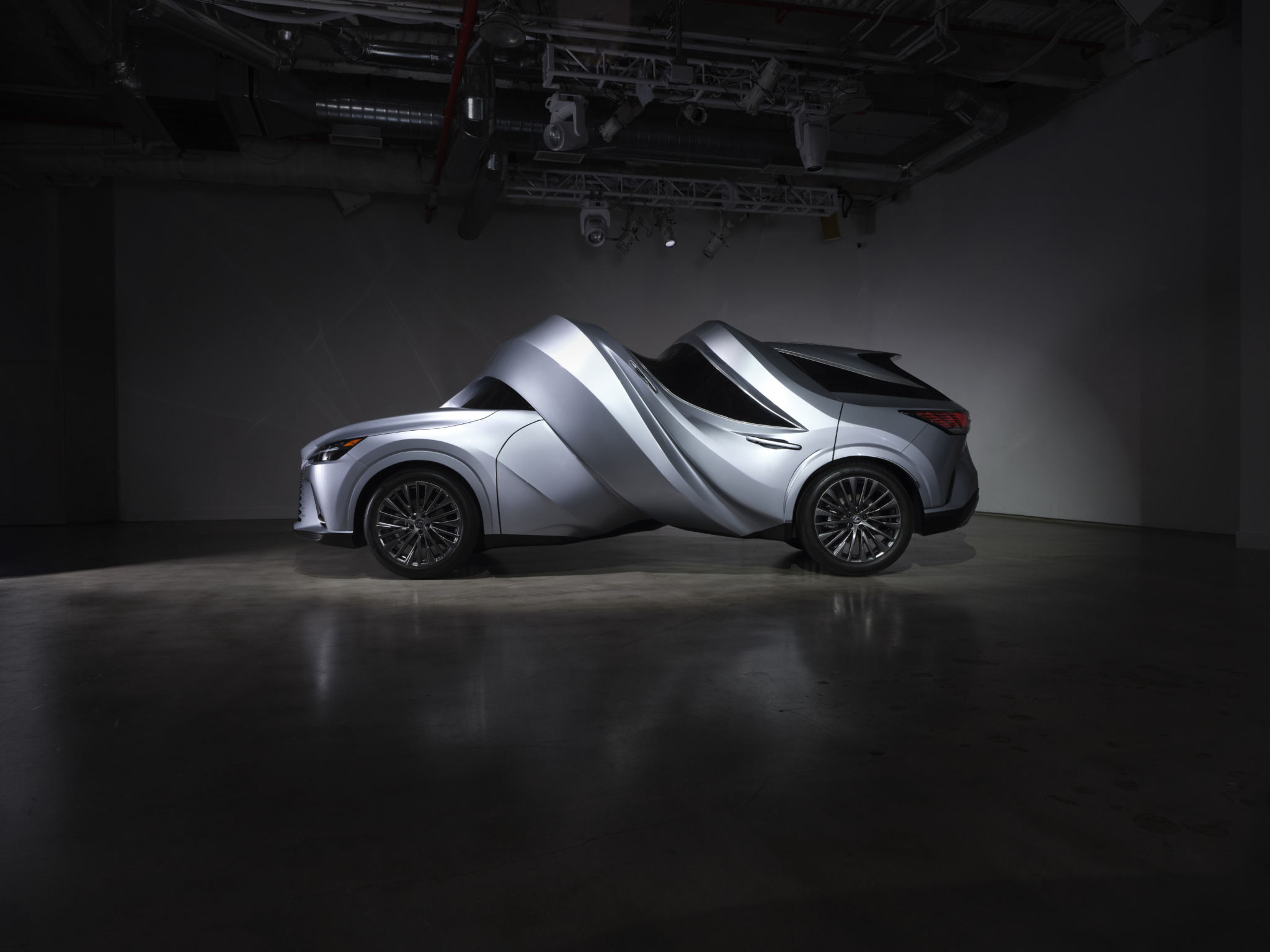
The second vehicle, the Twisted Car, is built upon the architecture of a Lexus RX 450h+. This sculpture undergoes a violent yet fluid rotational distortion along its longitudinal axis. Windows, doors, body panels, and structural rooflines are pulled into a sweeping helix, evoking the visual shorthand of motion blur or a digital glitch frozen in time.
Rather than categorizing these pieces as conventional concept cars—which automakers typically deploy to preview forthcoming technological innovations, powertrain developments, or futuristic styling languages—MSCHF has coined the term “Form Cars.” This conceptual inversion subverts the traditional automotive design paradigm. Instead of designing a shape to house new technology, the collective treats the finalized, mass-produced consumer object as a pure geometry, manipulating it through software-inspired distortions to provoke a visceral reaction from the viewer.
The Digital Genesis of Physical Sculpture

To understand the mechanics behind MOTOMORPHOSIS, one must examine the tools routinely employed by modern industrial designers, animators, and digital artists. Software suites such as Blender, Maya, and Cinema 4D rely on baseline mathematical operations including scaling, bending, twisting, and skewing. Within a digital workspace, these operations are mundane, instantaneous, and entirely untethered from the laws of physics or structural integrity.
Furthermore, MSCHF drew explicit inspiration from the principles of traditional and digital animation—specifically the concept of “squash and stretch,” alongside the use of smear frames. In motion graphics, objects and characters temporarily distort into exaggerated shapes to communicate velocity, impact, and momentum to the viewer’s eye. MOTOMORPHOSIS effectively captures this fleeting visual language, translating ephemeral pixels into multi-ton structural steel, glass, and polyurethane.
By placing the static, distorted sculptures immediately adjacent to functioning, production-ready vehicles, MSCHF creates a profound artistic tension. The standard Lexus vehicles are marvels of mechanical engineering, aerodynamics, and propulsion, meticulously designed to move through physical space with maximum efficiency. Conversely, their distorted counterparts are entirely immovable and static, yet they communicate a hyper-accelerated sense of movement and dynamic energy far more aggressively than any vehicle capable of highway transit.
Background Context and Event Chronology
The genesis of MOTOMORPHOSIS dates back months prior to its public unveiling, originating as an experimental commission by Lexus aimed at exploring the psychological and cultural implications of vehicular electrification. While the automotive industry has spent the better part of the last decade embroiled in discussions surrounding kilowatt-hours, charging infrastructure, carbon reduction, and range anxiety, Lexus sought an artistic partner capable of examining the broader paradigm shift brought on by electric mobility.
MSCHF, known globally for subverting consumer culture through high-profile, viral projects—such as their oversized cartoonish red boots and microscopic designer handbags—accepted the challenge to redirect their irreverent material critique toward the heavy machinery of the automotive sector.
The timeline of the exhibition’s rollout was strategically aligned with New York’s Armory Week, a peak period for the international contemporary art market that draws collectors, critics, and enthusiasts from around the globe. Opening its doors at Chelsea Industrial, MOTOMORPHOSIS was scheduled for a tightly controlled, limited run, remaining open to the public through September 26, 2026. This limited engagement elevated the scarcity and urgency of the installation, transforming the gallery space into a temporary shrine to post-industrial absurdity.
Official Responses and Corporate Perspectives
Collaborations between counter-cultural art collectives and multinational corporations often risk diluting the edge of the artists or appearing as superficial marketing ploys. However, both parties involved in MOTOMORPHOSIS have emphasized the project’s exploratory nature, framing it as a genuine dialogue between mass production and avant-garde sculpture.
Lisa McQueen, senior manager of Lexus marketing, addressed the underlying philosophy of the commission in an official statement surrounding the exhibition. “Most conversations about electrification focus on how a vehicle is powered,” McQueen noted. “MOTOMORPHOSIS asks a different question: What can electricity power in our imagination? Working with MSCHF allowed us to take the automobile beyond its familiar form and explore movement, transformation, and possibility in an entirely new way.”
By backing a project that actively deconstructs and invalidates the primary utility of its own products, Lexus demonstrated an openness to radical artistic critique that is rare within the corporate automotive sphere. For MSCHF, the partnership provided unprecedented access to industrial-scale raw materials, heavy-duty machinery, and authentic automotive components, allowing the collective to scale up its signature method of object-based satire to an unprecedented physical dimension.
Broader Impact and Design Implications
The implications of the MOTOMORPHOSIS exhibition extend far beyond the temporary walls of the Chelsea Industrial gallery. As computer-aided design (CAD), generative AI, and virtual reality increasingly dominate the initial phases of industrial manufacturing, the boundary between the digital render and the physical product grows increasingly porous.
For decades, concept cars have acted as idealized bridges between futuristic imagination and showroom realities. They hint at what might be built next. MSCHF’s Form Cars, however, reject this linear trajectory of progress. They suggest that the objects we already inhabit—the sedans and SUVs populating our suburban driveways and urban thoroughfares—are not final destinations, but merely raw material awaiting psychological and digital reinterpretation.
Furthermore, the exhibition forces an uncomfortable confrontation with the homogeneity of modern automotive design. As global safety regulations, aerodynamic optimizations, and manufacturing efficiencies push contemporary vehicles toward a standardized, wind-tunnel-tested conformity, interventions like those of MSCHF serve as a violent reminder of the arbitrary nature of industrial form.
Ultimately, MOTOMORPHOSIS succeeds by weaponizing the familiar. By taking two ubiquitous symbols of modern mobility and twisting them into mathematical impossibilities, MSCHF and Lexus have created a monument to the digital age—a place where the rigid rules of physics are momentarily suspended, and the automobile is liberated from its utilitarian obligations to become pure, unadulterated sculpture.