The Art of Gifting Under $100: How Curated Design and Thoughtful Utility Are Reshaping Holiday Shopping Trends

A budget of one hundred dollars has traditionally occupied a nebulous space in modern consumer culture—often perceived as too modest for major luxury investments yet overly generous for token gestures. However, contemporary shifts in industrial design, material innovation, and consumer preferences have transformed this exact price threshold into a sweet spot for discerning gift-givers. Rather than defaulting to mass-market convenience items, shoppers are increasingly seeking out objects that carry a distinct point of view, superior craftsmanship, and unexpected functionality. This evolving approach to gift-giving prioritizes items that transcend their monetary value through clever design, sustainable sourcing, and sculptural presence.

The Economic Shift in Holiday Spending and Consumer Priorities
Market analyses from late-season retail periods indicate a broader cultural pivot toward intentional consumerism. Buyers are moving away from disposable novelties and fast-fashion accessories, opting instead for durable goods, archival reissues, and artist collaborations that promise longevity and narrative depth. In an economic climate marked by cautious spending, the sub-$100 category acts as a crucial bridge. It allows gift-givers to indulge recipients in small luxuries they might otherwise deny themselves—ranging from artisanal kitchenware to conversation-starting home decor—while maintaining fiscal responsibility.
Design curators and retail analysts note that items priced between fifty and one hundred dollars are experiencing unprecedented demand. This segment benefits directly from advancements in additive manufacturing, such as 3D printing with recycled materials, and the resurgence of small-batch artisanal production in ceramics and woodworking. By focusing on provenance and materiality, brands are able to deliver objects that punch well above their weight class, offering high-end aesthetic appeal without the associated luxury price tag.

Culinary Craftsmanship and Tabletop Surprises
The intersection of functionality and artistic expression is perhaps most evident in the kitchen and dining category, where everyday utensils are being reimagined as statement pieces. Long gone are the days of purely utilitarian cookware; today’s consumers demand visual engagement even during food preparation.
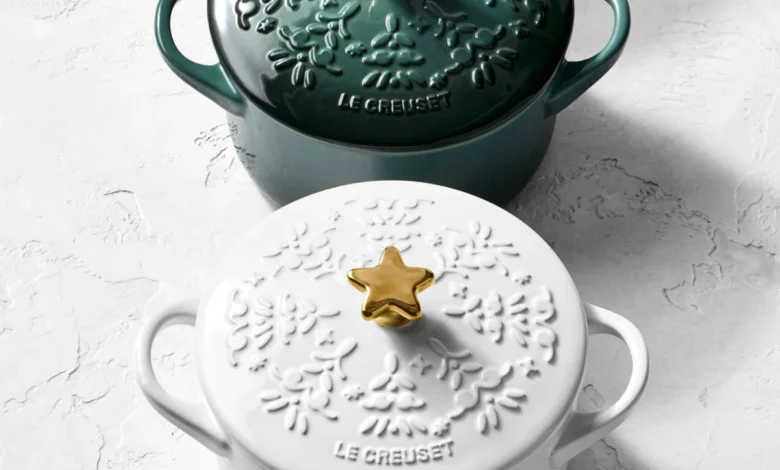
A prime example of this trend is the Noël Mini Cocotte by Le Creuset. Merging centuries-old cast-iron and stoneware traditions with seasonal whimsy, the French heritage brand has introduced a 24-ounce vessel featuring an embossed Christmas tree lid and a gleaming gold-finished star knob. Priced at $62, the stoneware piece transitions seamlessly from oven to table, catering to the modern appetite for individual portions of baked pasta, pot pies, or warm desserts. Culinary historians point out that such items tap into a psychological desire for comfort and nostalgia during the winter months, elevating routine meal preparation into a festive ritual.

Similarly, table settings are undergoing a maximalist renaissance. Belgian jewelry designers Wouters & Hendrix have partnered with Serax to produce the Les Objets Mouleversants candle holder set, retailing at $85.30. Drawing inspiration from 1920s surrealist art, the hand-painted stoneware trio employs graphic checkerboard patterns and contrasting silhouettes to challenge conventional tabletop design. According to home goods analysts, surrealism and asymmetry are dominating interior trends, as consumers reject minimalist uniformity in favor of objects with eccentric character and individual artistic provenance.
For daily hydration and bedside utility, Maison Balzac’s Bedside Carafe, priced at $90, reinterprets traditional French glassware. Crafted from dishwasher-safe borosilicate glass in a spectrum of rich hues, the carafe features a nesting cup that doubles as a sculptural stopper. Industry observers note that the resurgence of such classic bedroom accessories reflects a broader cultural movement toward wellness and self-care, where the physical environment of the bedroom is curated as a sanctuary of calm and beauty.

Architectural Precision and Workplace Nostalgia
Beyond the kitchen, the workspace has become a primary canvas for thoughtful gifting. As remote and hybrid work models persist, professionals are investing in desk accessories that blur the line between utility and fine art.
Wooj, a Brooklyn-based studio, has captured this market with the Kinoko Lamp, retailing at $95. Inspired by the pioneering pleated textiles of Issey Miyake, the mushroom-shaped lamp is 3D-printed from recycled plastic. This manufacturing technique achieves the delicate, accordion-like aesthetic of folded paper while retaining structural durability. Design critics have praised the lamp for democratizing avant-garde aesthetics, proving that sustainable manufacturing practices can yield high-design objects accessible to a wider audience.

In a similar vein of tactile engagement, Present & Correct offers the Wood Polyhedra Set, priced between $41 and $82 depending on box size. Originally conceived as educational tools for Spanish classrooms in 1934, these solid beechwood geometric shapes invite hands-on experimentation with form and proportion. Educational toy historians emphasize that tactile, screen-free objects are seeing a resurgence among adults seeking cognitive stimulation and physical grounding in an increasingly digitized world.
Strategy and play have also found a home in contemporary home decor through Printworks’ Classic Chess Set. Priced at $79, the set features wooden playing pieces and an acrylic-topped board housed in a coordinated storage box designed to remain on display. Retail data indicates a massive surge in board games marketed as decorative objects, driven by consumers who view their living spaces as curated reflections of their intellectual and aesthetic interests.

Travel Accessories with Personality and Purpose
The travel sector has likewise embraced the under-$100 gift market, focusing on accessories that inject individuality into transit essentials. Calpak’s Luka Mini Duffel, available for $98, has become a staple for frequent flyers and urban commuters alike. Featuring a puffy, quilted silhouette, water-resistant fabrics, and smart internal organization—including a luggage sleeve and hidden security pockets—the bag reconciles playful fashion trends with rigorous practical demands.
For tech-integrated travel, Antler’s Heritage Leather Aeroplane AirTag Holder ($75) offers a whimsical solution to luggage tracking. Crafted from scratch-resistant green leather in the shape of a miniature aircraft, the accessory secures an Apple AirTag within a discreet compartment. Travel accessories market analysts note that personalization and humor are key drivers in the post-pandemic travel boom, as consumers seek ways to humanize standardized transit gear.

Art, Textiles, and the Modern Interior
Textural elements and soft goods round out the under-$100 landscape, offering low-commitment ways to radically alter a room’s atmosphere. Slowdown Studio’s Bessie Throw Pillow Cover, priced at $80, features graffiti-inspired abstract compositions by German artist Marc David Spengler. By translating fine art into functional home textiles, the brand provides an accessible entry point for emerging art collectors.
Simultaneously, Sophie Lou Jacobsen’s Spiral Coaster Set ($85) elevates a humble protective surface into a kinetic sculpture. Sand-cast in aluminum and nickel-plated, the looping, fluid forms function equally well as drink coasters or standalone decorative objects.

Broader Market Implications and Future Outlook
The proliferation of sophisticated, design-forward products under $100 signals a permanent maturation of the mid-tier gift market. Manufacturers and independent studios alike recognize that modern consumers—particularly millennials and Gen Z—value storytelling, ethical production, and aesthetic novelty over sheer brand prestige or bulk quantity.
As supply chain innovations and localized manufacturing continue to evolve, the barrier to entry for high-end design is lowering. The curation of objects that bridge art, utility, and affordability demonstrates that thoughtful gifting is no longer defined by the size of the checkbook, but by the intentionality of the choice. Industry forecasts suggest this trend will accelerate, placing further pressure on mass-market retailers to elevate their design standards or risk losing ground to agile, studio-driven brands.