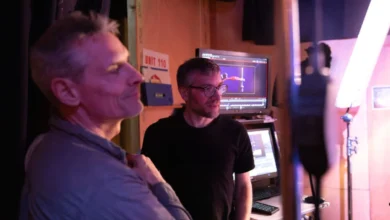
From Viral Internet Phenomenon to A24 Box Office Phenomenon: The Visual Effects Blueprint Behind Kane Parsons Feature Film Debut Backrooms

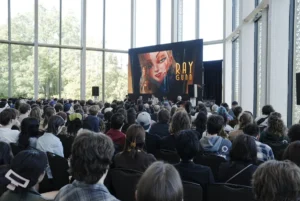
What began as a hauntingly minimalist, three-minute digital rendering of a yellowish, endless labyrinth shared on YouTube by a 16-year-old creator has transformed into one of the most commercially successful and critically scrutinized psychological horror films of 2026. A24’s feature adaptation of Backrooms, directed by its original digital architect Kane Parsons, represents a watershed moment for internet-born media crossing over into mainstream Hollywood distribution. Operating on a relatively modest indie budget of $10 million, the production defied conventional studio expectations by mounting an intricate, highly collaborative hybrid pipeline that seamlessly fused the filmmaker’s teenage Blender files with multi-million-dollar physical set construction, advanced prosthetic makeup, and extensive digital effects.
The narrative framework of the feature expands significantly upon the ambient dread of the original viral shorts. The plot follows Clark, portrayed by Chiwetel Ejiofor, a down-on-his-luck Wisconsin furniture store owner who accidentally slips—or "clips"—through a spatial anomaly lurking beneath his showroom floor. Plunged into an endless, claustrophobic expanse of damp carpet and buzzing fluorescent lights, Clark is pursued by distorted manifestations of his own psyche and history. Renate Reinsve stars opposite Ejiofor as Mary, Clark’s dedicated therapist, who embarks on a desperate and surreal rescue mission that blurs the boundaries of reality, memory, and spatial physics.
Bridging the Digital Divide: From Teen Blender Files to Cinematic Pipelines
When Parsons first began conceptualizing his digital architecture in Blender years prior, he was working entirely in isolation as an adolescent enthusiast. Yet, when A24 greenlit the feature adaptation, those foundational digital assets were not discarded in favor of a clean slate. Instead, they were treated as historical blueprints for the physical and digital production.
According to Visual Effects Supervisor Edward Douglas, the integration of old and new digital environments required meticulous technical calibration. "There were certain moments where we were literally taking the Blender file he built when he was 16 and working off it, enhancing it, getting it ready for cinematic quality, and then moving it into a production pipeline," Douglas explains.
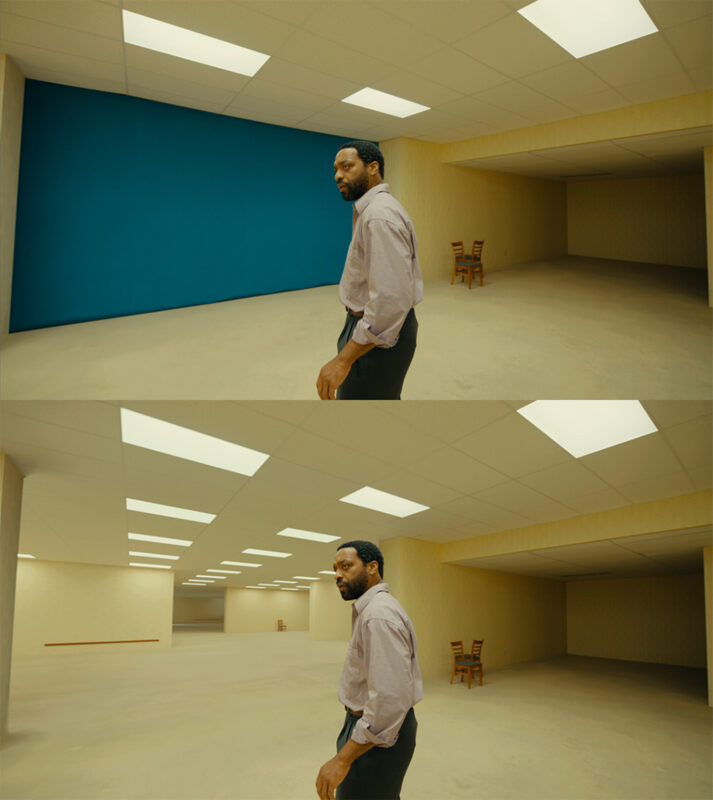
Despite coming from a purely digital background, Parsons demonstrated a fierce commitment to tangible filmmaking. Rather than defaulting to computer-generated environments for convenience, the director insisted on building physical spaces for his actors to inhabit. Across four sound stages, the production constructed roughly 30,000 square feet of physical sets, perfectly matching or contrasting with the approximately 100,000 square feet of virtual space designed digitally. This philosophy redefined the role of visual effects on set, moving away from arbitrary digital replacement and toward a pragmatic approach focused on solving logistical impossibilities.
The Mechanics of "Clipping" and Set Extensions
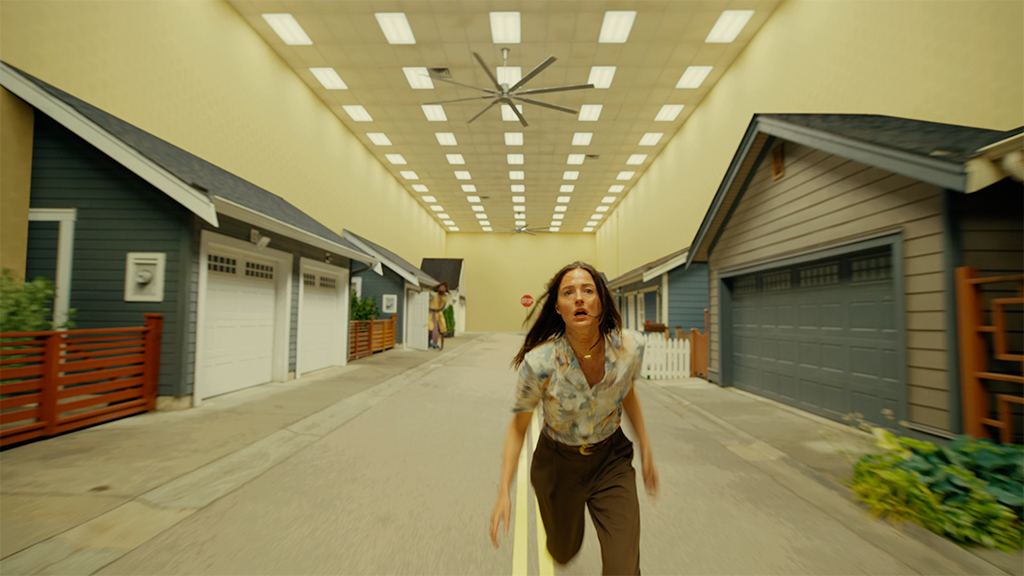
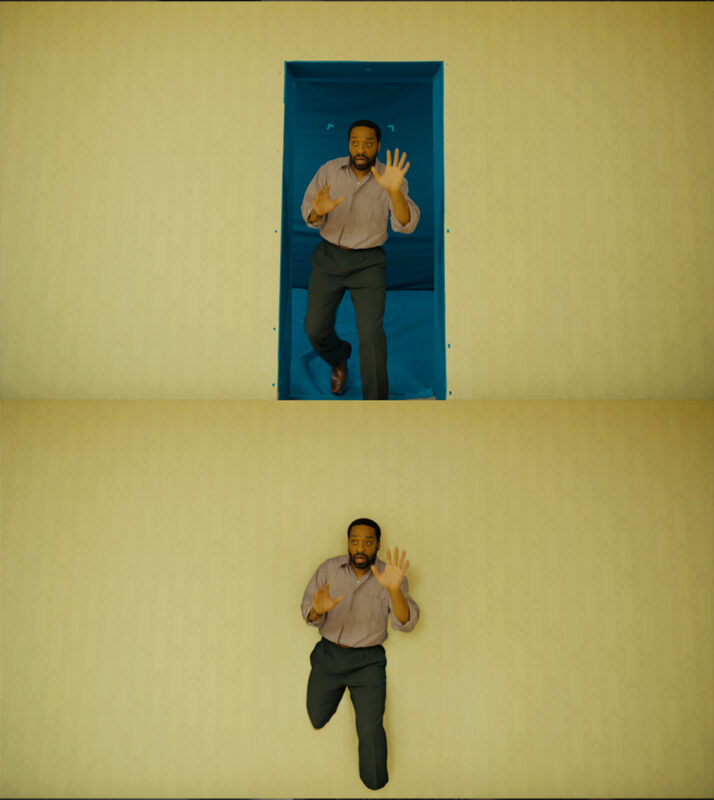
One of the most defining signatures of the Backrooms lore is the concept of "clipping"—the glitch-like phenomenon where entities and humans pass through solid walls as if they were intangible. Executing this visually for the feature film proved to be a formidable technical hurdle for the primary VFX vendor, Mr. Wolf VFX, alongside contributions from Roxel Creative and Associate VFX Supervisor Calvin Romeyn.
While the physical actors performed their movements naturally by stepping through designated gaps in the practical sets, the visual effects teams had to reconstruct the architectural barriers closing in around them post-performance.
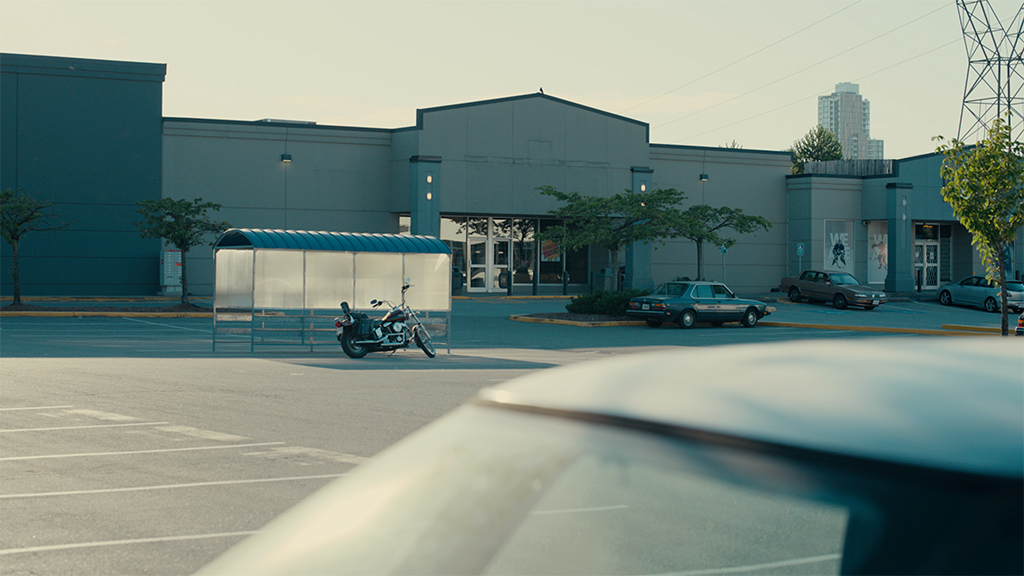
"Clipping was an incredibly simple concept but pretty challenging to pull off," notes Douglas. "You have two objects in a computer and you’re just sliding them together. There’s nowhere to hide. So it was about letting the actors perform naturally and then adding in the walls where they would slide back through."
The complexity intensified due to the demanding interplay of light and shadow. The teams discovered that digital rotomation and intersection work were insufficient on their own; the illusion relied entirely on accurate lighting dynamics. By projecting custom CG shadows from animation onto the practical and extended walls, the artists successfully grounded the supernatural movement into the physical environment, convincing audiences that the spatial fabric of reality was actively fracturing.
Practical Horror: Prosthetics, Puppetry, and the Still Lifes
While digital simulation formed the backbone of the endless corridors, the entities inhabiting the Backrooms relied heavily on practical makeup effects supervised by Werner Pretorius and his team at Amazing Ape. The choice to prioritize practical creature design over digital monsters paid immense dividends, frequently baffling even seasoned VFX professionals.
The "Still Lifes"—nightmarish human-like entities encountered within the maze—showcased the terrifying potential of high-end prosthetics. The redheaded Still Life, drawing conceptual inspiration from the distorted portrait sculptures of artist Evan Penny, required actress Rhiannon Roberts to endure grueling three-day shoots wearing heavy prosthetic appliances and towering high heels inside a confined set corner, utilizing concealed vision holes.
Meanwhile, the striped-shirt Still Life featured a hybrid execution where roughly 90% of the face consisted of physical prosthetics built by Pretorius’s team. Visual effects were subsequently deployed to solve a biological impossibility: multiple sets of eyes. While the top and bottom eyes were static glass prosthetics lacking depth, VFX teams replaced them with digital counterparts to unify the creature’s gaze.
"Whenever he blinked, we made the other eyes blink, but offset," Douglas details. "So it was like creepy cascading blinks. It is so creepy, and I love it so much." The prosthetic work was executed with such precision that when initial plates were sent to external vendors for eye enhancement, artists asked for the "unprocessed" originals, refusing to believe the skin textures and facial deformations were entirely practical.
Bringing Pirate Clark to Life: A Multinational Collaboration
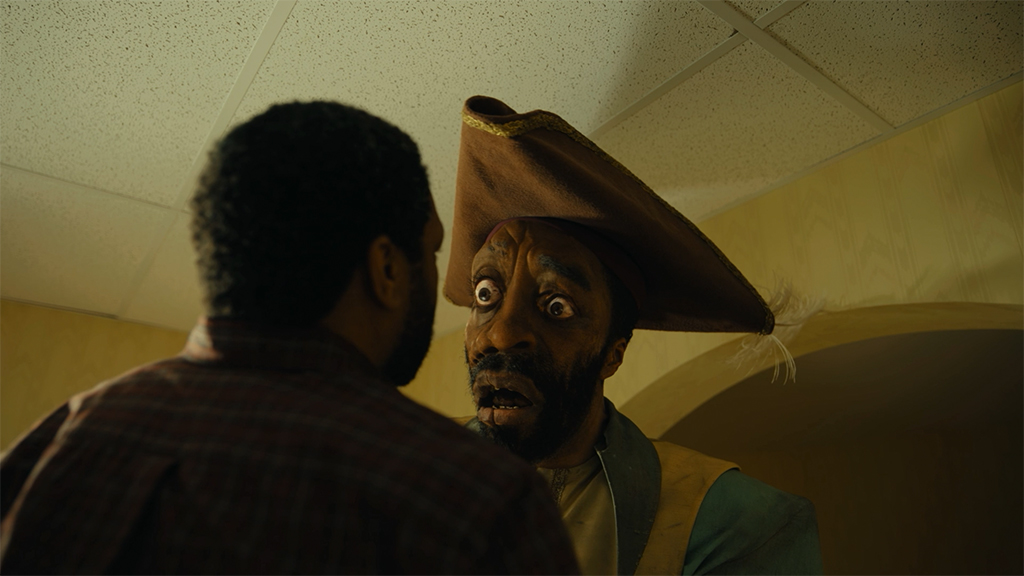
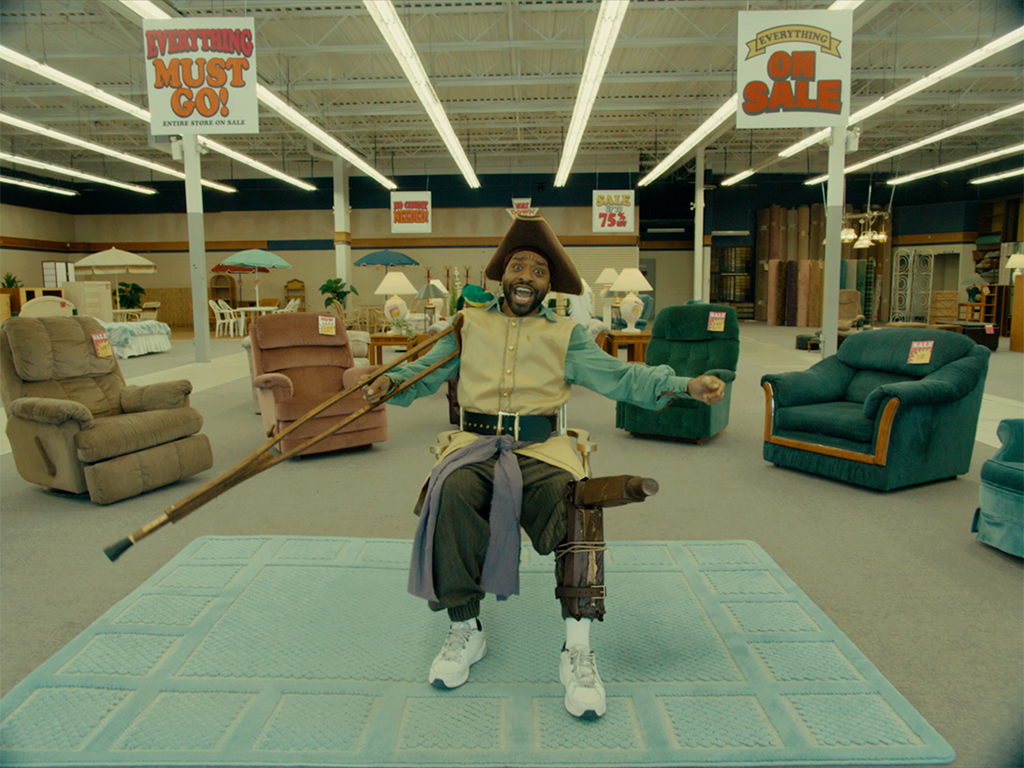
The film’s most complex creature creation involved "Pirate Clark," an 8.5-foot-tall distorted duplicate of Ejiofor’s character. Initial production discussions flirted with the idea of a stunt performer navigating stilts, but concerns over safety and shooting velocity prompted a rapid pivot. Upon a suggestion by the production team, towering performer Robert Bobroczkyi—who previously terrorized audiences in Alien: Romulus—was cast in the role within a matter of days.
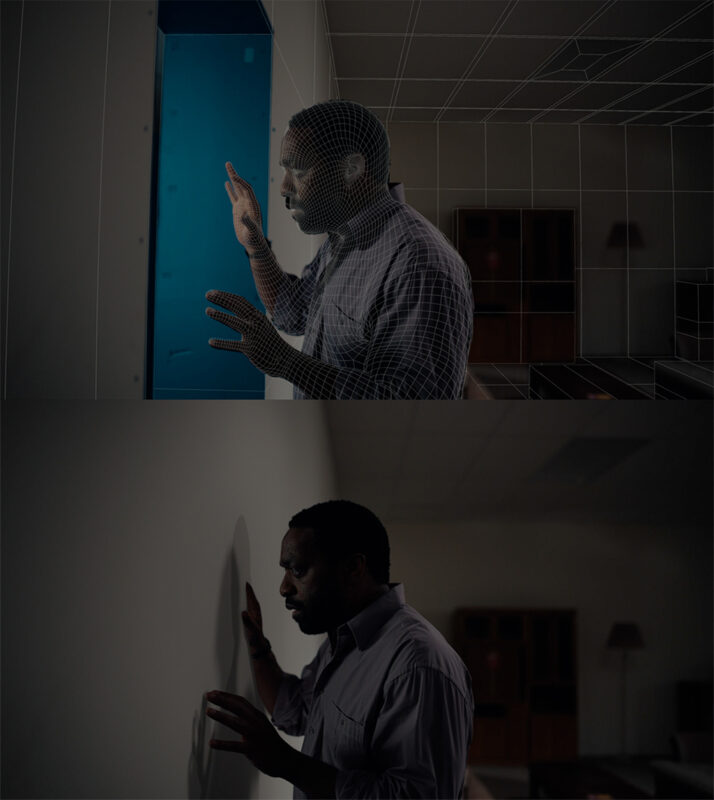
The physical performance was driven collaboratively by Bobroczkyi and puppeteer Richard Darwin. However, because the physical mask lacked the micro-expression articulation required for the character’s profound emotional resonance, Zoic Studios stepped in during post-production. Utilizing an ultra-high-resolution digital scan of Chiwetel Ejiofor, the team mapped a digital face onto the puppet’s head.
The animation philosophy actively rejected conventional monster tropes. Rather than giving Pirate Clark snarls, furrowed brows, or aggressive expressions, the filmmakers aimed for an atmosphere of deep existential sorrow and fear. Because the character’s facial geometry shifted dramatically under moving cameras and erratic lighting conditions, artists performed continuous micro-animation adjustments to maintain absolute emotional consistency.
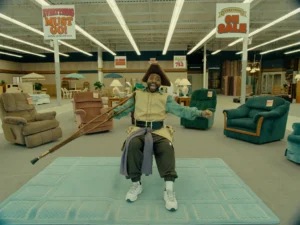
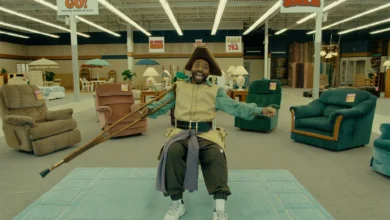
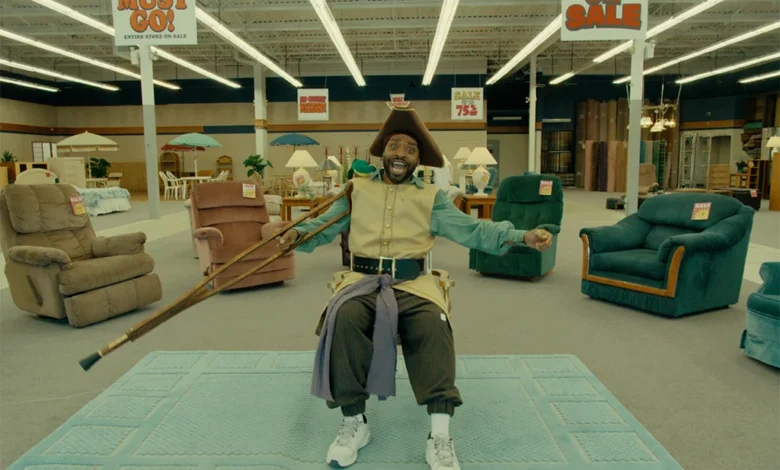
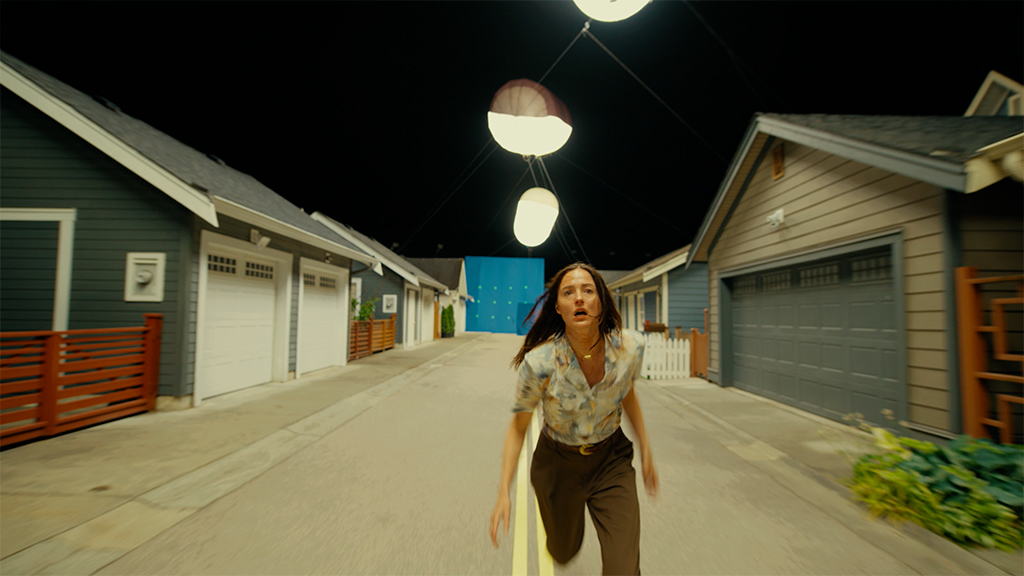
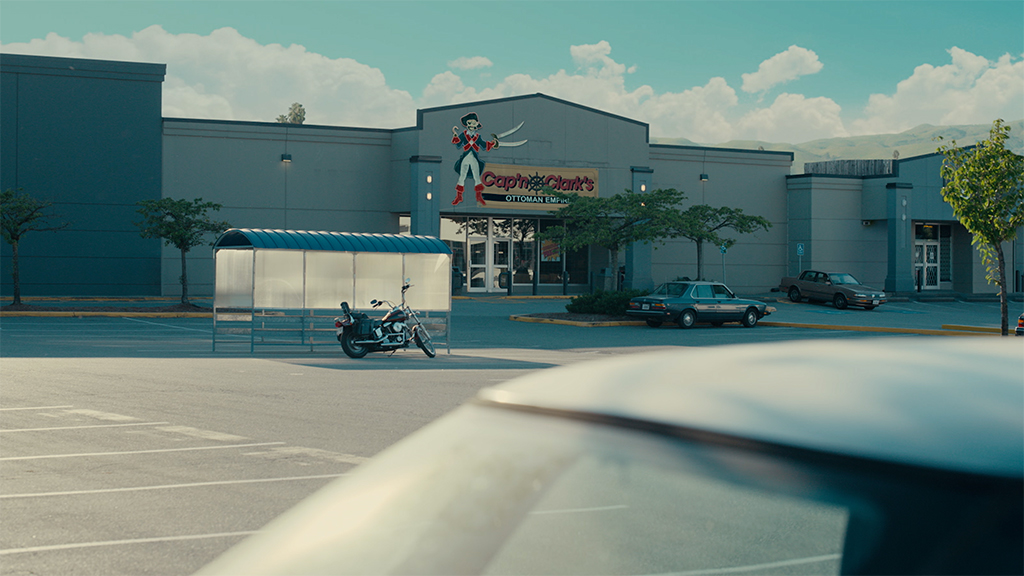
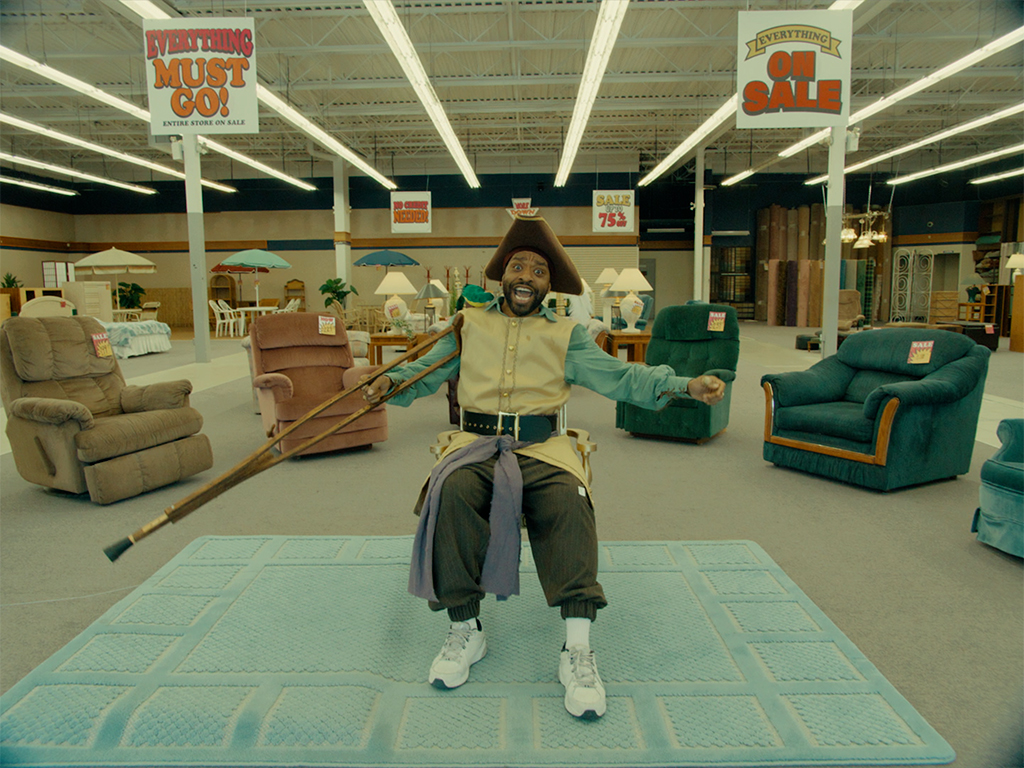
Additional adjustments were made for safety and narrative cohesion. In a comedic yet unsettling commercial sequence featuring Clark, his wooden peg leg was entirely realized via digital replacement to protect the actor from physical strain. For exterior shots, modern Vancouver streetscapes were meticulously scrubbed and replaced with period-accurate San Jose environments, adjusting skies and lighting to curate a distinct "dreamcore" aesthetic.
Analog Authenticity in an Era of Digital Noise
Despite relying on hundreds of digital shots, the production maintained a strict adherence to analog textures, particularly when dealing with found footage and VHS elements. Rather than simulating tape degradation digitally, the crew routed footage directly through physical VCR hardware, manipulating frame rates, tape speeds, and tracking mechanisms in real-time.
Director Kane Parsons even utilized a physical distortion box—functioning similarly to an electrical guitar pedal—to manually inject signal interference into the cables linking computers to the playback monitors. This dedication to tangible, lo-fi methodologies mirrored the film’s overarching production ethos: a synthesis of old-school practical wizardry and modern digital enhancement.
Scale, Industry Impact, and Financial Performance
The sheer volume of visual effects work executed on Backrooms stands as an anomaly within contemporary independent cinema. The final theatrical cut runs for approximately one hour and eighteen minutes, containing a total of 830 shots. Of those, a staggering 600 shots involved visual effects integration, alongside an additional 10 minutes consisting entirely of full-CG imagery, including the film’s chilling opening found-footage sequence.
Supported by an external roster of 11 specialized VFX vendors—including Zoic Studios, Mr. Wolf VFX, CoSA VFX, Stormborn VFX, and Roxel Creative—alongside an active in-house pipeline, the production successfully navigated the logistical nightmare typically associated with high-concept sci-fi blockbusters while adhering strictly to its $10 million ceiling.
The film’s commercial triumph upon its 2026 release marks a profound shift in intellectual property cultivation. By entrusting a viral internet creator with full creative oversight over his own foundational material, A24 has demonstrated that grassroots digital art can successfully transition into sophisticated cinematic art without losing its underlying soul. Through an uncommonly harmonious partnership between practical makeup artists, physical stunt coordinators, and digital animators, Backrooms has established a new benchmark for how modern horror can bridge the gap between amateur digital origins and studio-grade filmmaking.