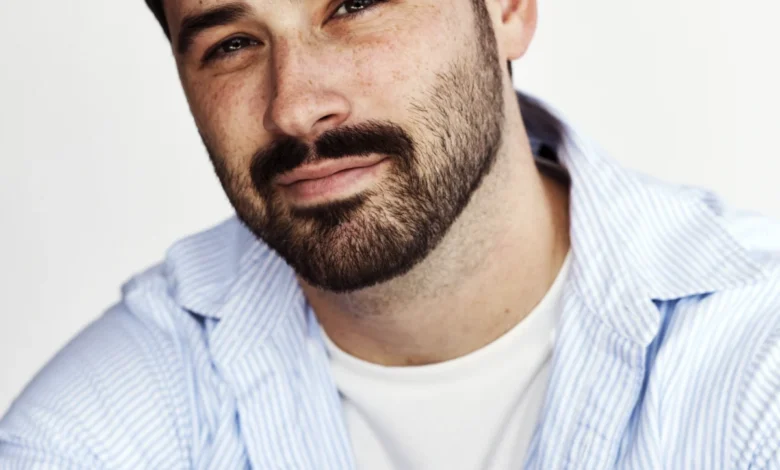
The landscape of modern digital media has long been defined by the migration of independent creators from boutique platforms to mainstream institutional collaborations. For Joe Santagato, co-host of the viral internet powerhouse The Basement Yard and founder of Santagato Studios, this evolution has entered a new chapter. Known for commanding millions of dedicated views alongside co-host Frank Alvarez, Santagato has cemented his status as a staple of digital comedy and podcasting. Now, he is stepping into a brand-new arena as the host and executive producer of Hot Ones: Game Night, a strategic spin-off from First We Feast’s globally recognized interview franchise, Hot Ones.
This high-profile partnership bridges the gap between independent creator culture and traditional digital network programming. By marrying Santagato’s rapid-fire comedic sensibility with the high-production pedigree of First We Feast, the new series represents a calculated expansion for both parties. As digital video consumption increasingly favors hybrid formats that blend casual conversation with interactive elements, Hot Ones: Game Night offers a masterclass in how legacy digital brands can refresh their intellectual property by partnering with native internet talent.
The Genesis of a Partnership: From Podcast Studios to First We Feast
The journey to Hot Ones: Game Night began not through a formal pitching marathon, but via an organic overture. Greg Dybec, Santagato’s longtime business partner and collaborator at Santagato Studios, was approached by executives at First We Feast for an exploratory meeting. The momentum accelerated rapidly from that initial conversation. First We Feast did not merely want to license Santagato’s likeness or bring him on as a rotating guest; they envisioned building an entirely new property centered explicitly around his unique comedic timing and hosting persona.
For Santagato, the transition offered a compelling professional challenge. While he has spent years refining his unscripted banter on The Basement Yard—which regularly translates its massive digital footprint into sold-out live tours—stepping into the interviewer’s chair for a major studio production required a recalibration of his skill set. Despite his extensive background in digital media production and editing, Santagato has candidly noted that traditional celebrity interviewing is a discipline he is still actively mastering.
Rather than attempting to replicate the meticulous, deeply researched journalistic style of Hot Ones host Sean Evans, Santagato deliberately carved out a distinct lane for the spin-off. Hot Ones: Game Night discards the traditional Q&A framework in favor of a chaotic, unstructured environment where celebrity guests navigate a hot sauce-fueled board game. The core objective is not necessarily to extract hard-hitting journalistic revelations, but rather to construct an authentic, low-pressure space where high-profile figures can drop their public guards and reveal genuine facets of their personalities.
Deconstructing the Format: Casual Conversations and High-Stakes Heat
The structural design of Hot Ones: Game Night relies on deliberate subversion. While traditional interview programs place the heavy burden of research and rigid interrogation on the host, Santagato’s approach leans heavily into spontaneity and collaborative play. The inclusion of a game element acts as an immediate psychological equalizer, diffusing the inherent tension that often accompanies promotional media junkets.
In interviews discussing the show’s mechanics, Santagato has emphasized that the vibe is intended to mirror two acquaintances hanging out in a living room rather than a formal press interaction. Celebrities frequently cycle through dozens of identical press outlets, answering identical variations of the same promotional questions. By introducing unpredictable board game mechanics paired with the infamous Hot Ones hot sauce gauntlet, the production forces guests to react in real-time, short-circuiting their rehearsed talking points.
The guest dynamic, according to producers, relies heavily on the willingness of participants to "play ball." While initial moments on set often feature a brief period of awkward acclimatization as guests gauge the unfamiliar parameters of the game, the friction quickly gives way to organic comedic chemistry. As the show’s library of episodes grows, incoming guests arrive with a pre-established framework of expectations, further smoothing the onboarding process and accelerating the comedic payoff.

Industry Implications and the Evolution of Santagato Studios
Beyond the creative satisfaction of hosting a major network-backed show, the collaboration offers Santagato an invaluable operational masterclass. Operating under the umbrella of First We Feast—widely regarded as one of the most structurally disciplined and polished digital production houses in the industry—has provided Santagato Studios with a blueprint for scaling its own internal operations.
Santagato has frequently praised the professionalism, organizational rigor, and positive morale fostered within the First We Feast production ecosystem. Unlike high-pressure corporate television environments that often stifle creativity through bureaucratic delays, the production house maintains a meticulous schedule without sacrificing a relaxed, collaborative workplace culture. Santagato has actively imported these structural philosophies back into his own company, applying operational insights to his internal team at Santagato Studios to prove that large-scale efficiency can coexist with a fun, creator-first environment.
This project also arrives at a critical juncture in Santagato’s career, one characterized by rapid professional scaling. Stepping into a marquee hosting role for a globally recognized franchise inevitably brings moments of industry-standard imposter syndrome. However, rather than allowing apprehension to stall his momentum, Santagato has embraced a philosophy of "doing it scared"—showing up, leaning into his natural instincts, and trusting the collaborative foundation built with the production crew.
The Viral Economy: Social Media Curation and Organic Growth
A significant driver behind Santagato’s meteoric rise—and a foundational reason for his mainstream appeal—is the unprecedented cultural saturation of The Basement Yard across short-form video platforms such as TikTok, Instagram Reels, and YouTube Shorts. It is virtually impossible for an active social media user to navigate digital feeds without encountering viral clips of Santagato and Alvarez’s unscripted comedic exchanges.
Rather than taking a draconian approach to copyright enforcement—a strategy historically utilized by legacy media networks—Santagato and his team have embraced the decentralized nature of internet clipping culture. By permitting independent creators to curate, edit, and distribute highlights of the podcast, Santagato Studios has effectively outsourced its promotional funnel to a decentralized army of digital creators.
Crucially, this ecosystem is mutualistic. Santagato has openly supported the practice of independent accounts monetizing their clipped content, noting that as long as bad actors refrain from uploading full-length episodes, the proliferation of viral snippets acts as the primary engine for the podcast’s massive audience expansion over the past four years. This progressive stance on digital distribution reflects a modern understanding of internet economics: audience acquisition in the digital age relies on frictionless sharing and community-driven amplification rather than rigid gatekeeping.
Broader Context and Future Outlook
The launch of Hot Ones: Game Night signals a broader industry trend wherein legacy digital media brands increasingly leverage native independent creators to inject fresh vitality into established IP. As audiences continue to migrate away from traditional linear television toward hybrid digital platforms, the demand for hosts who possess pre-existing, highly engaged digital communities has never been higher.
For First We Feast, partnering with Santagato minimizes the risk associated with launching new formats by tapping into an established, fiercely loyal base of consumers. For Santagato, the partnership provides a formidable platform to scale his personal brand beyond the confines of the podcasting studio, proving that his distinct comedic voice can successfully translate to structured network television and multi-camera digital formats.
As Hot Ones: Game Night continues to roll out new episodes featuring a rotating roster of celebrity guests, the project stands as a testament to the changing guard of digital entertainment. It highlights a media ecosystem where independent creators no longer have to build entirely isolated empires; instead, they can form strategic, synergistic alliances with major studios, maintaining their creative agency while scaling their operations to unprecedented heights.