Practical Magic on a Budget: How Blind Beagle VFX Brought Miniature Cephalopods to Life in NEON’s The Wrong Girls

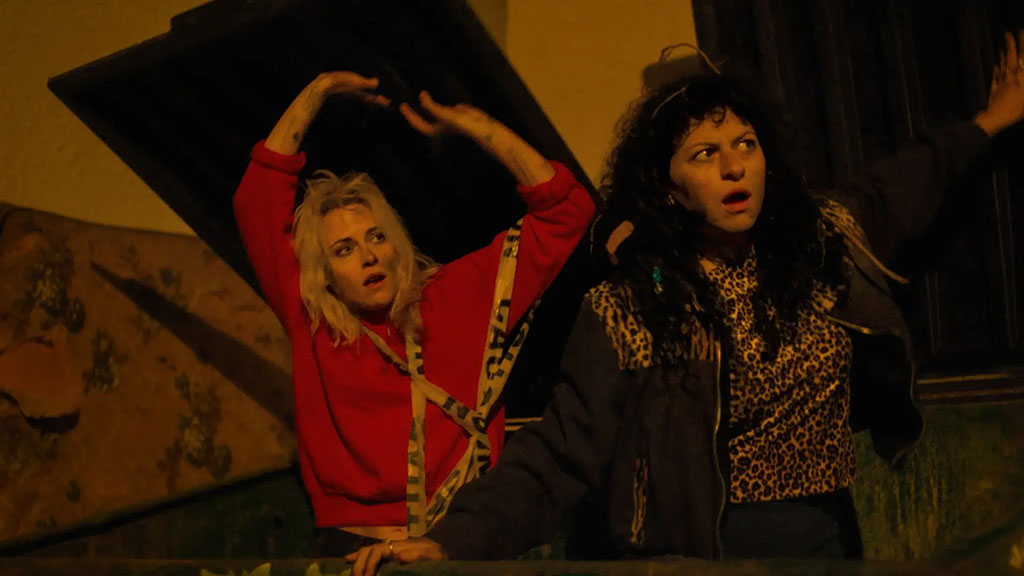
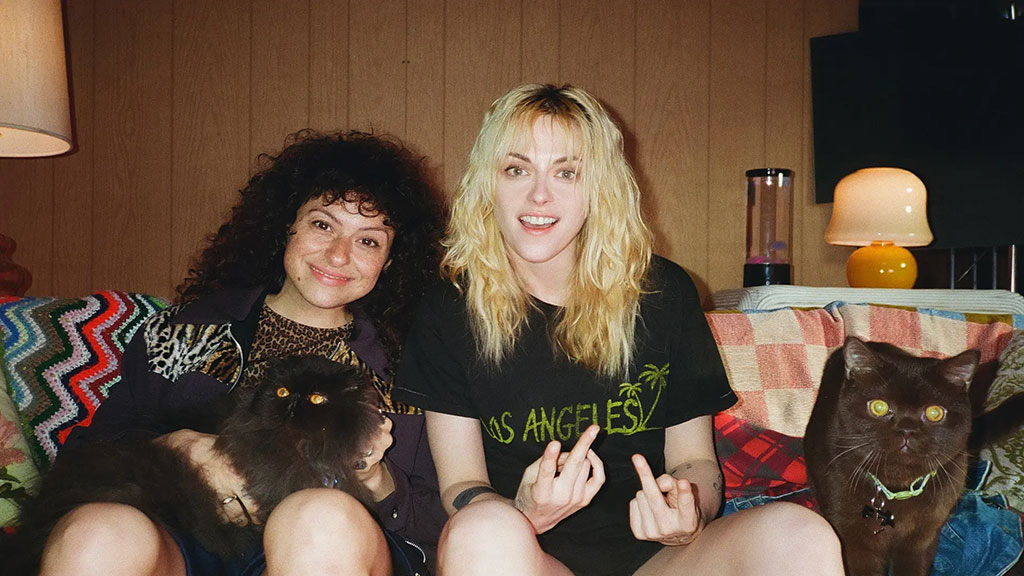
The intersection of practical special effects and modern comedy has always yielded some of cinema’s most memorable visual spectacles. In NEON’s upcoming stoner comedy The Wrong Girls, written and directed by Dylan Meyer, that intersection takes a remarkably aquatic turn. The film follows down-on-their-luck best friends Frankie, played by Kristen Stewart, and Molly, played by Alia Shawkat. Struggling to scrape together rent money, the duo’s lives are upended by a simple case of mistaken identity. Frankie inadvertently comes into possession of a briefcase containing a powerful, experimental hallucinogen. Once the friends ingest the substance, they develop sudden telepathic abilities and find themselves thrust into a high-stakes cross-country flight, pursued relentlessly by a syndicate of impeccably dressed, ruthless enforcers.
While the narrative hinges on the frantic chemistry between Stewart and Shawkat, the film’s distinctive visual flair relies heavily on a less conventional star: the giant squid. Driven by director Dylan Meyer’s lifelong fascination with deep-sea cephalopods, the mysterious creatures weave through the narrative as psychedelic symbols of the protagonists’ mind-bending experiences. To bring these sequences to life without relying entirely on computer-generated imagery, the production enlisted the veteran craftsmanship of Christopher Warren and his specialized team at Blind Beagle VFX. Building upon their previous collaboration on Boots Riley’s unconventional feature I Love Boosters, Warren and his crew leaned into a collaborative ethos prioritizing artistic impact over rigid photorealism. The resulting visual effects blend miniature environments, motion-control cinematography, underwater photography, and practical puppetry into a seamless, hallucinatory cinematic tapestry.
Behind the Scenes of the Trippy Title Sequence
One of the most technically ambitious elements of The Wrong Girls is its hypnotic title sequence, which sets the tone for the film’s surreal narrative trajectory. To achieve the desired psychological depth, Blind Beagle VFX utilized a tripartite photographic approach, fusing genuine oceanic footage with meticulously crafted miniature sets.
The sequence begins beneath the surface of the Pacific Ocean off the rocky coast of Southern California’s Catalina Island. Christopher Warren personally captured the initial underwater footage, originally intended strictly as visual reference material. However, the striking quality of the naturalistic environment—complete with swaying kelp, ambient marine life, and shifting natural light—convinced the creative team to use the footage in the final cut.
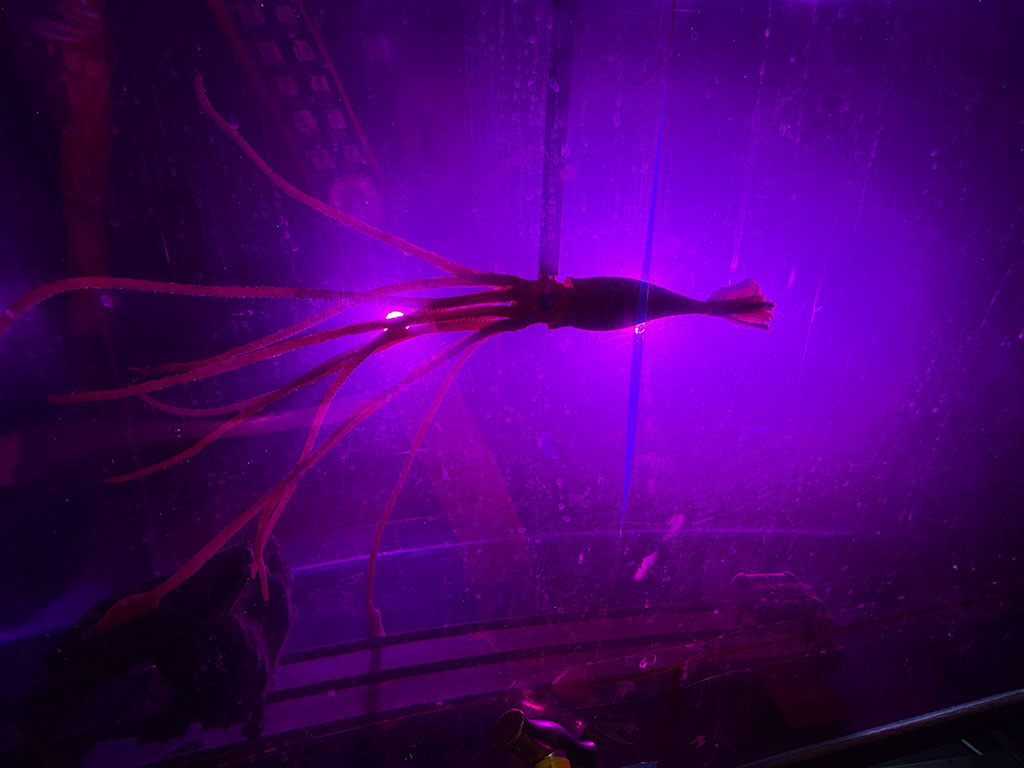
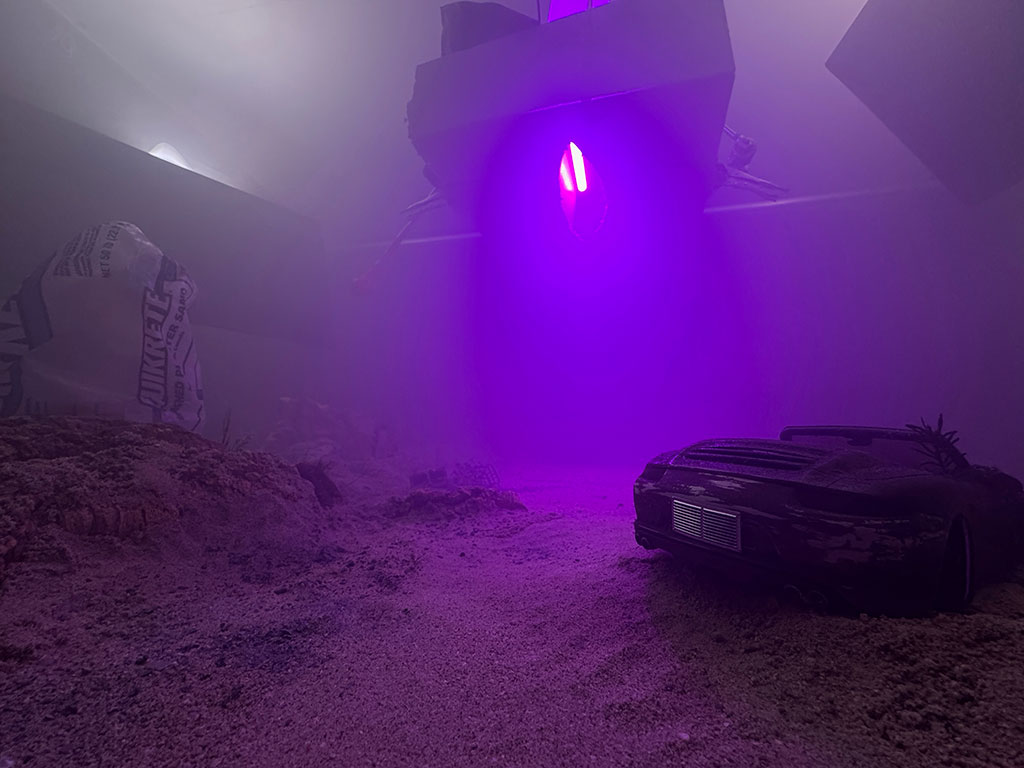
As this open-ocean sequence unfolds, the visual field gradually plunges into darkness, serving as a transitional bridge to the miniature world. When the screen fades to black, it seamlessly morphs into an artificial ocean floor built by the Blind Beagle team. Within this dark, miniature landscape, viewers spot a tiny scale-model Porsche resting on the sand. Suddenly, a bioluminescent miniature squid drifts into frame from above, culminating in the bold title card of The Wrong Girls splashing across the screen.
Crafting the Miniature Environments and Dry-for-Wet Techniques
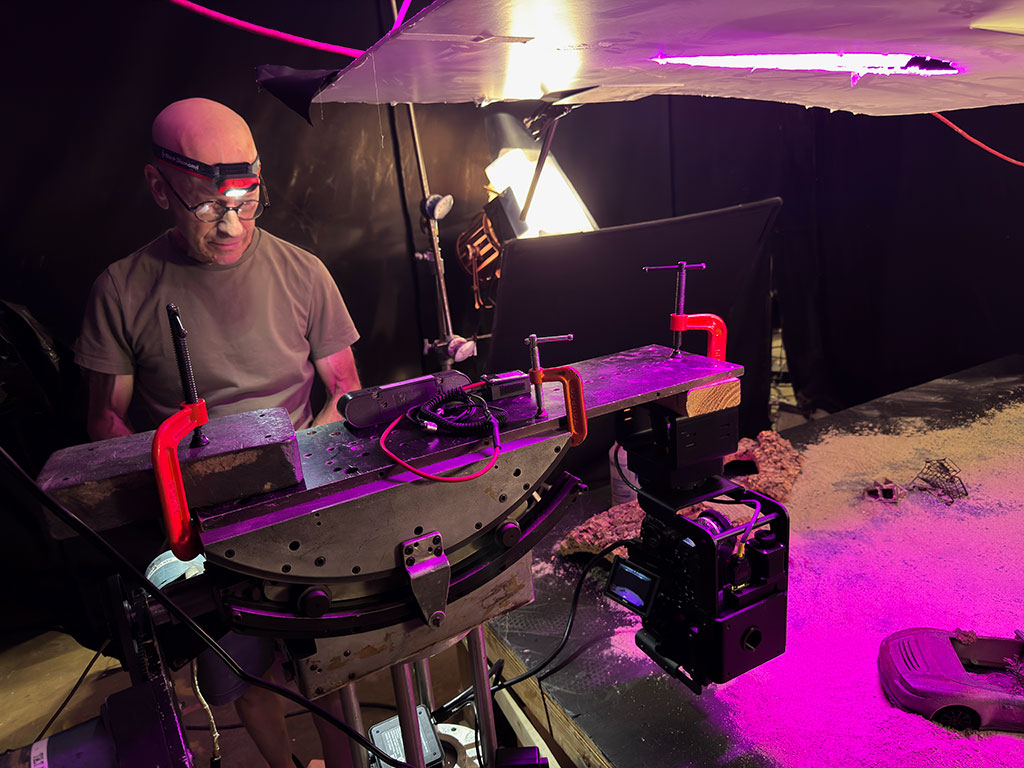
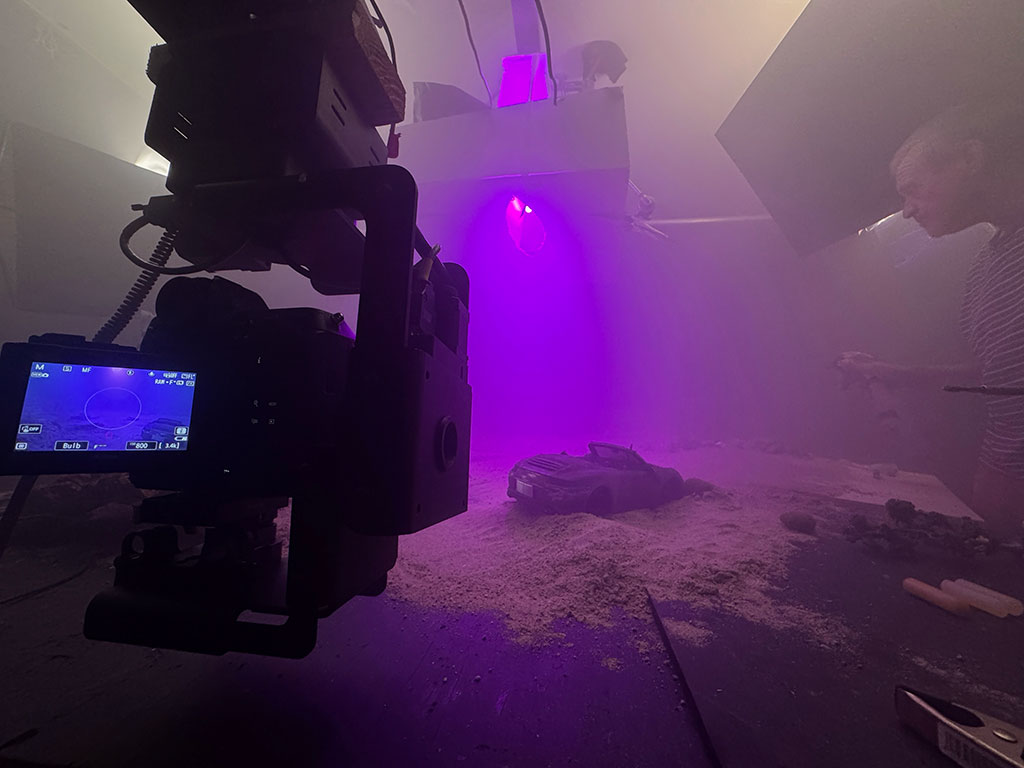
Constructing the miniature ocean floor required a delicate balance of classic physical effects techniques and modern motion-control precision. To simulate the murky, light-filtering properties of deep-water environments without shooting entirely underwater, Blind Beagle utilized a specialized cinematic technique known as "dry-for-wet."
According to Warren, achieving this look involved filling a controlled stage environment with a dense, calculated layer of smoke. This ambient atmospheric haze tricks the camera’s exposure settings, creating the dense, light-diffusing ambiance characteristic of deep-sea cinematography. However, executing the technique presented unique technical hurdles. The team had to carefully calibrate their camera exposures and manage the airflow on the stage to prevent the smoke from shifting too rapidly, which would instantly break the illusion of deep-water stillness.
Guiding the camera fluidly through this smoky miniature environment was motion-control operator Les Bernstien, whose extensive industry background includes high-profile projects such as the sci-fi series Foundation. Bernstien’s precision allowed the camera to execute repeatable, complex moves that would be virtually impossible to replicate by hand, ensuring that the scale of the miniature cars, sand grains, and kelp beds remained entirely convincing to the human eye.
The Engineering of a Bioluminescent Star
While Blind Beagle handled the photography and environmental builds, the physical creation of the cephalopod characters was spearheaded by design duo Josh Russell and Sierra Spence at Russell FX. Known for their intricate creature design, Russell and Spence sculpted, molded, and assembled the practical squid elements utilized throughout the production.
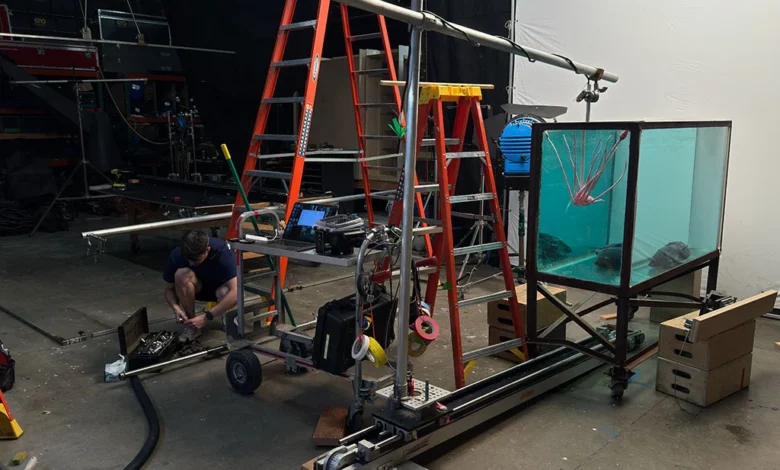
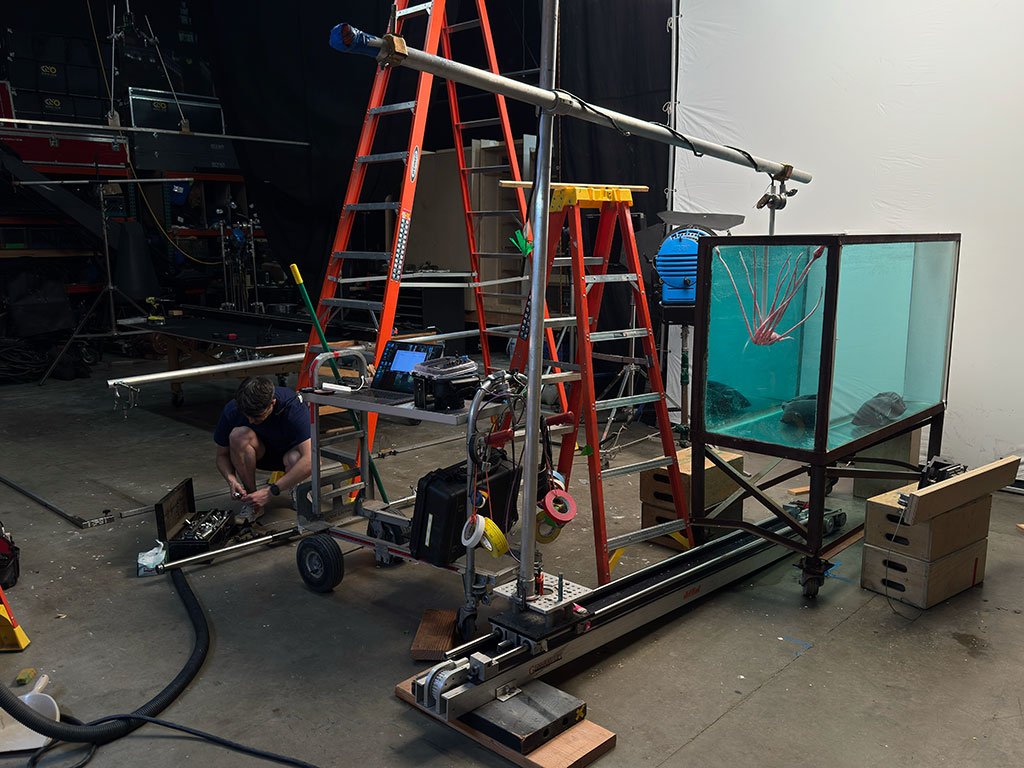
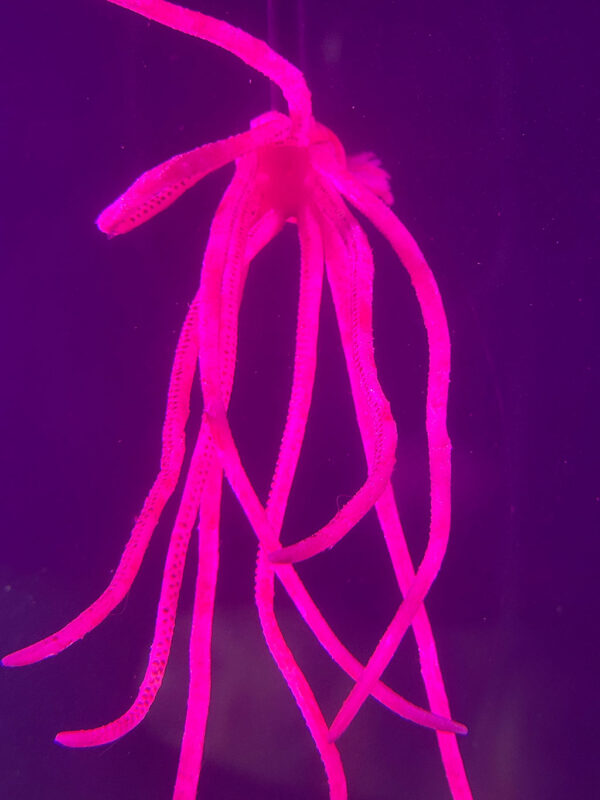
The design mandate called for creatures that could operate both in miniature water tanks and as oversized, menacing tentacles during the film’s chaotic climax. For the miniature sequences photographed by Warren’s team, Russell FX constructed a puppet measuring approximately two and a half feet in total length, featuring a mantle body roughly nine to twelve inches long.
A central challenge in bringing the puppet to life was outfitting it with operational bioluminescent lighting. The design team integrated extensive fiber-optic cabling throughout the creature’s body, allowing it to emit an ethereal, shifting glow that pulsed dynamically on camera. Operating the puppet required constant troubleshooting. The crew had to simultaneously manipulate the creature’s movement within a water tank while ensuring the delicate fiber-optic power feeds remained securely connected and illuminated.
The rigging setups shifted drastically depending on the specific demands of each shot. For the title sequence reveal, the miniature squid was mounted to an overhead dolly system using a concealed structural rod. This configuration allowed the crew to slide the puppet backward away from the camera, abruptly halt its momentum, and kick it forward toward the lens to mimic the creature expelling ink directly at the audience. For other setups, the puppet was suspended on a flexible, free-flowing rod, allowing it to drift naturally over the miniature tank while the internal fiber optics cast an eerie, self-contained illumination across the scene.
Collaboration, Humor, and the Art of Deception
Executing physical effects work on a tight schedule often breeds a unique camaraderie among crew members. The physical manipulation of the squid puppet during filming became a collaborative family and team effort, with Gene Warren handling the creature’s physical performance while Christopher Warren operated the camera. Additional contributions came from Brandon Knight-Warren and Brian Bradford, rounding out the core Blind Beagle unit.
Despite the technical frustrations of keeping fiber-optic systems dry and smoke densities stable, the set was characterized by frequent humor. Manipulating an inanimate puppet to behave with organic, lifelike intent under tight cinematic constraints frequently sparked laughter among the crew.
Furthermore, the production benefited significantly from director Dylan Meyer’s collaborative leadership style. Warren praised Meyer for maintaining a clear overarching vision while remaining entirely receptive to on-set experimentation. In an industry where visual effects are often tightly locked down in pre-production, Meyer’s willingness to let the special effects team showcase practical alternatives proved invaluable. According to Warren, working with a director who encourages testing, evaluates the practical results on stage, and makes decisive choices creates an ideal creative environment.
Industry Implications and the Enduring Appeal of Practical FX
The reliance on practical miniatures and physical puppetry in The Wrong Girls highlights a broader, ongoing trend within contemporary independent and mid-budget filmmaking. While computer-generated imagery remains a dominant force in visual effects, productions are increasingly rediscovering the tangible weight, authentic lighting interactions, and distinct artistic charm that physical builds bring to the screen.
As digital tools become more ubiquitous, audiences have grown remarkably sophisticated at detecting fully synthetic environments. By grounding fantastical sequences—such as a drug-induced, squid-filled automotive chase—in physical reality, filmmakers can evoke a tactile sense of wonder that pure CGI often struggles to replicate. The success of Blind Beagle VFX’s work on The Wrong Girls and I Love Boosters demonstrates that practical craftsmanship, when paired with imaginative direction, continues to hold a vital and vibrant place in modern cinema.